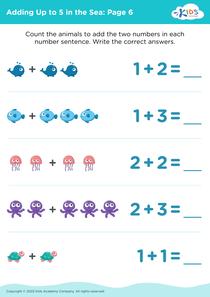
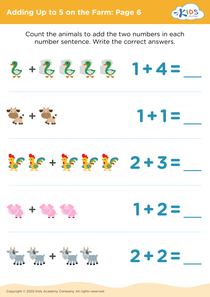
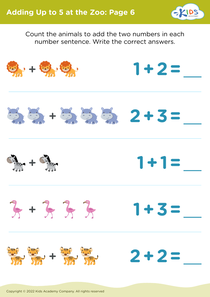
Basic Addition Skills Adding in the Forest Worksheets for Ages 5-6 - Page 3
55 filtered results
-
From - To
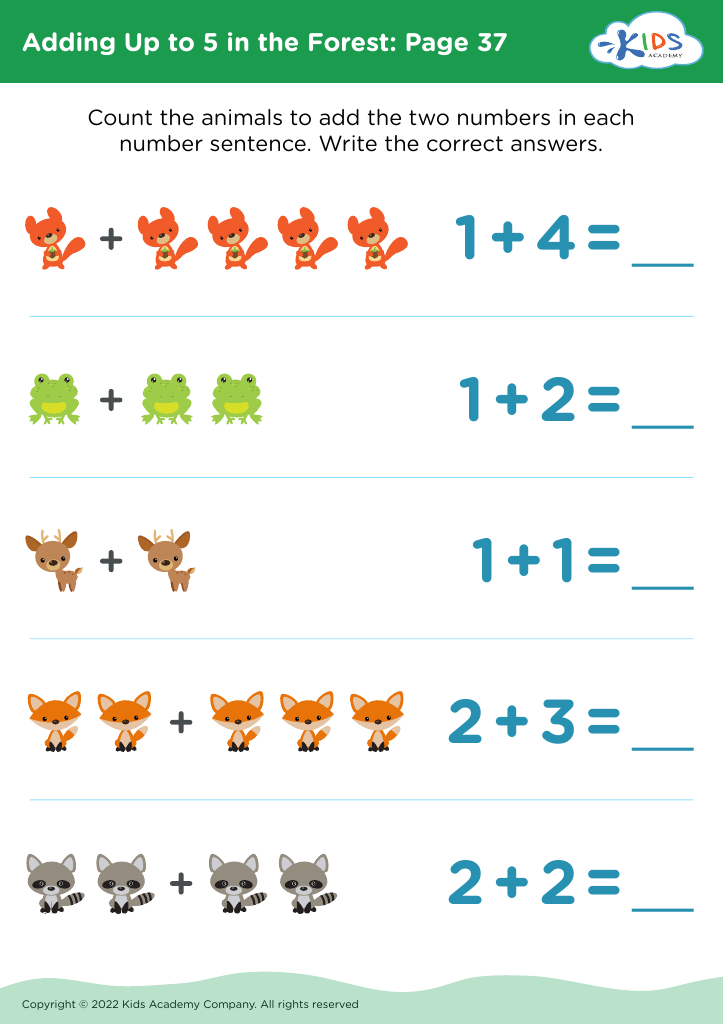
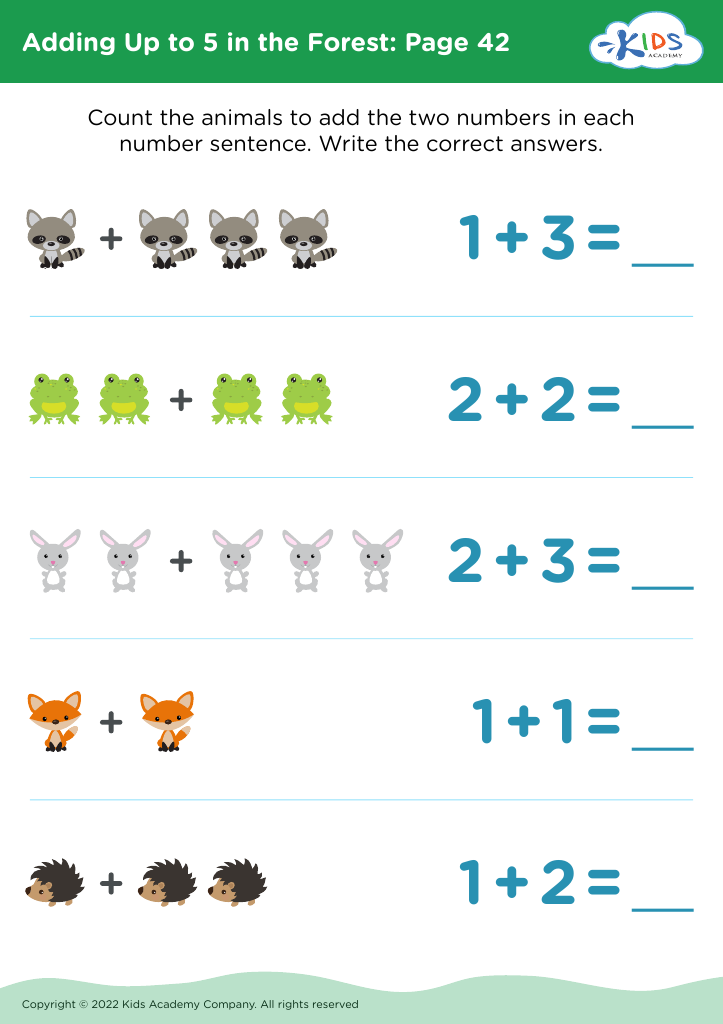
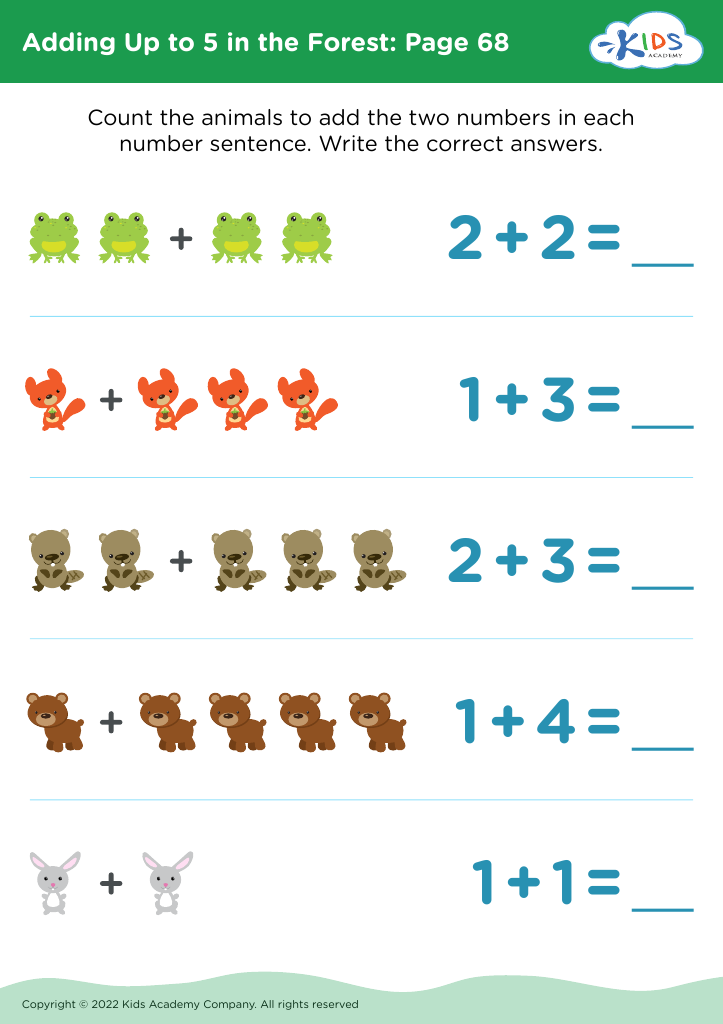
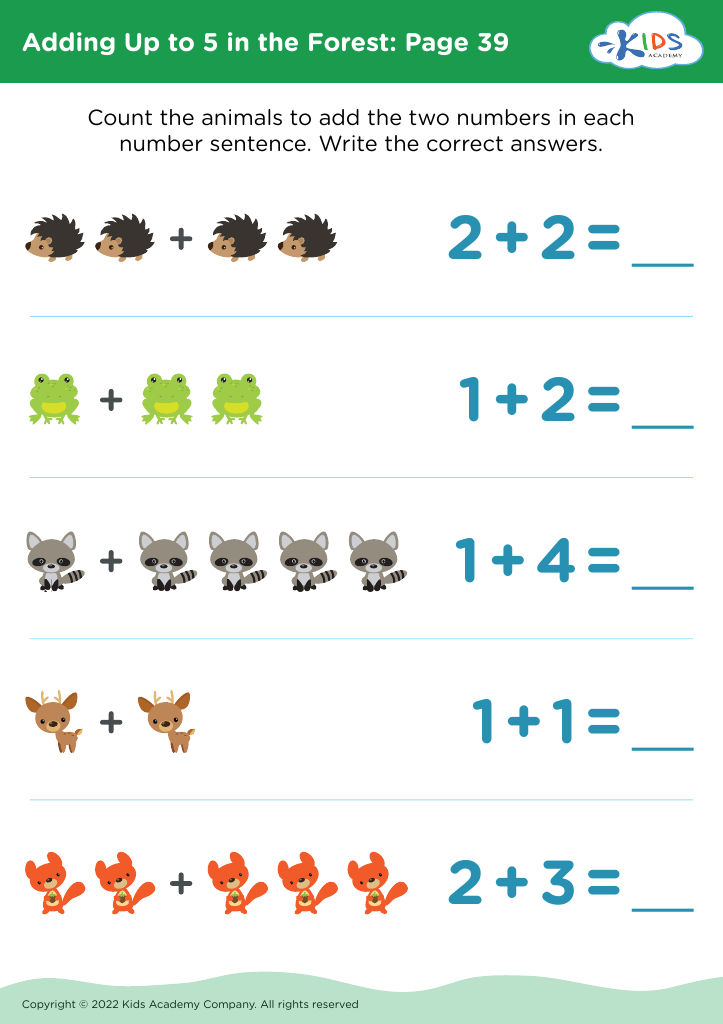
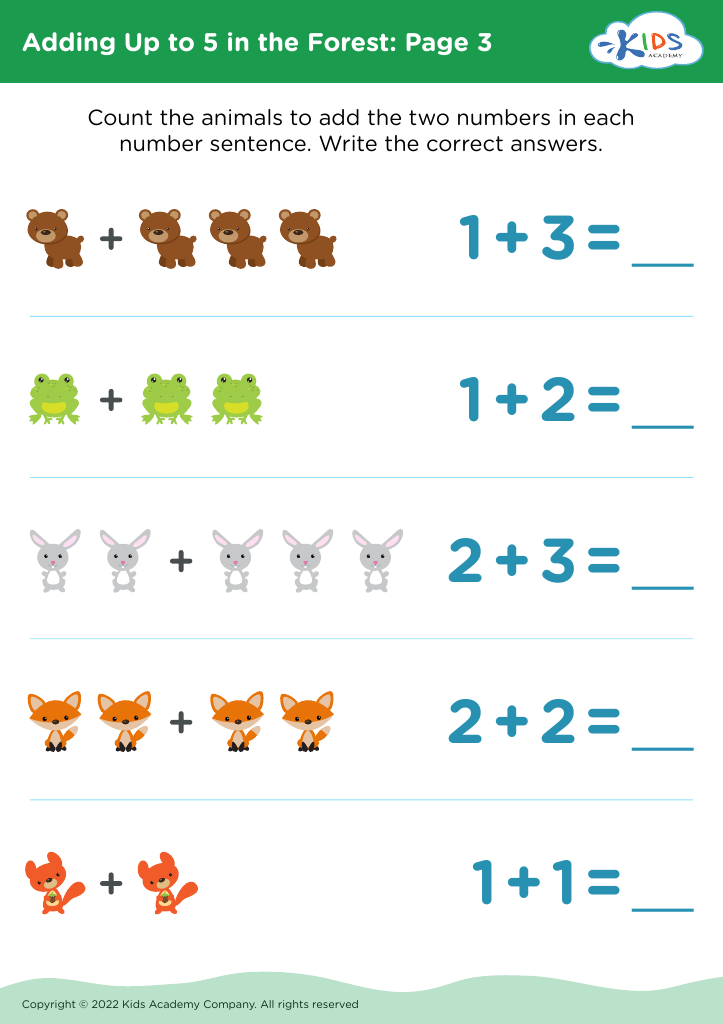
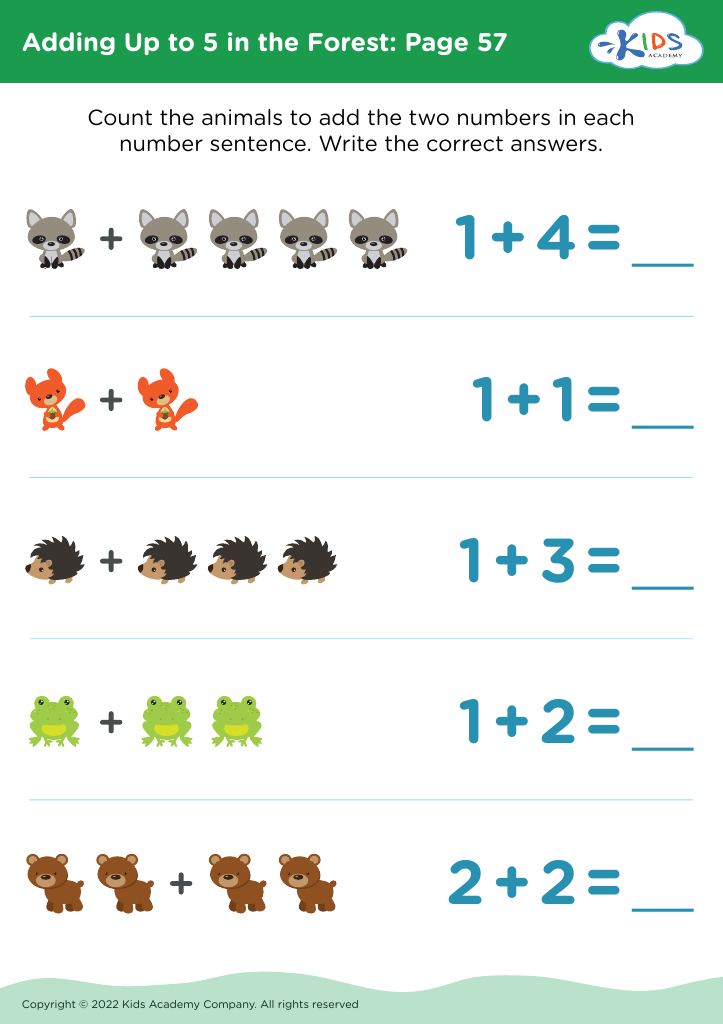
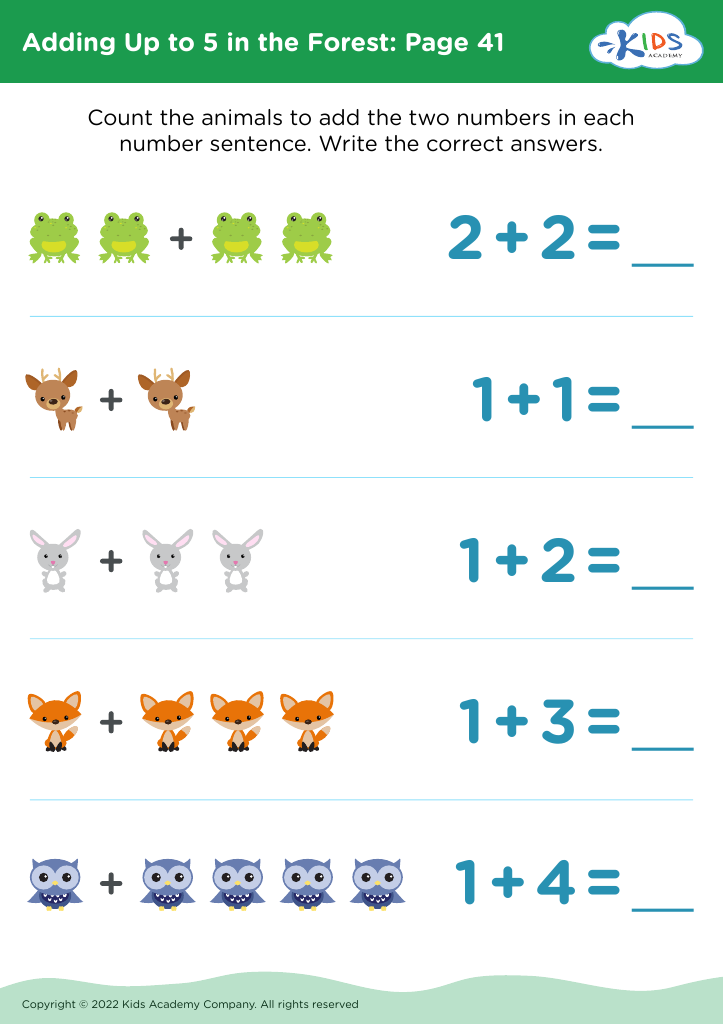




Parents and teachers should care about Basic Addition Skills Adding in the Forest for ages 5-6 because it lays a crucial foundation for early mathematical understanding in a fun and engaging context. This age-appropriate activity transforms the abstract concept of addition into a tangible and playful learning experience, using the familiar and attractive motif of a forest setting. By incorporating elements of storytelling and nature, children stay engaged, which enhances their willingness to learn.
Understanding basic addition is a cornerstone of numeracy, helping children to develop their cognitive abilities in areas like logic, pattern recognition, and problem-solving. Early proficiency in addition sets the stage for grasping more complex mathematical concepts as children progress in their education. The themed approach of adding in the forest not only makes learning enjoyable but also stimulates imagination and creativity, which are equally important in child development.
Furthermore, the interactive nature of this method strengthens children's fine motor skills and promotes social interaction when done in collaborative settings, either with adults or peers. Teaching addition skills in this engaging way can harness a child's natural curiosity and bootstrap their enthusiasm for mathematics, making it less daunting and more enjoyable. Ultimately, these activities contribute to a balanced, well-rounded early education.