Filters

19 filtered results

Clear all filters
Favorites
With answer key
Interactive

19 filtered results

Difficulty Level

Grade


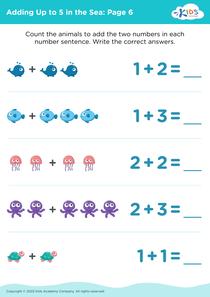
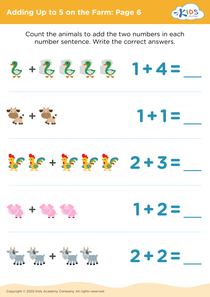
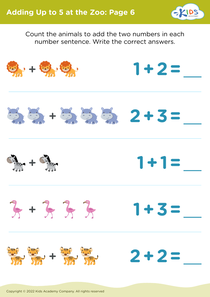
Enhance your child's counting skills with our engaging "Adding in the Forest Worksheets for Ages 5-6." Perfect for young learners, these colorful and interactive worksheets take kids on an exciting woodland adventure while teaching them basic addition. As they encounter friendly animals and vibrant forest scenery, children practice adding numbers and develop strong foundational math skills. Aligned with early education standards, these printable activities are designed to make learning fun and effective. Ideal for kindergarten and first-grade students, our forest-themed worksheets are an excellent resource for reinforcing classroom lessons and building confidence in math.
Check out this FREE Trial Lesson on Adding in the Forest for age 5-6!

H

Favorites
With answer key
Interactive
  • 5-6
  • Counting skills
  • Adding in the Forest
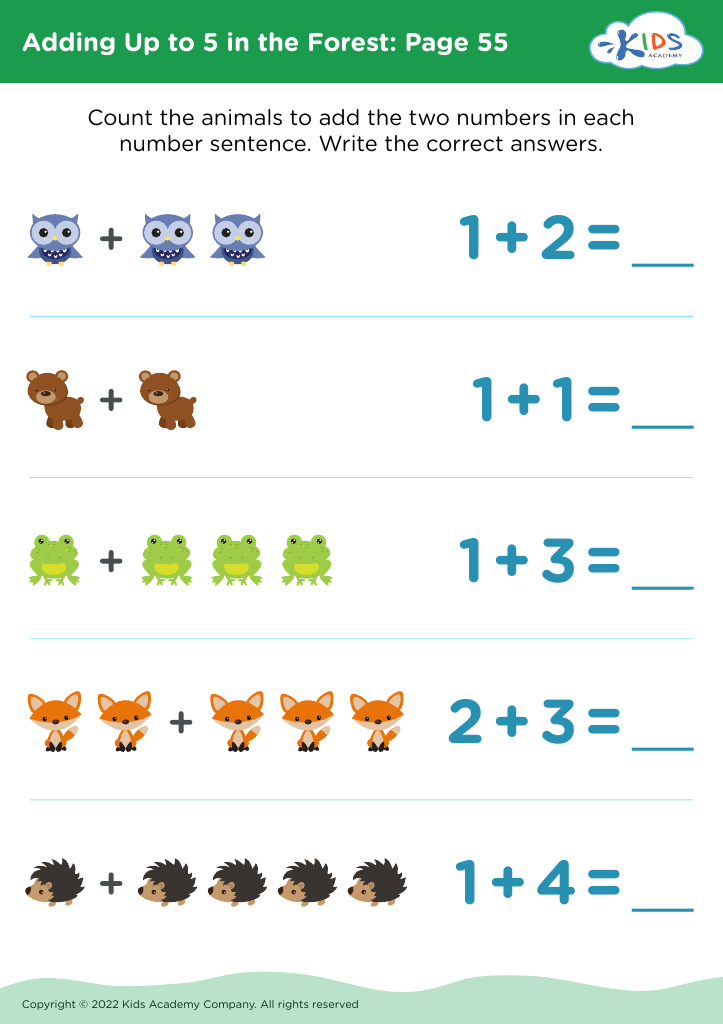
Adding Up to 5 in the Forest: Page 55
Worksheet
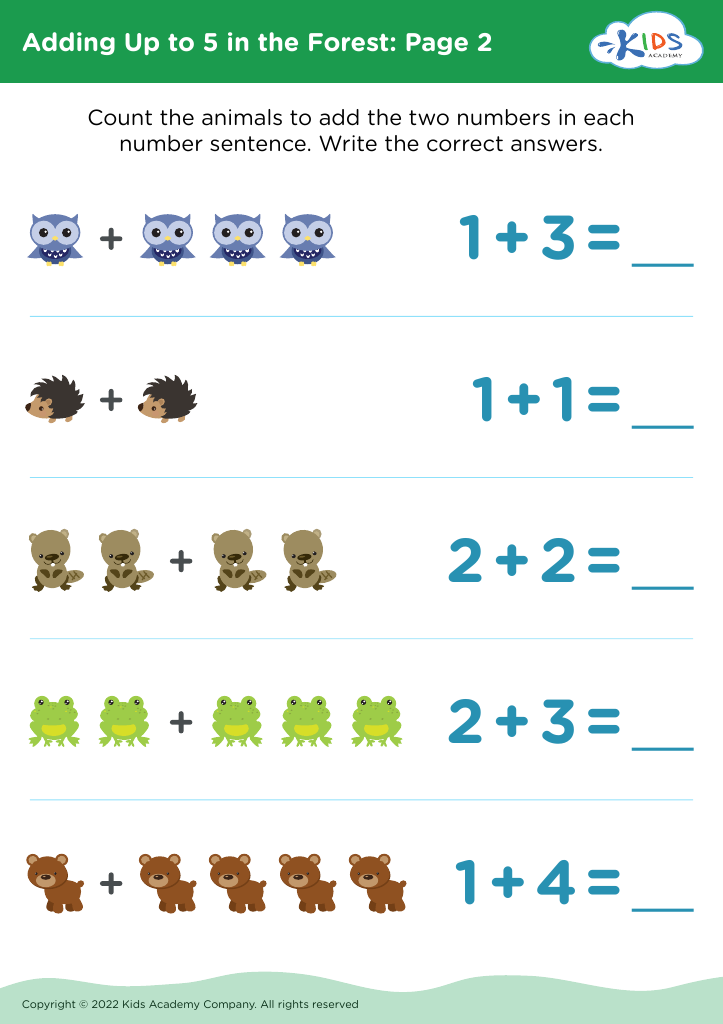
Adding Up to 5 in the Forest: Page 2
Worksheet
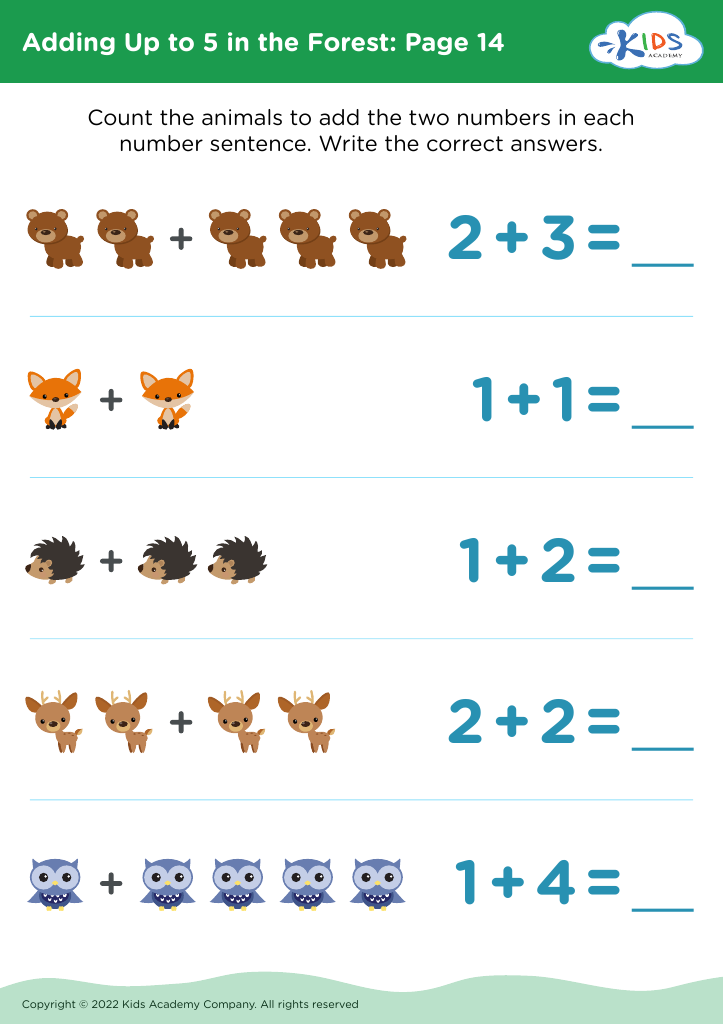
Adding Up to 5 in the Forest: Page 14
Worksheet
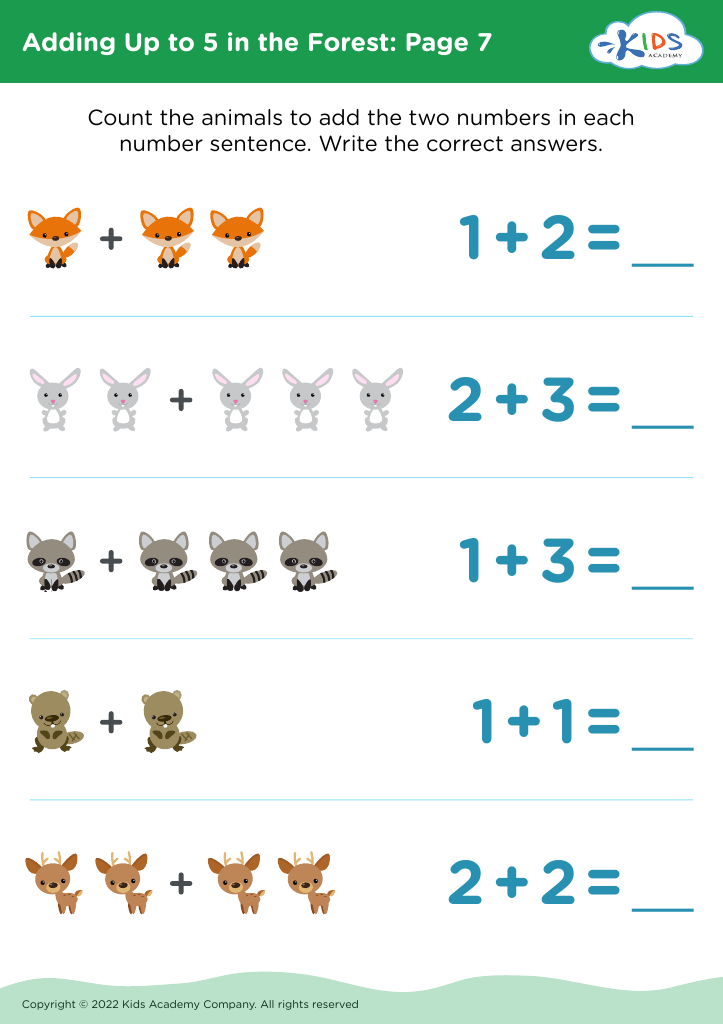
Adding Up to 5 in the Forest: Page 7
Worksheet
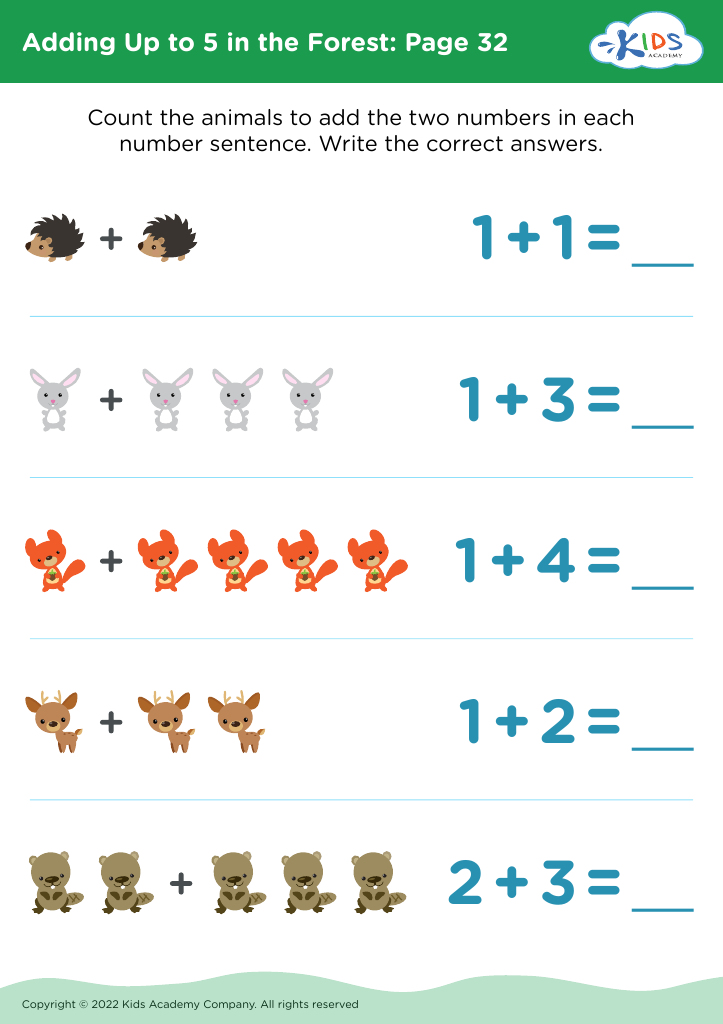
Adding Up to 5 in the Forest: Page 32
Worksheet
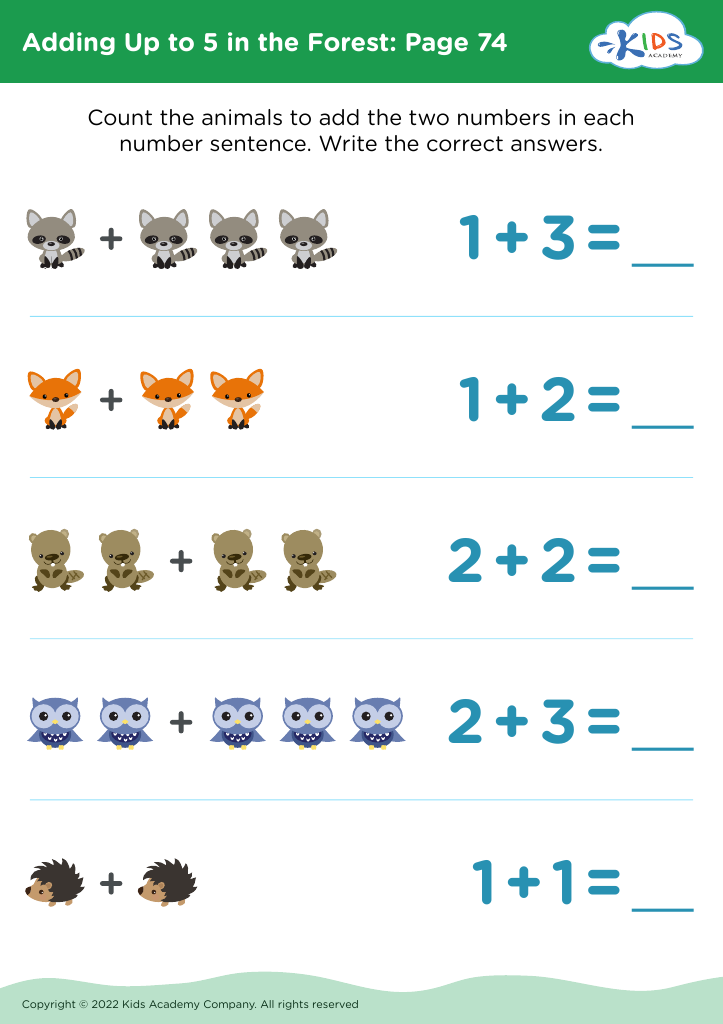
Adding Up to 5 in the Forest: Page 74
Worksheet
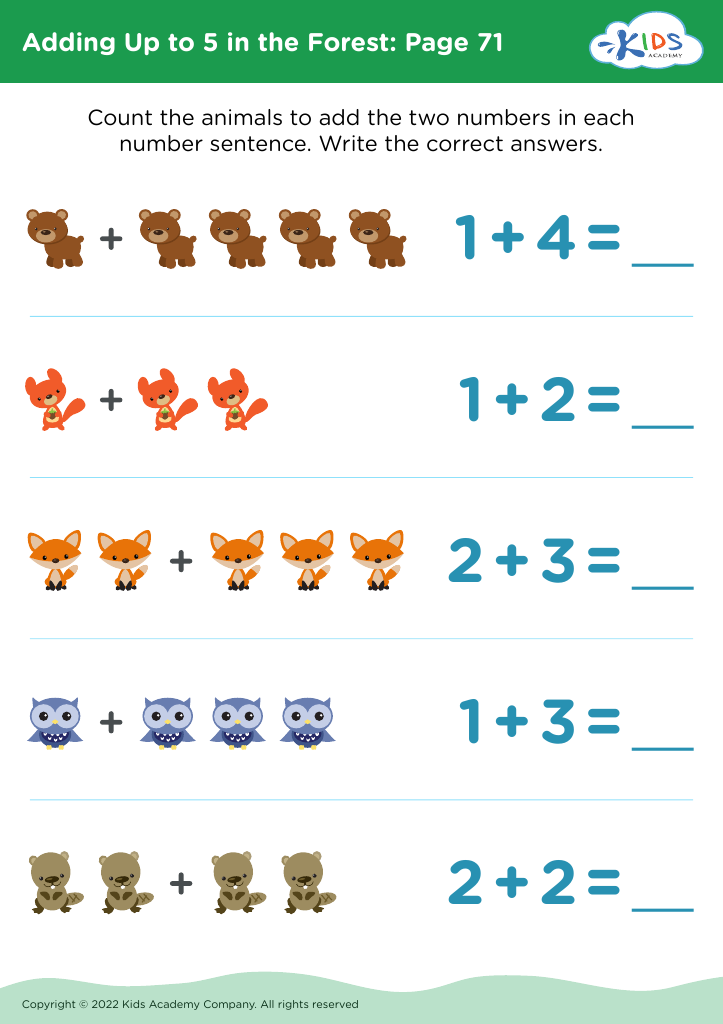
Adding Up to 5 in the Forest: Page 71
Worksheet
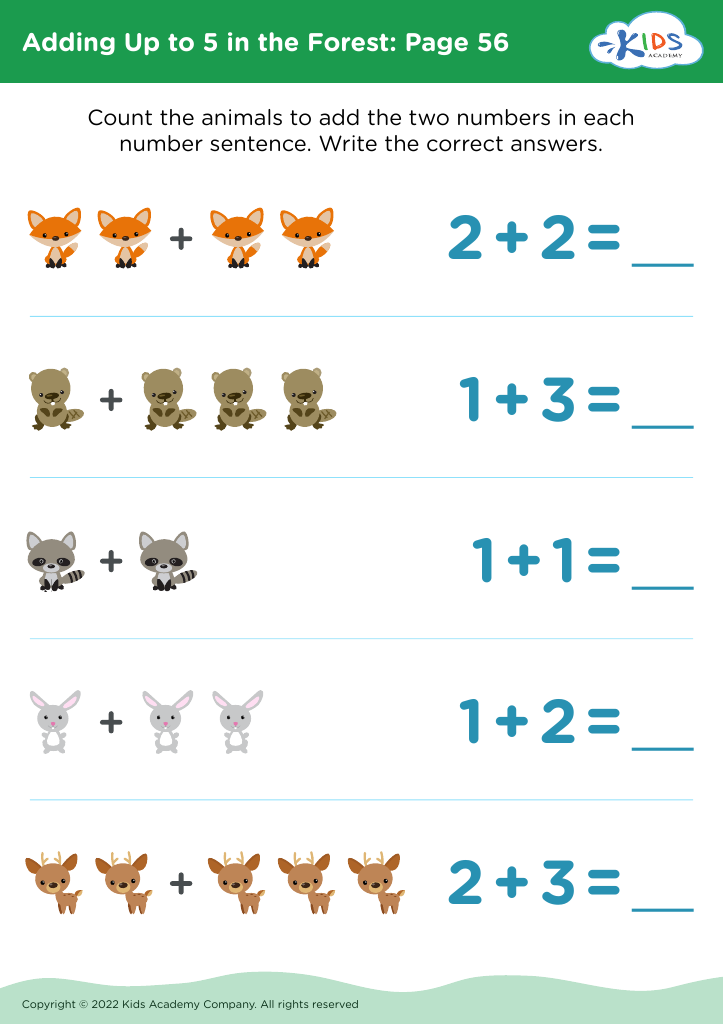
Adding Up to 5 in the Forest: Page 56
Worksheet
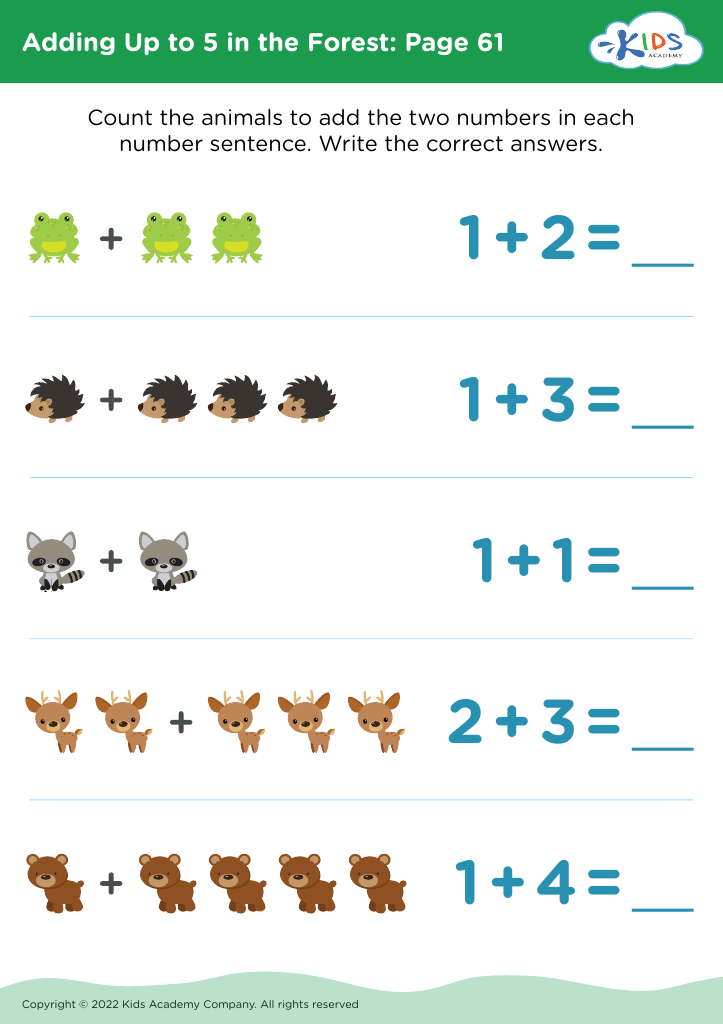
Adding Up to 5 in the Forest: Page 61
Worksheet
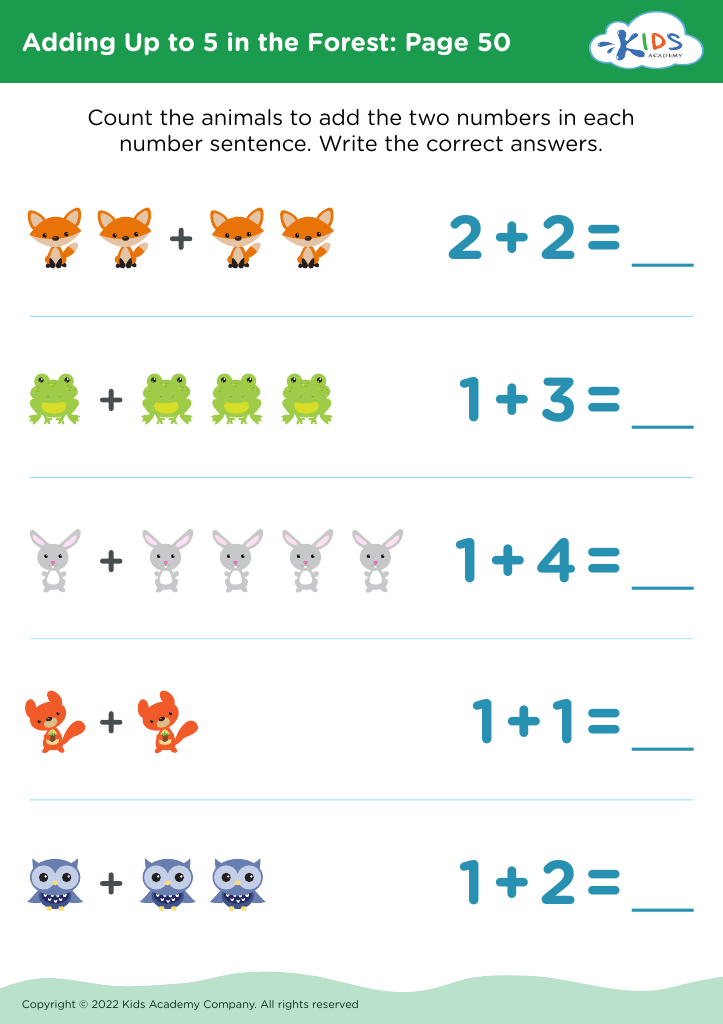
Adding Up to 5 in the Forest: Page 50
Worksheet
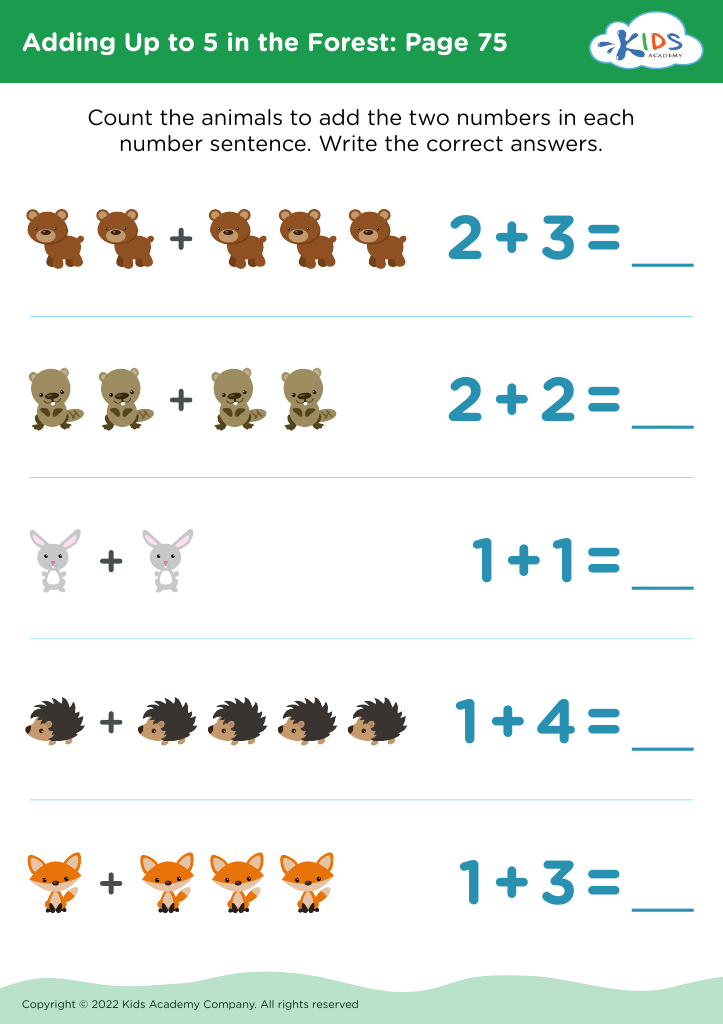
Adding Up to 5 in the Forest: Page 75
Worksheet
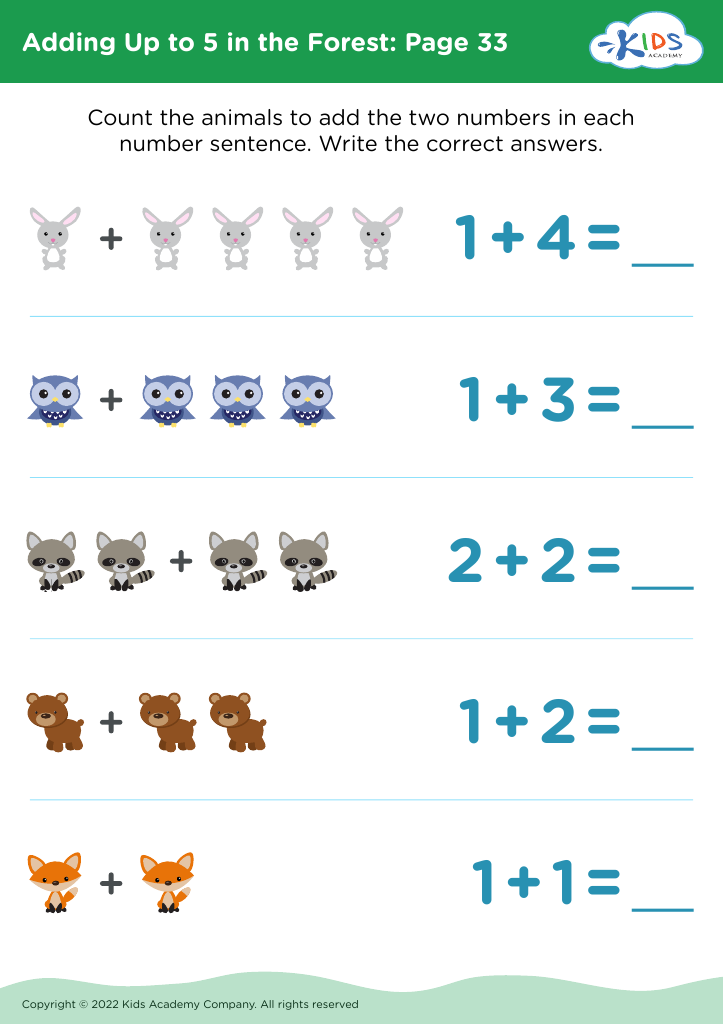
Adding Up to 5 in the Forest: Page 33
Worksheet
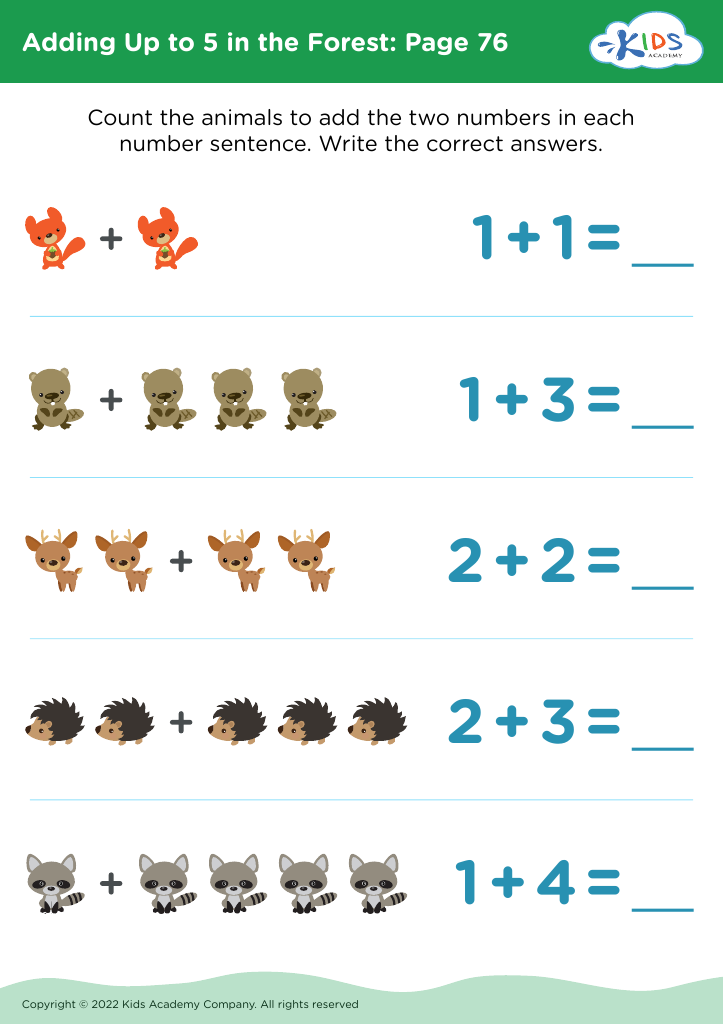
Adding Up to 5 in the Forest: Page 76
Worksheet
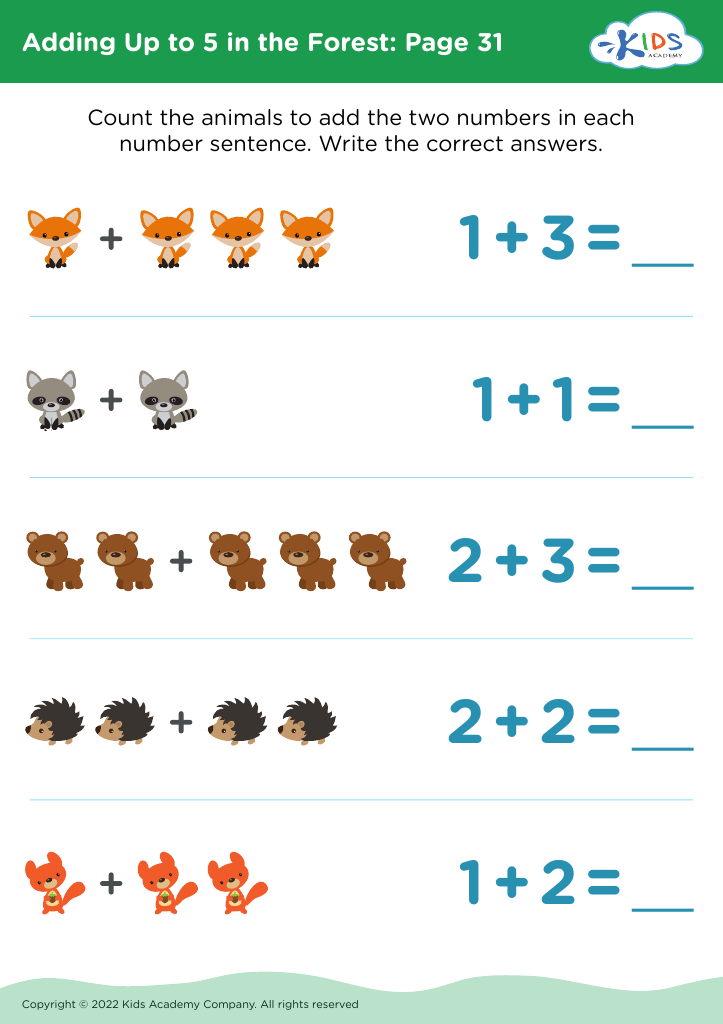
Adding Up to 5 in the Forest: Page 31
Worksheet
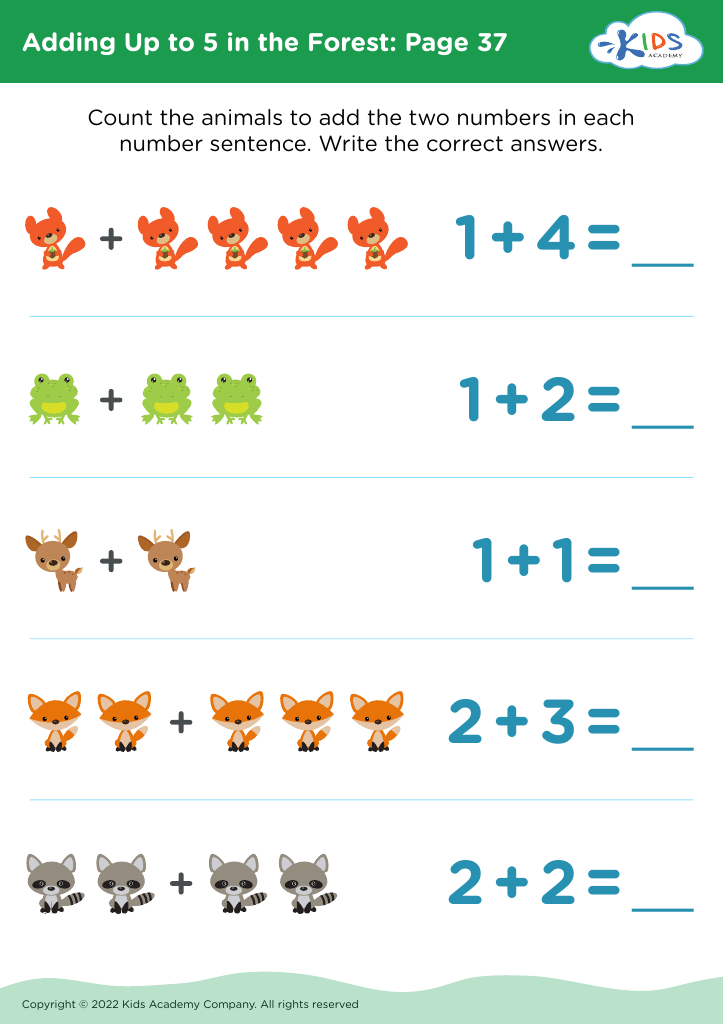
Adding Up to 5 in the Forest: Page 37
Worksheet
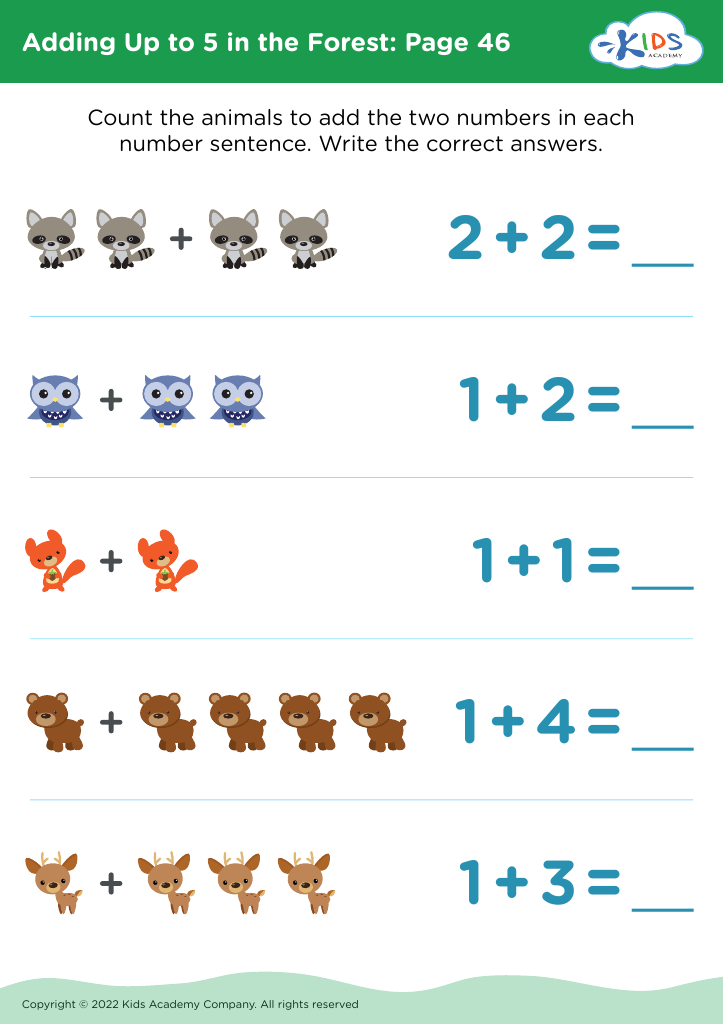
Adding Up to 5 in the Forest: Page 46
Worksheet
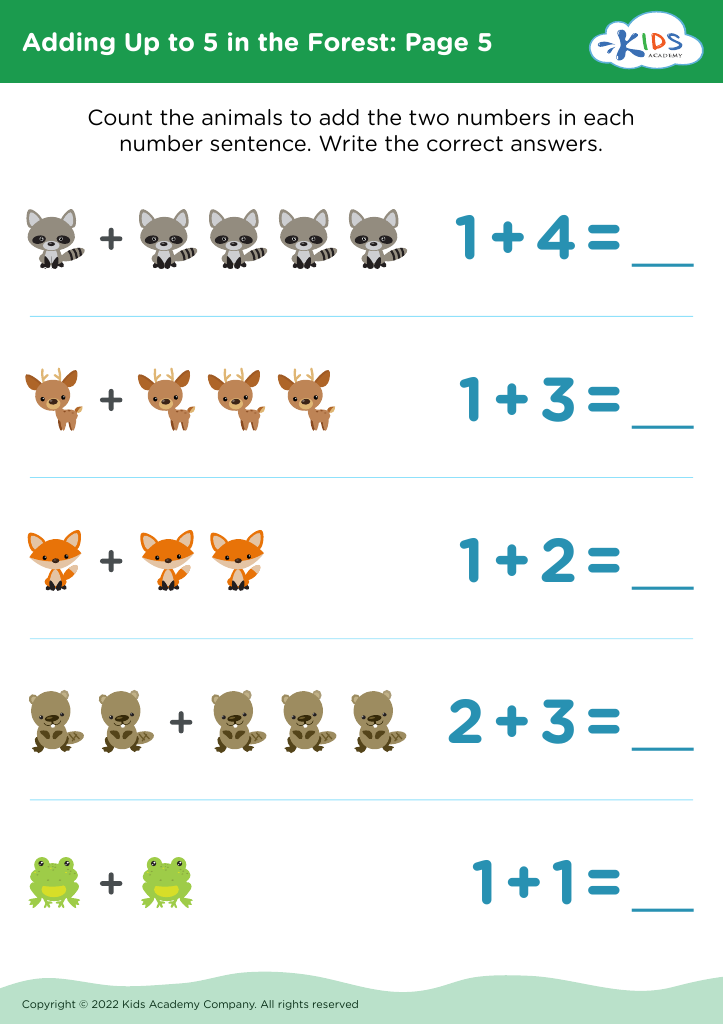
Adding Up to 5 in the Forest: Page 5
Worksheet
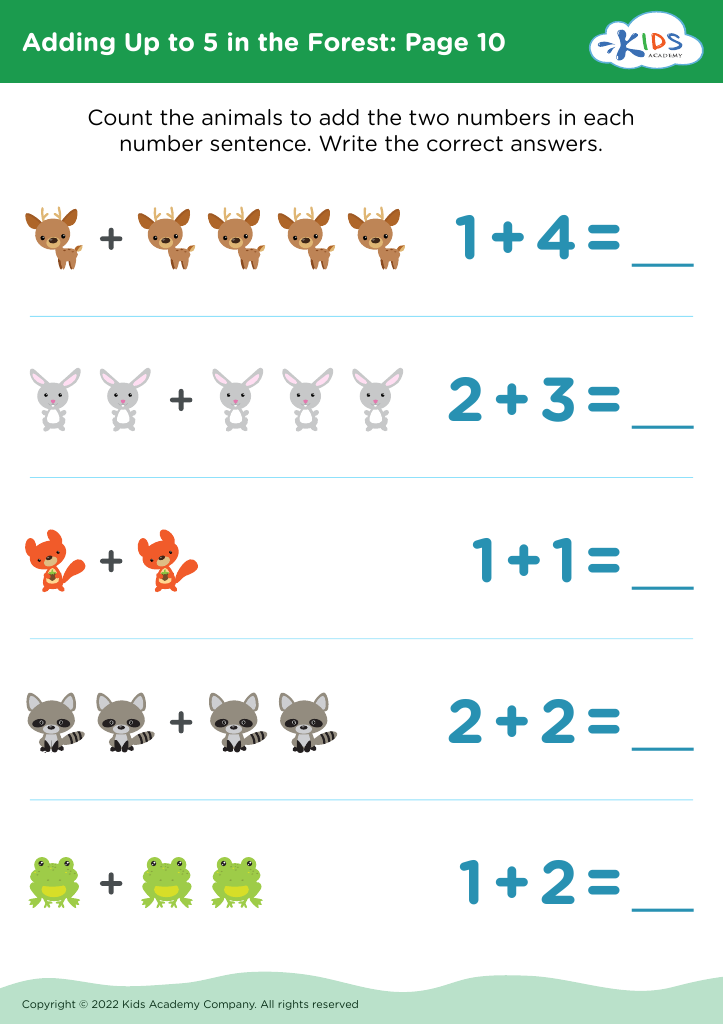
Adding Up to 5 in the Forest: Page 10
Worksheet
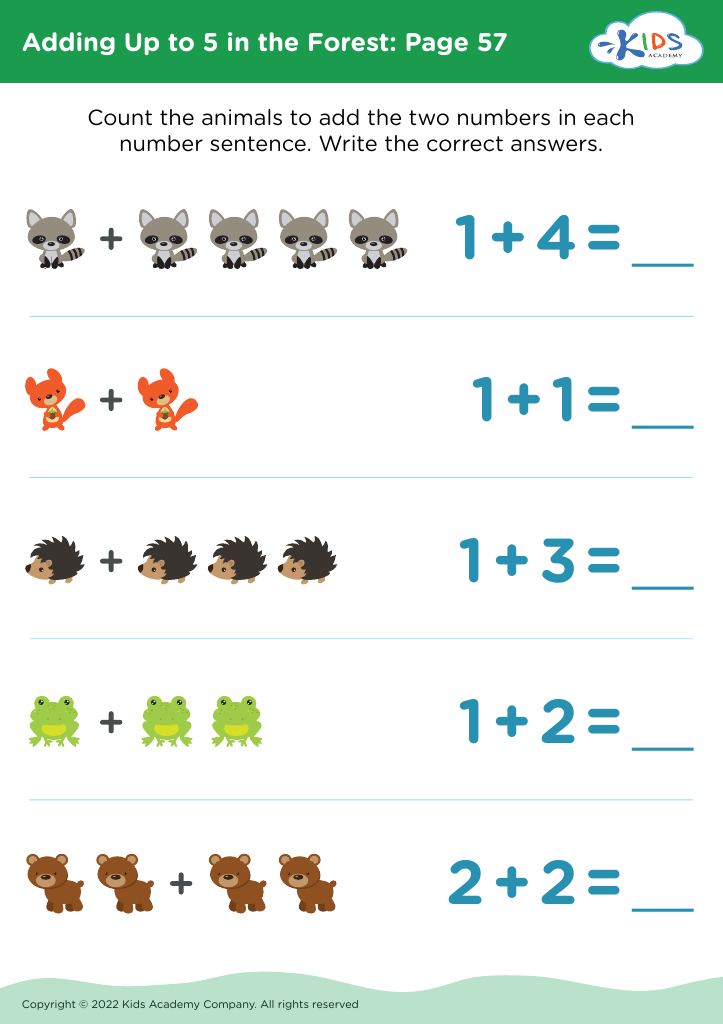
Adding Up to 5 in the Forest: Page 57
Worksheet


Counting skills are a fundamental aspect of early childhood education, forming the building blocks for more complex mathematical concepts. For children aged 5-6, resources like "Counting Skills Adding in the Forest" offer a valuable, engaging way to develop these essential skills. Parents and teachers should care about this educational tool because it blends learning with the natural allure and wonder of the forest, making the learning experience both enjoyable and educational.

Firstly, developing counting and basic addition skills at an early age sets the groundwork for future math success. These skills are crucial for understanding number sense, patterns, and basic arithmetic operations, all of which are foundational knowledge areas in elementary school curriculums.

Secondly, "Counting Skills Adding in the Forest" introduces mathematical concepts in a fun and interactive manner. When learning is enjoyable, children are more likely to engage with and retain new information. The forest theme also stimulates children’s imagination, promoting a love for learning and curiosity about the world around them.

Lastly, involving parents or teachers in such activities facilitates bonding and provides a platform for guided learning. Adults can scaffold the learning process, offering support and encouragement which boosts children's confidence and reinforces their educational development. In essence, counting and adding in captivating, natural settings prepare children for academic success while fostering a deep-set love for learning.