Fine Motor Skills Adding in the Forest Worksheets for Ages 5-6
5 filtered results
-
From - To
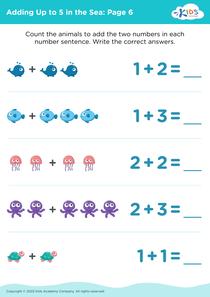
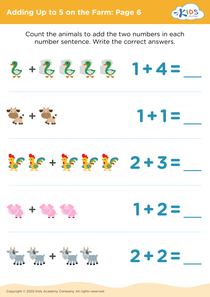
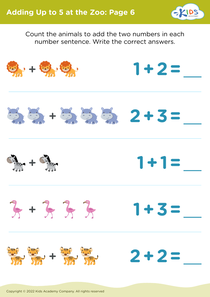
Explore our "Fine Motor Skills Adding in the Forest Worksheets for Ages 5-6" designed to blend math learning with fine motor skill development. These captivating worksheets feature fun forest-themed activities that help children practice addition while enhancing hand-eye coordination and pencil control. Perfect for young learners, each sheet provides engaging tasks that keep kids motivated and excited about learning. Visit Kids Academy for these and other expertly crafted educational resources to support your child's academic growth and fine motor skills development, ensuring a strong foundation for future learning success.
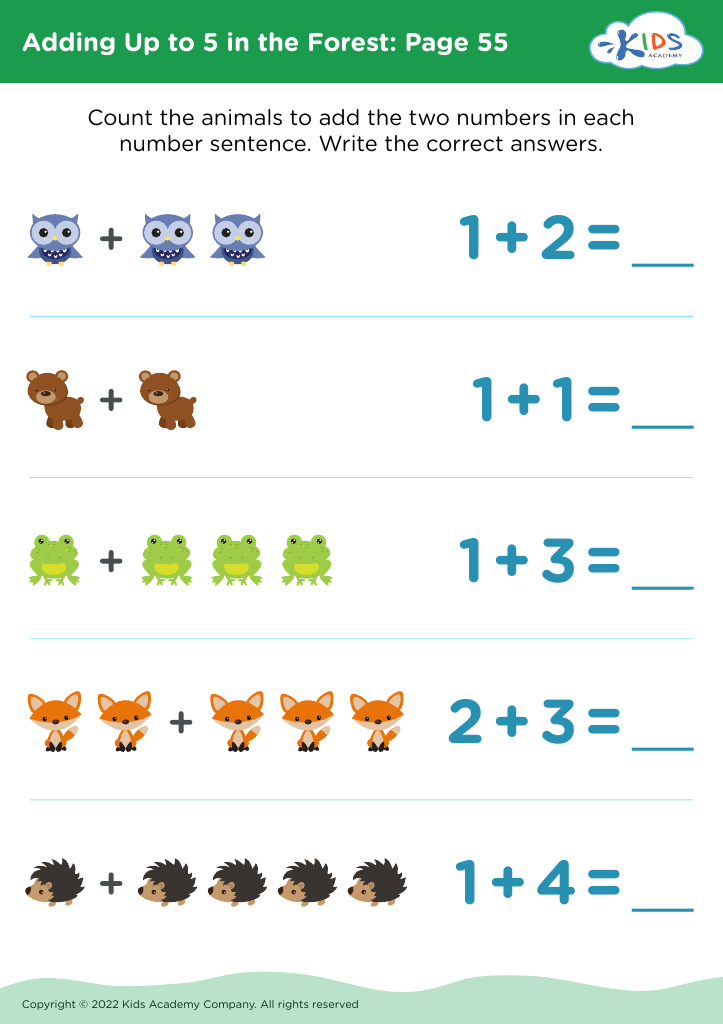
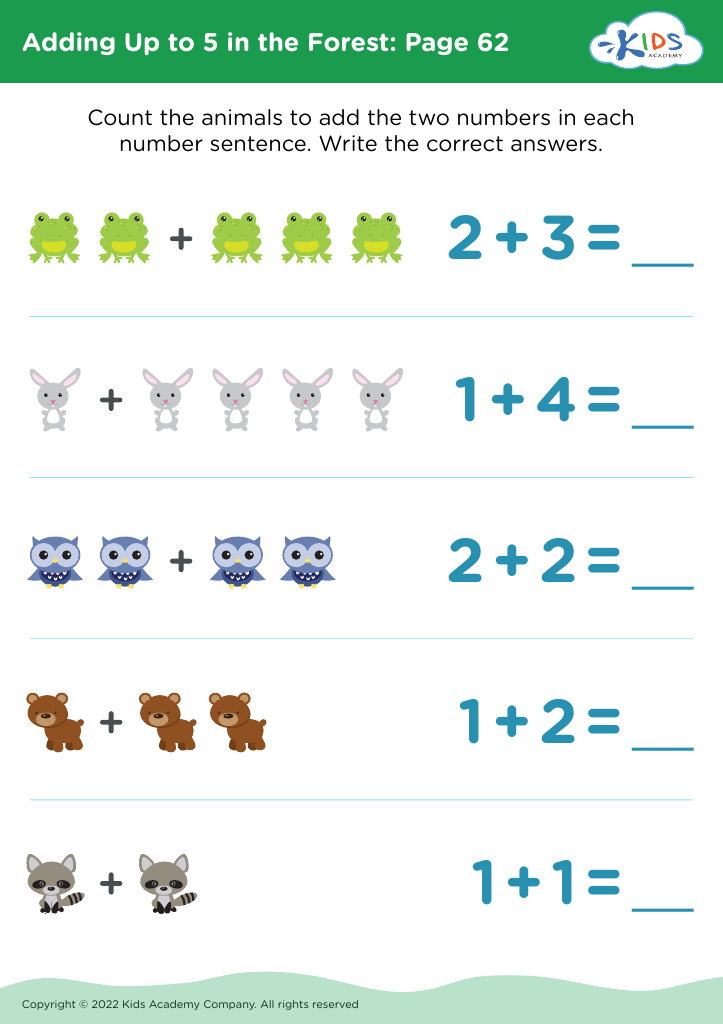
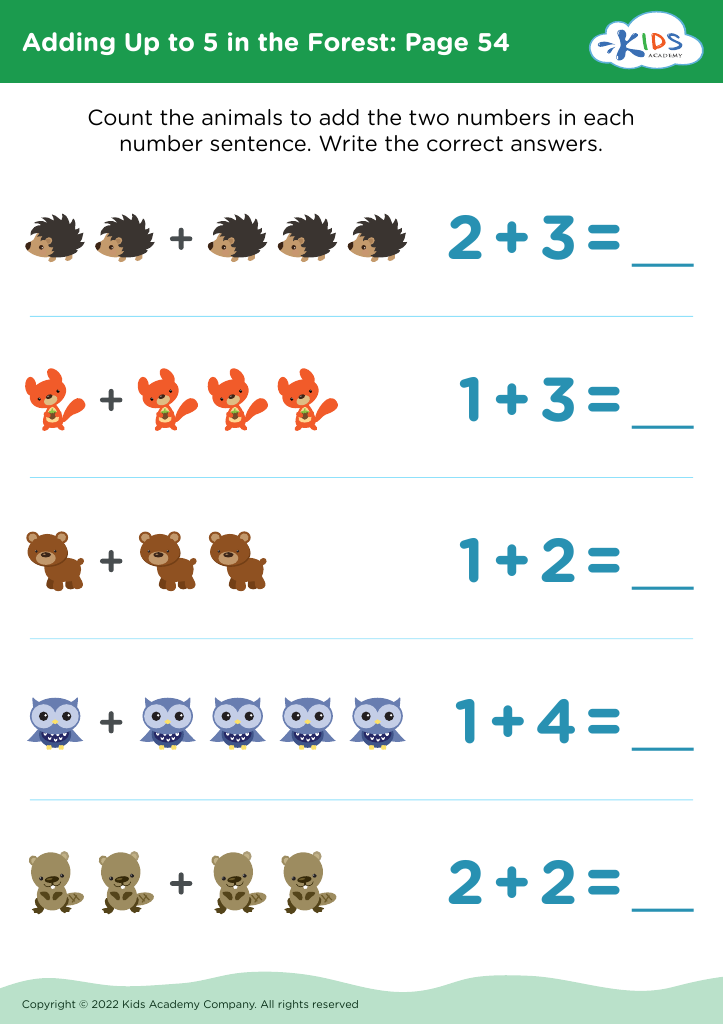
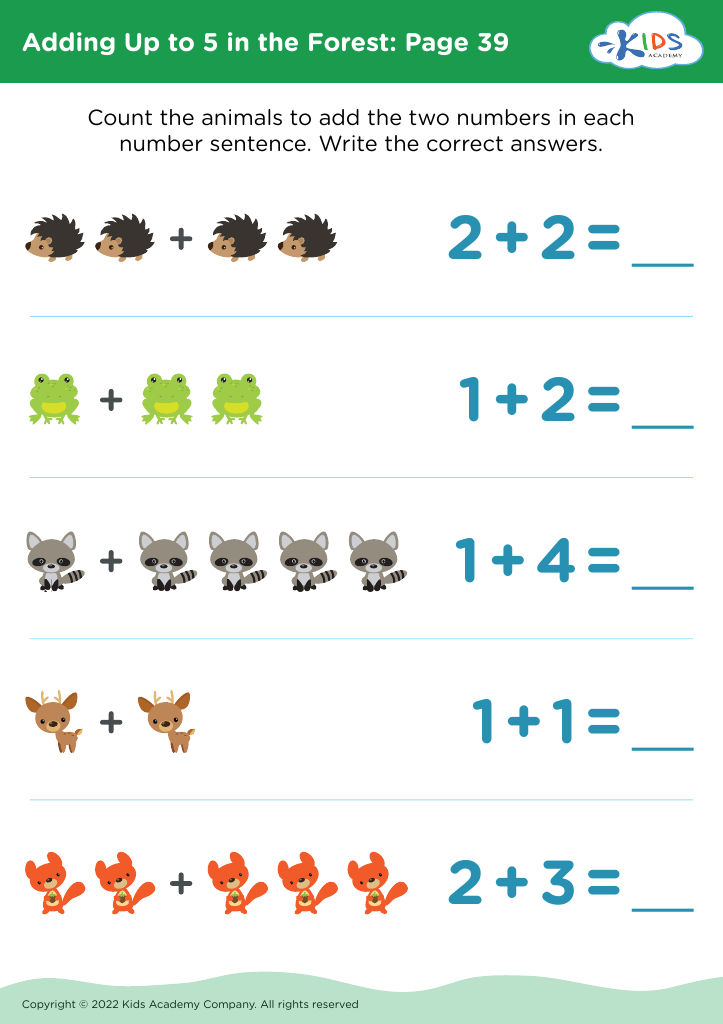
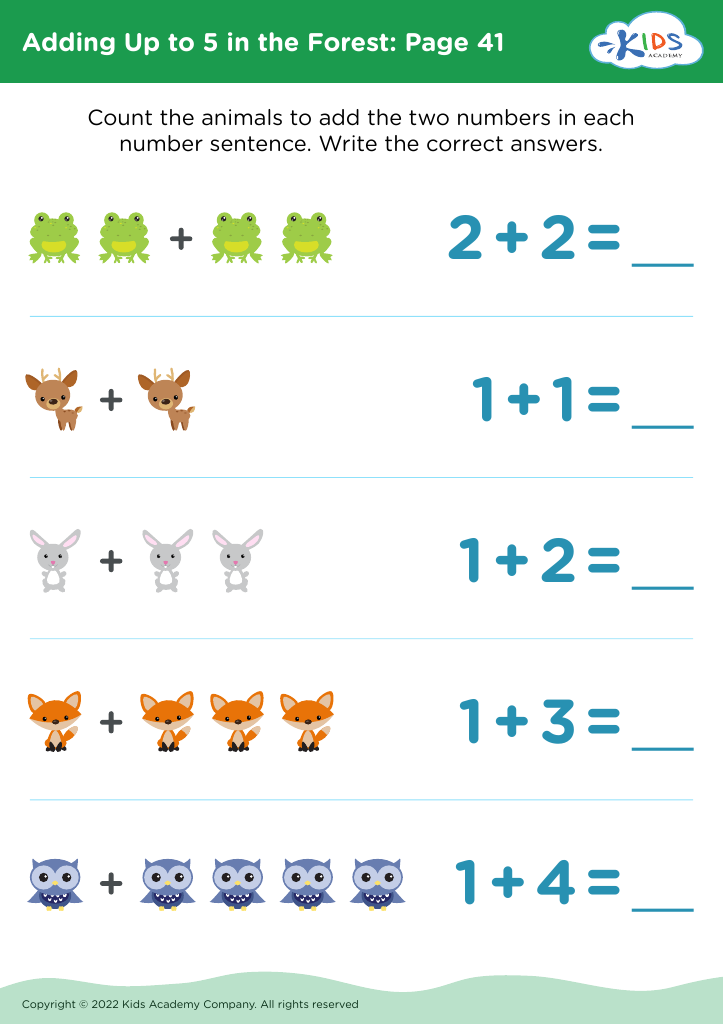



Fine motor skills play a crucial role in the overall development of children, especially those aged 5-6, as they form the foundation for more complex tasks like writing, cutting, and self-care activities. "Fine Motor Skills Adding in the Forest" is an inventive and engaging way to enhance these skills through activities set in a natural and stimulating environment.
Firstly, such activities foster hand-eye coordination and dexterity. The natural setting challenges children to manipulate various objects found in the forest, like leaves, sticks, and stones, thereby honing their pincer grip and control. This organic approach makes the learning process enjoyable and impactful.
Secondly, the immersive environment of a forest stimulates sensory experiences that a traditional classroom setting may lack. Sensory-rich activities support cognitive development, improve concentration, and fuel creativity. By planting seeds, assembling natural puzzles, or tracing the patterns of leaves, children practice precision and patience in a holistic manner.
Finally, integrating motor skill exercises within a forest context imparts a love for nature and physical activity. This promotes a balanced lifestyle where learning and play go hand in hand. For parents and teachers, it’s a dual advantage: nurturing crucial fine motor skills while fostering an early appreciation for the environment, making the process both effective and delightful.