Improves concentration Adding in the Forest Worksheets for Ages 5-6
4 filtered results
-
From - To
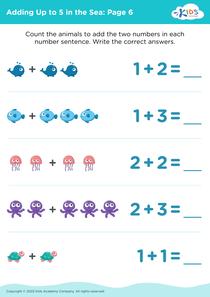
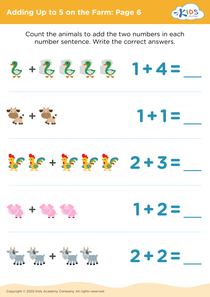
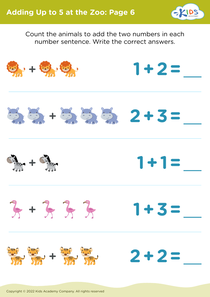
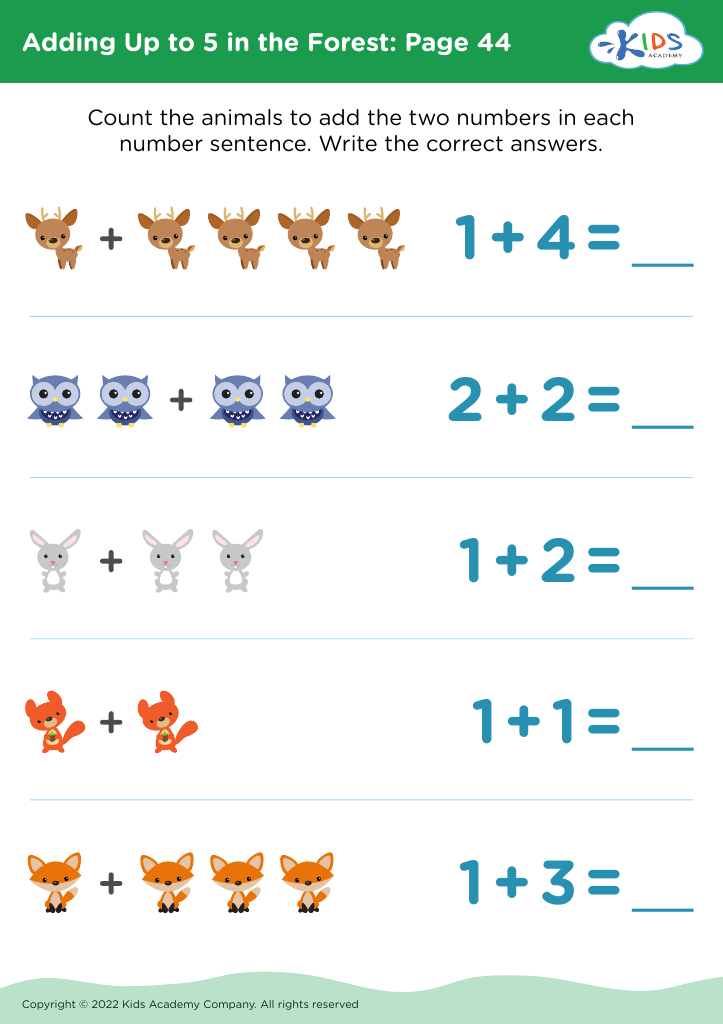
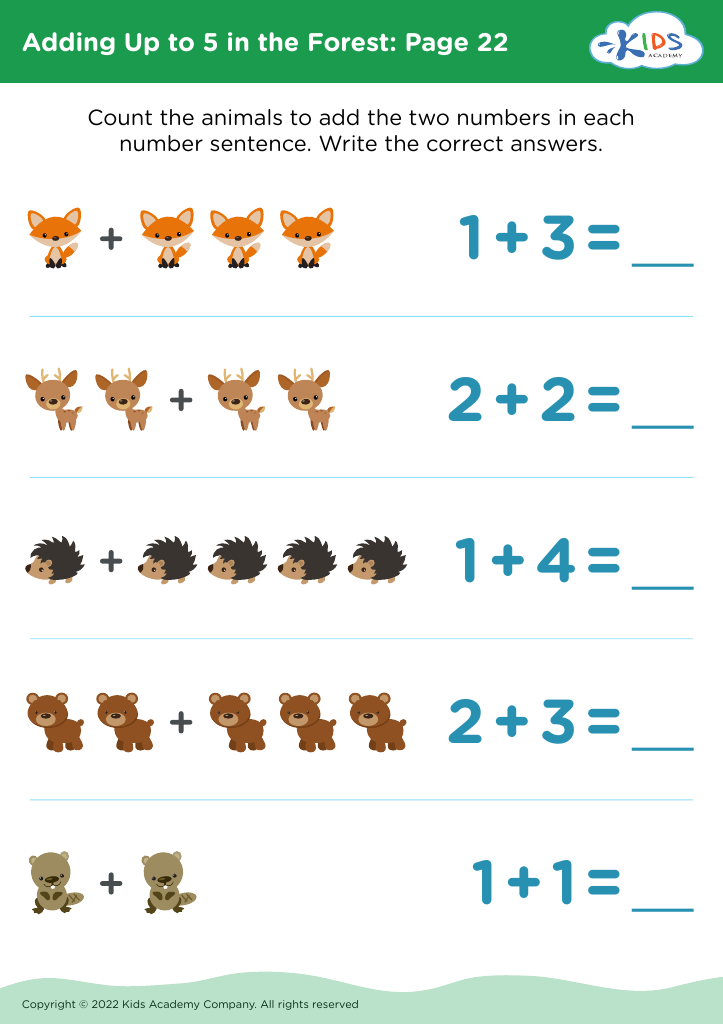
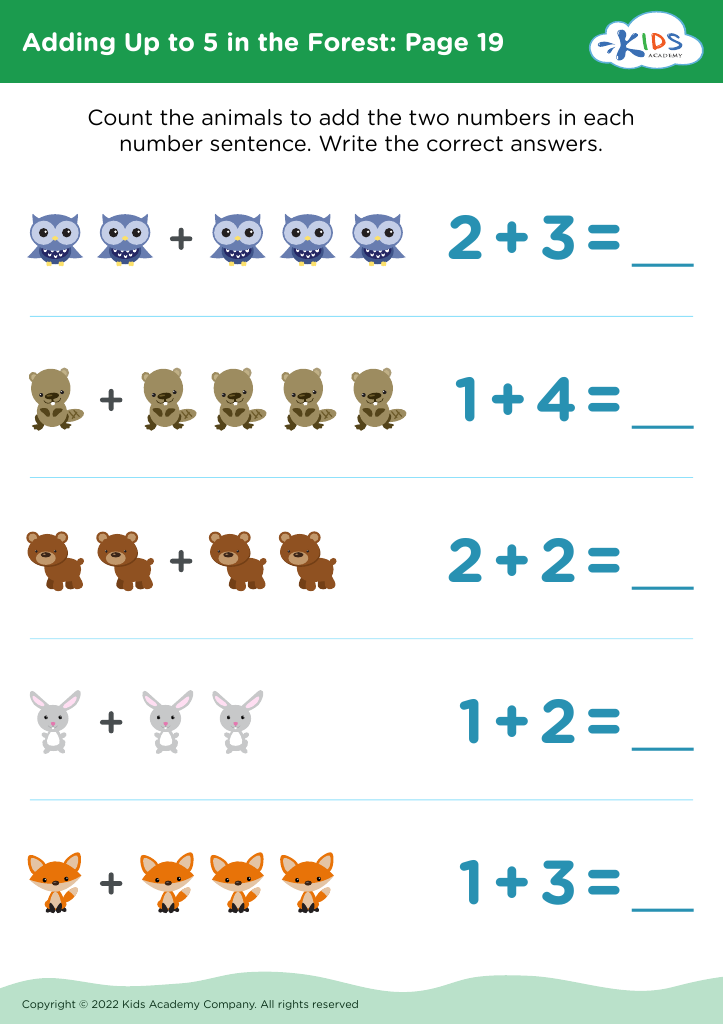
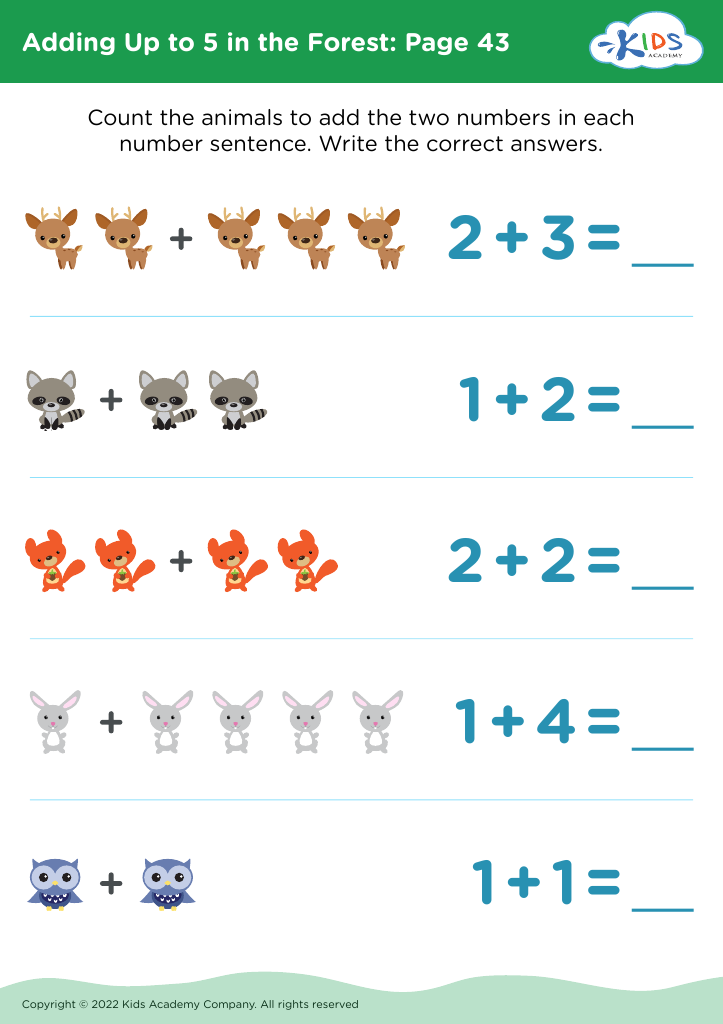
Boost your child's concentration with our engaging "Adding in the Forest" worksheets, tailored for ages 5-6. These carefully designed resources combine the beauty of nature with essential math skills, making addition fun and effective. As kids count and add forest-themed elements, their focus and attention to detail improve significantly. Each worksheet is colorful and interactive, captivating young minds and fostering a love for learning. Ideal for both classroom use and at-home practice, "Adding in the Forest" provides an excellent way to enhance concentration and build foundational math skills in your child. Discover the perfect balance of education and enjoyment!



The introduction of a forest component into the educational routine of 5-6-year-olds can significantly enhance their concentration levels. During early childhood, children are in a critical development phase where sensory experiences lay foundational cognitive and behavioral skills. Spending time in a forest environment immerses children in a setting rich with natural stimuli, engaging multiple senses in a way traditional classroom settings cannot. This diversified input helps sharpen focus as children learn to filter and prioritize sensory information.
Moreover, the calmness inherent in nature provides an antithesis to the often overstimulating artificial environments. This serene atmosphere reduces stress and anxiety, common detractors of concentration, allowing children to approach learning tasks with a more relaxed and focused mindset.
Frequent interactions with nature also foster a sense of curiosity and enthusiasm for learning. Young children are naturally curious, and the forest's ever-changing environment can captivate their attention, encouraging sustained observational focus. By drawing connections between what they see in nature and classroom lessons, children can develop stronger engagement and retention skills.
Lastly, physical activities in a forest—such as climbing, walking, and exploring—enhance physical well-being, directly impacting cognitive functions. Healthy bodies support healthy minds, laying a foundation for improved concentration and overall academic success. Therefore, parents and teachers should actively incorporate forest experiences to nurture well-rounded and focused learners.