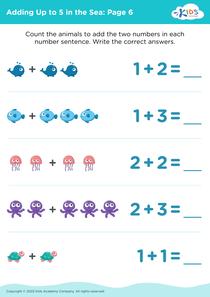
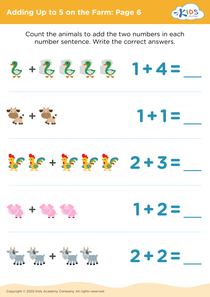
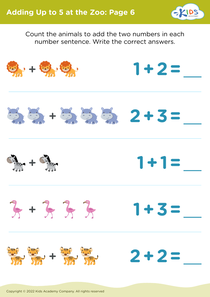
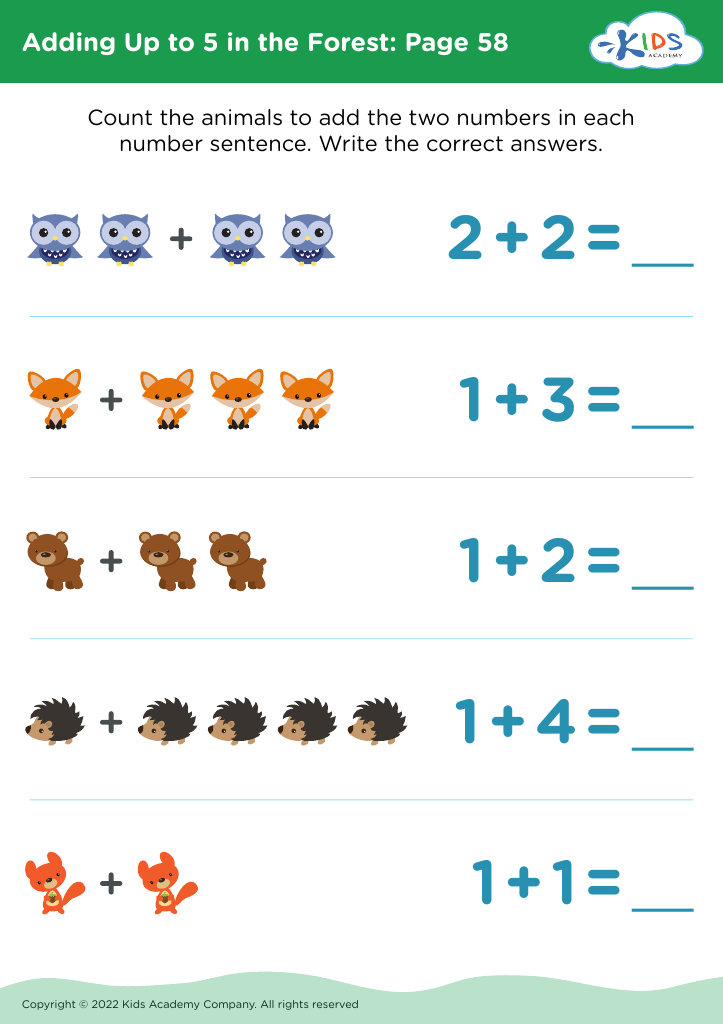
Nature appreciation Adding in the Forest Worksheets for Ages 5-6
5 filtered results
-
From - To
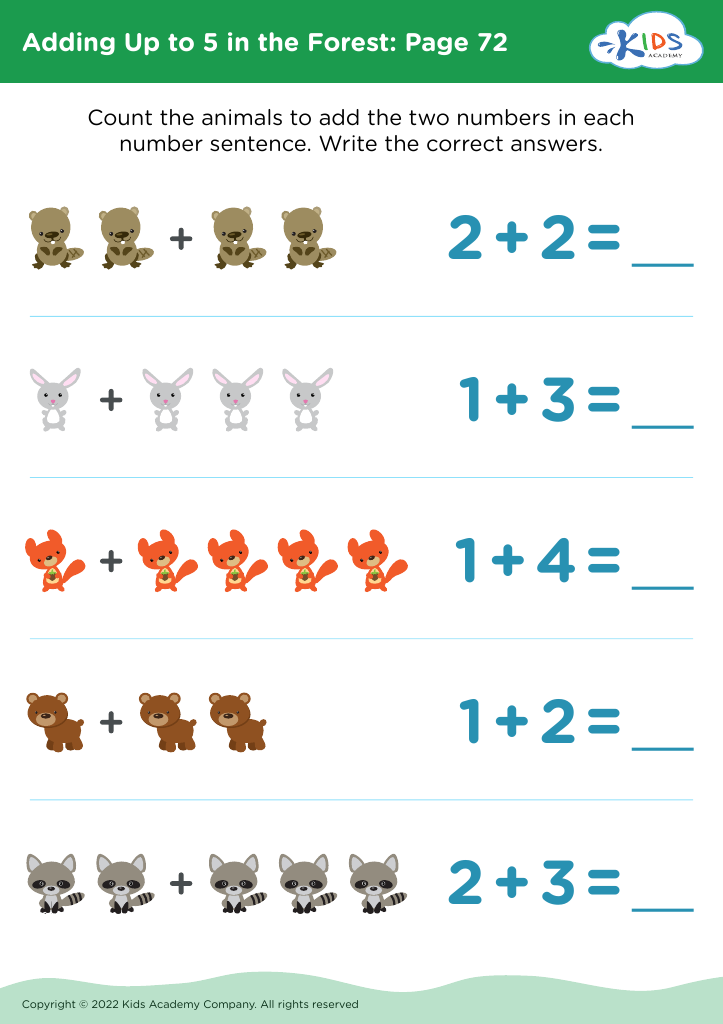
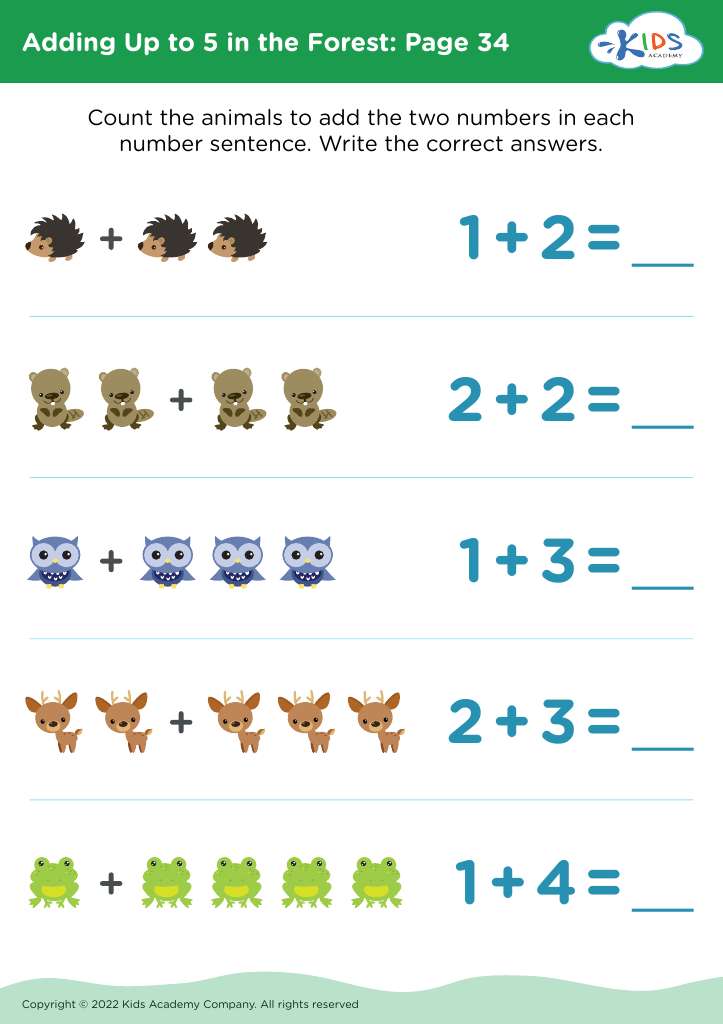
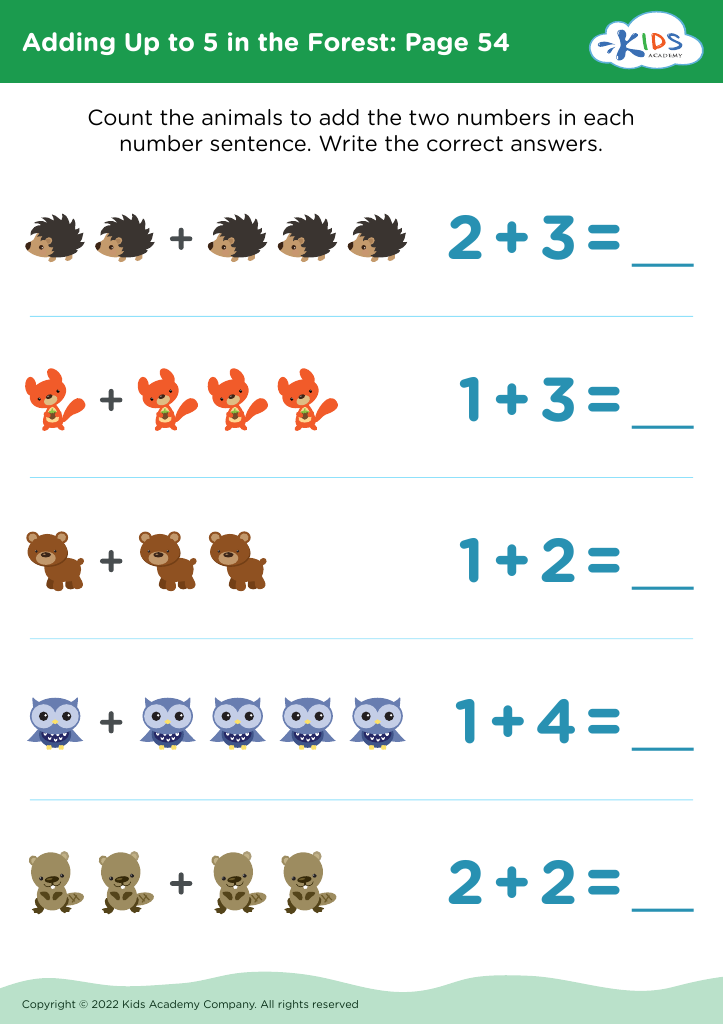
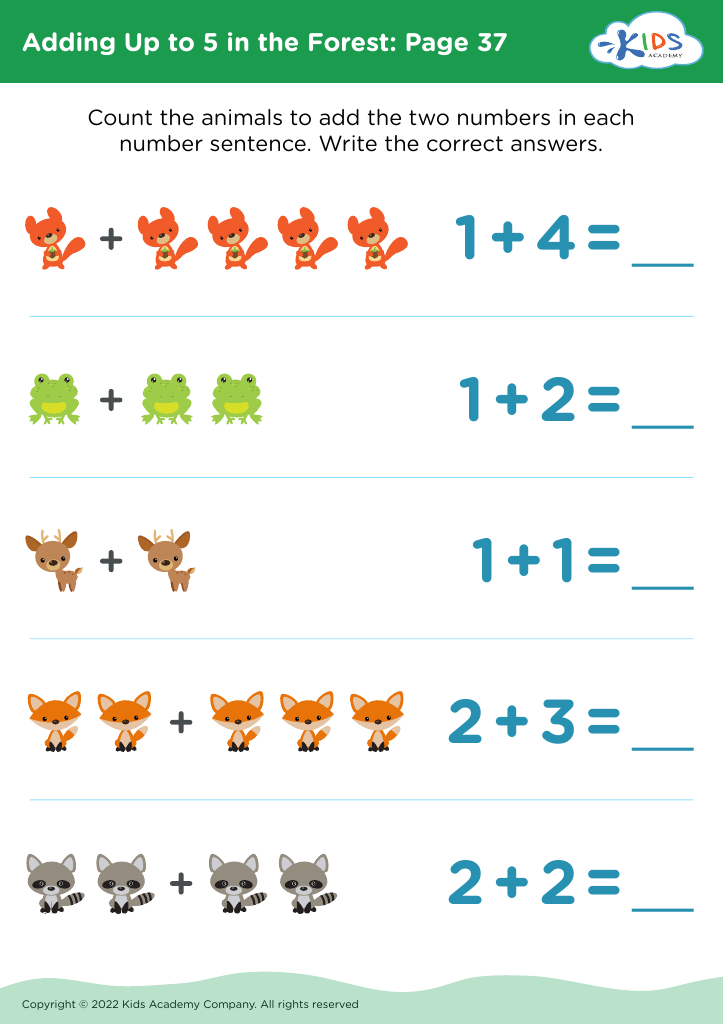
Discover the joy of nature appreciation with our "Adding in the Forest" worksheets designed for children aged 5-6. This engaging resource combines educational math skills with the wonders of nature, helping young learners explore basic addition while fostering a love for the outdoors. Each worksheet features delightful forest-themed illustrations, encouraging kids to connect with their environment as they practice counting and adding. Perfect for use in the classroom or at home, these worksheets not only promote mathematical understanding but also inspire curiosity about wildlife and nature. Bring the beauty of the forest into your learning experience today!



Nature appreciation plays a vital role in the development of young children, especially for ages 5-6, as it fosters curiosity, creativity, and a sense of wonder. Engaging with nature, particularly in a forest setting, offers children unique opportunities to explore, learn, and connect with the environment. Parents and teachers should care about this because such experiences provide many educational benefits.
By introducing young learners to forests, they can observe the changing seasons, observe wildlife, and understand ecosystems, which enriches their understanding of biology and environmental science. Moreover, the freedom to play and explore in nature strengthens motor skills and enhances physical health.
Nature also sparks imaginative play, allowing children to engage in storytelling and problem-solving in an unstructured environment. Furthermore, spending time outdoors is linked to emotional well-being, helping to reduce stress and anxiety while fostering resilience.
Lastly, when children develop a respect and appreciation for nature early on, they are more likely to become environmentally-conscious adults. Teachers and parents have the powerful opportunity to instill these values and create a foundation for lifelong learning and nurturing a profound connection to the natural world.