Filters

90 filtered results

Clear all filters
Favorites
With answer key
Interactive

90 filtered results

Difficulty Level

Grade


Check out this FREE Trial Lesson on Adding Up to 5 for age 5-6!

H

Favorites
With answer key
Interactive
  • 5-6
  • Animal recognition
  • Adding Up to 5
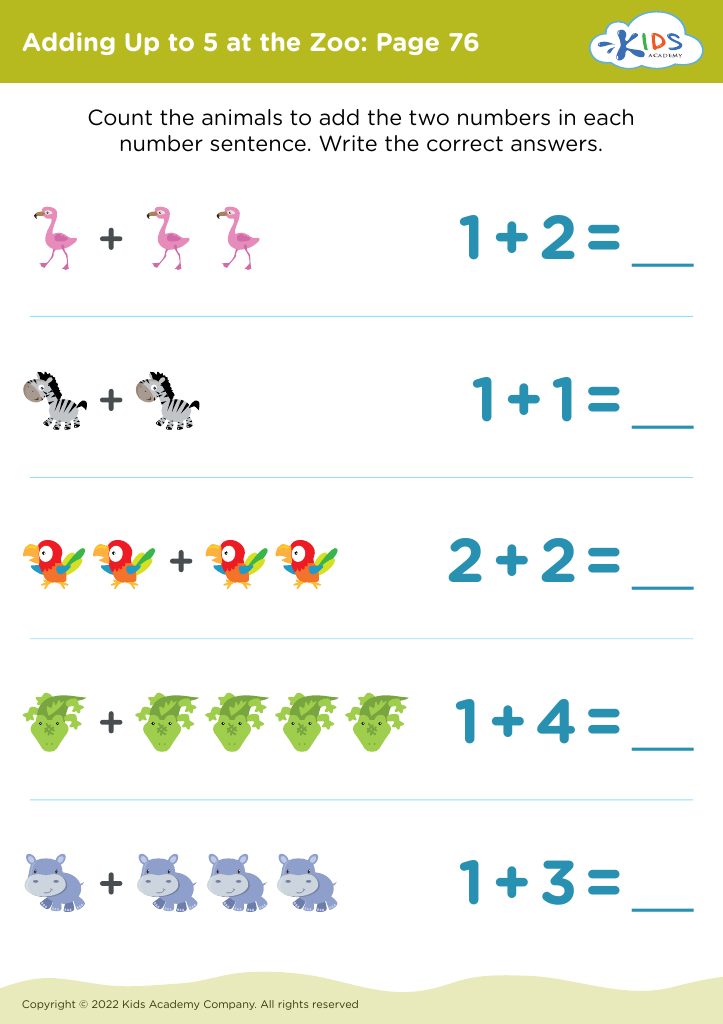
Adding Up to 5 at the Zoo: Page 76
Worksheet
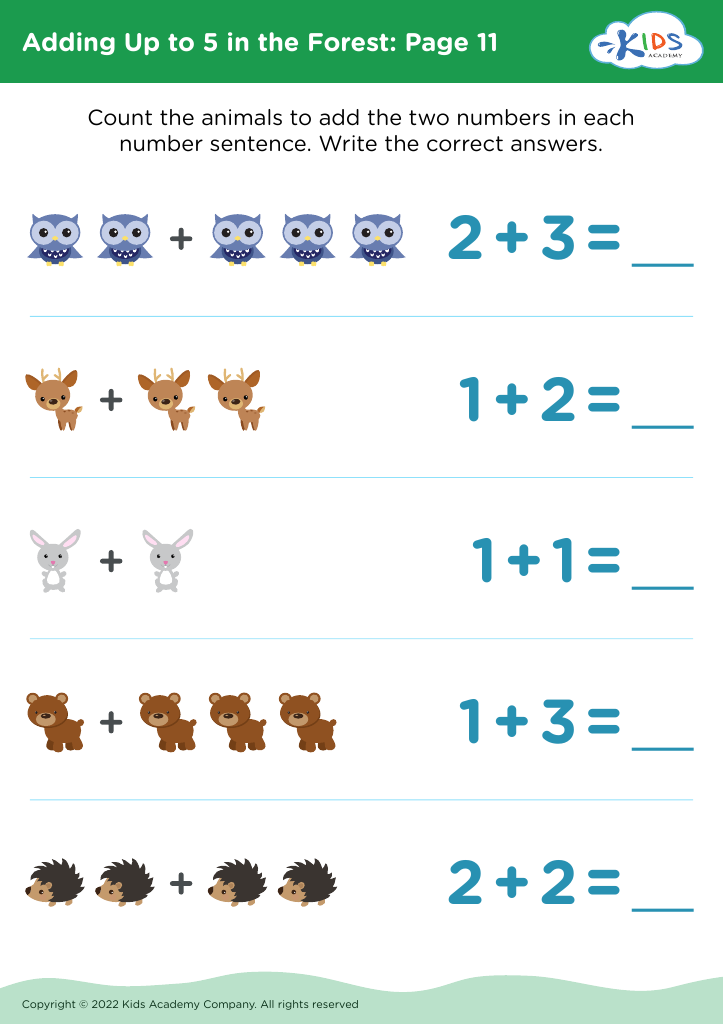
Adding Up to 5 in the Forest: Page 11
Worksheet
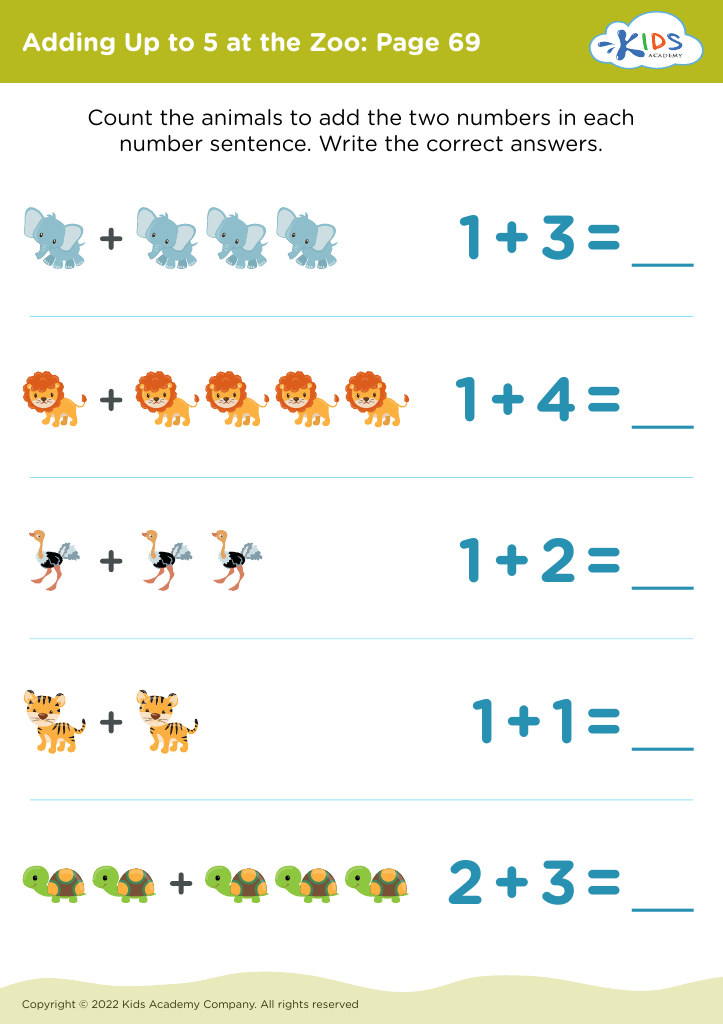
Adding Up to 5 at the Zoo: Page 69
Worksheet
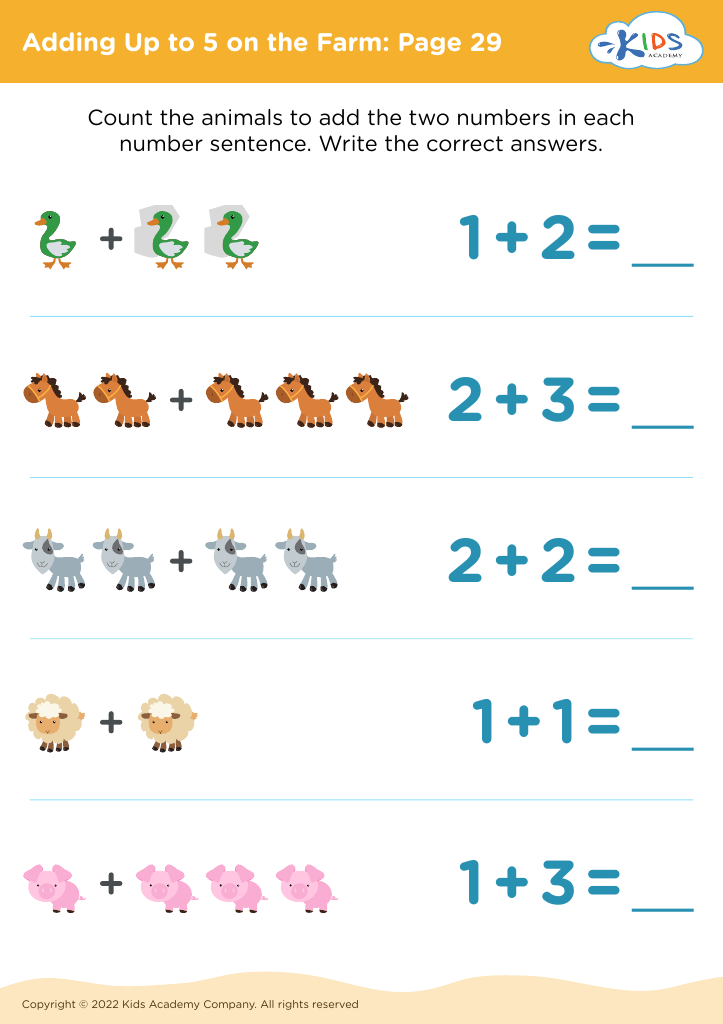
Adding Up to 5 on the Farm: Page 29
Worksheet
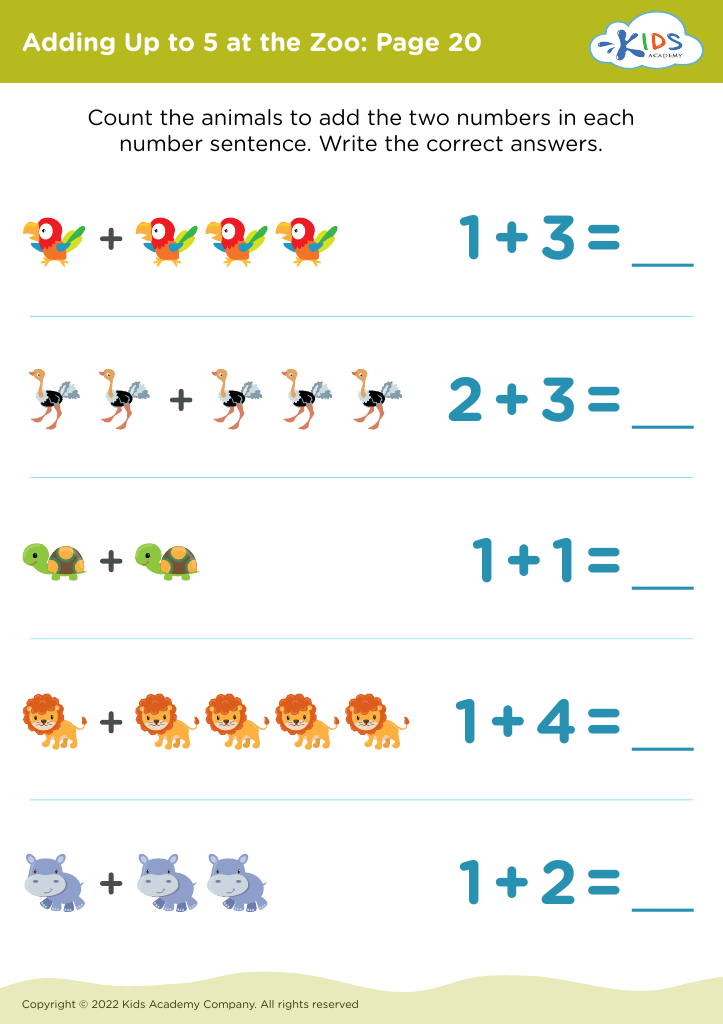
Adding Up to 5 at the Zoo: Page 20
Worksheet
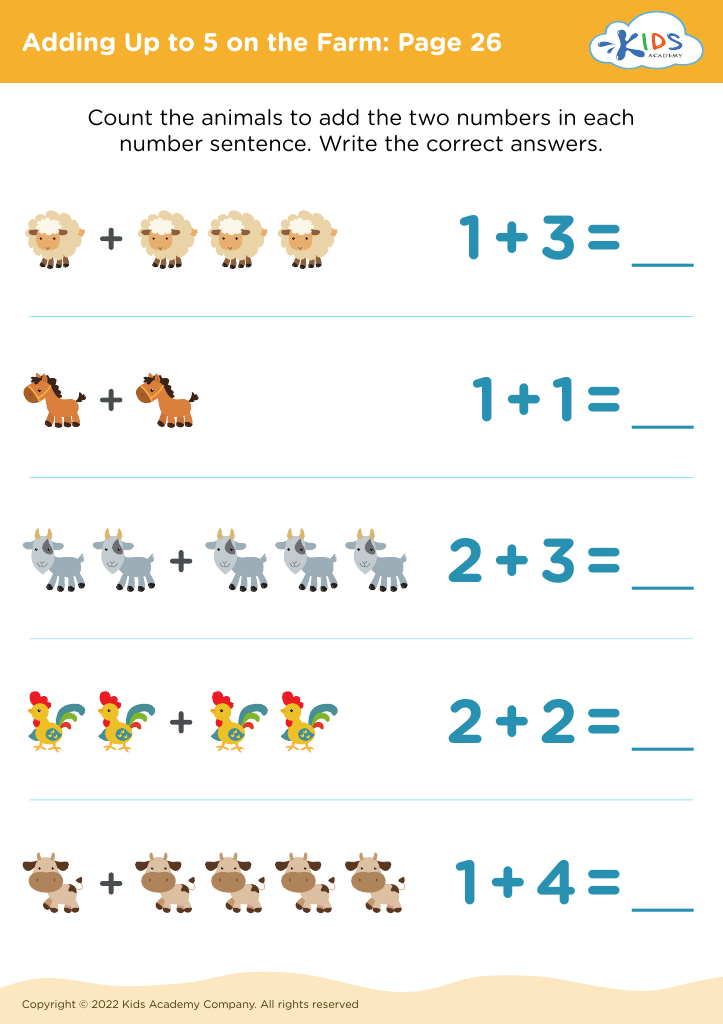
Adding Up to 5 on the Farm: Page 26
Worksheet
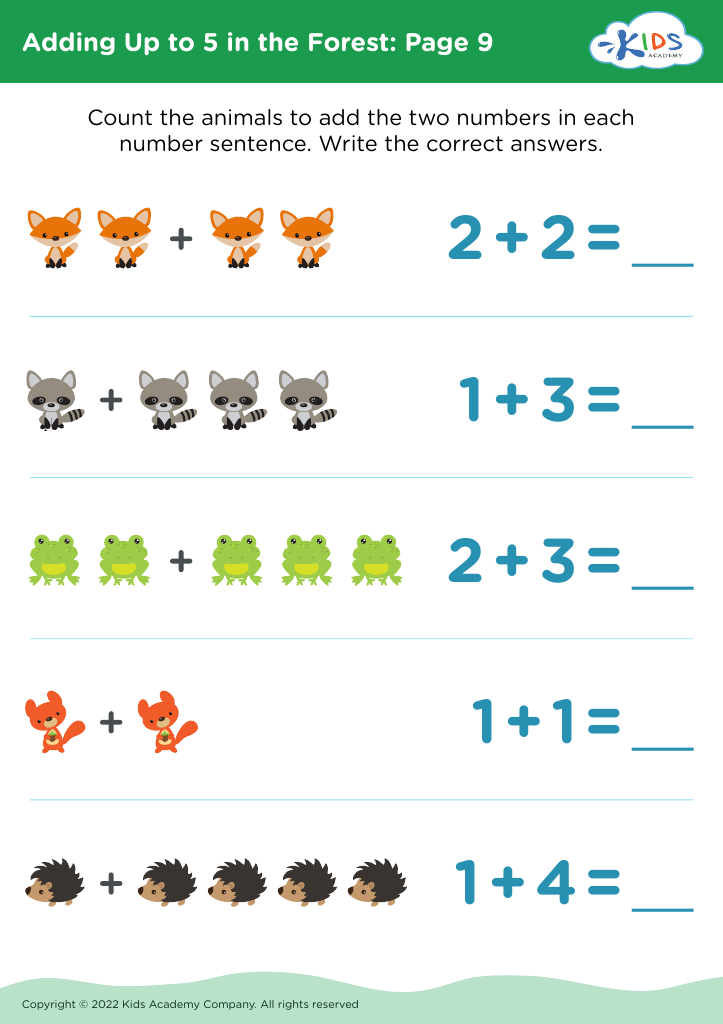
Adding Up to 5 in the Forest: Page 9
Worksheet
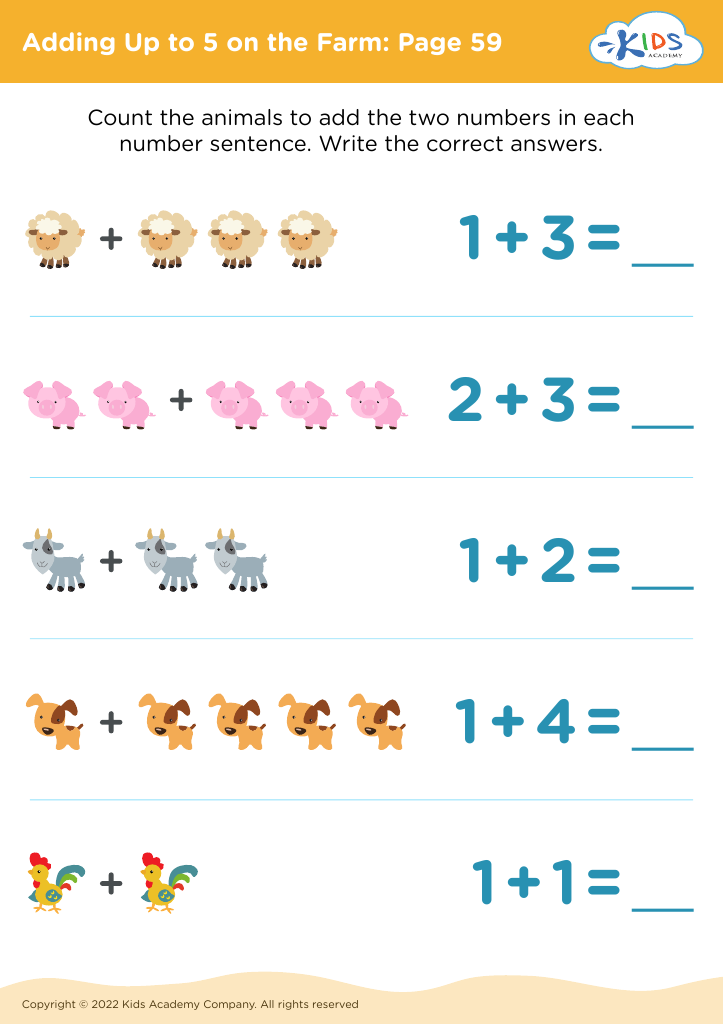
Adding Up to 5 on the Farm: Page 59
Worksheet
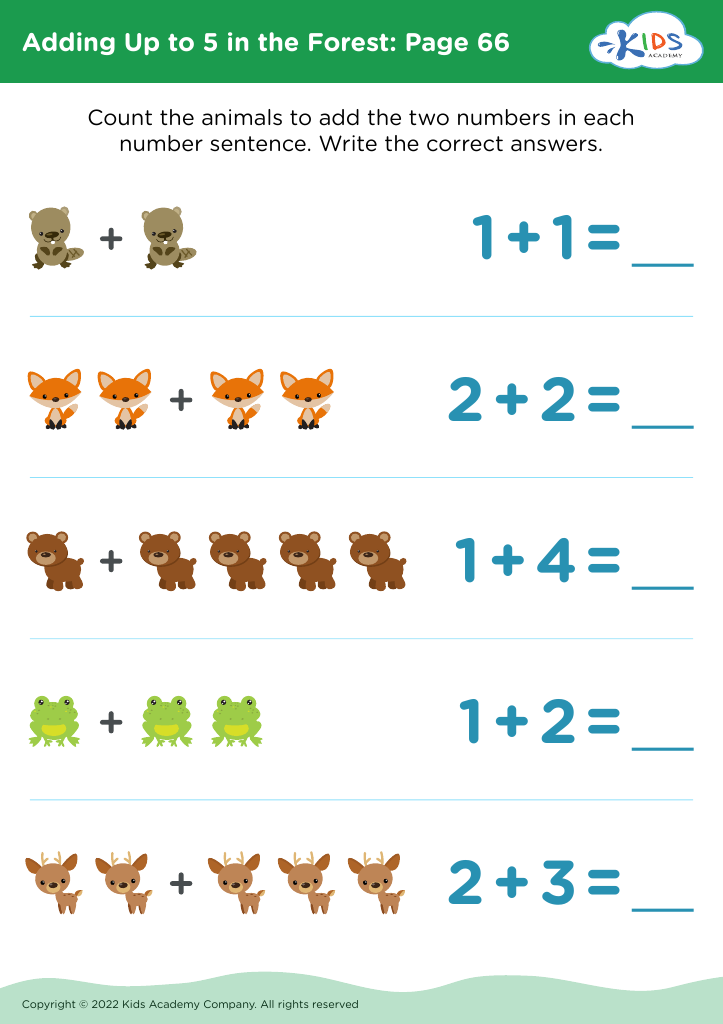
Adding Up to 5 in the Forest: Page 66
Worksheet
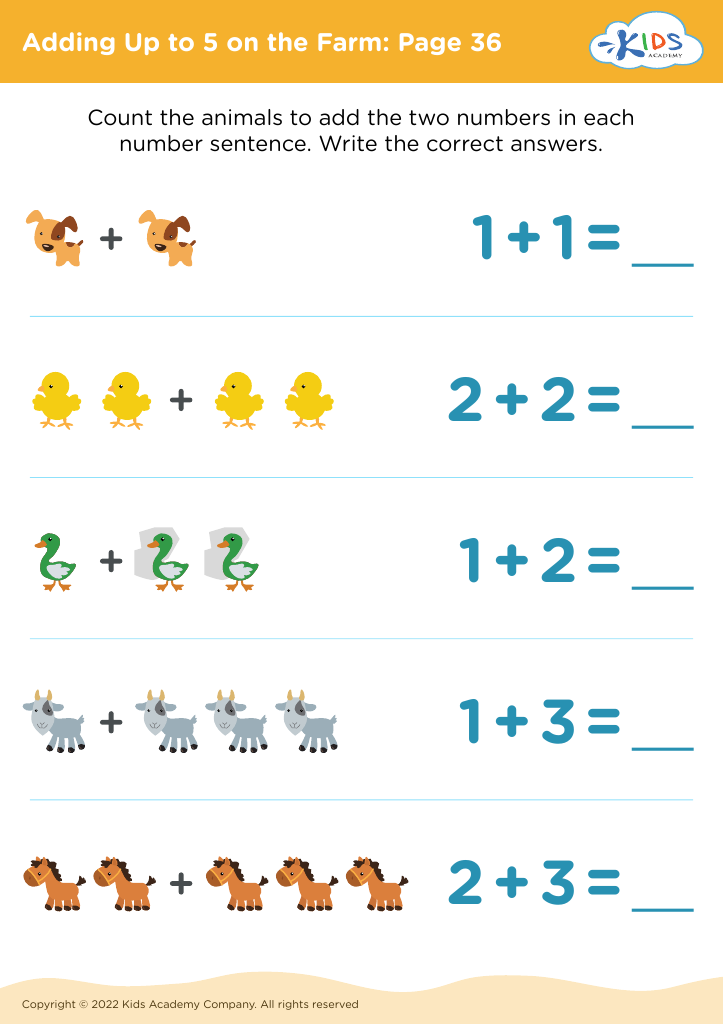
Adding Up to 5 on the Farm: Page 36
Worksheet
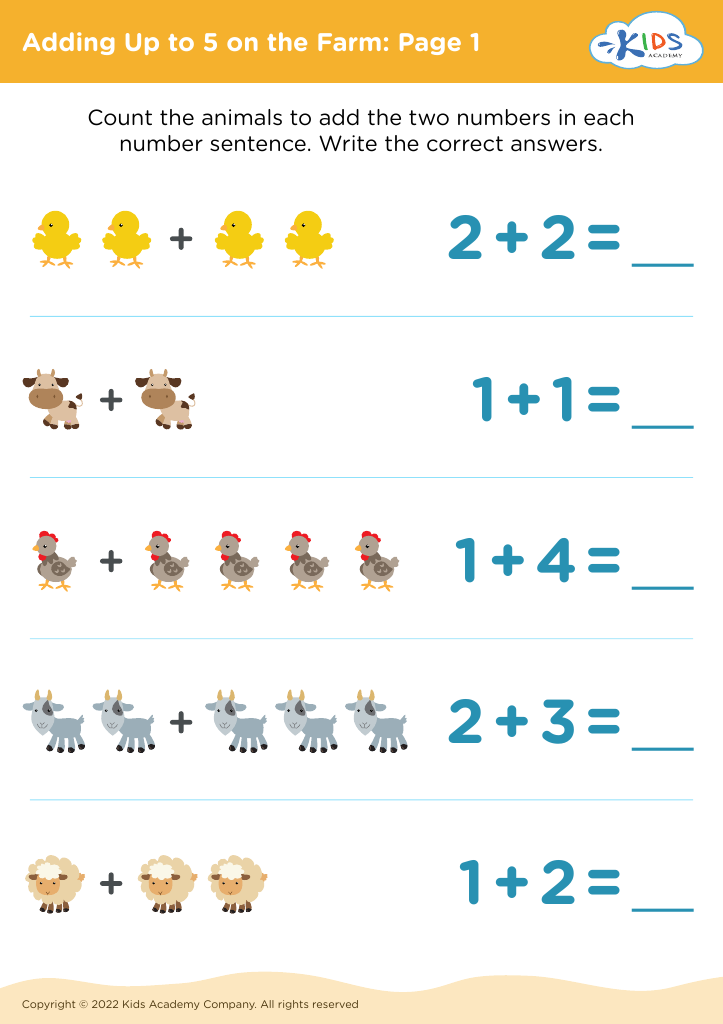
Adding Up to 5 on the Farm: Page 1
Worksheet
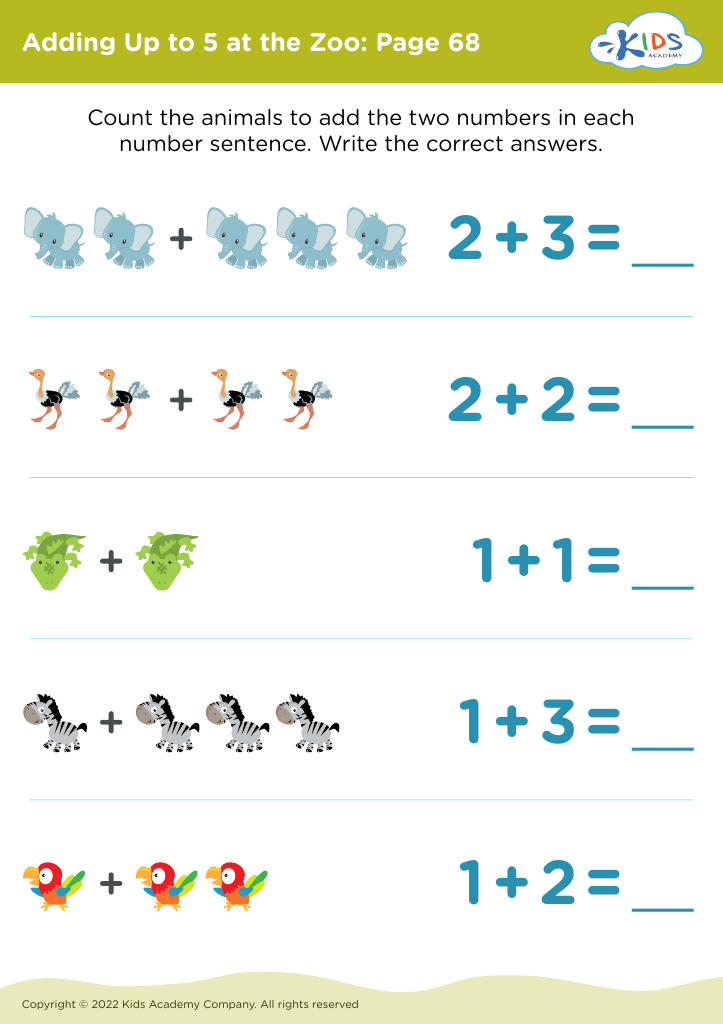
Adding Up to 5 at the Zoo: Page 68
Worksheet
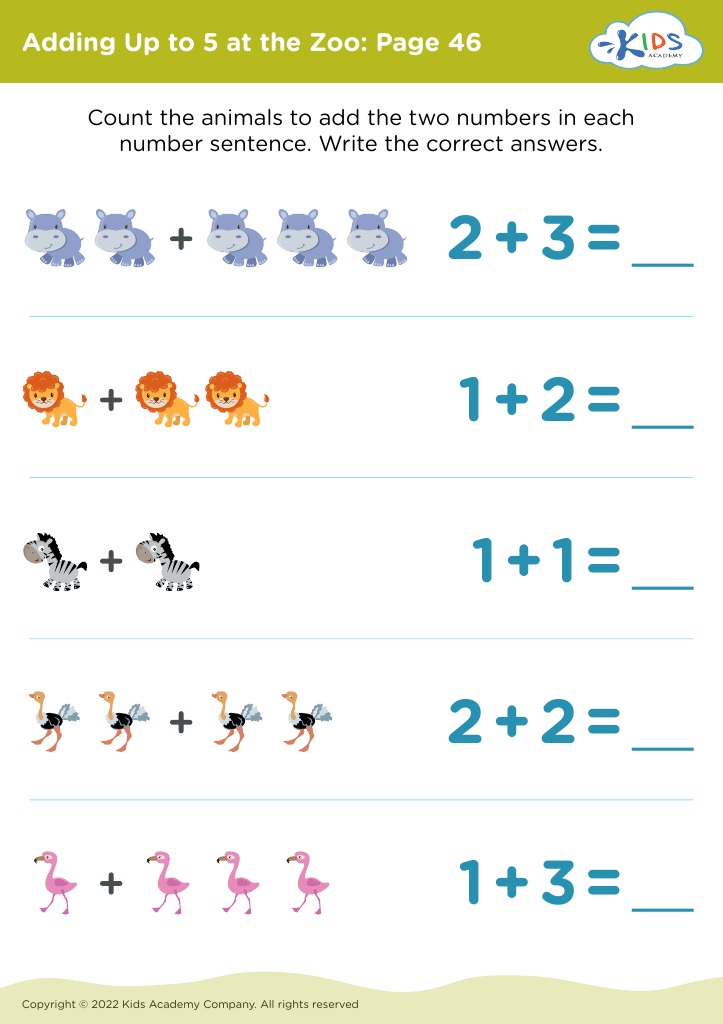
Adding Up to 5 at the Zoo: Page 46
Worksheet
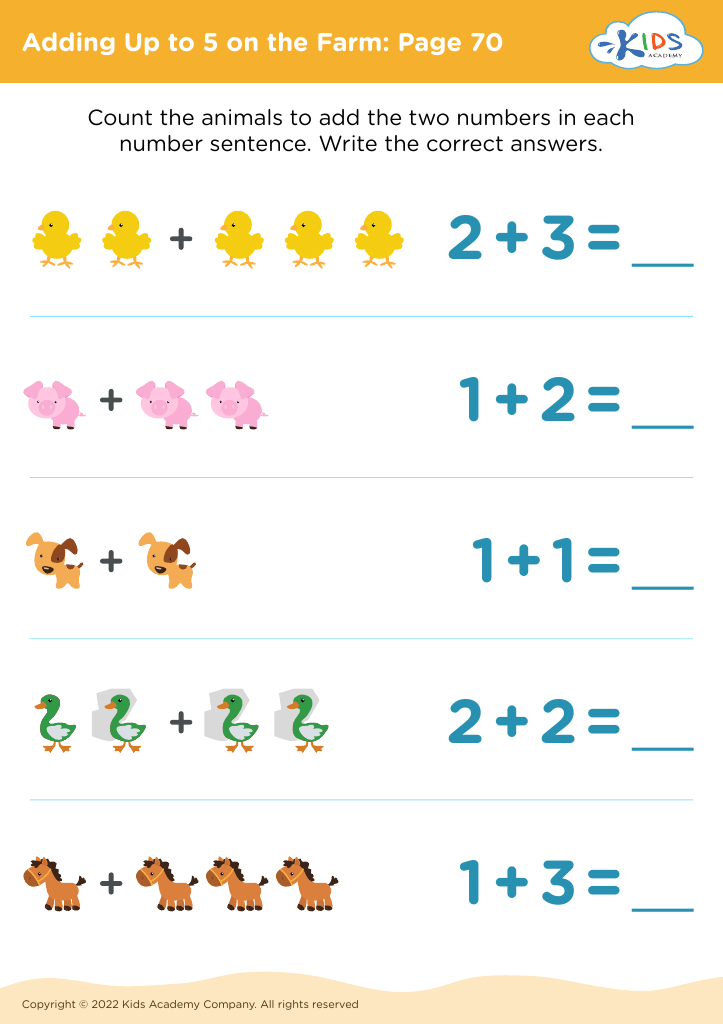
Adding Up to 5 on the Farm: Page 70
Worksheet
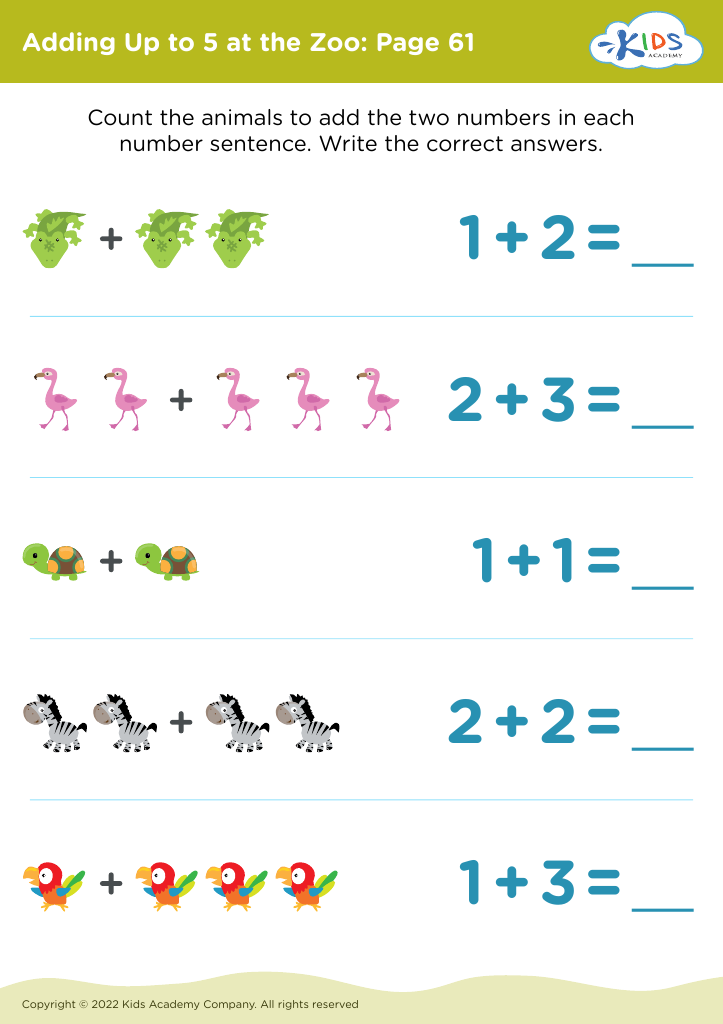
Adding Up to 5 at the Zoo: Page 61
Worksheet
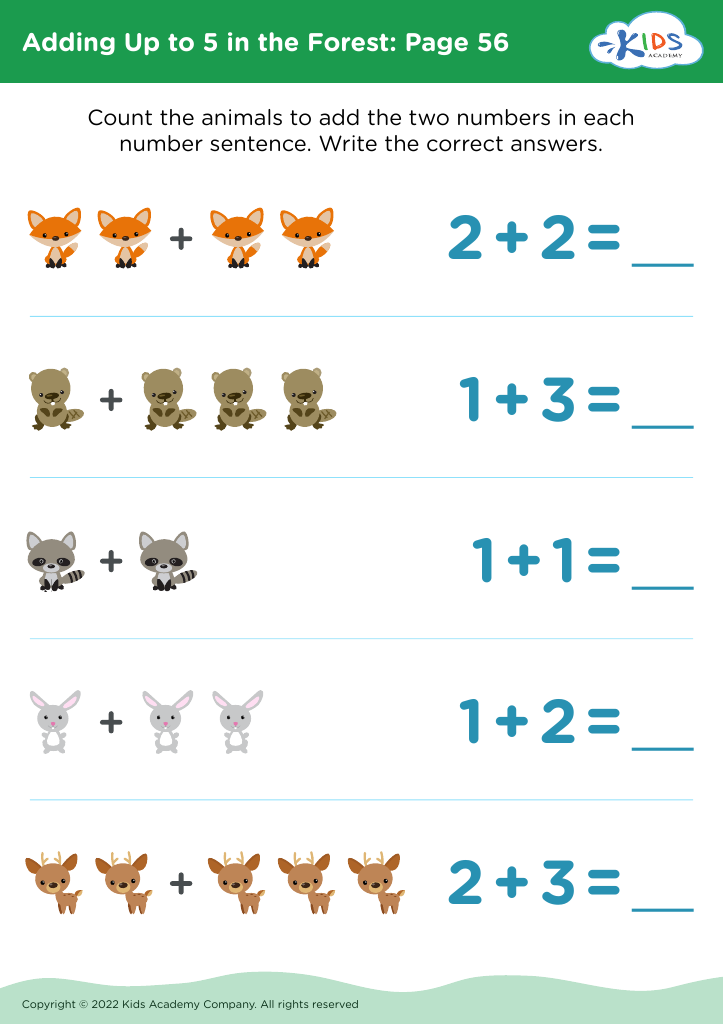
Adding Up to 5 in the Forest: Page 56
Worksheet
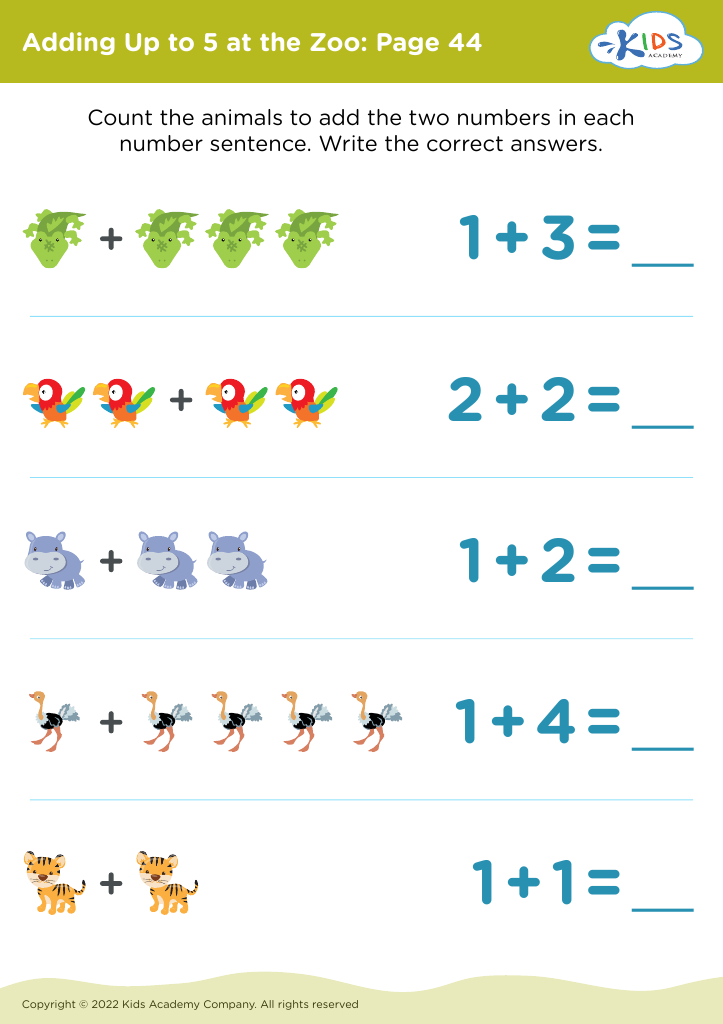
Adding Up to 5 at the Zoo: Page 44
Worksheet
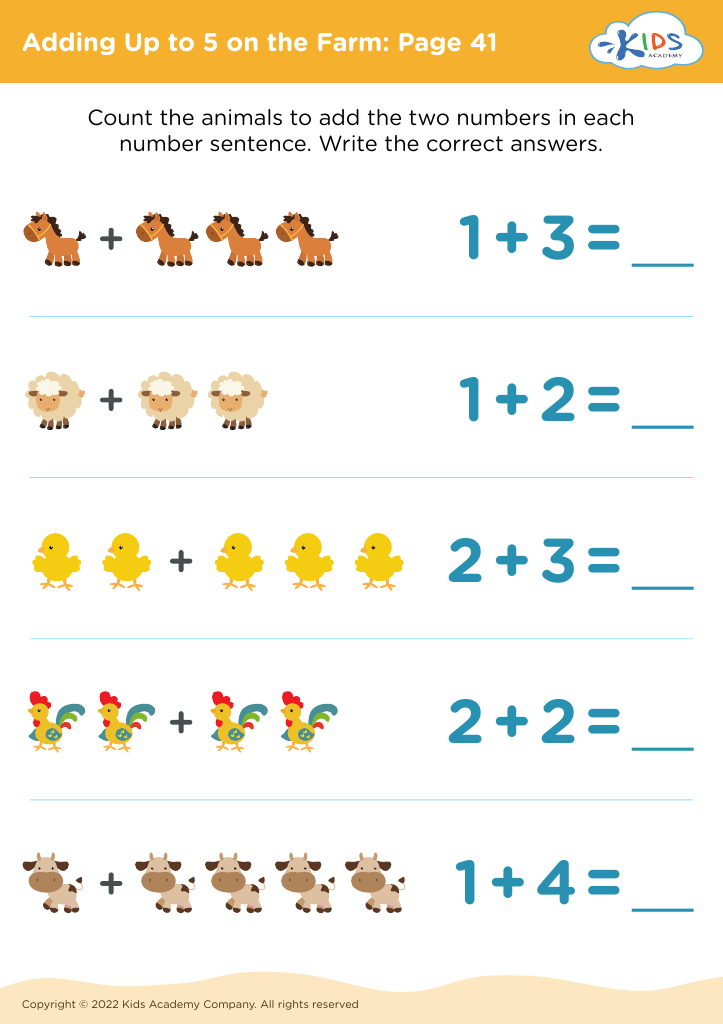
Adding Up to 5 on the Farm: Page 41
Worksheet
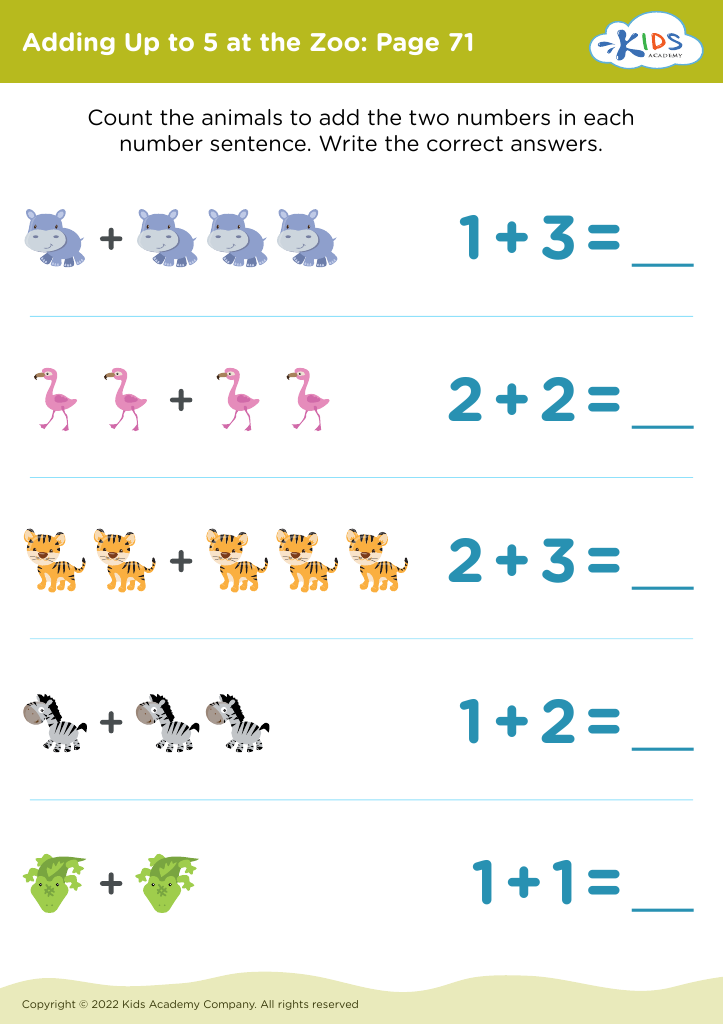
Adding Up to 5 at the Zoo: Page 71
Worksheet
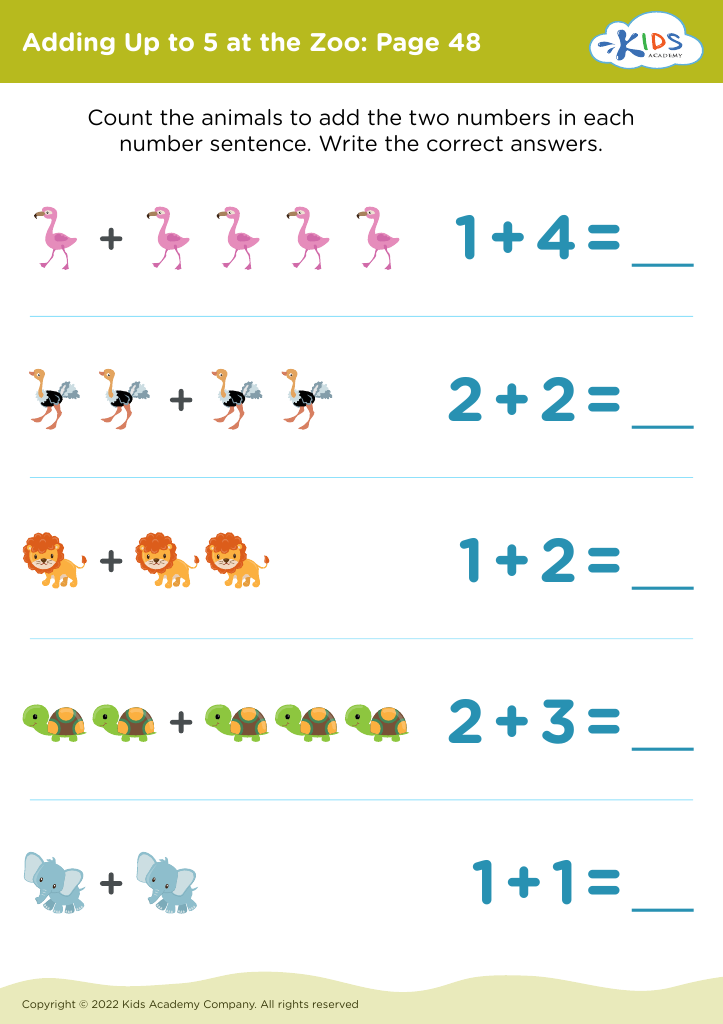
Adding Up to 5 at the Zoo: Page 48
Worksheet
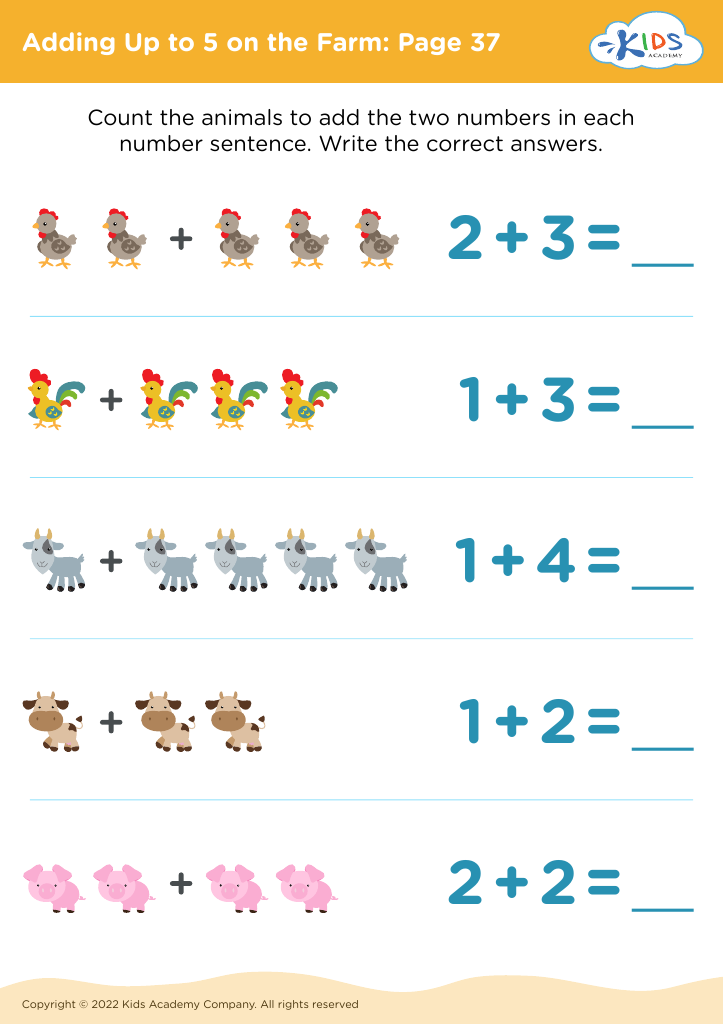
Adding Up to 5 on the Farm: Page 37
Worksheet
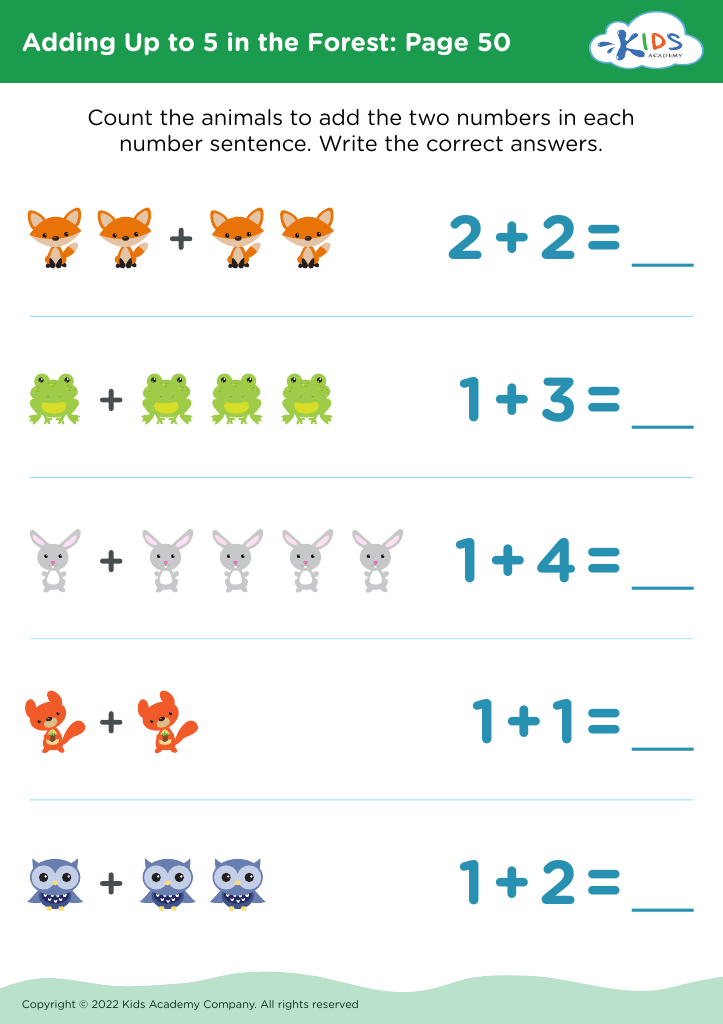
Adding Up to 5 in the Forest: Page 50
Worksheet
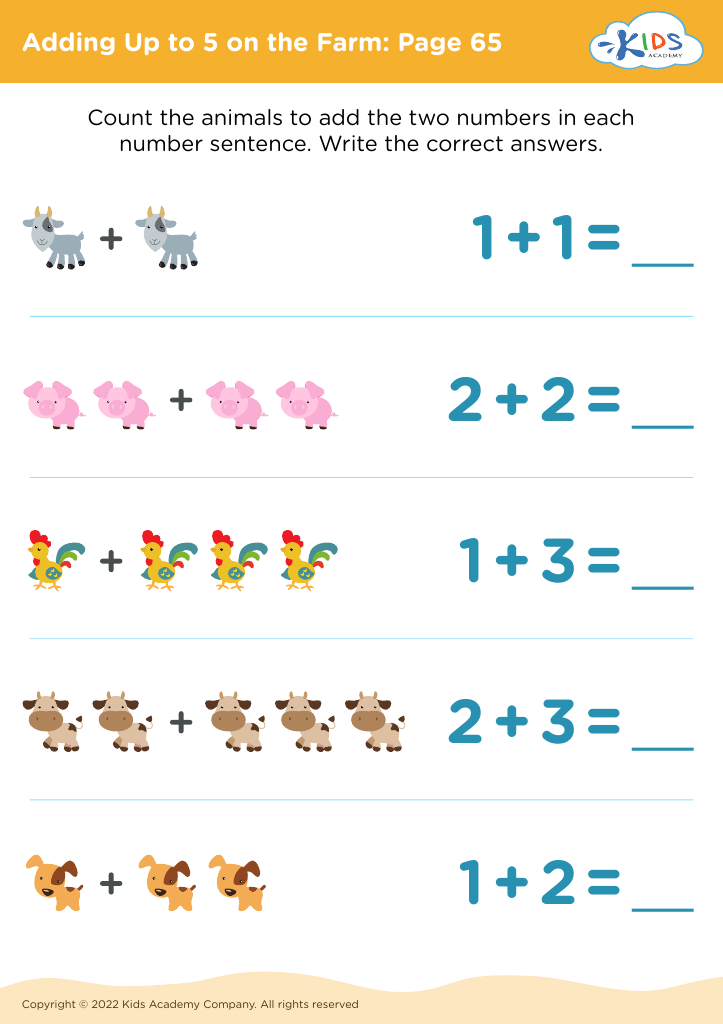
Adding Up to 5 on the Farm: Page 65
Worksheet
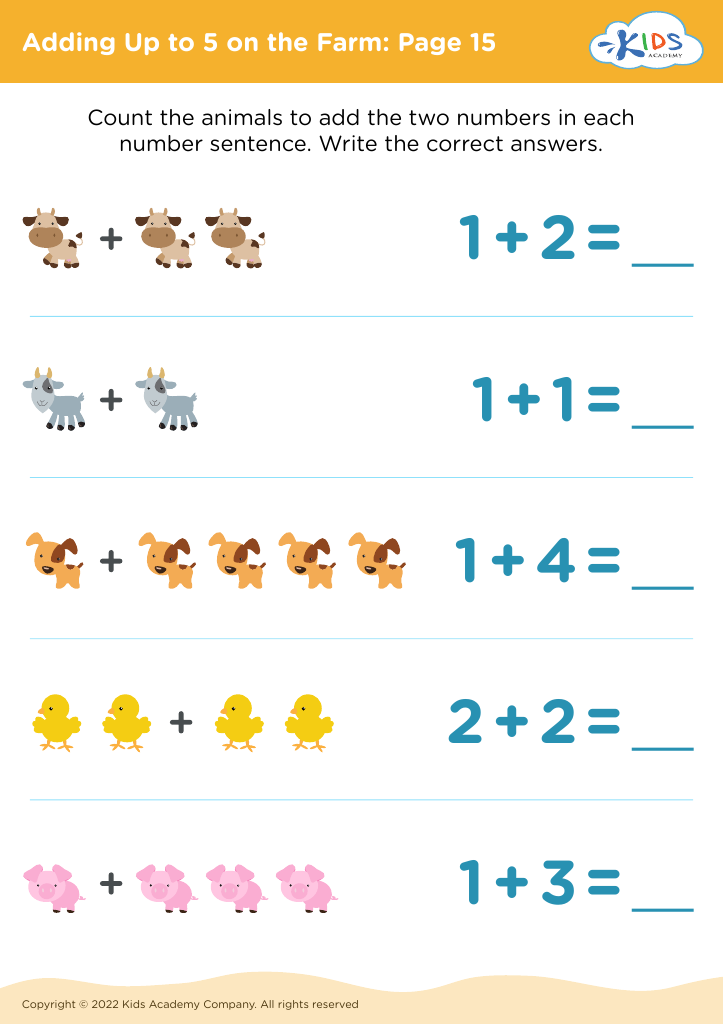
Adding Up to 5 on the Farm: Page 15
Worksheet


Animal recognition and the ability to add up to 5 are fundamental skills that go hand-in-hand in early childhood education. Teaching children to recognize animals not only helps them connect with the world around them but also stimulates their curiosity and cognitive development. Children who can identify animals often engage more in conversations about biodiversity, habitats, and behaviors, fostering a love for nature.

Combining this with the skill of adding numbers up to 5 enhances cognitive connections. For instance, using animal images to represent quantities allows children to visualize math. If a child sees three cats and adds two dogs, they can physically count and understand that 3 plus 2 equals 5. This concrete representation builds a solid foundation for future mathematical concepts.

Moreover, this method can make learning engaging and enjoyable. It integrates play with education, using toys, flashcards, or even outdoor activities. When children interact with both animals and numbers, they develop critical thinking and problem-solving skills, promoting emotional and social growth.

Ultimately, prioritizing animal recognition alongside basic math skills equips young learners with essential tools for their educational journey, making learning both fun and impactful.