Understanding numeracy Adding Up to 5 Worksheets for Ages 5-6
4 filtered results
-
From - To
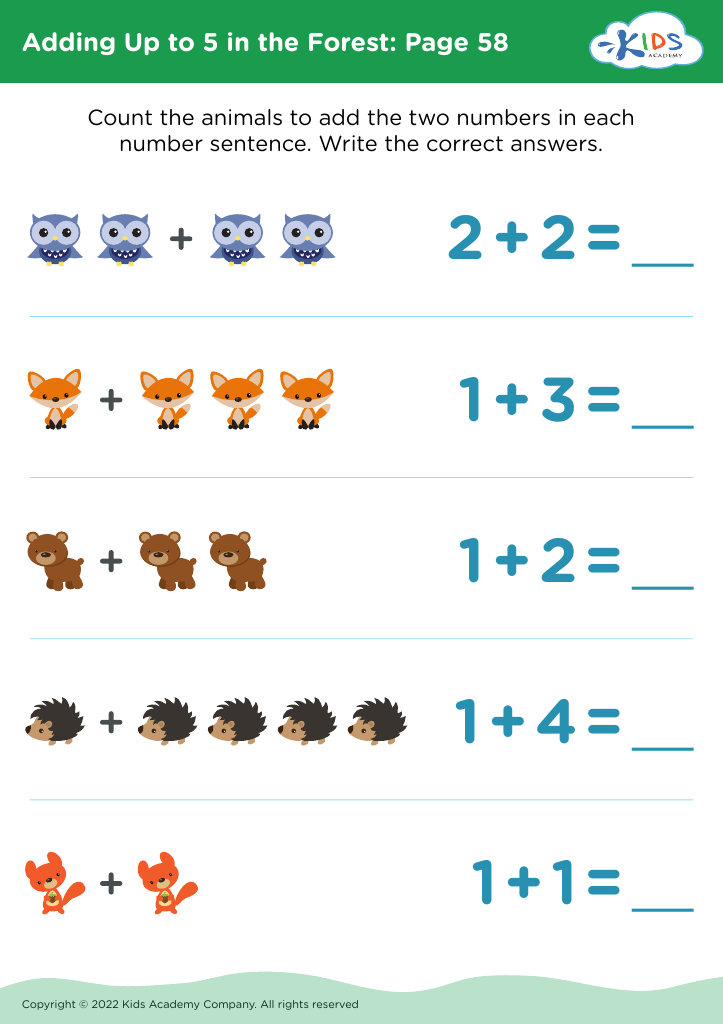
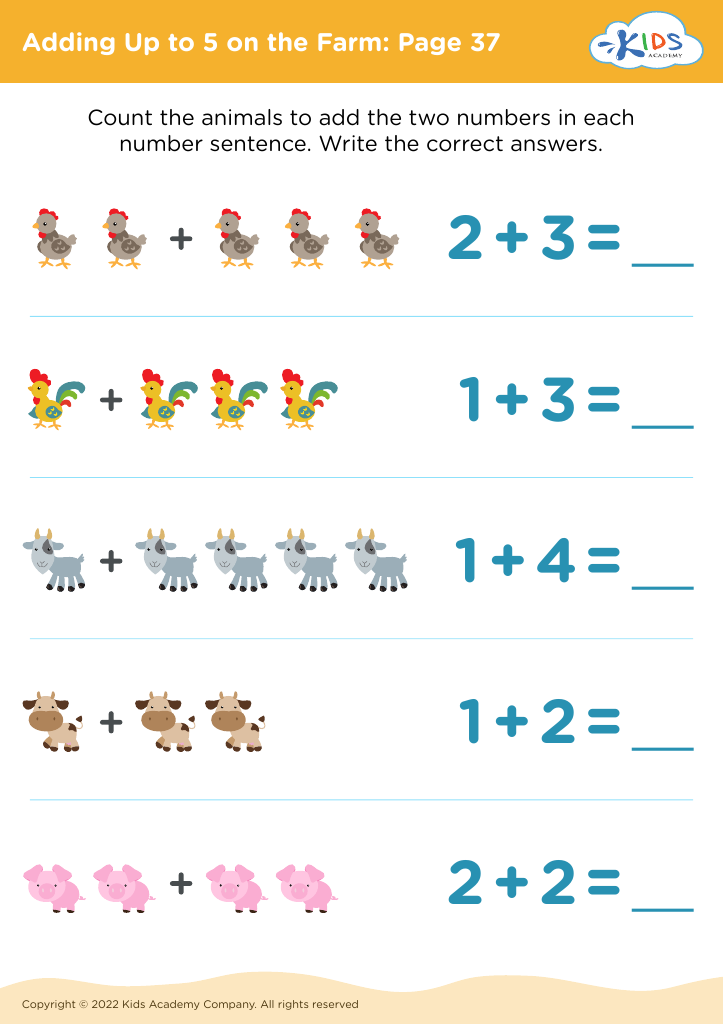
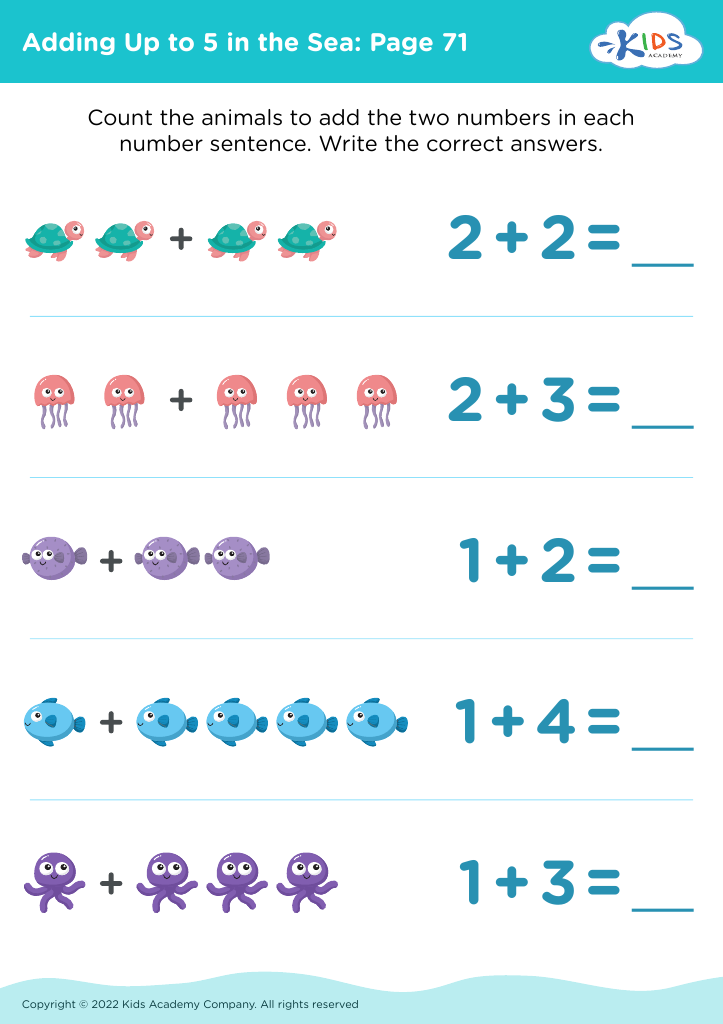
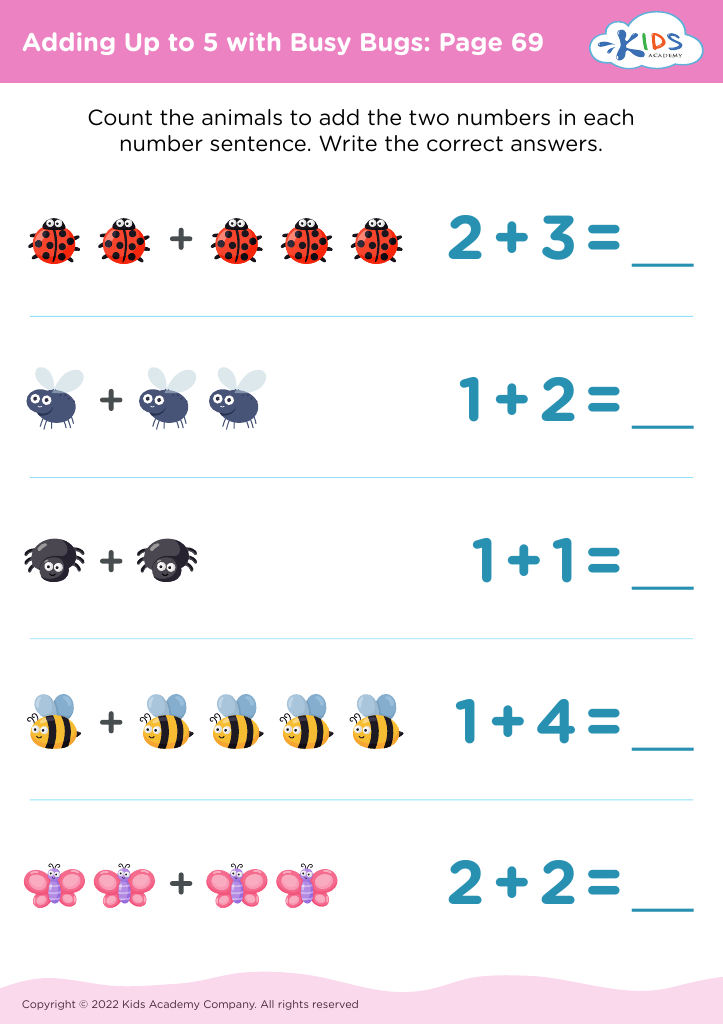
Unlock your child's mathematical potential with our "Understanding Numeracy: Adding Up to 5 Worksheets" designed for ages 5-6. These engaging worksheets focus on helping young learners grasp foundational addition skills, boosting their confidence and fluency with numbers. Featuring vibrant illustrations and age-appropriate exercises, your child will enjoy practicing addition in a fun and interactive way. As they progress, they'll develop a solid understanding of numeracy concepts, essential for future math success. This resource is perfect for parents and educators looking to enhance early math learning at home or in the classroom. Empower your child's journey to becoming a math whiz today!








Understanding numeracy, particularly adding up to 5, is crucial for children ages 5-6 as it lays the foundation for their mathematical skills and overall cognitive development. At this age, children are curious and eager to learn, and developing strong numeracy skills can foster a positive attitude towards math in the future.
Furthermore, grasping the concept of adding up to 5 helps children build critical thinking and problem-solving abilities. It encourages them to recognize patterns, make connections, and understand quantity, which are essential skills in daily life.
For parents and teachers, supporting children in numeracy helps cultivate confidence and independence in learning. This foundational knowledge is instrumental in transitioning to more complex math concepts as they grow, such as adding higher numbers, subtraction, and even basic multiplication.
Moreover, numeracy skills promote language development as children learn to articulate their thought processes during math activities. Engaging with math in fun, interactive ways can enhance parent-child bonds and support classroom learning experiences, paving the way for a well-rounded educational journey. Ultimately, investing time in understanding numeracy at this early stage can significantly influence a child's future success in math and related fields.








