Addition Practice Addition Worksheets for Ages 5-6 - Page 4
77 filtered results
-
From - To
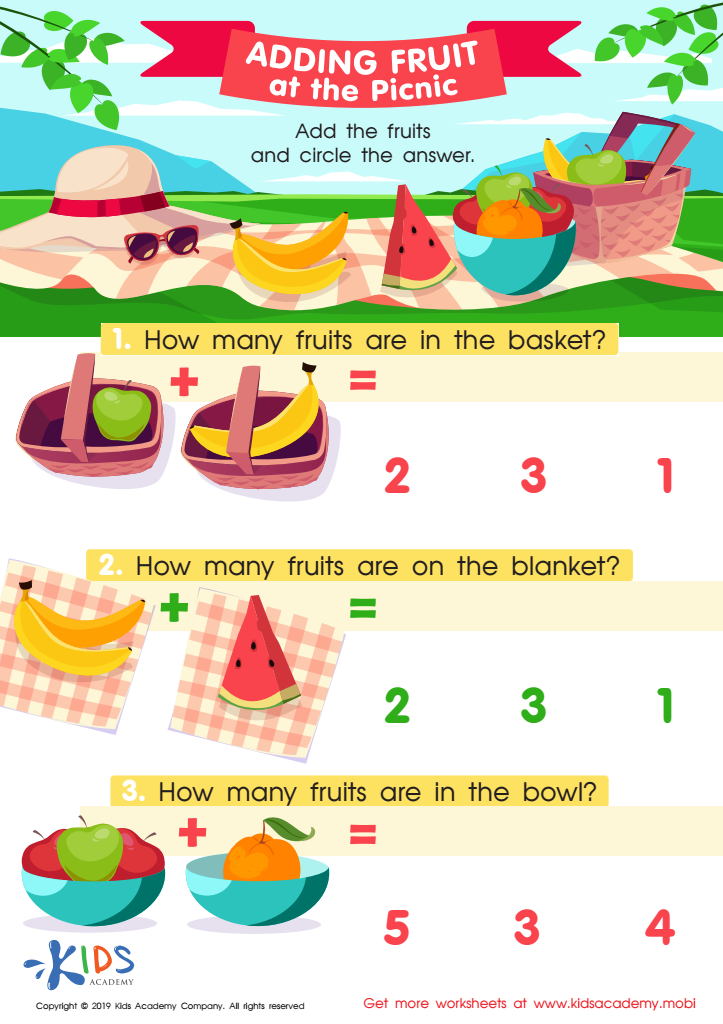
Adding Fruit at the Picnic Worksheet
 Assign to My Students
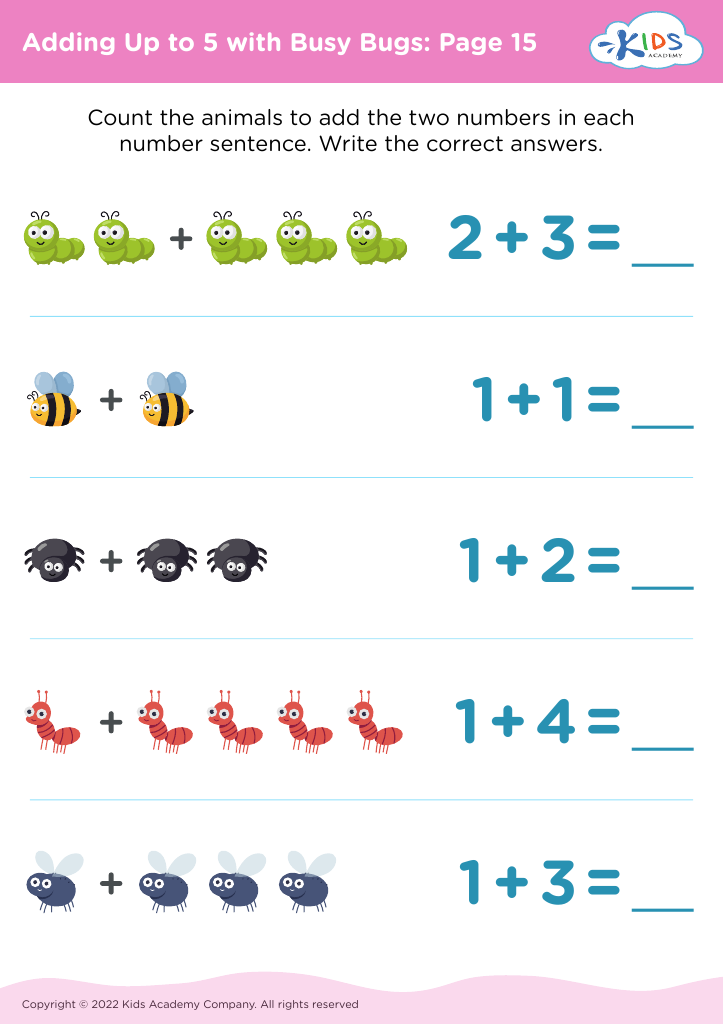








Addition practice for ages 5-6 is crucial for several reasons. At this stage, children are developing foundational math skills that will support their academic growth. An understanding of addition not only enhances their numeracy but also strengthens cognitive abilities such as problem-solving and logical thinking. Engaging in regular addition practice helps to improve mental arithmetic skills, enabling children to process information quickly and accurately.
Furthermore, consistent practice builds confidence. As children master basic addition, they become more willing to tackle more complex math concepts in the future, fostering a positive attitude towards learning. This early expertise can influence their overall performance in school, as math competency is often linked to success in various subjects.
Additionally, addition has real-world applications. From counting items during shopping trips to understanding time and scheduling, these skills translate to essential life experiences. Encouraging children to practice addition through fun games or engaging activities can also foster a love for math, making it enjoyable rather than intimidating.
In conclusion, a focus on addition practice helps children develop essential skills, enhances their confidence, and prepares them for future academic challenges, making it a critical area of attention for both parents and teachers.








