Basic arithmetic comprehension Addition Worksheets for Ages 5-6
3 filtered results
-
From - To
Discover our engaging Basic Arithmetic Comprehension Addition Worksheets specially designed for children aged 5-6! These worksheets provide a fun and interactive way to introduce young learners to the fundamentals of addition. With colorful visuals and easy-to-follow exercises, kids can enhance their counting skills and develop a solid grasp of basic math concepts. Each activity is crafted to promote critical thinking and improve problem-solving skills while keeping lessons enjoyable. Perfect for home or classroom use, our addition worksheets empower early learners to build confidence and mastery in arithmetic. Begin your child’s math journey with our comprehensive collection today!
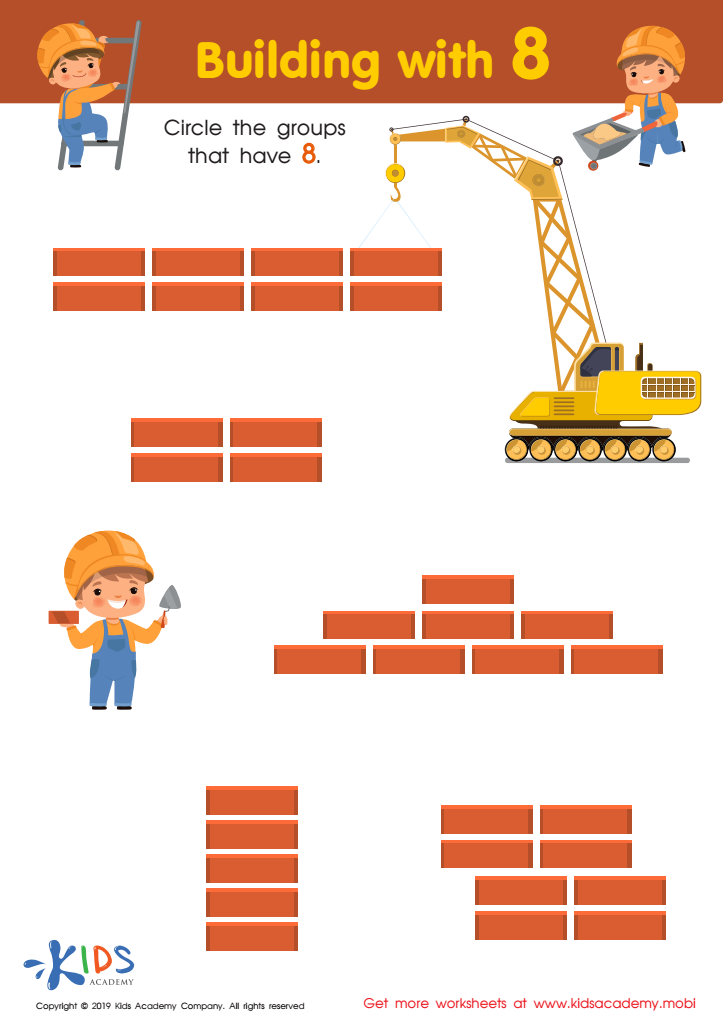
Building with 8 Worksheet
 Assign to My Students
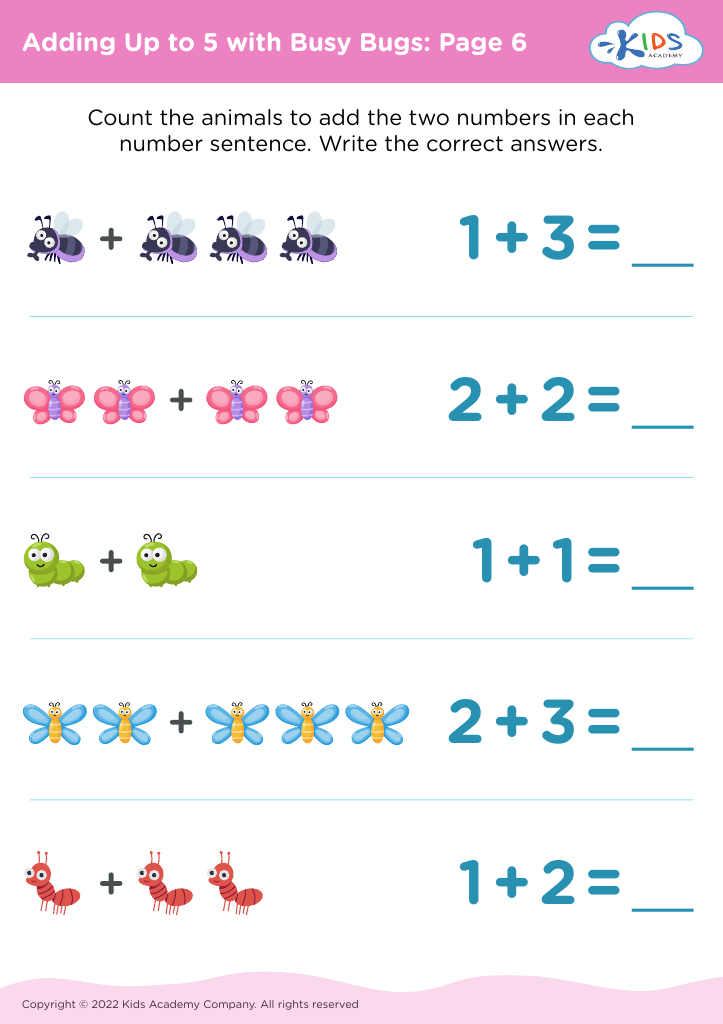
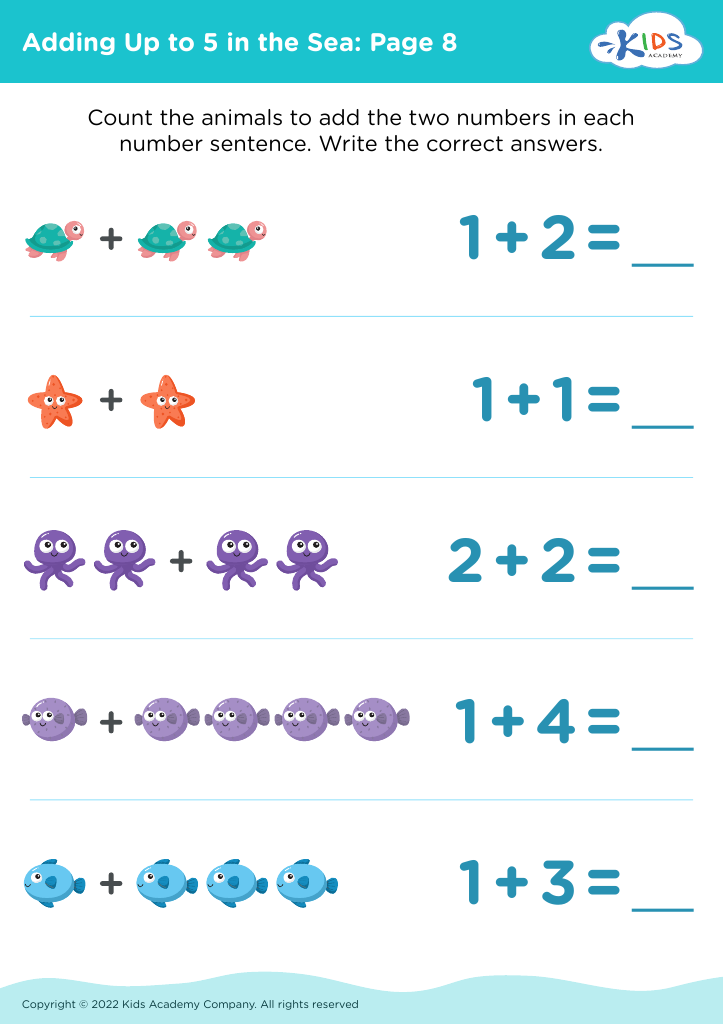








Basic arithmetic comprehension, particularly addition, is crucial for children aged 5-6 as it lays the groundwork for their future mathematical learning and overall cognitive development. At this early stage, understanding addition helps children grasp essential concepts such as quantity, grouping, and numerical relationships. It builds confidence in their ability to solve problems, enhances their logical thinking skills, and promotes a sense of achievement.
Furthermore, mastering addition equips young learners with skills they will use throughout their lives, from basic budgeting to managing finances. It also supports their performance in other subjects, as mathematical reasoning is closely tied to reading comprehension and analytical skills.
Parents and teachers play a vital role in fostering this understanding. Engaging children in fun, everyday activities that incorporate addition—like sharing snacks, counting toys, or playing number games—makes learning relatable and enjoyable. Additionally, encouraging a positive attitude towards math can significantly influence a child's future academic pursuits. By emphasizing the importance of early math skills, parents and teachers can help instill a love for learning and ensure children develop a strong foundation in mathematics, empowering them for success as they advance in school and beyond.








