
Fine motor skills (drawing lines) Addition Worksheets for Ages 5-6
3 filtered results
Difficulty Level
Grade
Age
-
From - To
Subject
Activity
Standards
Enhance your child's fine motor skills and math abilities with our specially designed Addition Worksheets for Ages 5-6. These worksheets focus on helping children practice drawing straight and curved lines, strengthening their hand-eye coordination and dexterity. Featuring fun and engaging themes, these printables are tailored to develop counting and addition skills through interactive line tracing activities. Perfect for early learners, our worksheets make math fun and accessible, ensuring a solid foundation for future learning. Ideal for home or classroom use, these resources are a great way to support your child’s educational journey.
Favorites
With answer key
Interactive
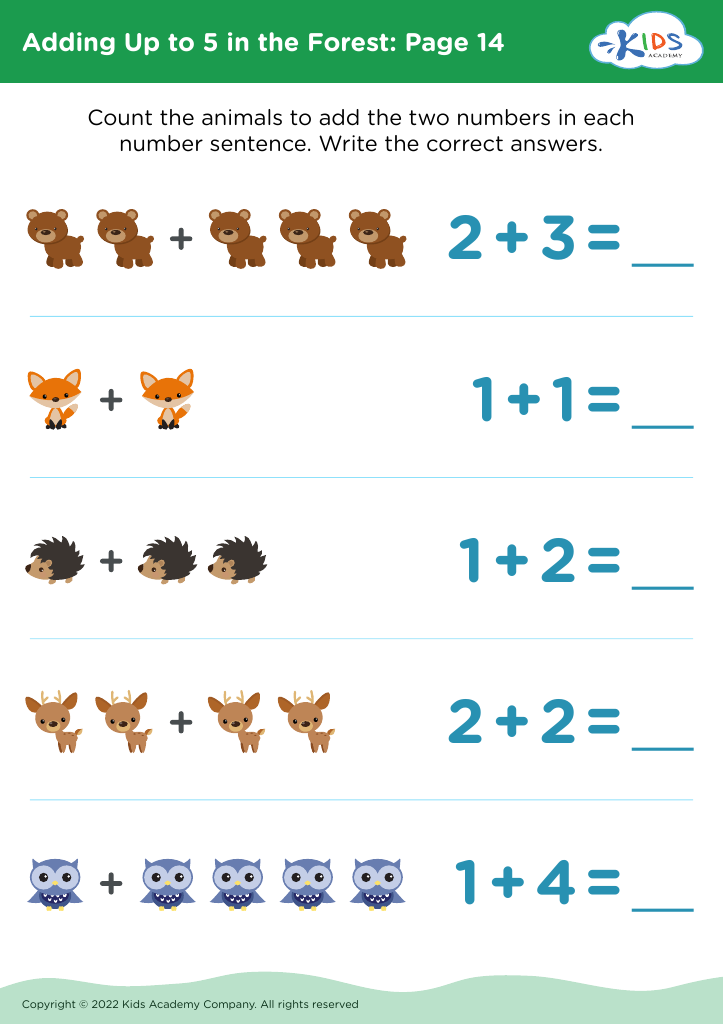
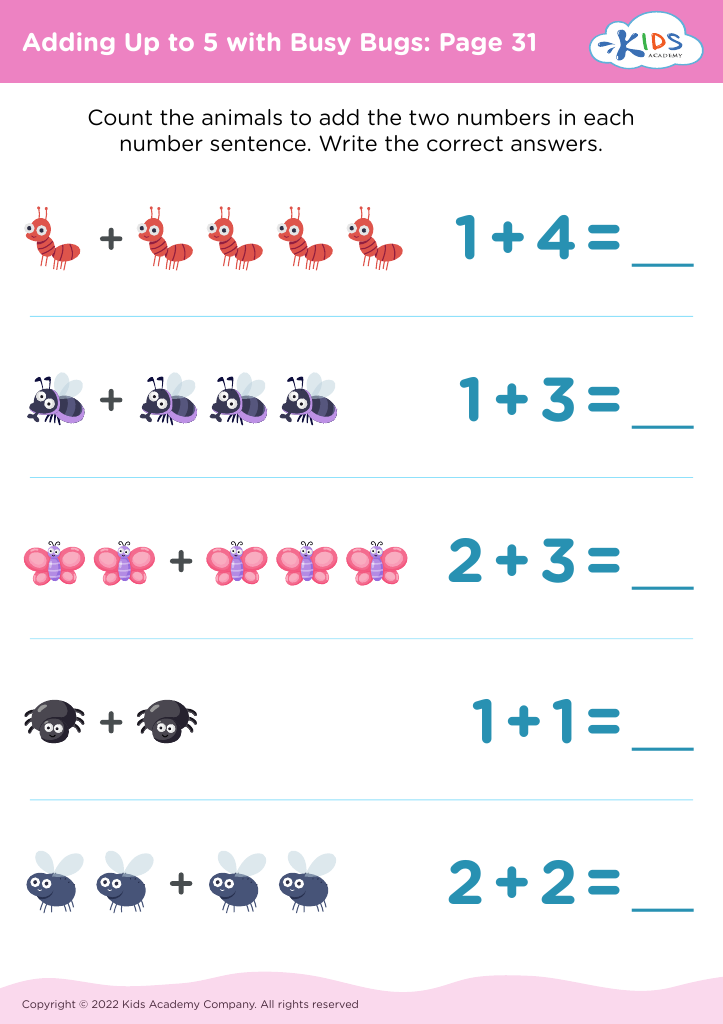
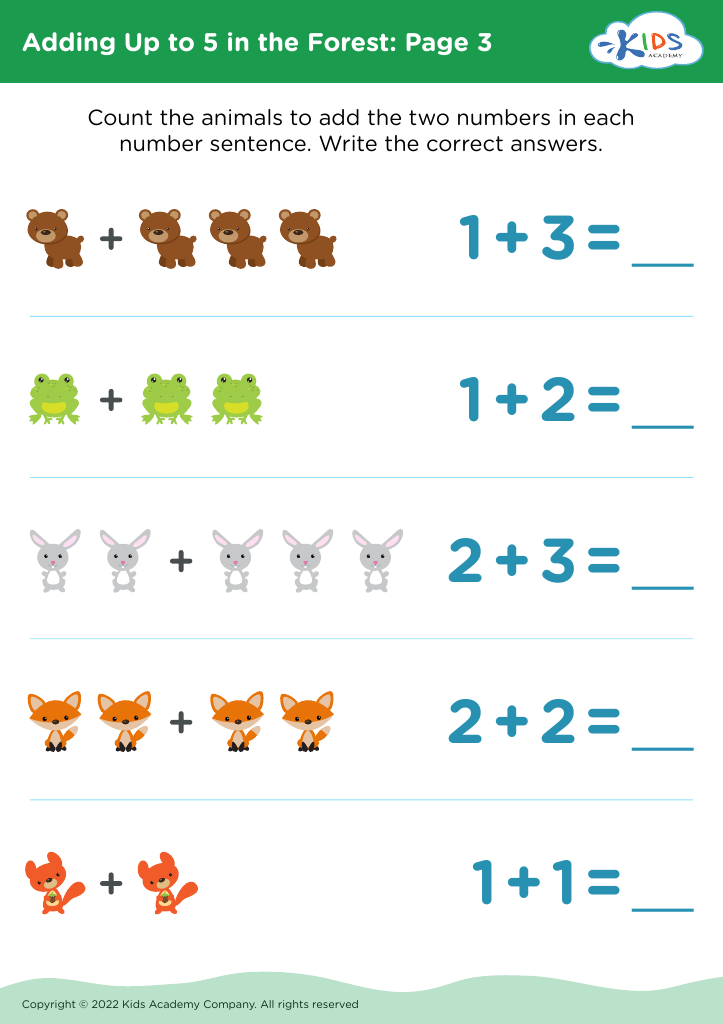
Join Kids Academy for Free
Who is primarily going to use this learning content?








Parents and teachers should care about developing fine motor skills, such as drawing lines, in children aged 5-6 because these abilities lay a crucial foundation for academic and everyday tasks. Fine motor skills involve the coordination of small muscles in the hands and fingers, enabling children to perform activities that require precision and accuracy.
By practicing activities like drawing lines, children enhance their hand-eye coordination, dexterity, and control, which are essential for writing, cutting with scissors, and manipulating small objects. These skills are critical for educational development, as they directly impact a child’s ability to engage effectively in classroom activities, follow instructions, and express creativity. Developing fine motor skills also promotes independence and self-confidence as children accomplish tasks that require attention to detail.
Moreover, fine motor skills are fundamentally connected to cognitive development. Engaging in tasks that refine these skills helps stimulate brain areas responsible for problem-solving, attention, and concentration. As children draw lines, they not only improve their muscle control but also organizational and spatial recognition abilities, important for more complex mathematical and literacy tasks.
In essence, by supporting the development of fine motor skills in children, parents and teachers provide them with the tools necessary for success both in and out of the classroom. This approach ensures a well-rounded growth that prepares young learners for future academic challenges and everyday activities.








