Nature appreciation Addition Worksheets for Ages 5-6
5 filtered results
-
From - To
Introduce your young learners to basic addition now intertwined with nature's beauty using our "Nature Appreciation Addition Worksheets" for ages 5-6. Combining math skills with vivid nature-themed illustrations, these worksheets make learning fun and engaging. Children will count flowers, leaves, and animals, fostering both arithmetic proficiency and an early love for the environment. Ideal for classroom and home settings, these printables help kids practice addition while enjoying charming images of nature. Ensure your little ones develop essential math skills and an appreciation for the world around them with resources from our thoughtfully designed collection. Unlock the joys of math-enhanced nature exploration today!
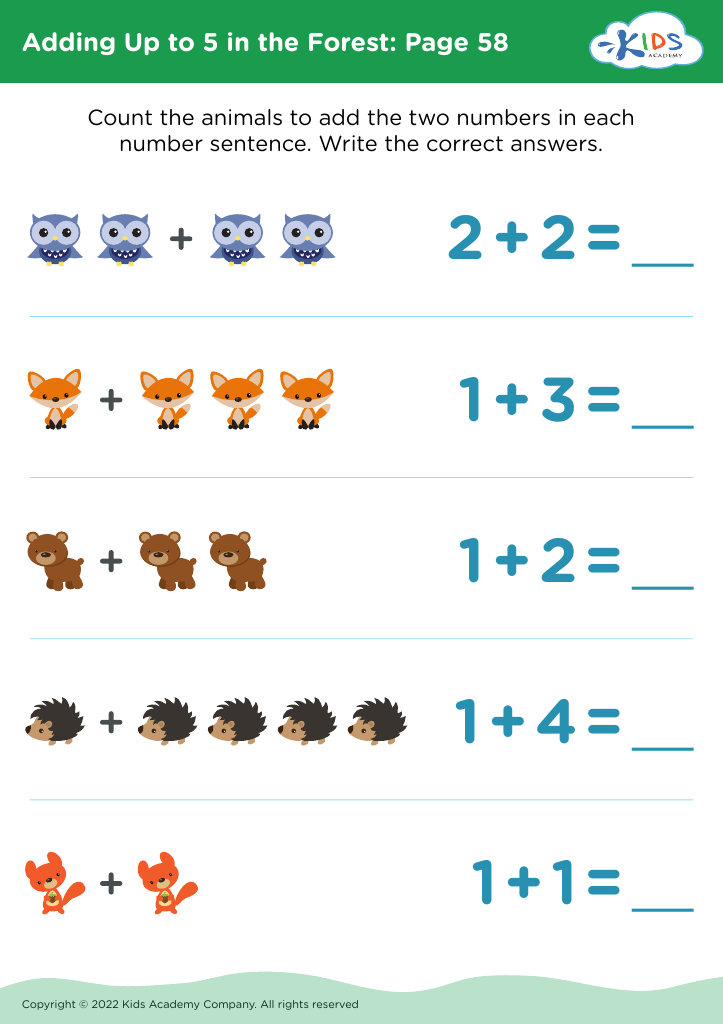
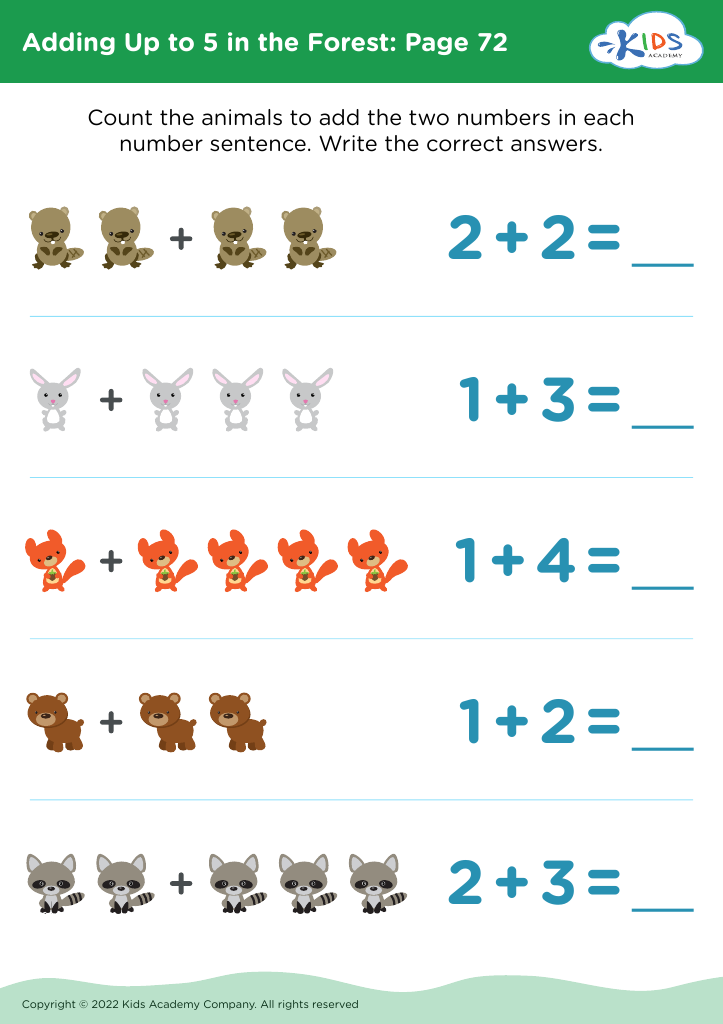
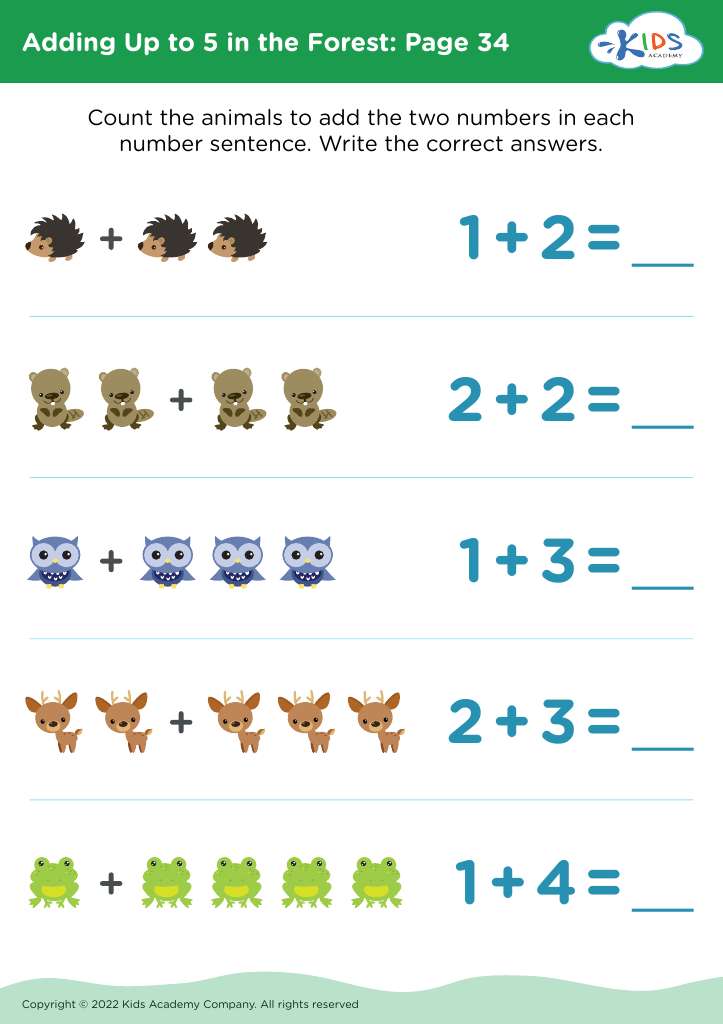
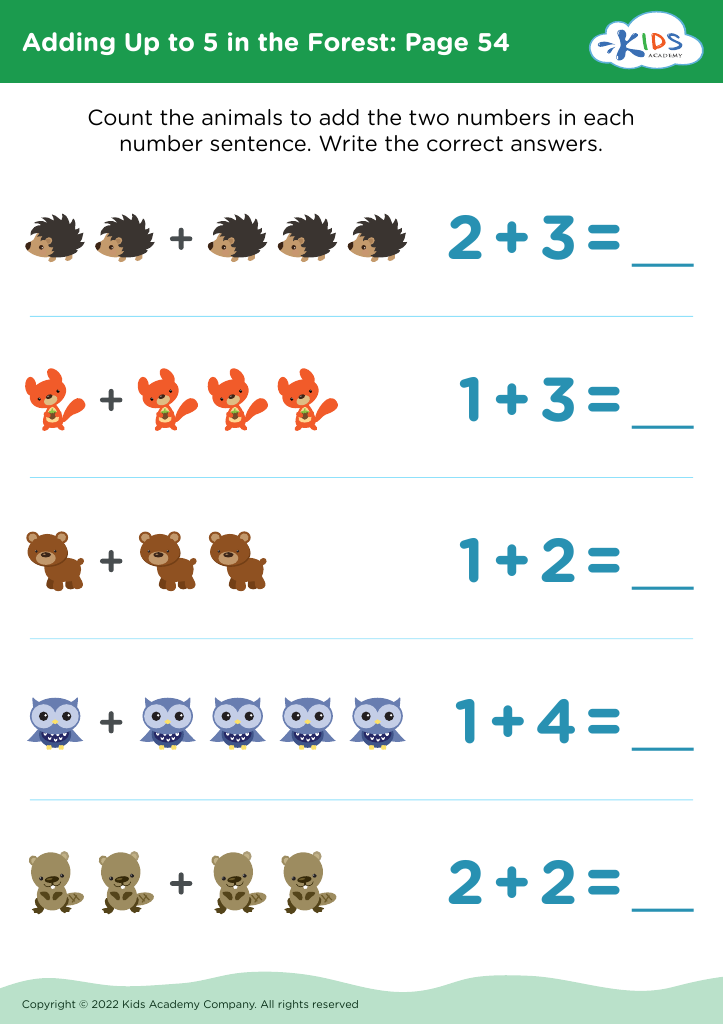
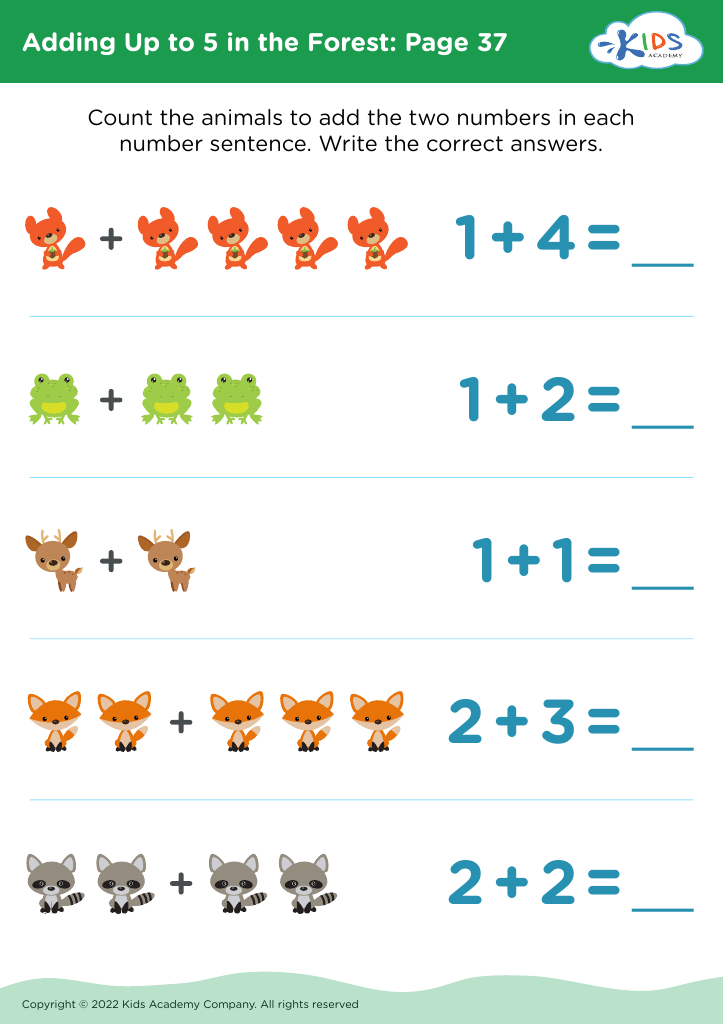








Nature appreciation is vital for children ages 5-6 as it fosters a lifelong connection to the environment, promoting holistic growth. Engaging with nature nurtures physical, emotional, and cognitive development. For parents and teachers, instilling a love for nature at this age builds the foundation for responsible environmental stewardship.
Physical activities like walking, climbing, or exploring support gross motor skills and enhance overall fitness. Nature walks bring joy and act as a stress reliever, improving emotional well-being through mindfulness and the calming effects of natural surroundings.
Nature-themed educational activities, like counting leaves or identifying flowers, nurture curiosity and observational skills. They support basic math and science learning through hands-on experiences. This encourages critical thinking, problem-solving, and boosts creativity.
In addition, fostering empathy for living organisms builds compassion and social responsibility. Children who appreciate nature are more likely to engage in eco-friendly behaviors as they grow older.
For parents and teachers, providing opportunities to connect with nature prepares children to become conscientious global citizens. Whether it's backyard exploration, park visits, or community gardens, making nature appreciation a part of early education promotes healthy development and a sustainable future. Support today forms the environmental advocates of tomorrow.








