Understanding numerical values Addition Worksheets for Ages 5-6
4 filtered results
-
From - To
Welcome to our "Understanding Numerical Values Addition Worksheets" for ages 5-6! Designed to enhance foundational math skills, these engaging worksheets help young learners grasp numerical values through fun and interactive exercises. Children will explore concepts of counting, comparing numbers, and beginner addition, all while fostering critical thinking and problem-solving skills. Our activities incorporate colorful visuals and relatable contexts to make learning enjoyable. These resources are perfect for parents and educators looking to support early mathematical development and boost confidence in young mathematicians. Unlock your child’s potential with our creative and educational activities that encourage a love for math from an early age!
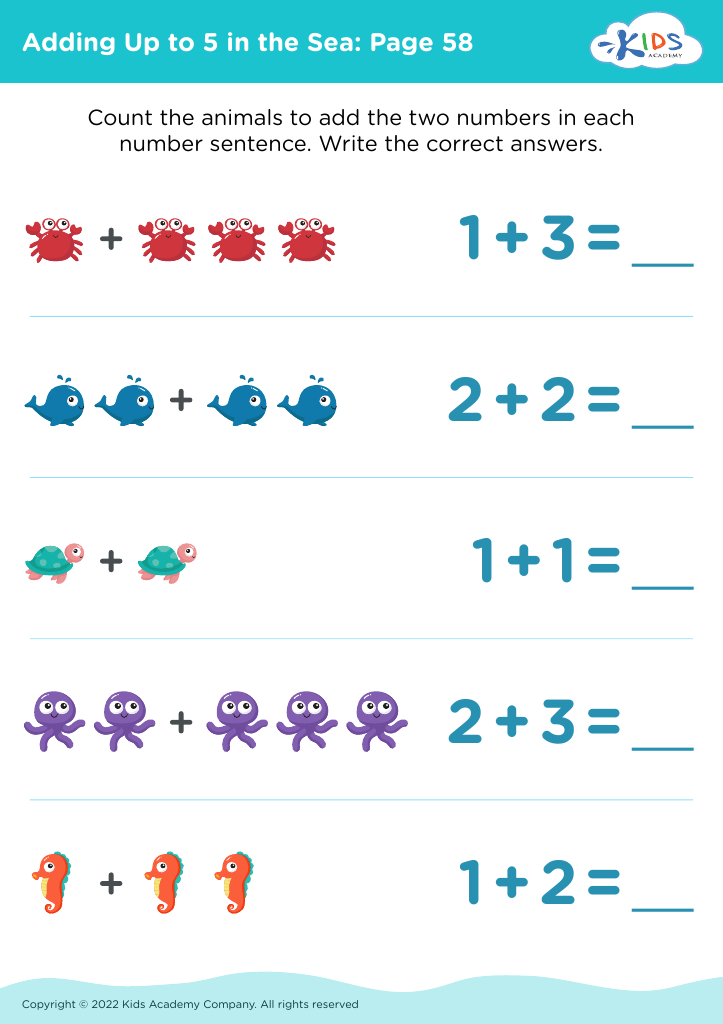
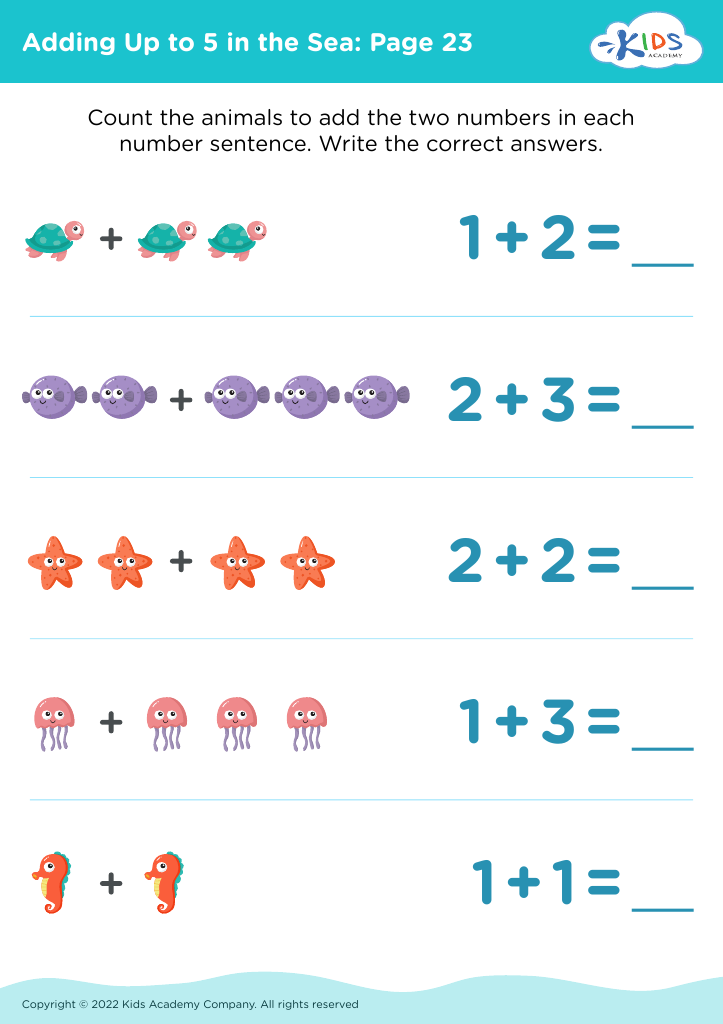
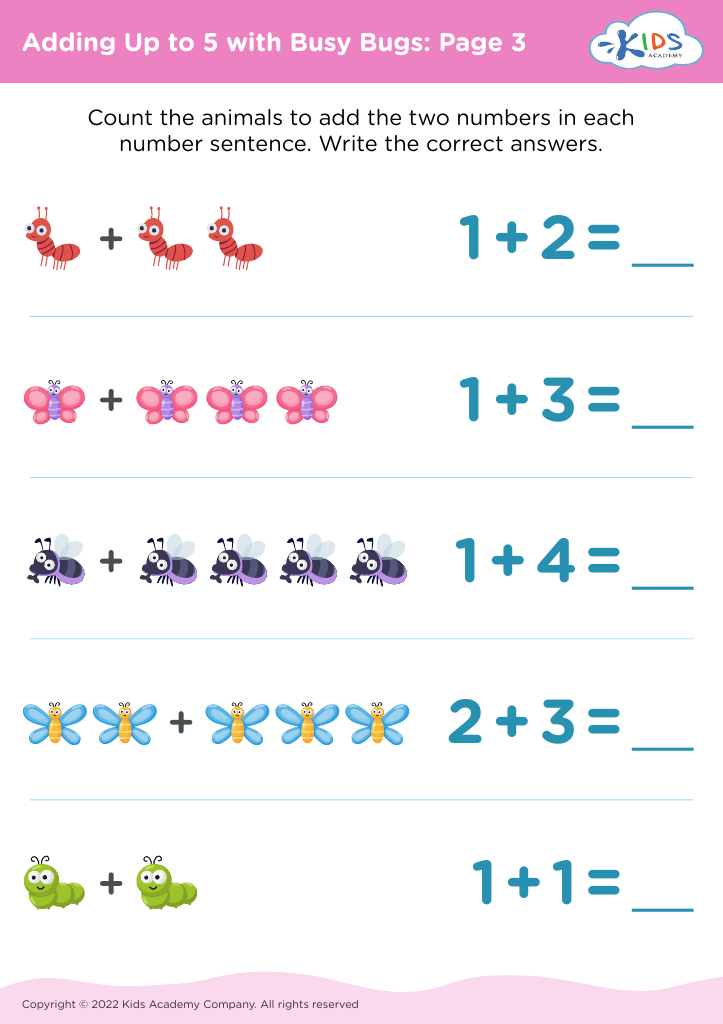
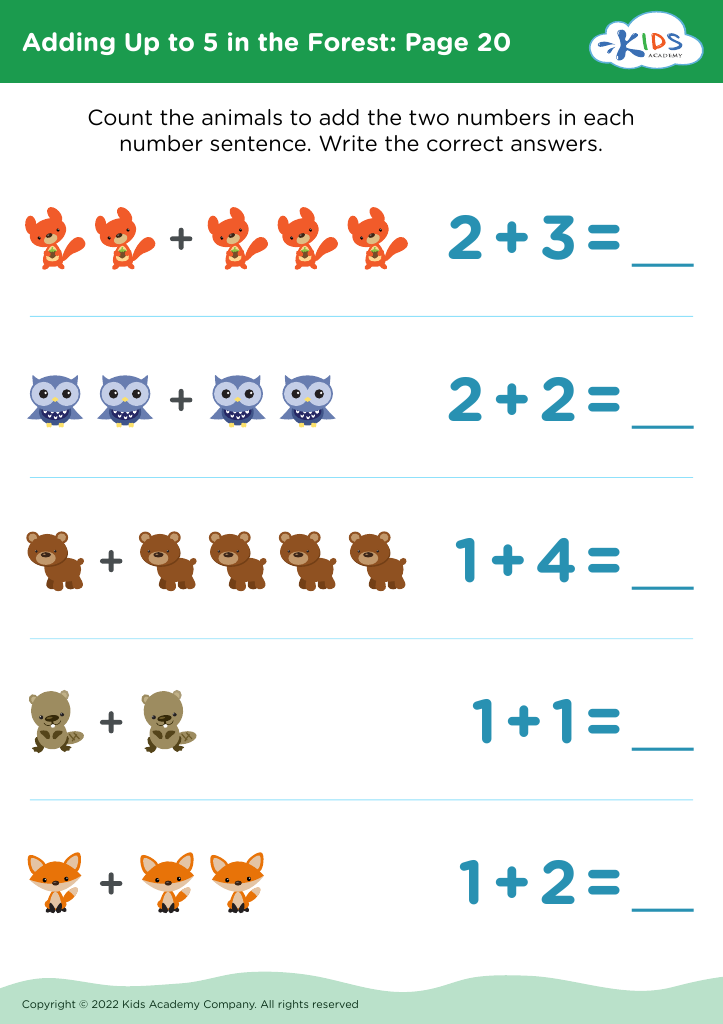








Understanding numerical values and the concept of addition is crucial for young learners aged 5-6, as it lays the foundation for their future academic success. At this age, children are naturally curious and eager to explore the world around them, making it an ideal time to introduce basic math concepts.
Numerical values help children develop critical thinking and problem-solving skills. By grasping that numbers represent quantities, children enhance their ability to make comparisons and quantify their experiences. Mastering addition not only strengthens their comprehension of numerical relationships but also fosters confidence and independence in their abilities to tackle everyday challenges.
Additionally, engaging parents or teachers in this learning phase promotes a supportive environment. Teachers can tailor lessons to meet individual needs, while parents can creatively reinforce these lessons at home, turning everyday activities into rich learning experiences. Establishing a strong mathematical foundation ensures that children are better prepared for more complex concepts as they advance in school. Furthermore, early intervention in numerical learning can assist in identifying learning gaps, paving the way for timely support and intervention strategies. For these reasons, fostering an understanding of numerical values and addition is an essential aspect of early education that benefits children long-term.








