Animal recognition Math Worksheets for Ages 5-6 - Page 5
108 filtered results
-
From - To
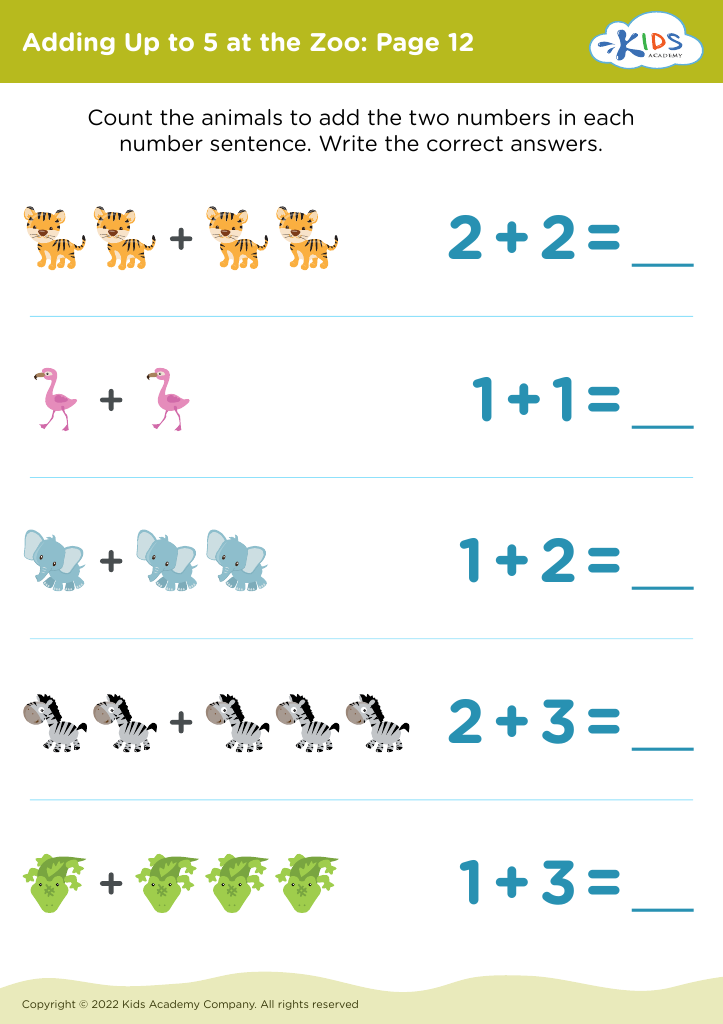
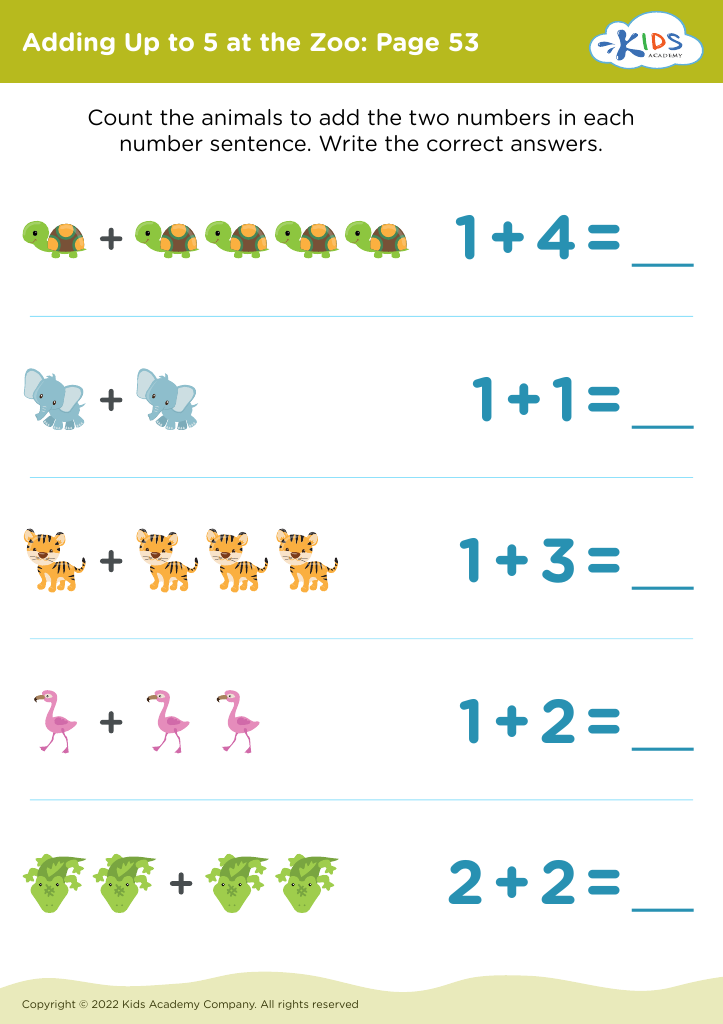
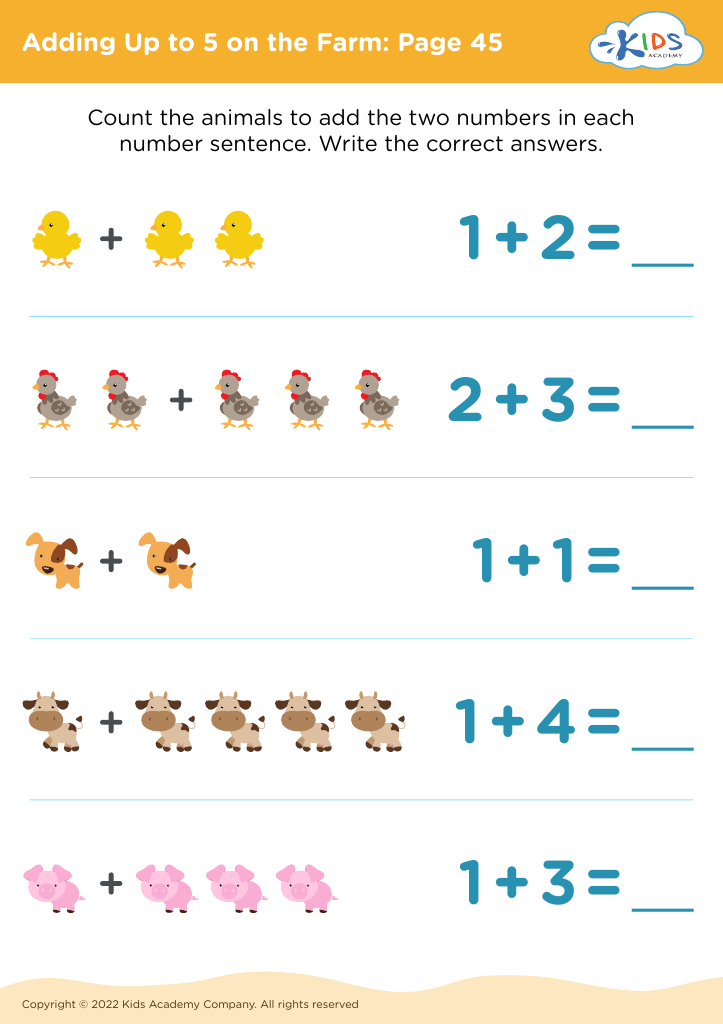
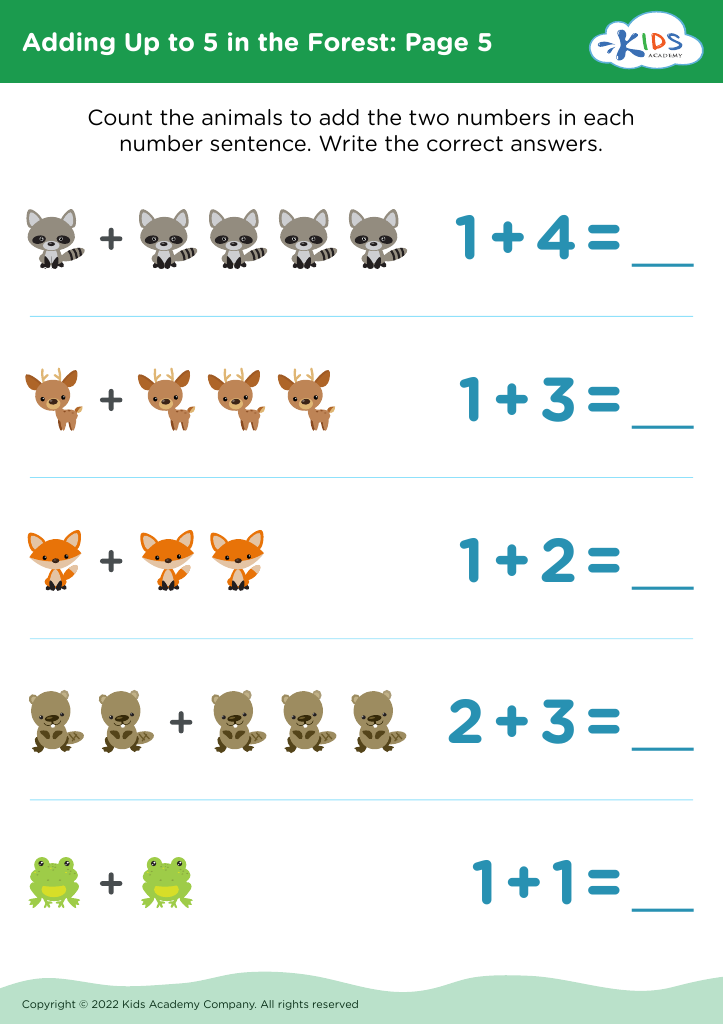
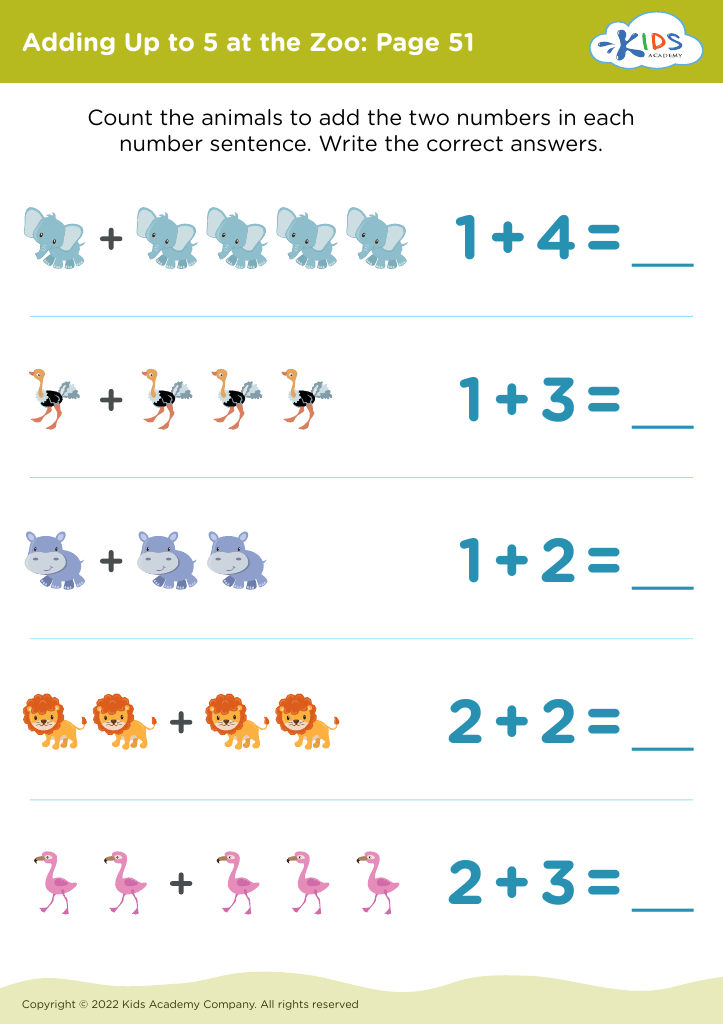
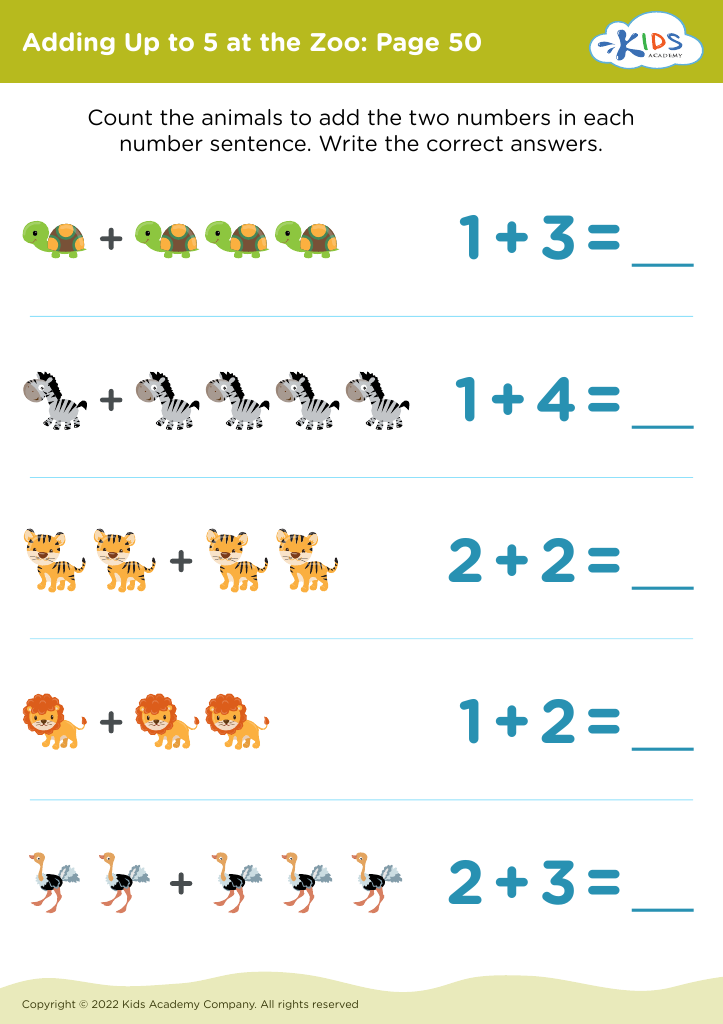
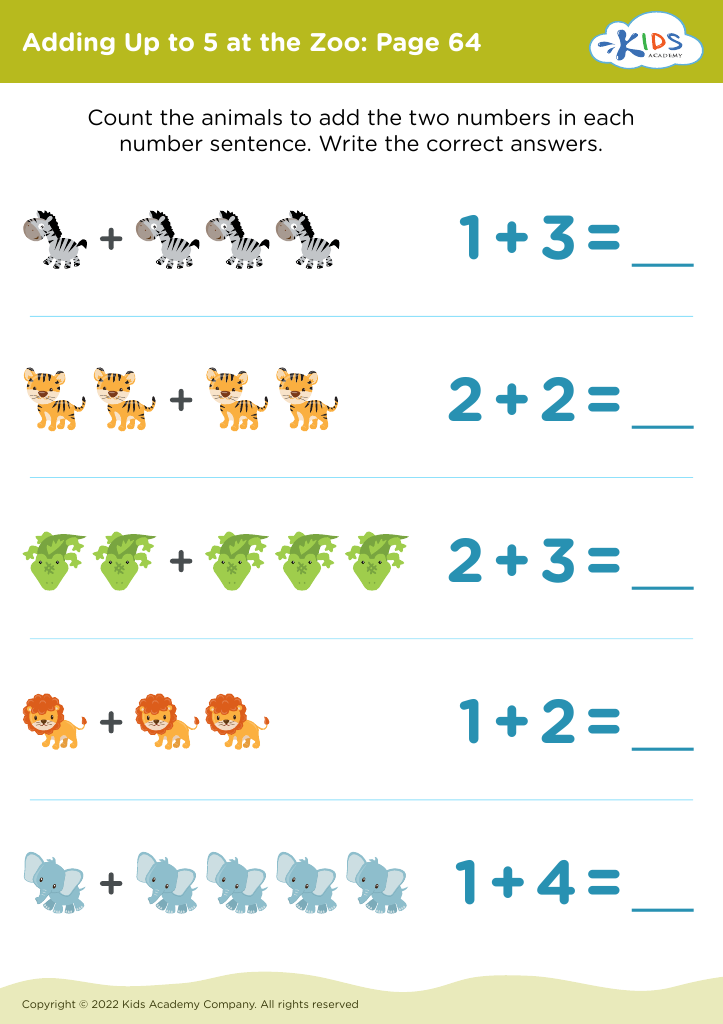
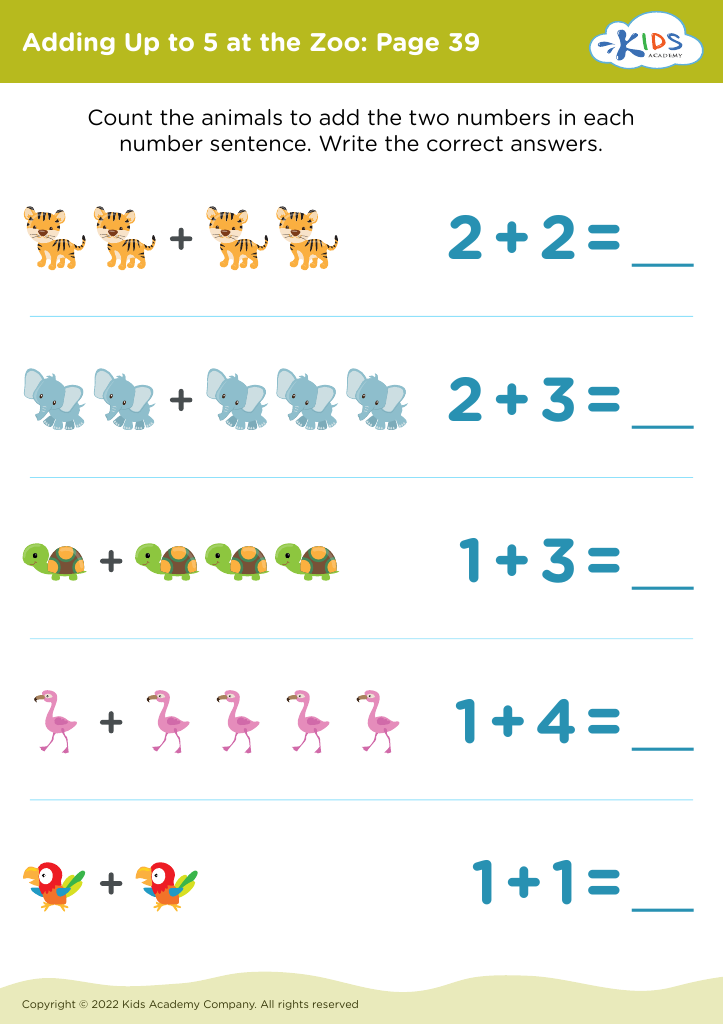
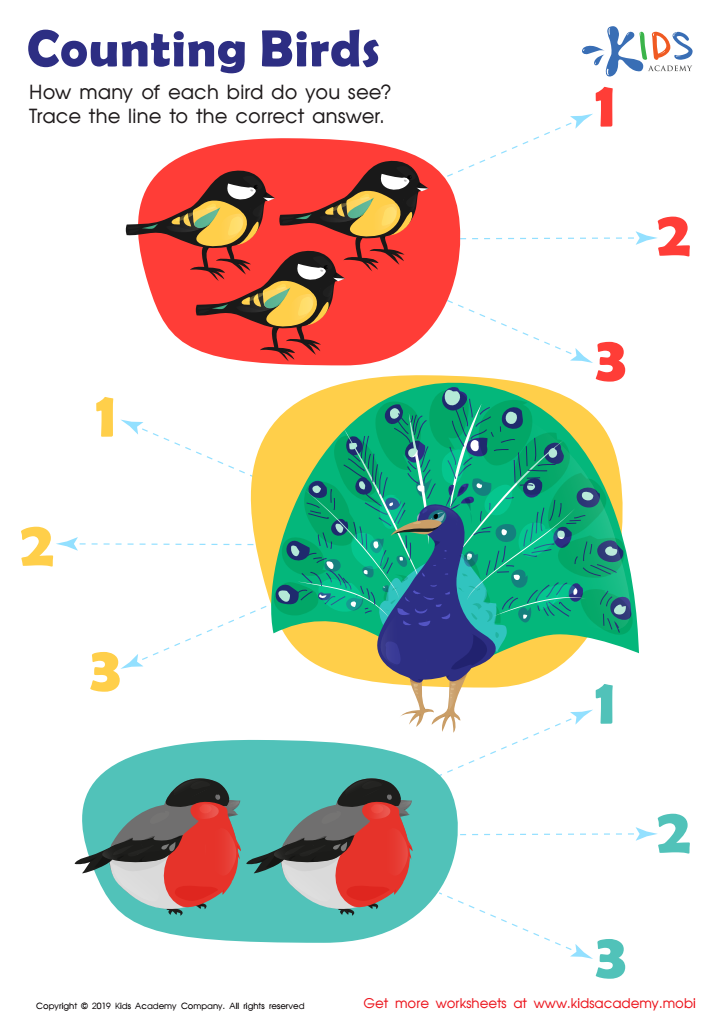
Counting Birds Worksheet
 Assign to My Students
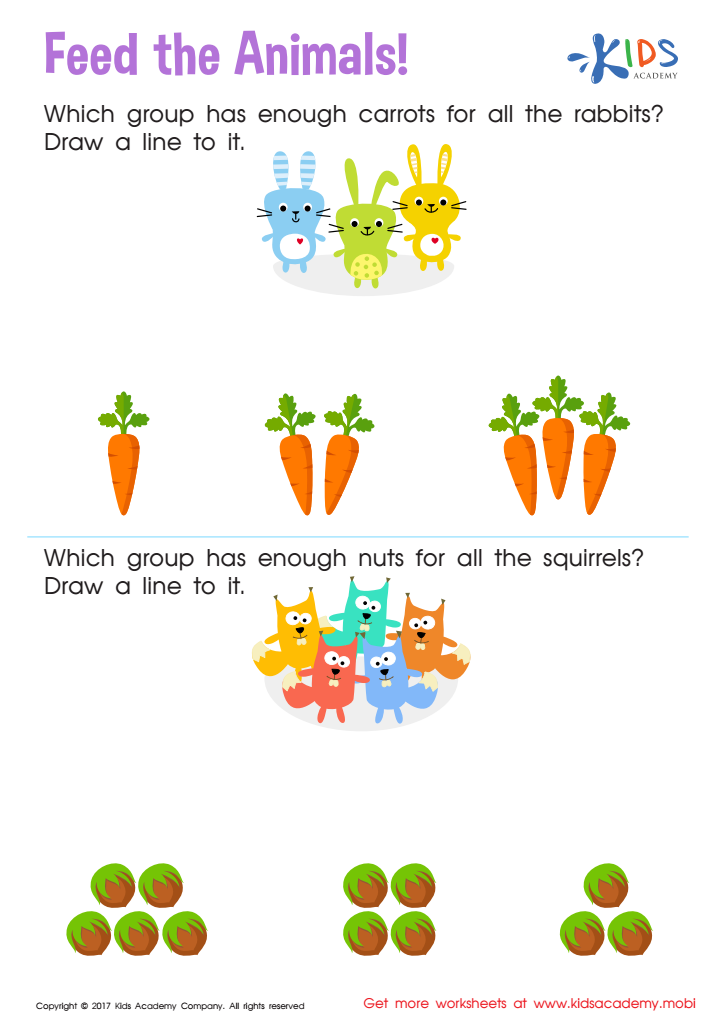
Count and Match: Feed the Animals Worksheet
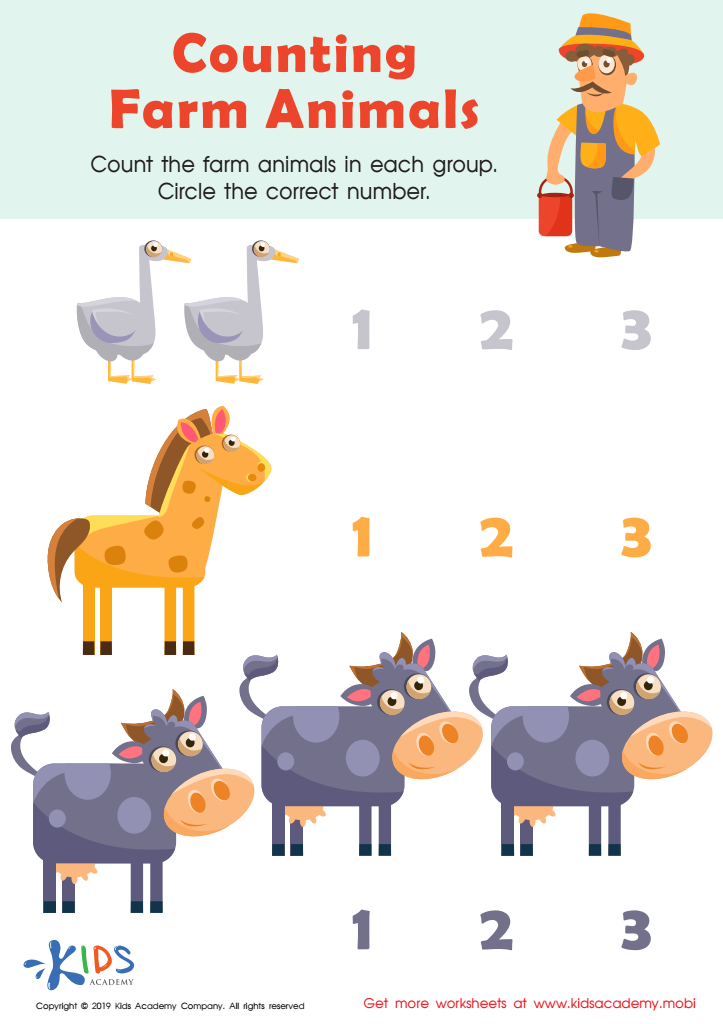
Counting Farm Animals Worksheet
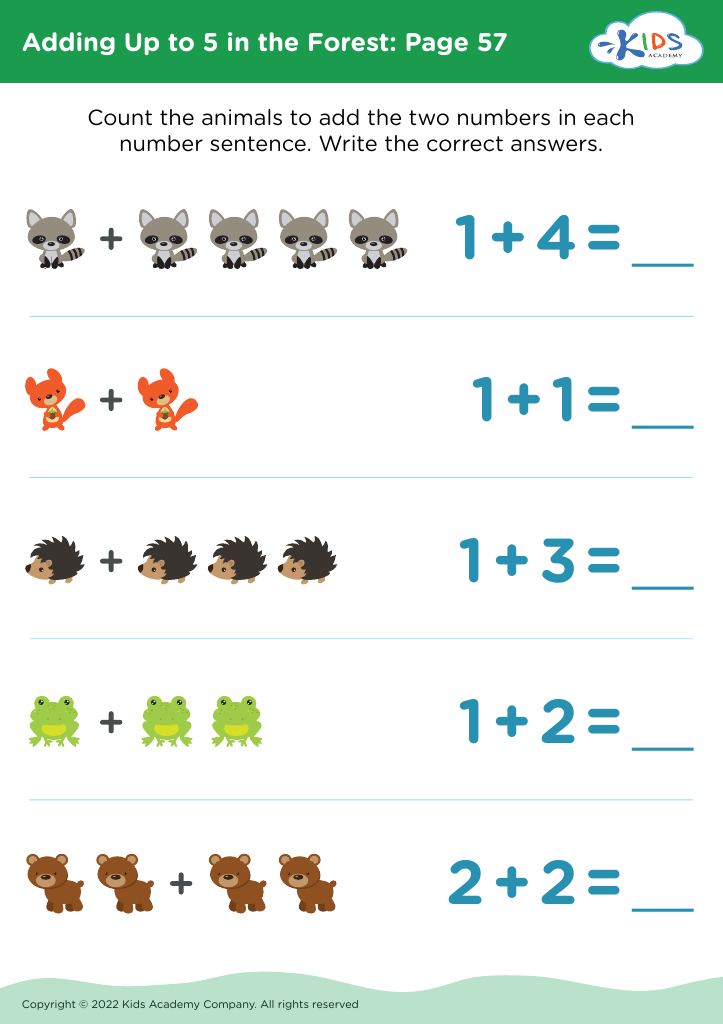








Parents and teachers should care about animal recognition math for ages 5-6 because it combines critical early math skills with an engaging and relatable topic for young children. This type of learning leverages children's natural interest in animals to introduce and reinforce basic math concepts such as counting, addition, subtraction, and pattern recognition. By associating these abstract concepts with something tangible and familiar, children are more likely to stay engaged and retain information.
Moreover, animal recognition math promotes cognitive development and problem-solving skills in a playful context. For instance, asking children to count the number of legs on different animals or creating simple math problems based on groups of animals can make learning more interactive and fun. It also helps in developing fine motor skills through drawing or using manipulatives.
Another critical aspect is the encouragement of cross-disciplinary learning. While focusing on math, children also improve their language skills by learning animal names and characteristics. This holistic approach nurtures curiosity and a love for learning, setting a strong foundation for future academic success.
By caring about animal recognition math, parents and teachers provide a rich, multimodal educational experience that keeps learning dynamic and enjoyable, paving the way for more complex mathematical and scientific concepts later on.








