Basic math abilities Math Worksheets for Ages 5-6
3 filtered results
-
From - To
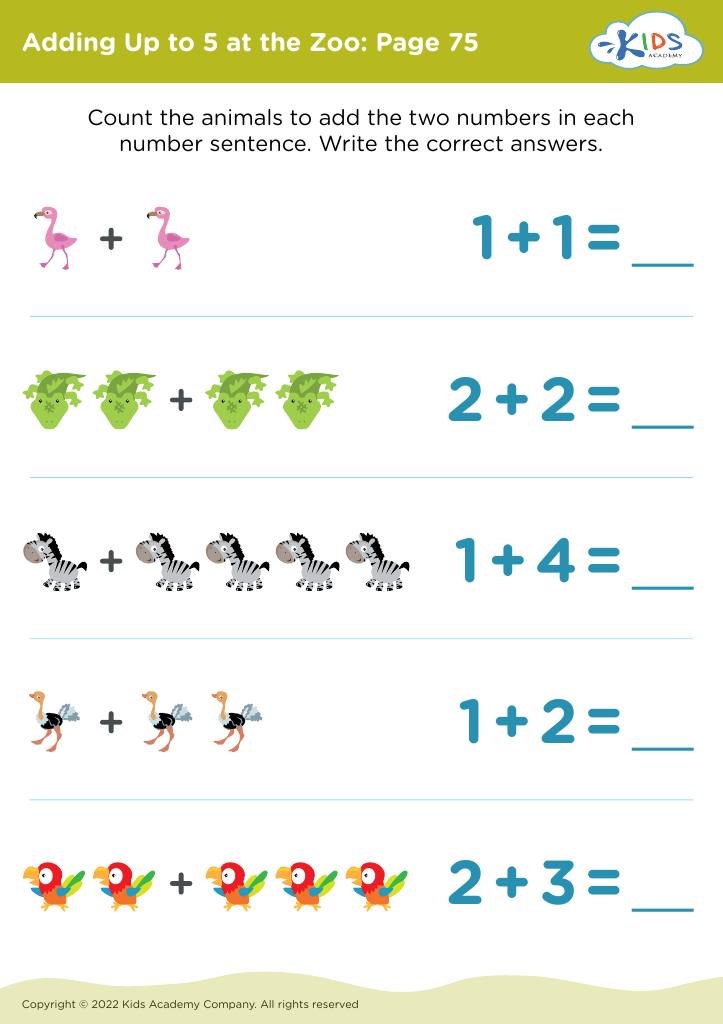
Explore our engaging "Basic Math Abilities Math Worksheets" designed specifically for children aged 5-6. These printable resources help young learners develop foundational math skills such as counting, addition, and subtraction through fun and interactive activities. Each worksheet promotes critical thinking and problem-solving, leveraging exciting themes and colorful illustrations to keep kids entertained while they learn. Perfect for both classroom and home use, our worksheets aim to build confidence and spark a love for math in early learners. Start your child's mathematical journey today with our easy-to-use worksheets, ideal for nurturing essential skills at this pivotal stage in their education!
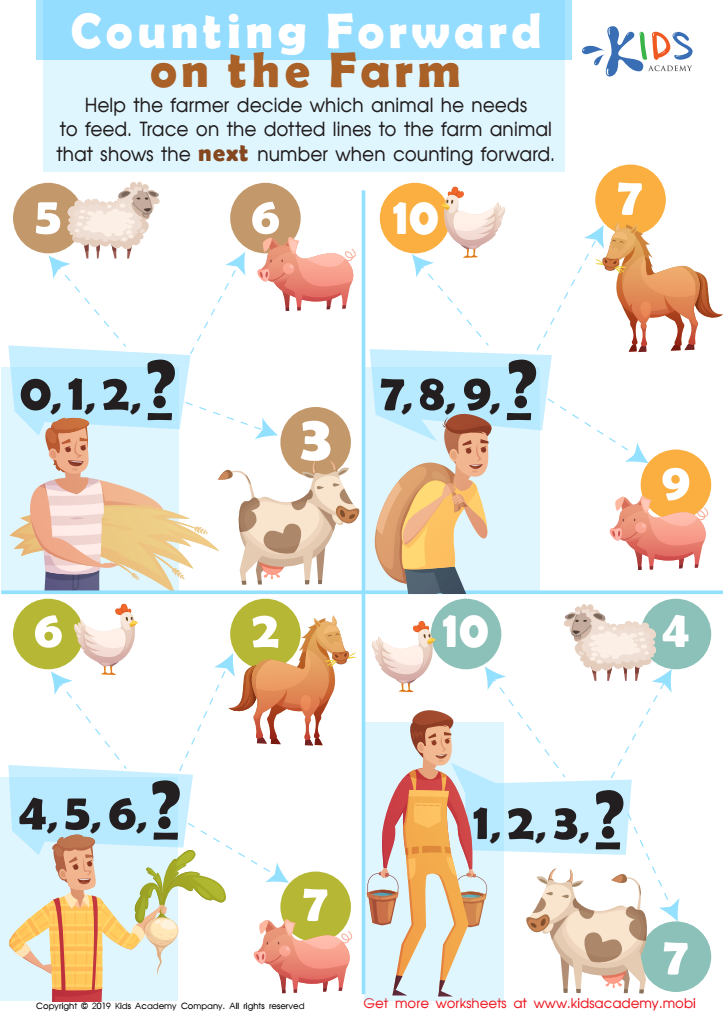
Counting Forward On the Farm Worksheet
 Assign to My Students
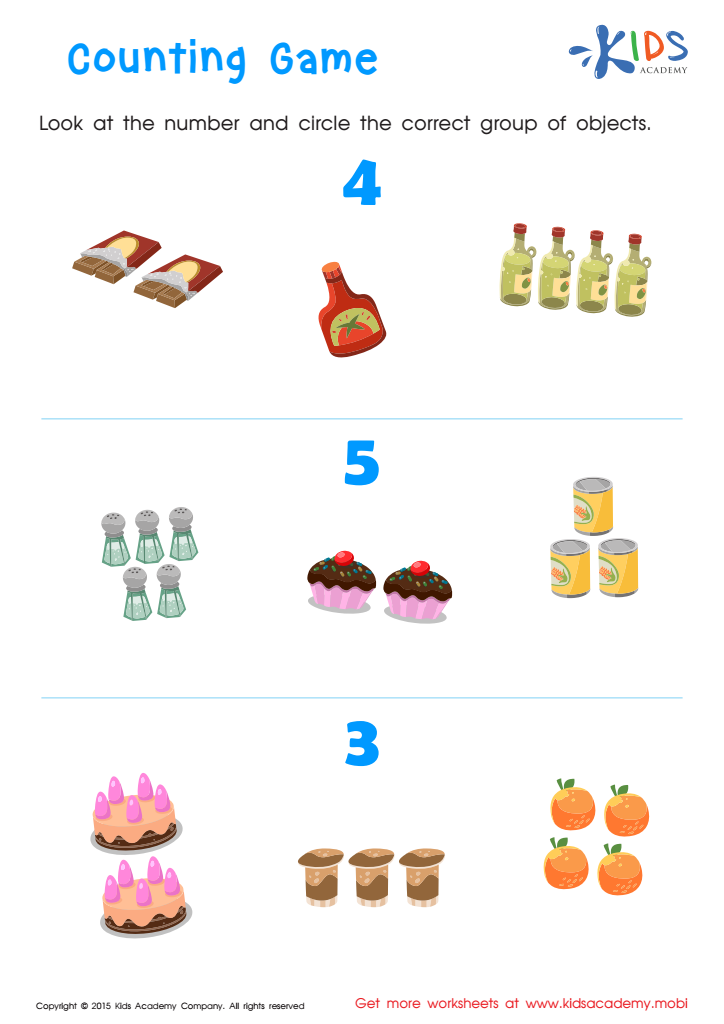
Counting Worksheet







Basic math abilities in children aged 5-6 are foundational for their future academic success and everyday life. From counting to recognizing shapes and comparing quantities, these skills lay the groundwork for more complex mathematics. At this age, children develop critical thinking and problem-solving skills that are vital not only in math but across all subjects. Early exposure to math concepts promotes cognitive development and enhances their ability to reason logically.
Moreover, strong basic math skills can boost children’s confidence, making them more willing to engage with challenging concepts as they progress in school. Parents and teachers play a crucial role by creating a supportive learning environment, incorporating math into everyday activities, and encouraging a positive attitude towards the subject.
Understanding numeracy is also essential for practical life skills, from budgeting and cooking to understanding time. As children learn through play, educators and parents can facilitate enjoyable experiences that reinforce these concepts, making math less daunting and more engaging. Ultimately, fostering basic math abilities ensures that children are well-prepared for future learning and helps them develop a lifelong appreciation for mathematics.








