Fine motor skills development Math Worksheets for Ages 5-6
3 filtered results
-
From - To
Looking for engaging tools to help your child develop fine motor skills while learning math? Our Fine Motor Skills Development Math Worksheets for Ages 5-6 are perfect! These specially designed printables blend math practice with activities that target hand-eye coordination, finger strength, and dexterity. From tracing numbers to manipulating small objects, each worksheet offers a fun way to boost fine motor skills. Ideal for young learners, these resources will enhance their ability to write, cut, and perform other essential tasks. Build a strong foundation for your child’s academic growth by integrating these developmental exercises into their early education routine.
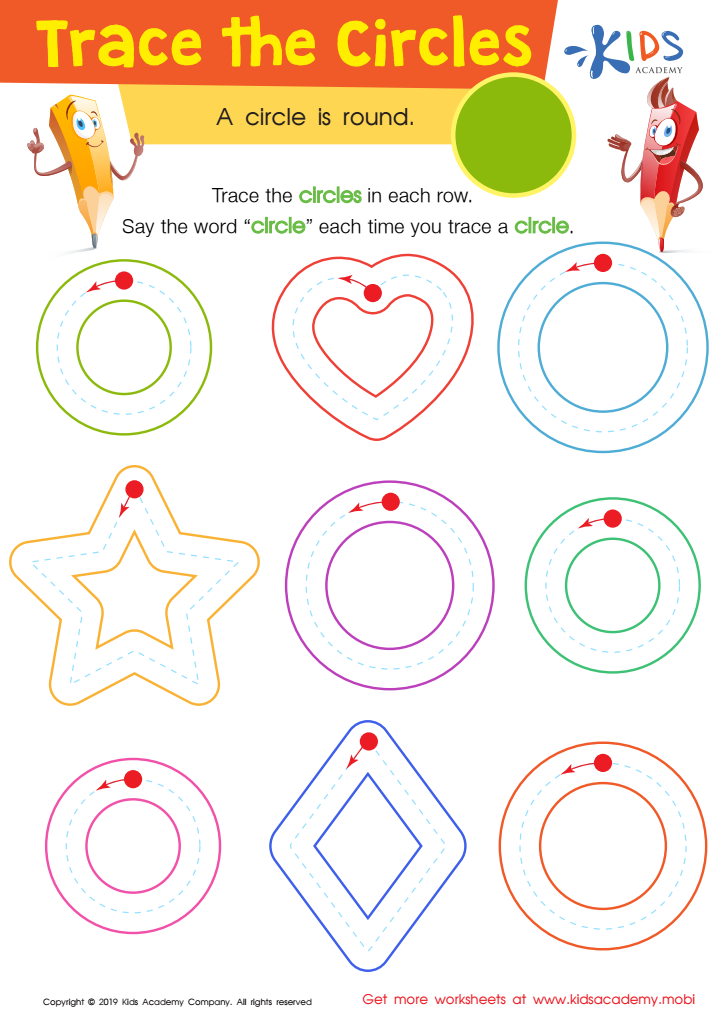
Trace The Circles Worksheet
 Assign to My Students
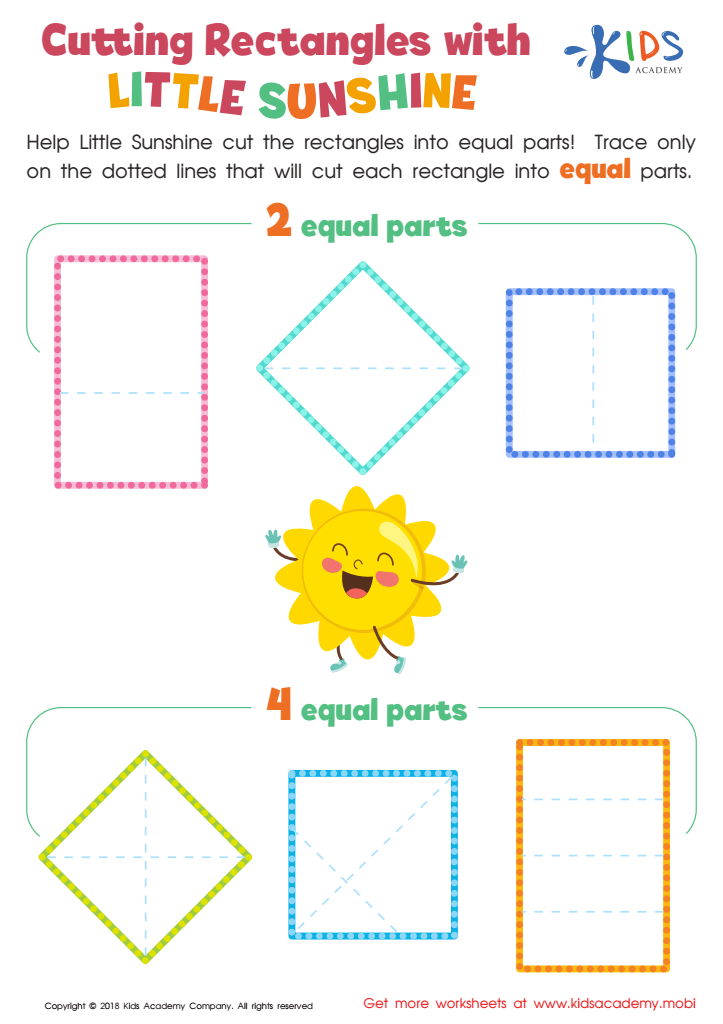
Cutting Rectangles with Little Sunshine Worksheet








Fine motor skills development is crucial for children aged 5-6, not just for their daily activities but also for their educational progress in subjects like math. At this stage, children are fine-tuning their hand-eye coordination, dexterity, and finger strength, all of which directly impact their ability to manipulate objects and tools, such as pencils and rulers, essential for drawing numbers, shapes, and lines in math.
Fostering fine motor skills helps children more accurately and efficiently write numbers and symbols, align objects within graphs, and handle manipulatives like counters or geometric shapes. This is especially important in mathematics, where precision in writing and placing digits significantly contributes to their understanding of numeric concepts, spatial awareness, and problem-solving skills.
Moreover, activities that enhance fine motor skills, such as cutting shapes, assembling puzzles, or arranging beads, can inherently teach mathematical principles like counting, sorting, and recognizing patterns. These integrated experiences make learning math a more hands-on and engaging process, strengthening both cognitive and motor development simultaneously.
In summary, by focusing on fine motor skill activities, parents and teachers provide children with the foundational tools needed for academic success, particularly in math, while also boosting their confidence and independence in both educational and everyday tasks.








