Identifying shapes Math Worksheets for Ages 5-6
5 filtered results
-
From - To
Unlock your child's mathematical potential with our engaging "Identifying Shapes" Math Worksheets, designed specifically for ages 5-6. These interactive worksheets help young learners recognize and differentiate between various shapes such as circles, squares, triangles, and more, fostering essential spatial awareness and cognitive skills. Each worksheet is thoughtfully crafted to ensure your child enjoys hours of learning while developing their understanding of geometry through fun and playful activities. Perfect for at-home learning or supplemental classroom activities, our resources help build a strong foundation in math. Begin your child's journey in exploring the world of shapes today and watch them thrive!
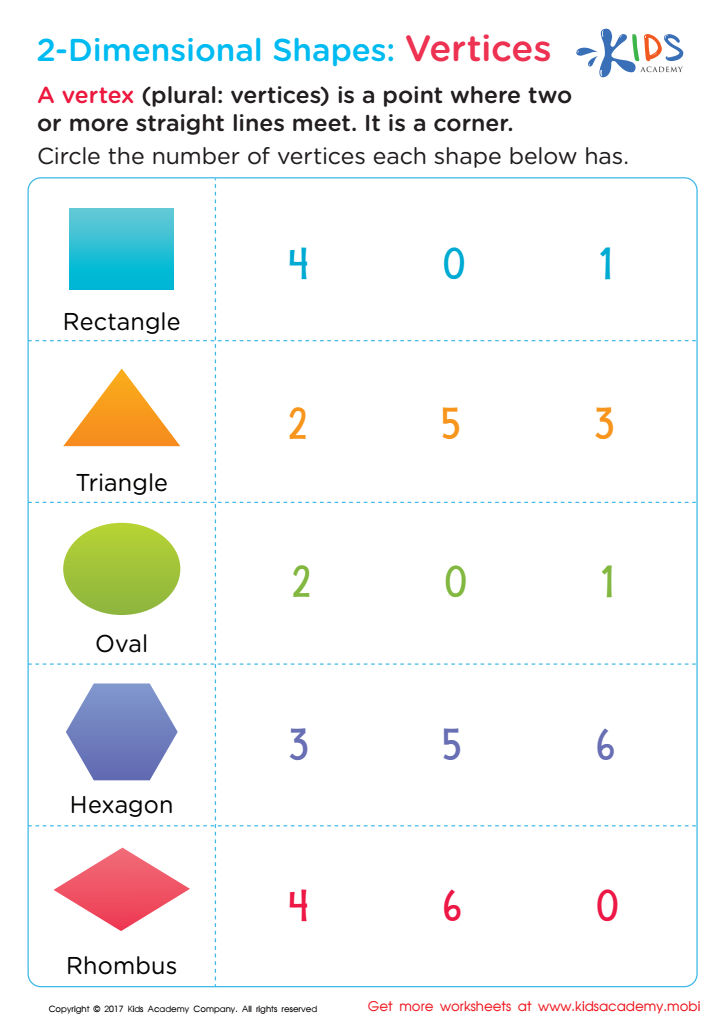
Two–Dimensional Shapes: Vertices Printable
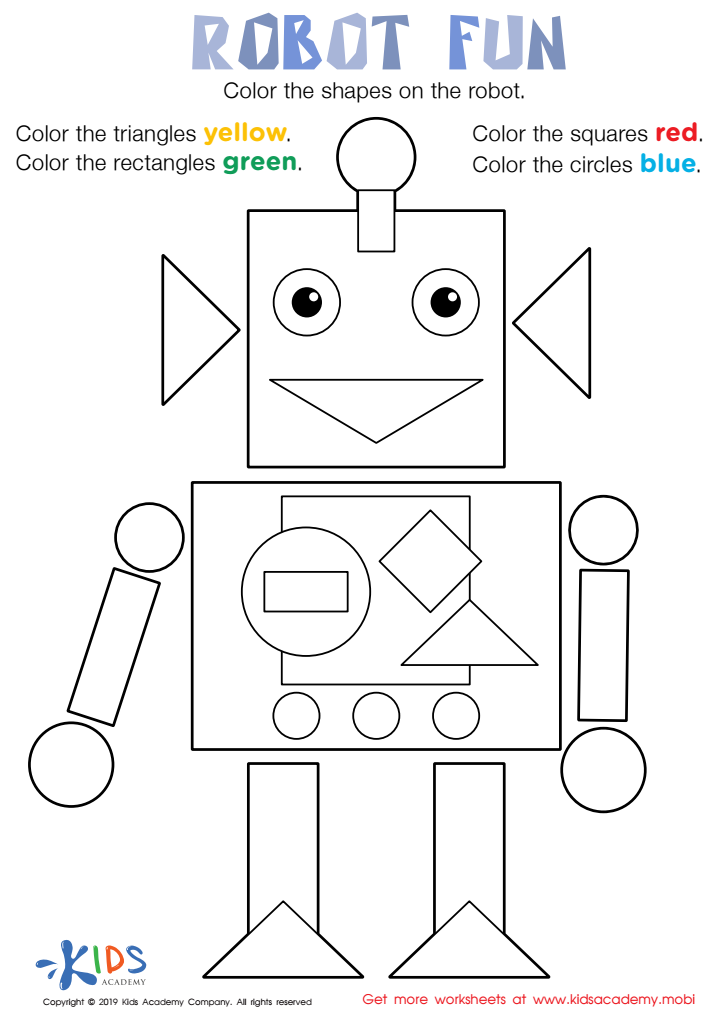
Robot Fun Worksheet
 Assign to My Students
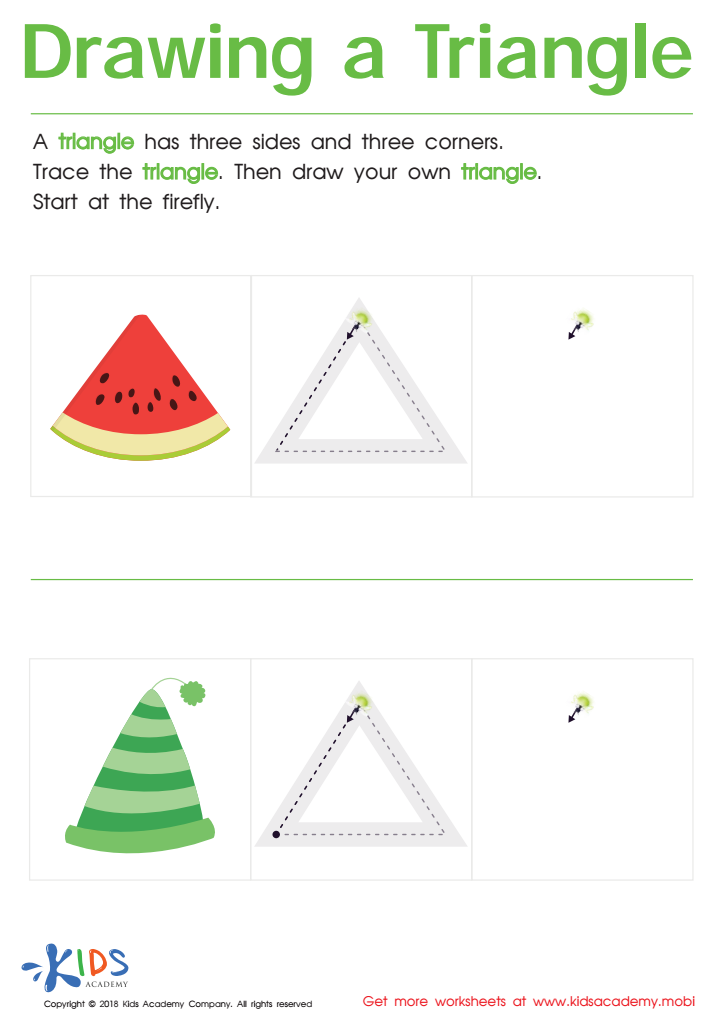
Drawing a Triangle Worksheet
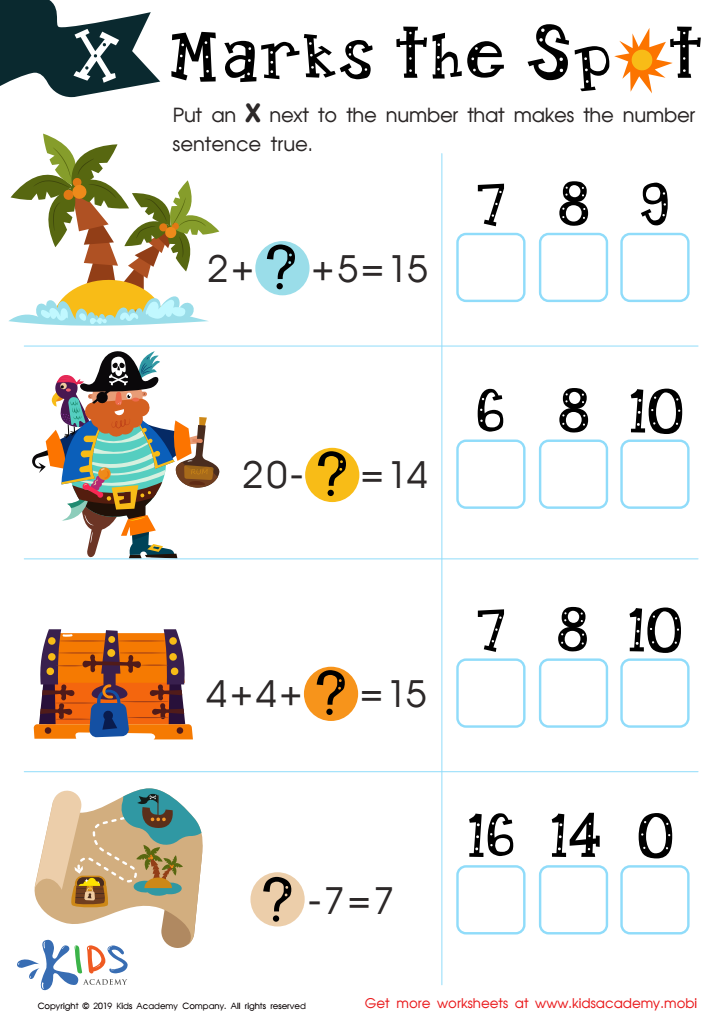
X Marks the Spot Worksheet
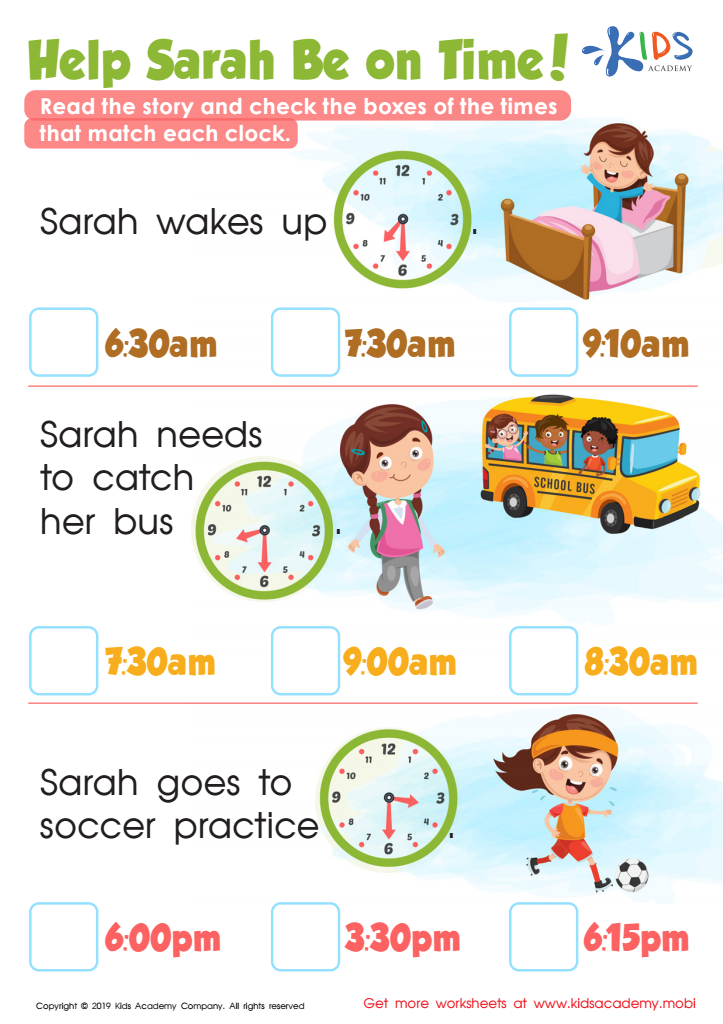
Help Sarah Be on Time! Worksheet








Identifying shapes is a foundational skill in early childhood education and plays a crucial role in cognitive development for children aged 5-6. Understanding shapes helps children develop spatial awareness, which is essential for problem-solving and critical thinking. When children learn to identify and categorize shapes, they enhance their ability to recognize patterns, an important skill in mathematics and literacy.
Moreover, recognizing shapes supports language development; children learn to articulate their observations and describe the world around them. Engaging in shape identification offers opportunities for hands-on learning and creative exploration, making math fun and interactive. Parents and teachers can use everyday objects to encourage this learning, helping children connect mathematical concepts to their daily lives.
By fostering shape identification, parents and teachers cultivate confidence in young learners, giving them a sense of accomplishment that motivates further exploration. This early mathematical literacy serves as a springboard for future learning in geometry and other math-related subjects. Ultimately, paying attention to shape recognition contributes to a well-rounded educational approach, preparing children for more complex mathematical concepts as they progress in their academic journey. Engaging with shapes lays the groundwork for life skills that extend beyond the classroom, supporting overall development.








