Nature appreciation Math Worksheets for Ages 5-6
5 filtered results
-
From - To
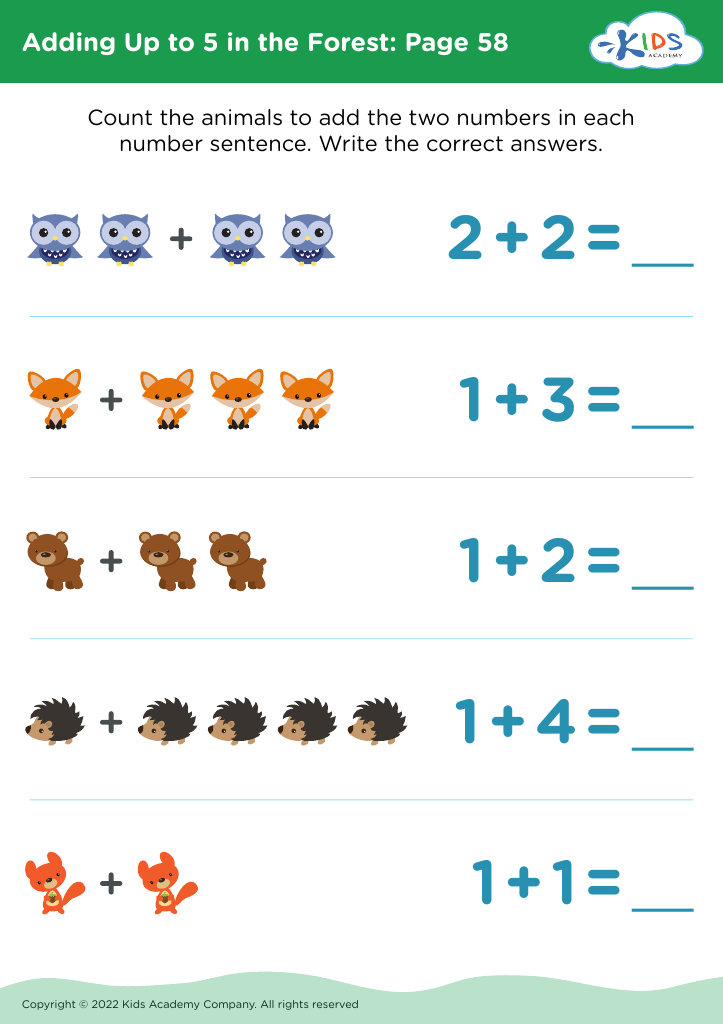
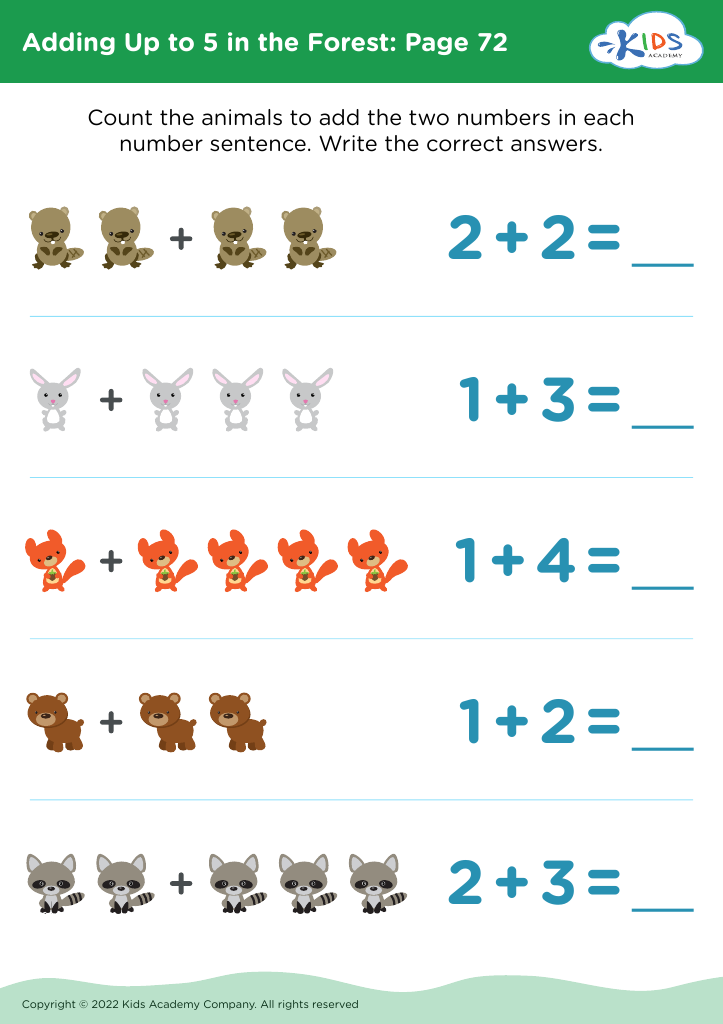
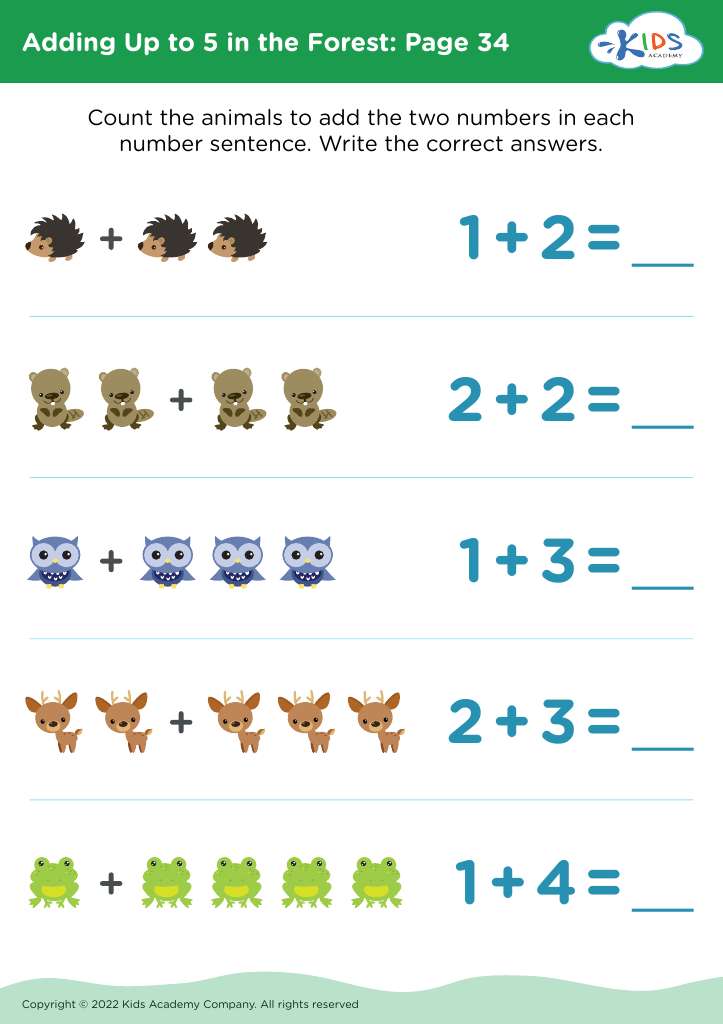
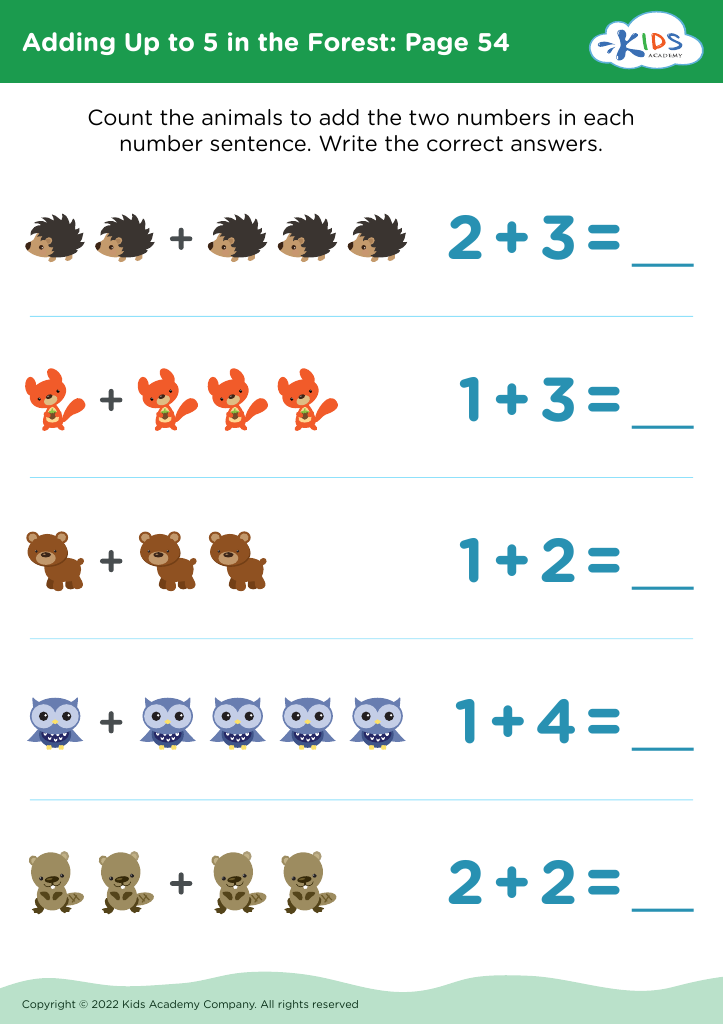
Discover our engaging "Nature Appreciation Math Worksheets for Ages 5-6". Blending the beauty of nature with fundamental math skills, these worksheets make learning enjoyable for young children. Perfectly designed for ages 5-6, each worksheet offers activities like counting, addition, and pattern recognition, all inspired by nature. Kids will count leaves, add birds, and recognize patterns through delightful images. Ideal for both classroom and home use, these worksheets help nurture a love for both math and the environment. Start your child's journey to academic success and a deeper appreciation for Mother Earth today!
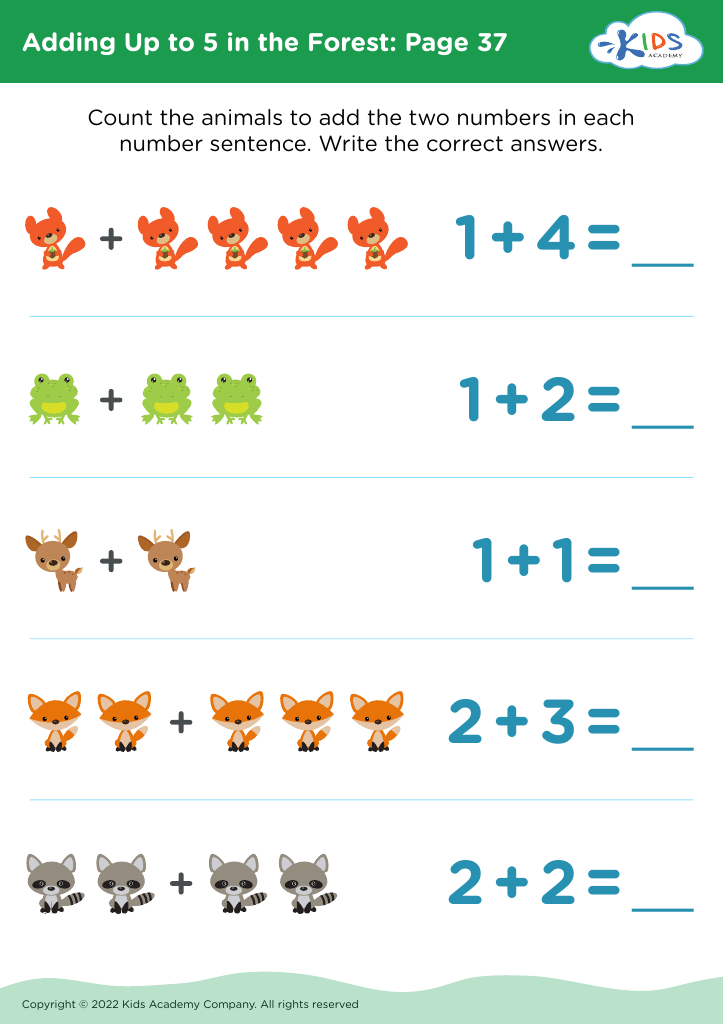








Introducing Nature Appreciation Math to children ages 5-6 is a unique and essential component of early childhood education. At this developmental stage, kids are incredibly curious and ready to absorb the world around them. Combining math with an appreciation for nature not only balances academic learning but also cultivates a sense of environmental stewardship.
Nature provides a rich, tactile environment for children to explore mathematical concepts. They can count leaves, measure the length of sticks, recognize patterns in flowers, or understand geometric shapes through the climbing structures of trees. Such activities provide hands-on learning, making math engaging, relatable, and enjoyable.
Additionally, outdoor learning promotes physical activity and can improve concentration and mood, thereby advancing cognitive function. This integrated approach helps children develop not just mathematical skills, but also fine motor skills, observation techniques, and problem-solving abilities.
Parents and teachers should care about Nature Appreciation Math because it nurtures a holistic development in young minds. Children are more likely to remember and be interested in math when they see its relevance in the real world which can lay a lifelong foundation for both academic and personal growth. Fostering early exposure to nature may also lead to a lasting respect for the environment, equipping them to become more responsible, environmentally-conscious adults.








