Understanding sequencing Math Worksheets for Ages 5-6
4 filtered results
-
From - To
Understanding sequencing is a fundamental math skill for young learners aged 5-6. Our specially designed worksheets at Kids Academy help to build this essential ability by guiding children through fun and engaging activities. These worksheets focus on recognizing patterns, ordering numbers, and arranging events in a logical sequence. They not only reinforce math concepts but also enhance critical thinking and problem-solving skills. Suitable for preschool and early elementary students, these exercises provide a strong educational foundation, ensuring your child gains confidence and enjoys learning math step by step. Visit Kids Academy to boost your child's sequencing skills today!
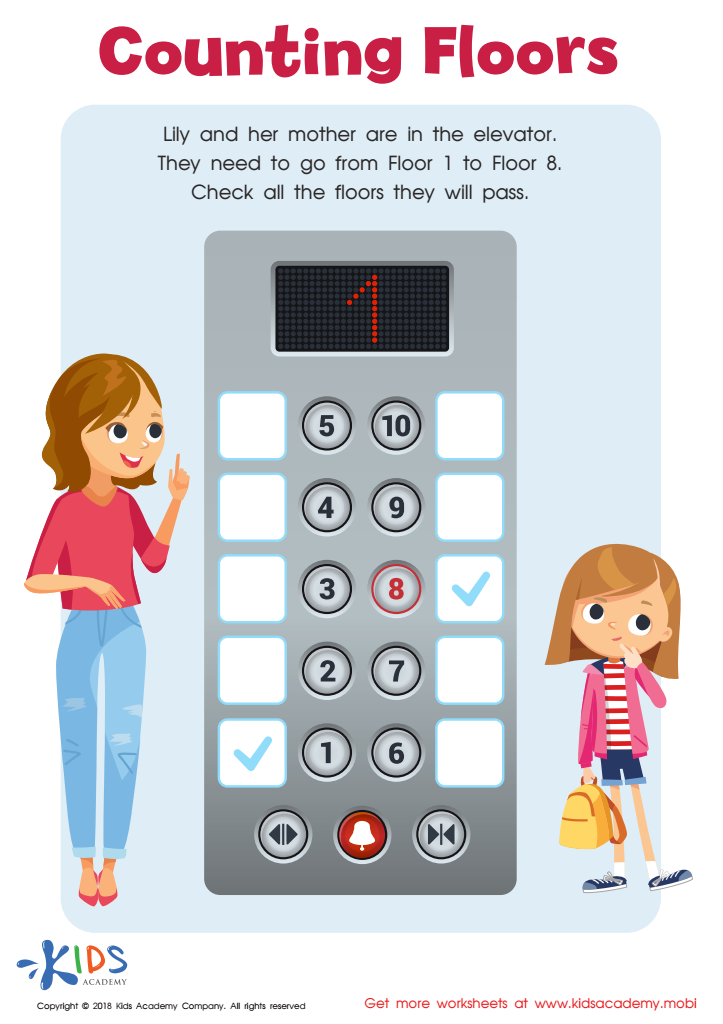
Counting Floors Worksheet
 Assign to My Students
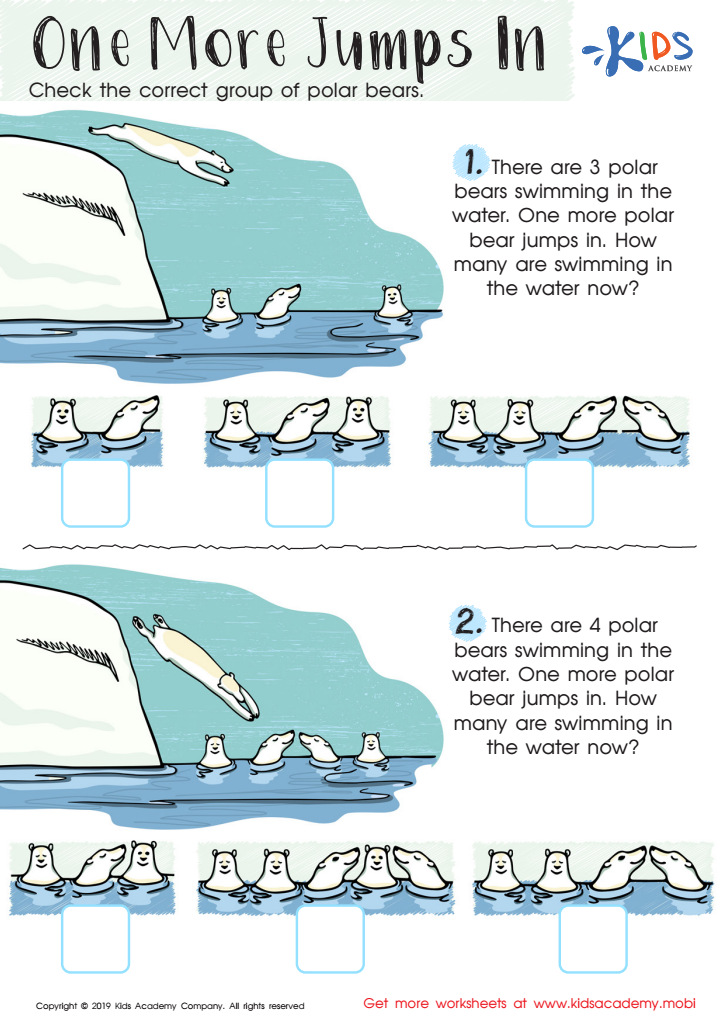
One More Jumps In Worksheet
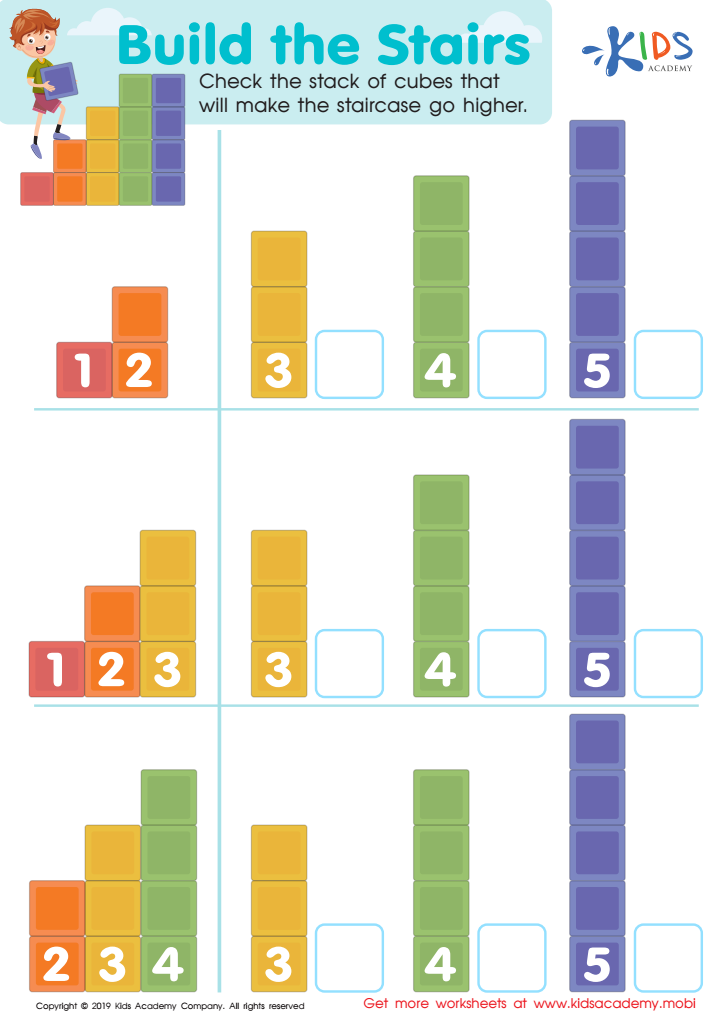
Build the Stairs Worksheet
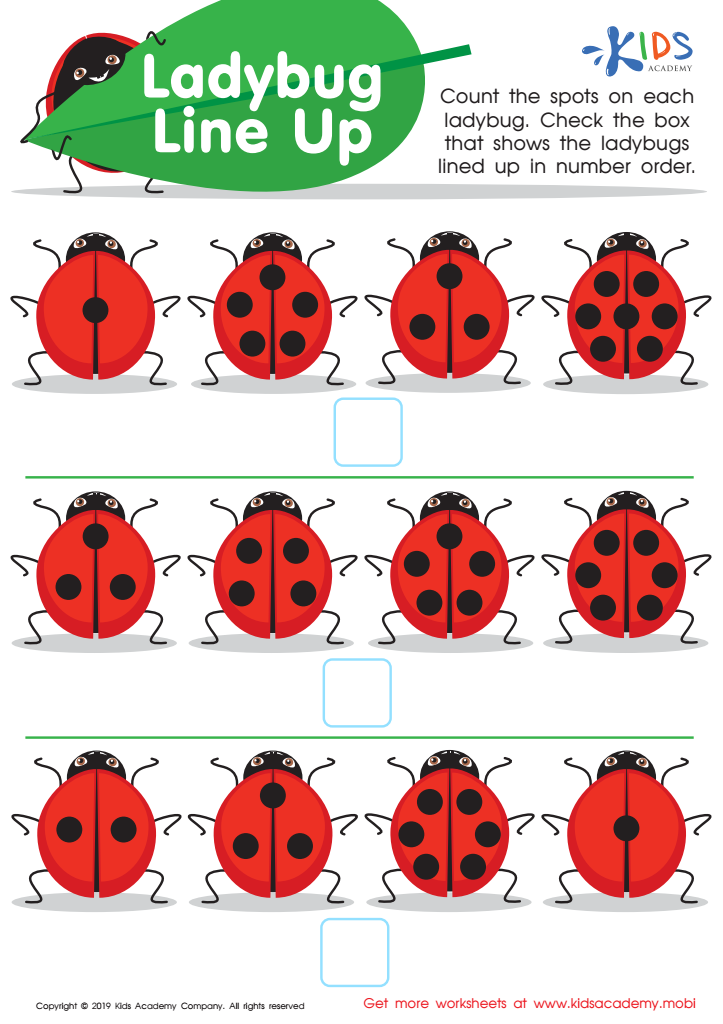
Ladybug Line Up Worksheet








Understanding sequencing in math is crucial for young learners, particularly for children aged 5-6, as it forms the foundation for critical mathematical concepts and cognitive skills. Sequencing essentially involves understanding the order in which events, numbers, or patterns occur, and this fundamental ability underpins numerous aspects of mathematics and everyday reasoning.
Firstly, grasping sequencing reinforces number sense, an essential component of early math skills. Children learn to recognize number order, count forward and backward, and understand numerical relationships, which are vital for more complex operations like addition and subtraction.
Moreover, sequencing aids in the development of logical thinking and problem-solving skills. By arranging items or numbers in a particular order, children learn to identify patterns and make predictions, enhancing their ability to approach and solve new problems systematically.
Additionally, sequencing is tied to language and literacy development. Understanding the sequence of events in stories or instructions helps children to follow directions and comprehend narrative structures better, linking math skills to reading and writing abilities.
Lastly, emphasizing sequencing creates a robust learning bridge to future topics in math and science, including arithmetic progression, algebra, and cause-and-effect reasoning. For parents and teachers, focusing on sequencing equips children with the essential, transferrable skills that support overall academic and life success.








