
Visualization skills Math Worksheets for Ages 5-6
4 filtered results
Difficulty Level
Grade
Age
-
From - To
Subject
Activity
Standards
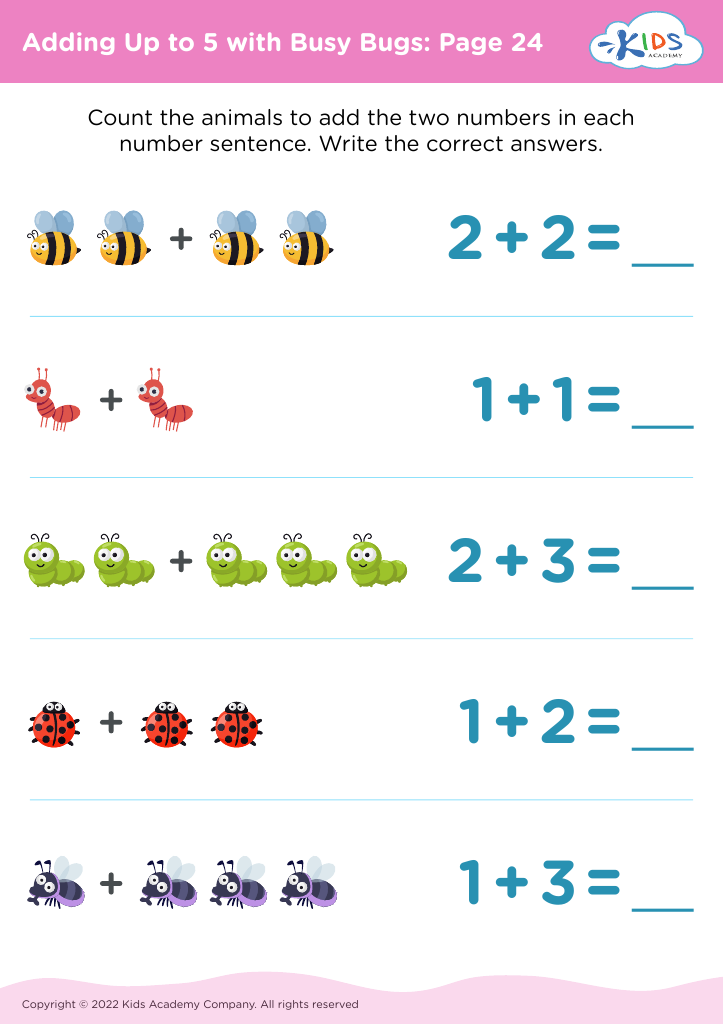
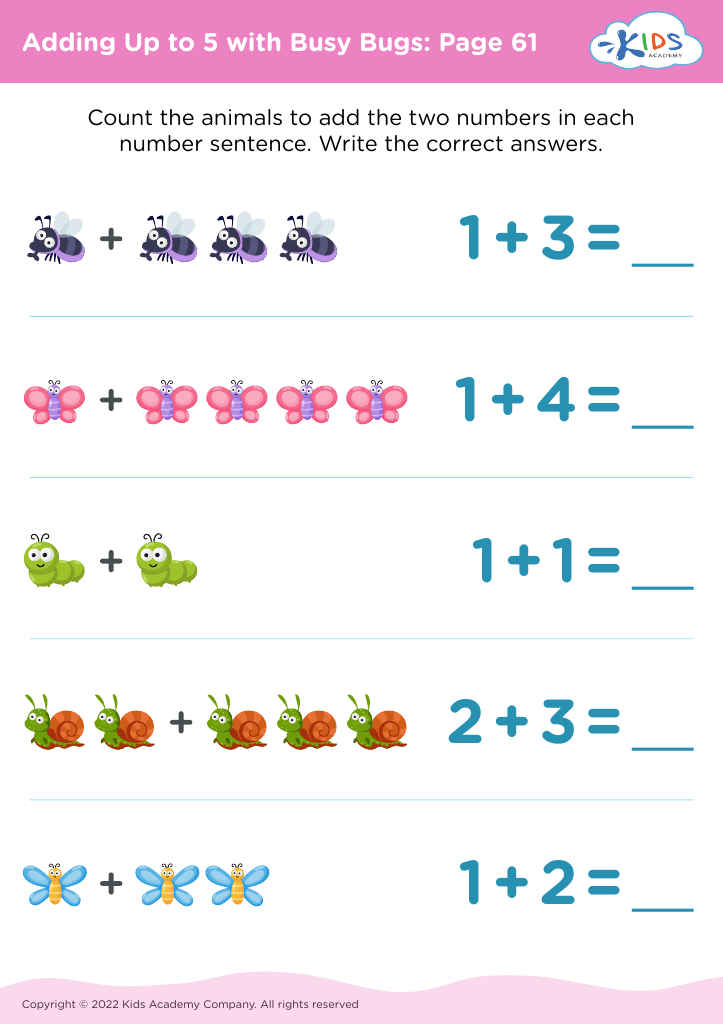
Boost your child's mathematical journey with our Visualization Skills Math Worksheets designed for ages 5-6. These engaging and colorful worksheets help young learners develop crucial visualization skills, paving the way for understanding complex mathematical concepts. Through a variety of fun activities like shape recognition, spatial awareness, and pattern identification, kids enhance their critical thinking and problem-solving abilities. Our worksheets are perfect for both classroom and home use, providing a strong foundation in math while keeping children motivated and enthusiastic. Give your child the advantage they need with these expertly crafted visualization skill resources.
Favorites
With answer key
Interactive
 Assign to My Students
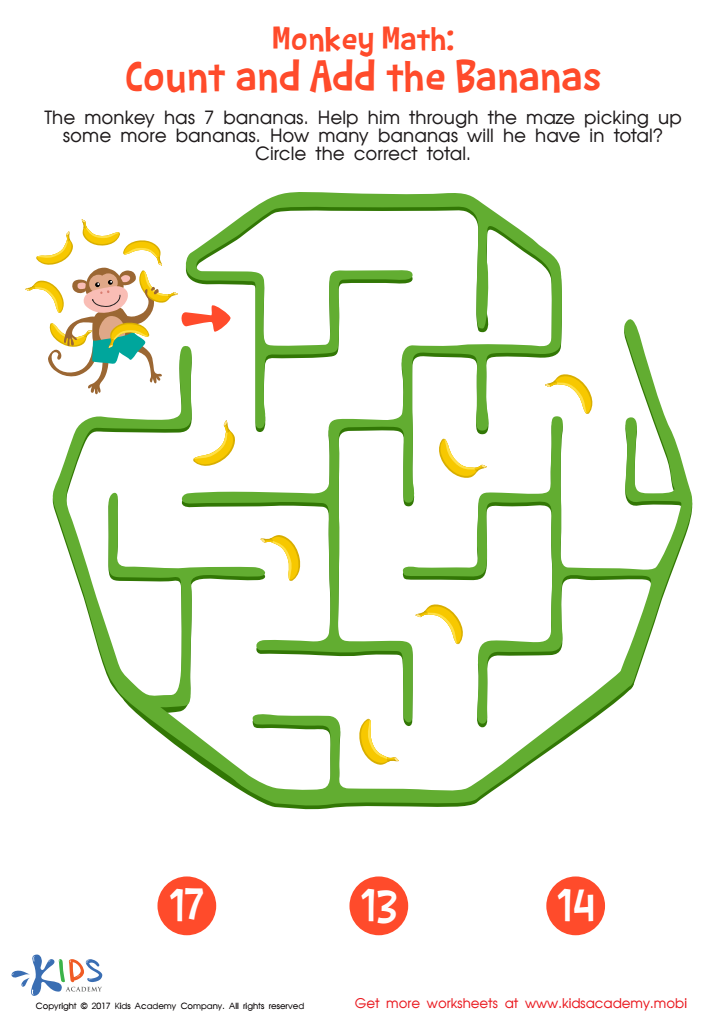
Monkey Math Worksheet
Worksheet
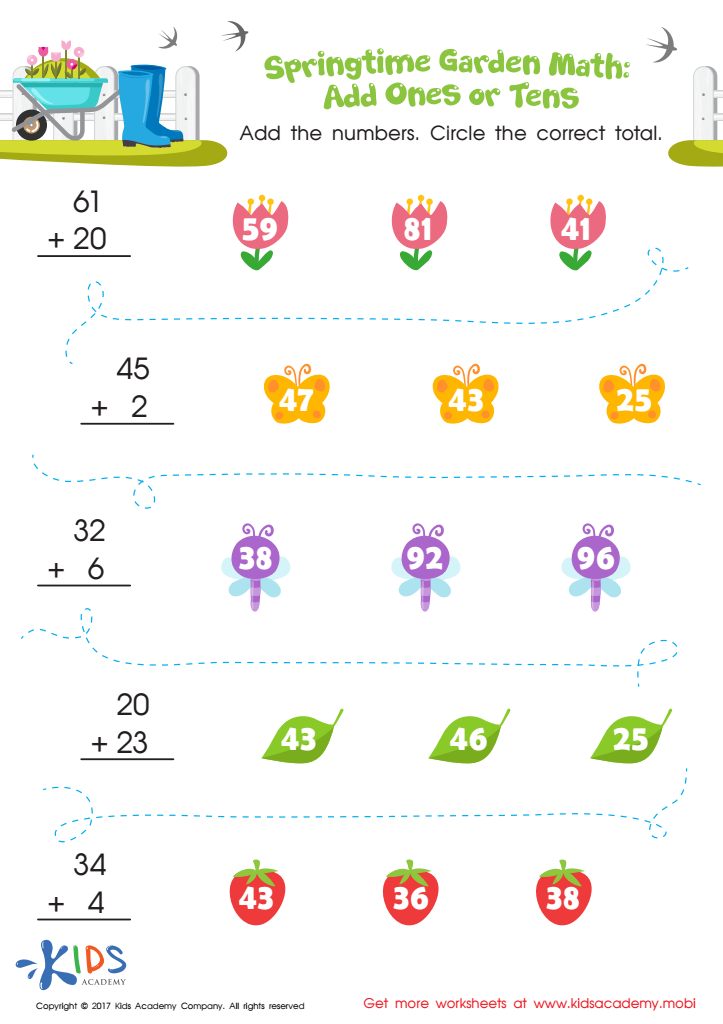
Springtime Garden Math Worksheet
Get your kid ready for math success with this bright garden-themed addition worksheet! They'll practice adding two-digit numbers and check their answers with the choices provided. It's an effective way to help kids build skills, as practice strengthens understanding. Get printing for math mastery!
Springtime Garden Math Worksheet
Worksheet
Join Kids Academy for Free
Who is primarily going to use this learning content?



.jpg)




Visualization skills in math lay a fundamental groundwork for young learners, especially for ages 5-6, often described as the "primary years" of education. At this developmental stage, children are incredibly receptive and their cognitive abilities are rapidly evolving. Visualization helps children comprehend abstract concepts by linking them to concrete images or scenarios. For example, visualizing numbers as groups of objects can make basic arithmetic more intuitive and less intimidating.
Engaging students in activities like drawing shapes, using building blocks, or working with simple graphs not only enhances their spatial reasoning but also improves problem-solving skills. By incorporating visualization, children learn to see math as a tangible, relatable subject rather than an abstract and confusing set of numbers. This tangible connection builds a stronger foundation for more complex mathematical concepts taught later in life.
Moreover, developing visualization skills nurtures creativity and critical thinking. These skills transcend math and aid children in understanding patterns and structures in various subjects, from reading to science. For parents and teachers, fostering these skills early helps cultivate confident, curious, and competent learners who view challenges as solvable puzzles rather than insurmountable obstacles. Overall, valuing and strengthening visualization skills in math at this crucial age can significantly influence a child’s academic trajectory and love for learning.








