Shape Recognition Numbers up to 100 Worksheets for Ages 5-6
3 filtered results
-
From - To
Introduce your young learner to the fun world of numbers and shapes with our "Shape Recognition Numbers up to 100 Worksheets" designed for ages 5-6. Our collection of engaging printable worksheets will help children master number recognition, counting, and shape identification up to 100. Each activity challenges kids to match numbers with corresponding shapes, promoting critical thinking and fine motor skills. Perfect for both classroom and at-home practice, these worksheets provide a playful yet educational experience that supports early math development and prepares kids for future success. Download now and see your child’s confidence soar!
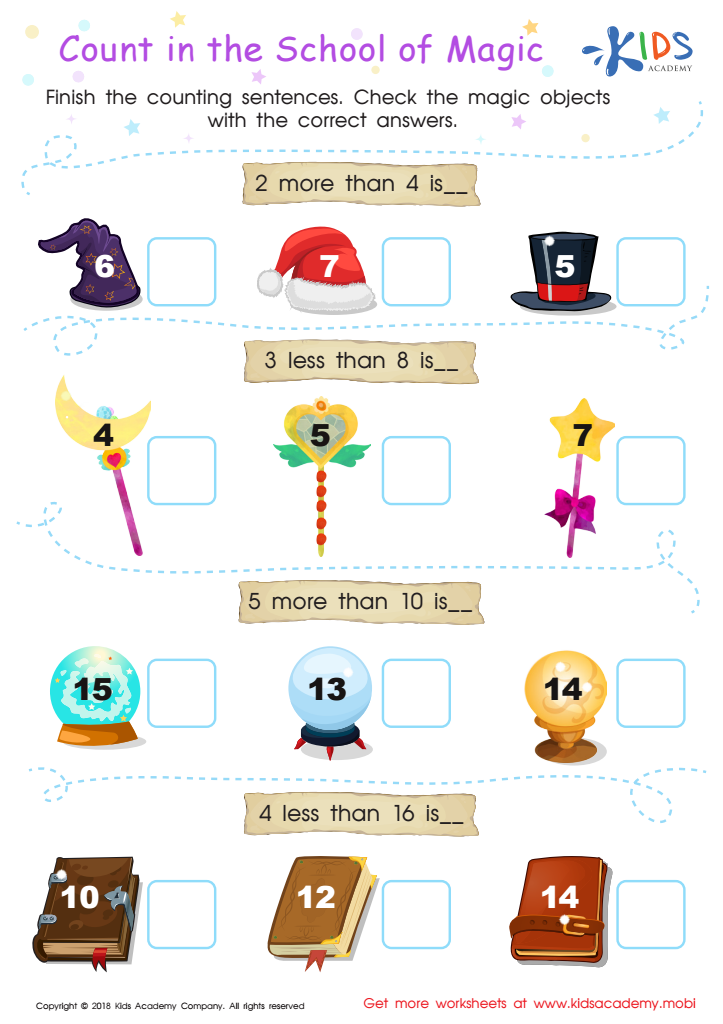
Count in the School of Magic Worksheet
 Assign to My Students
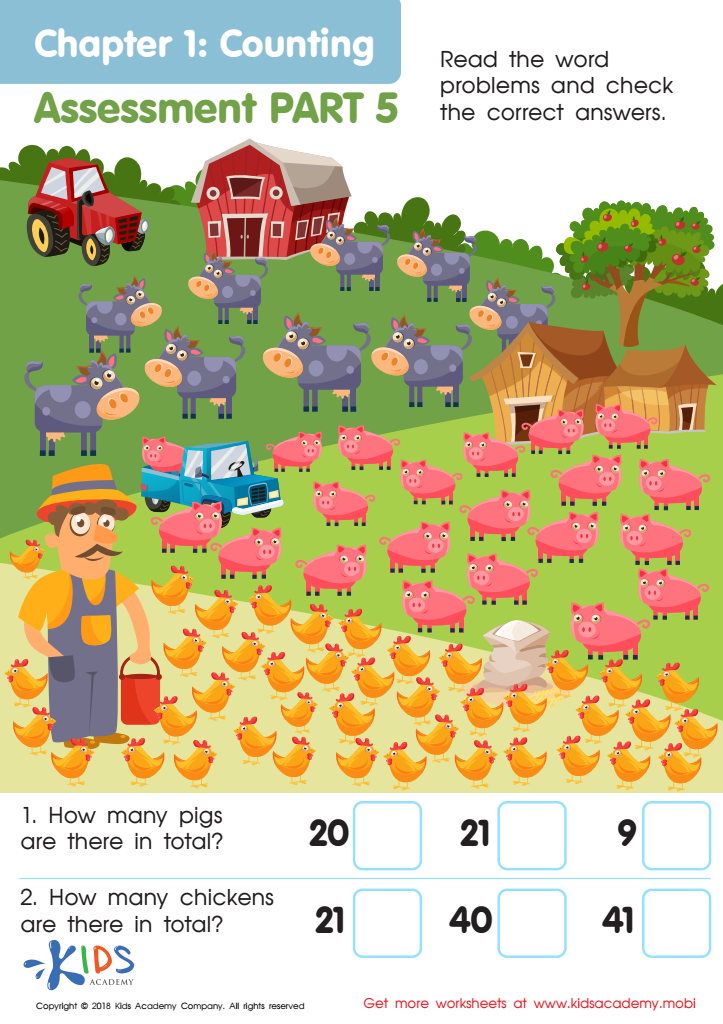
Counting: Assessment 5 Worksheet
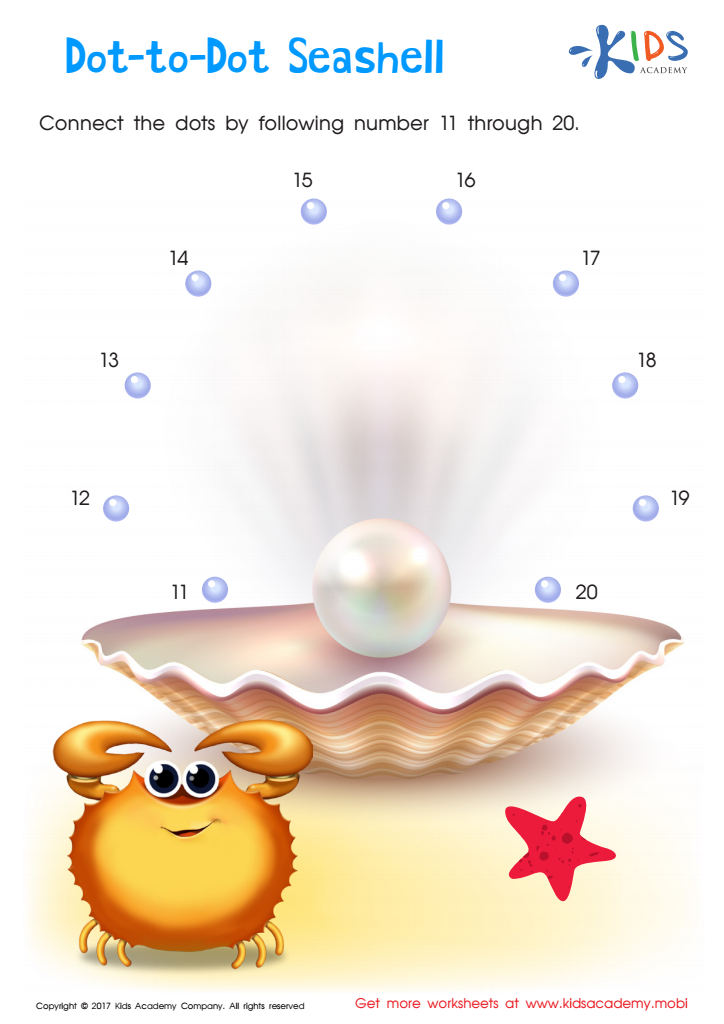
Ordering 11–20: Dot–to–dot Seashell Printable






%20(1).jpg)

Shape recognition and numbers up to 100 form foundational skills critical for early childhood education, directly impacting cognitive development in ages 5-6. Integrating both concepts, often referred to as "Shape Recognition Numbers," combines spatial and numerical understanding, fostering holistic learning.
Recognizing shapes sharpens visual perception and helps children differentiate between different forms and patterns, essential in reading and math. Numbers up to 100 instill a solid number sense, the foundation for arithmetic proficiency. Young learners begin to grasp quantities, sequences, and basic operations, predicting future success in formal math education.
As children link numerical values to shapes, they enhance their cognitive abilities, including memory and problem-solving skills. For instance, recalling the appearance of a shape aids in the memorization of numerical figures. Additionally, recognizing patterns in numbers (e.g., multiples of 10) leads to better organization of mathematical concepts, fostering analytical thinking.
Moreover, this educational integration aligns with STEM (Science, Technology, Engineering, and Mathematics) goals, encouraging children to view numbers multifacetedly—concepts broader than mere counting but as parts of a systemic, interrelated world. Addressing these skills early provides a robust educational foundation, fostering curiosity and an eagerness to learn, crucial in a child's academic journey.








