
Multiplication practice Word Problems Worksheets for Ages 5-6
4 filtered results
Difficulty Level
Grade
Age
-
From - To
Subject
Activity
Standards
Enhance your child's math skills with our engaging Multiplication Practice Word Problems Worksheets designed specifically for ages 5-6. These fun and educational worksheets offer young learners the opportunity to apply basic multiplication concepts through real-world scenarios. Perfect for building foundational skills, each worksheet encourages critical thinking and problem-solving in an age-appropriate context. Ideal for classroom or home use, these colorful printables make learning multiplication both enjoyable and effective. Equip your child with the tools they need to succeed in math by incorporating our expertly crafted worksheets into their daily routine. Start building a strong math foundation today!
Favorites
With answer key
Interactive
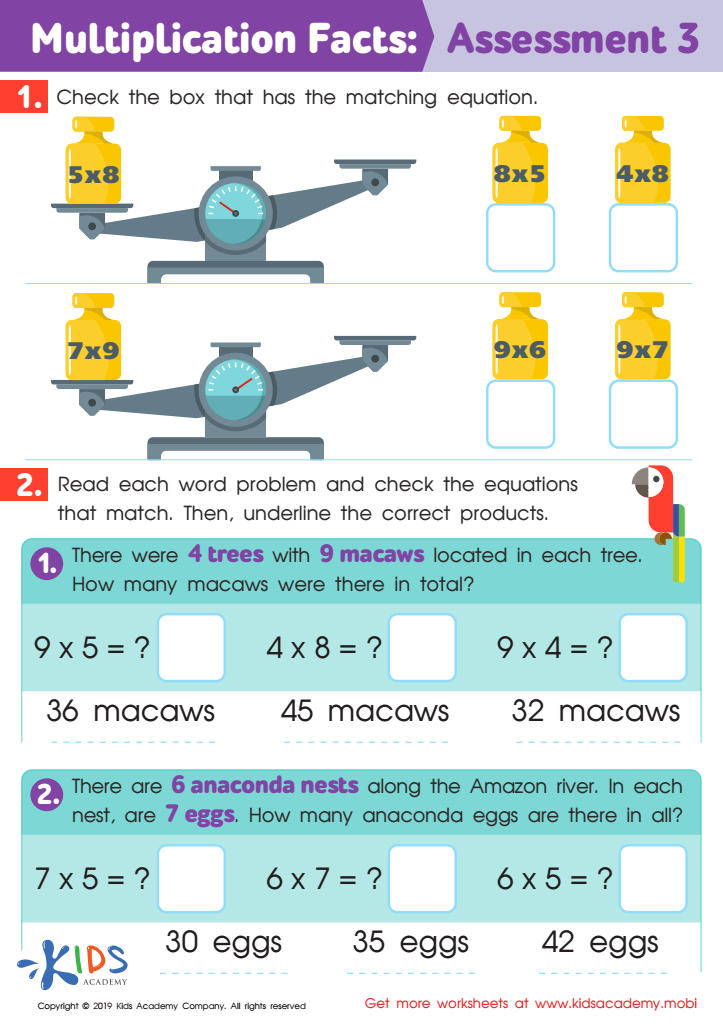
Multiplication Facts: Assessment 3 Worksheet
Test your kid's maths skills with this easy to use worksheet! Help them check the box that matches the equation in the first part, then read each word problem and underline the right answers to the second part. Assess your child's muliplication knowledge and find out where they need extra help.
 Assign to My Students
Multiplication Facts: Assessment 3 Worksheet
Worksheet
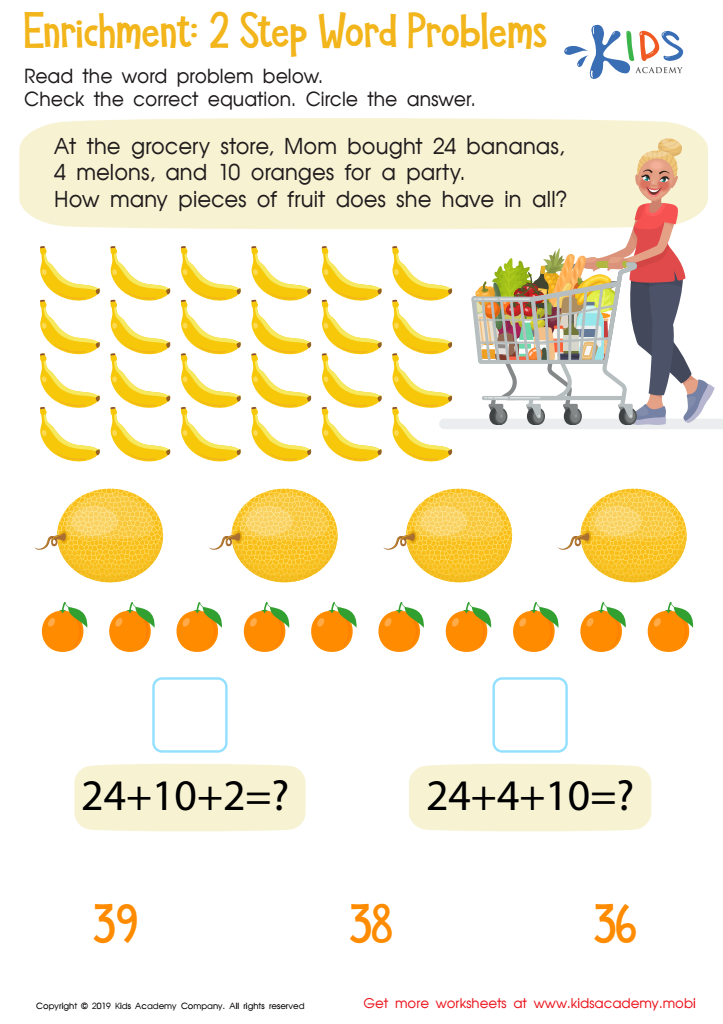
Enrichment -2 Step Word Problems Worksheet
Help your students learn math easier and faster with this colorful worksheet. Read the word problem and then guide them in checking the correct equation and finding the answer. Your students will benefit from the extra help, as they work through new concepts each day.
Enrichment -2 Step Word Problems Worksheet
Worksheet
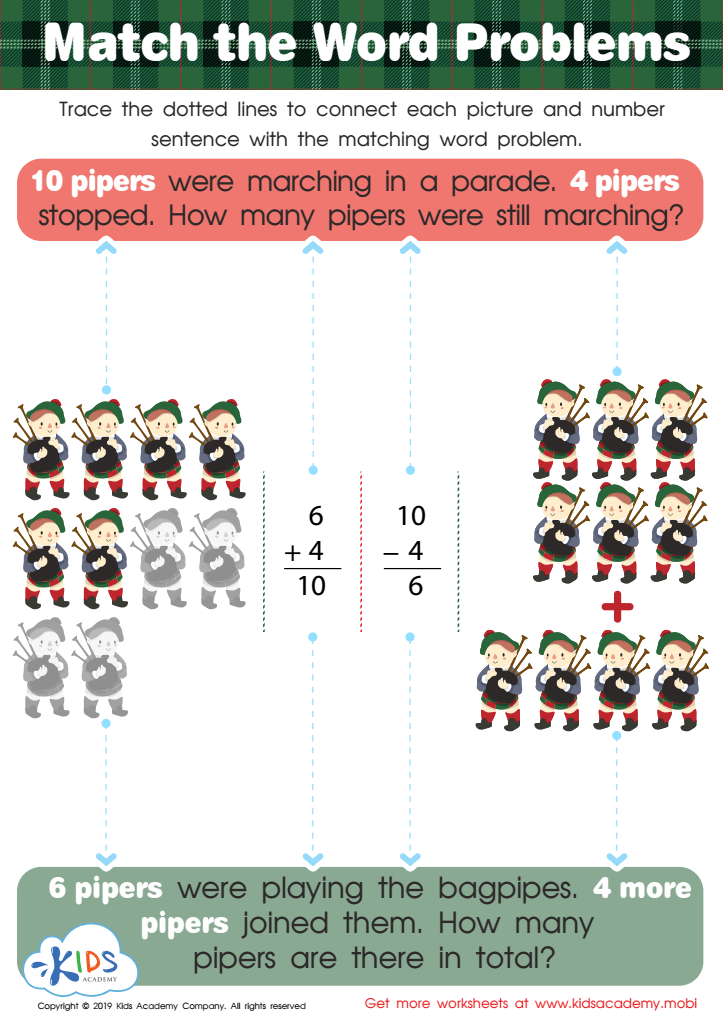
Match the Word Problems Worksheet
Read this word problem to your kids: Help them understand how it can be translated into a number problem. Trace the dotted lines to see how each picture and number sentence match the problem. With this worksheet, you can show your kids how easy it is to transform a word problem into a number problem.
Match the Word Problems Worksheet
Worksheet
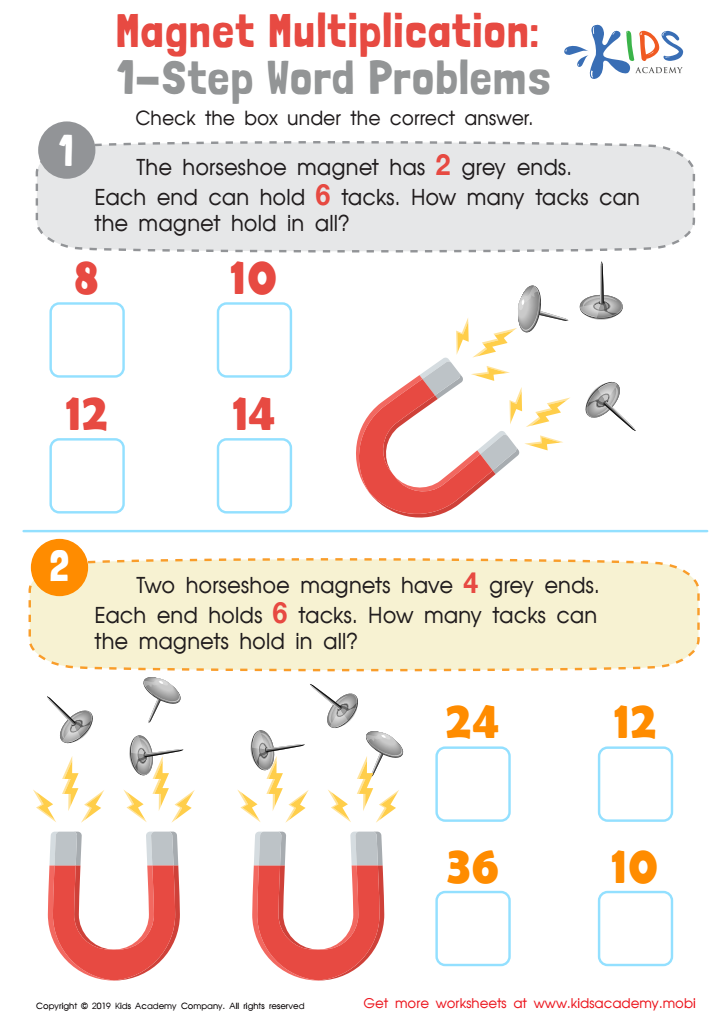
Magnet Multiplication: 1-Step Word Problems Worksheet
Refresh your students' knowledge about magnets with a simple math worksheet. Download the PDF with two word problems, along with pictures to help. Read the problems to the class, and help them identify the correct answer by checking the box. This activity will help them harness their science knowledge and practice their math skills.
Magnet Multiplication: 1-Step Word Problems Worksheet
Worksheet
Join Kids Academy for Free
Who is primarily going to use this learning content?


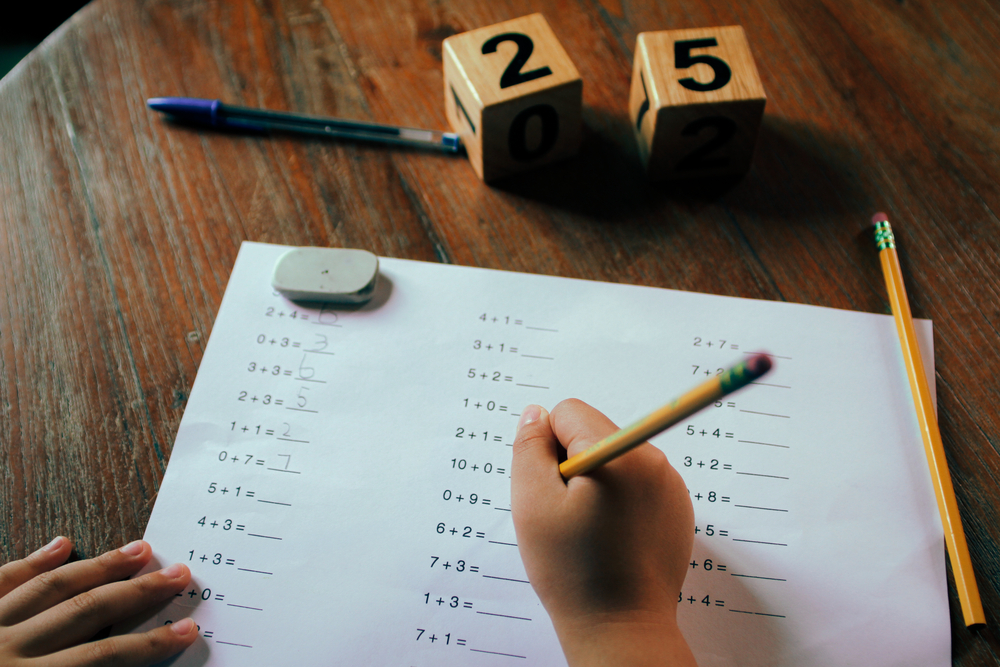





Teaching multiplication at an early age builds foundational math skills crucial for future learning. For children around 5-6 years old, integrating multiplication practice word problems into their curriculum offers several benefits. It stimulates critical thinking by encouraging them to understand concepts rather than memorizing facts. This deep comprehension aids in long-term retention and application of mathematical principles.
Word problems, in particular, present real-world scenarios, making math relevant and engaging for young learners. By contextualizing multiplication, children see the practical use of mathematics in everyday life, which enhances motivation and interest in the subject.
Furthermore, tackling these problems helps develop problem-solving skills. Children learn to break down problems into manageable steps, fostering analytical thinking and resilience. These cognitive skills are transferable across all areas of learning and life.
Early practice with multiplication word problems also encourages language development, as children must comprehend the text to solve the math problem. This dual exposure to math and literacy lays a balanced educational groundwork.
Finally, success in solving these problems boosts confidence and a positive attitude towards mathematics, setting a preferable trajectory for future educational endeavors. Therefore, parents and teachers should prioritize incorporating these activities into early education to build mathematically proficient and confident students.








