Problem-solving abilities Word Problems Worksheets for Ages 5-6
4 filtered results
-
From - To
Enhance your child's problem-solving skills with our engaging Word Problems Worksheets designed specifically for ages 5-6! Our collection features fun and relatable scenarios that encourage young learners to think critically and develop logical reasoning. Each worksheet helps children practice their math skills in a playful context, fostering a love for learning. From simple addition and subtraction to basic concepts of comparison, our worksheets are tailored to make mathematics enjoyable and accessible. Perfect for home or classroom use, these resources not only support academic growth but also build confidence in young mathematicians. Discover the joy of problem-solving today!
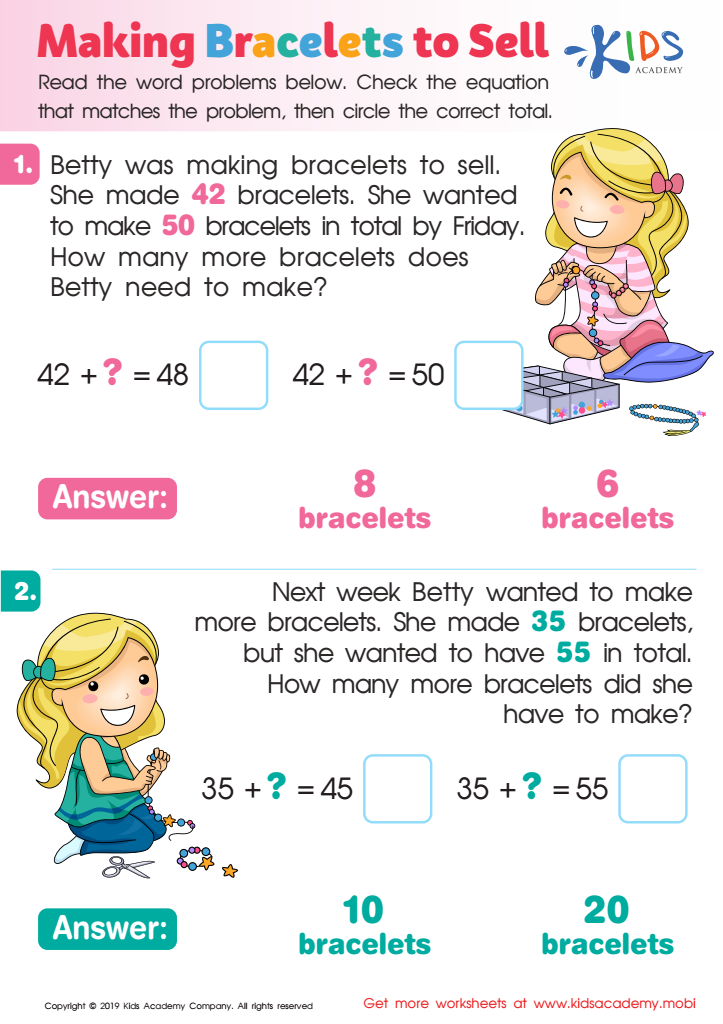
Making Bracelets to Sell Worksheet
 Assign to My Students
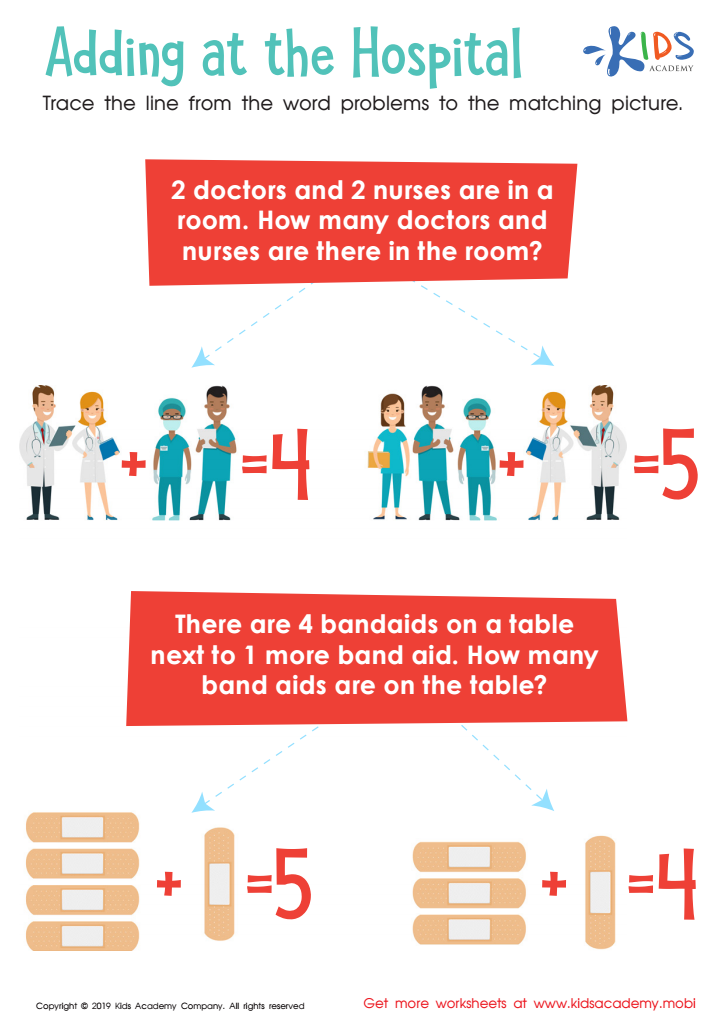
Adding at the Hospital Worksheet
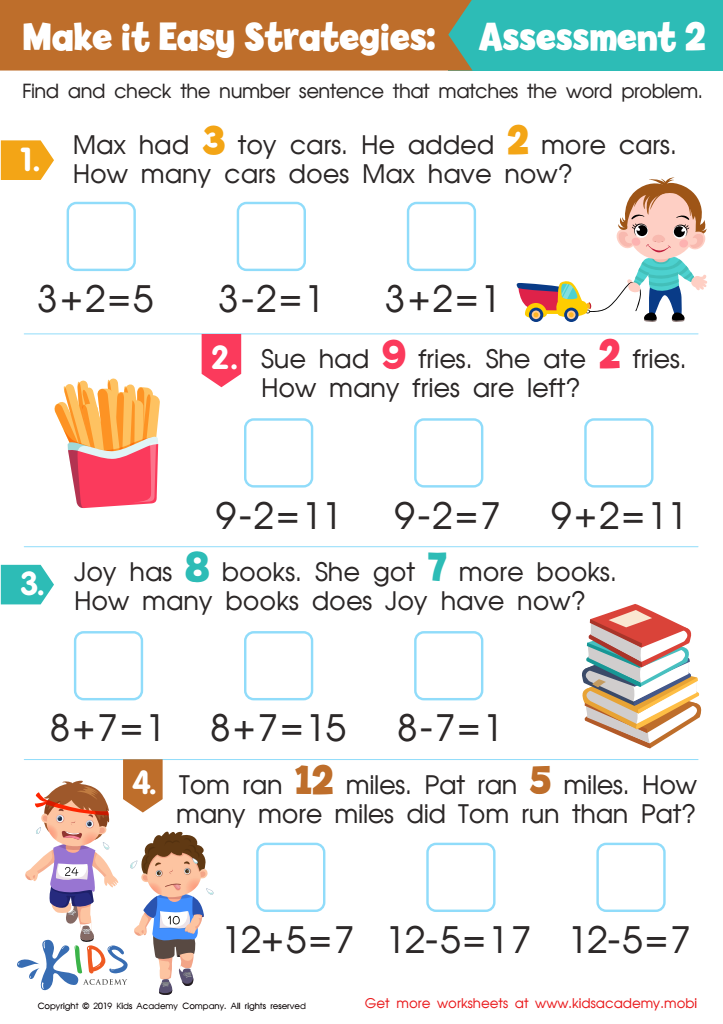
Make it Easy Strategies: Assessment 2 Worksheet
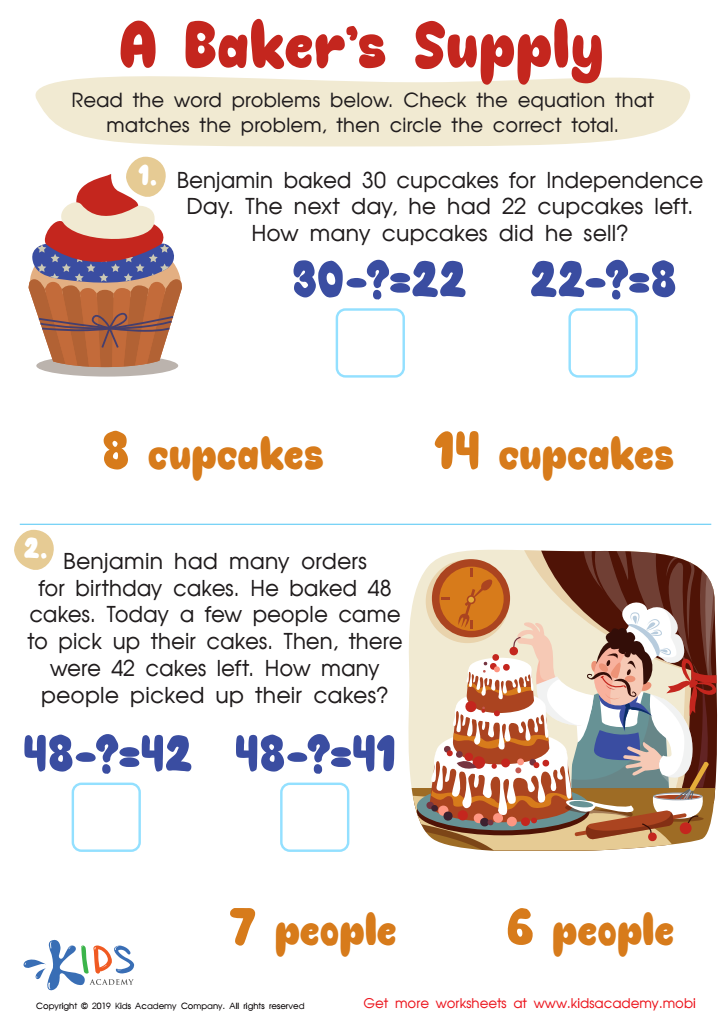
A Baker's Supply Worksheet








Problem-solving abilities, particularly through word problems, are crucial for children ages 5-6 as they lay the groundwork for critical thinking and analytical skills. At this stage, children are developing foundational math concepts and learning how to approach challenges systematically. Engaging with word problems enhances their comprehension and application of mathematical ideas, fostering a deeper understanding of numbers and operations.
Moreover, navigating word problems requires children to extract relevant information, interpret it, and determine the steps needed to arrive at a solution. This not only bolsters their mathematical skills but also enhances their verbal comprehension and reasoning abilities, crucial for both academic success and daily life.
For parents and teachers, supporting children in managing word problems encourages resilience and creativity in problem-solving. It nurtures a growth mindset, showing that struggle is a part of learning. Furthermore, children experience hands-on learning as they see the practical applications of math in real-world contexts, boosting their engagement and motivation.
In summary, fostering problem-solving skills through word problems is essential for developing well-rounded learners who can navigate challenges creatively and effectively. Engaging with these activities can instill confidence in young learners, paving the way for future success in academics and beyond.








