Animal identification Reading Non-Fiction Worksheets for Ages 5-6
3 filtered results
-
From - To
Discover the exciting world of animal identification with our engaging non-fiction worksheets, specially designed for ages 5-6! These resources help young learners develop reading skills while exploring various animals and their habitats. Each worksheet is crafted to encourage curiosity, enhance vocabulary, and support comprehension through fun facts and illustrations. Perfect for home or classroom use, our worksheets promote active learning and deepen understanding of the natural world. Active exploration of these animal concepts fosters critical thinking and deepens empathy towards wildlife. Dive into our collection of activities today and inspire a lifelong love of reading and learning about animals!
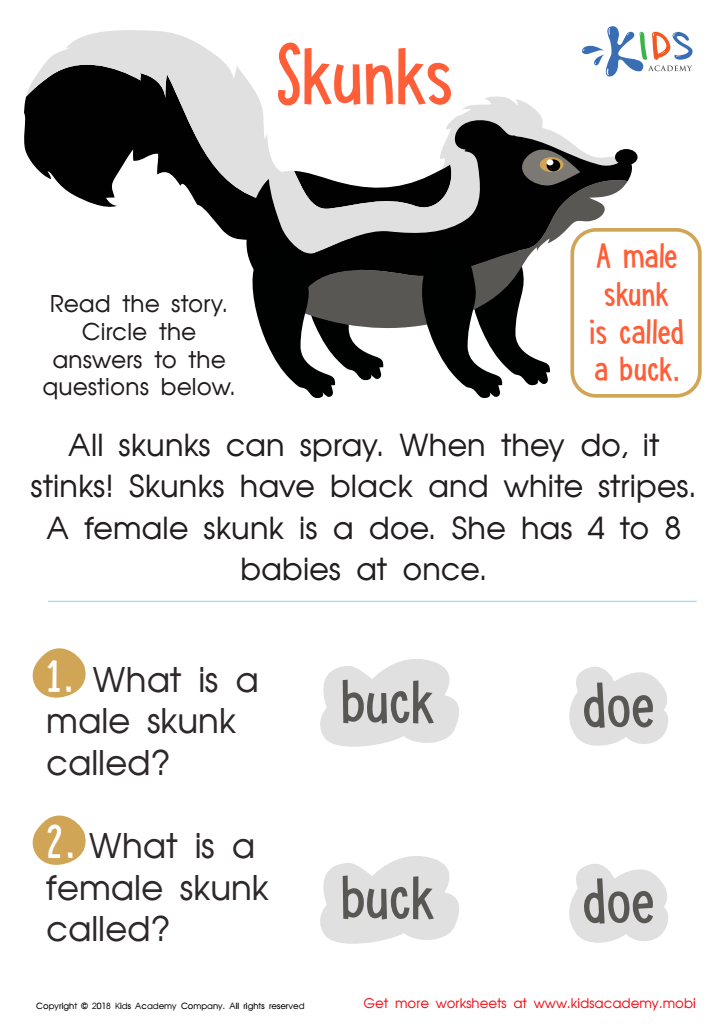
Skunks Worksheet
 Assign to My Students
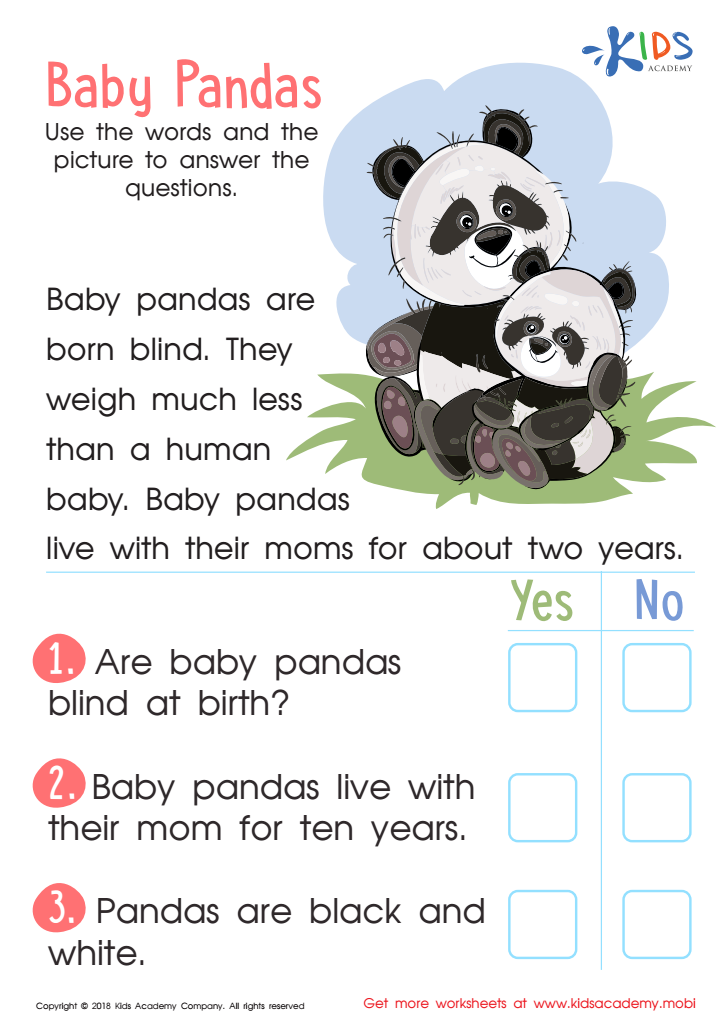
Baby Pandas Worksheet
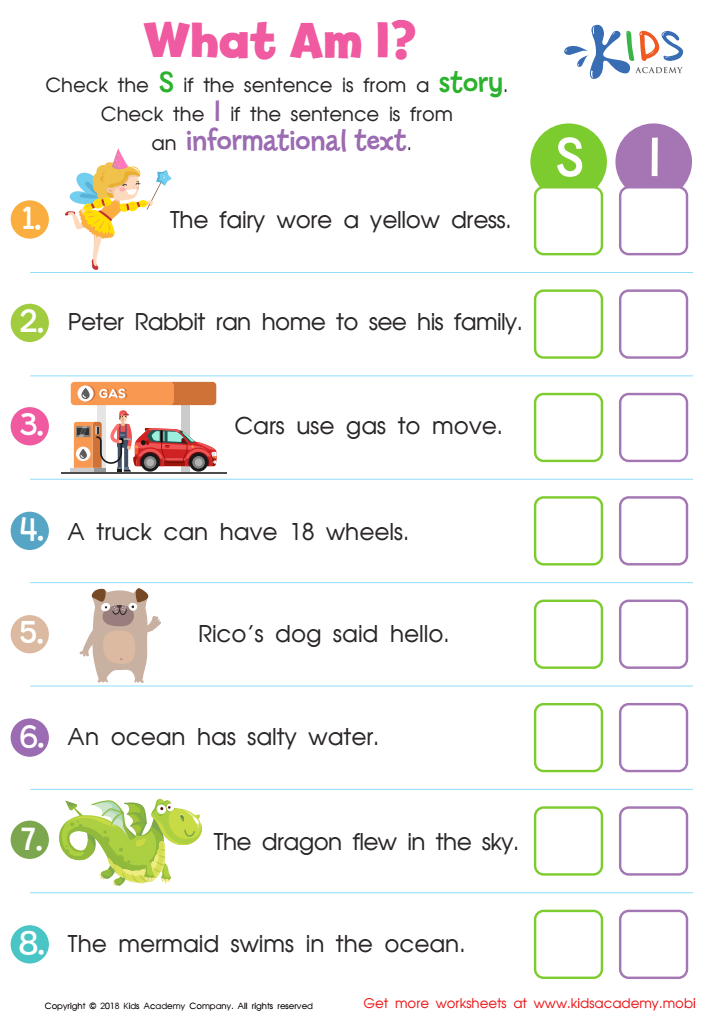
What Am I? Worksheet








Animal identification reading non-fiction for children ages 5-6 is crucial for several reasons. At this developmental stage, children are naturally curious about the world around them. Engaging them with non-fiction materials fosters a love for reading while satisfying their inquisitive minds. Books about different animals help them learn to identify species, understand their habitats, behaviors, and unique characteristics. This foundational knowledge enhances their vocabulary and comprehension skills.
Furthermore, such reading promotes cognitive development, critical thinking, and observational skills. As they learn to recognize various animals, children become more adept at classifying and categorizing, which are essential skills in science and beyond. Understanding biodiversity also instills environmental awareness and empathy toward living beings, nurturing a sense of responsibility and stewardship for the planet.
Parents and teachers who prioritize non-fiction animal identification reading are equipping children with knowledge that extends beyond mere facts; it supports their emotional and social development as they learn about diversity in the animal kingdom. In addition, these reading experiences often serve as springboards for related projects, discussions, and even field trips, enhancing a child's educational journey overall. By investing in this genre, adults help lay a solid foundation for academic success and lifelong learning.








