Animal knowledge Reading Non-Fiction Worksheets for Ages 5-6
3 filtered results
-
From - To
Discover the wonders of the animal kingdom with our "Animal Knowledge Reading Non-Fiction Worksheets" designed for children ages 5-6! These engaging worksheets introduce young learners to fascinating facts about various animals, enhancing their reading skills while nurturing a love for nature and wildlife. Each activity is crafted to strengthen comprehension, vocabulary, and critical thinking, ensuring a solid foundation in non-fiction reading. Perfect for classroom use or at-home learning, these worksheets encourage curiosity and provide an interactive approach to understanding animals in their habitats. Dive into the natural world and watch your child thrive as they explore and learn about our planet’s incredible creatures!
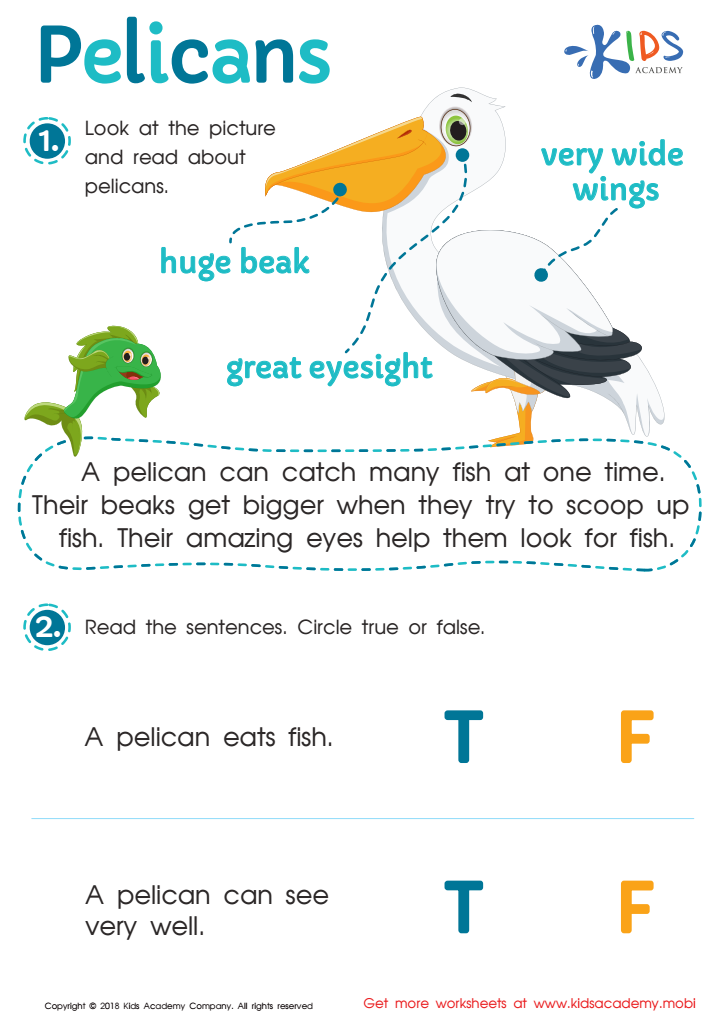
Pelicans Worksheet
 Assign to My Students
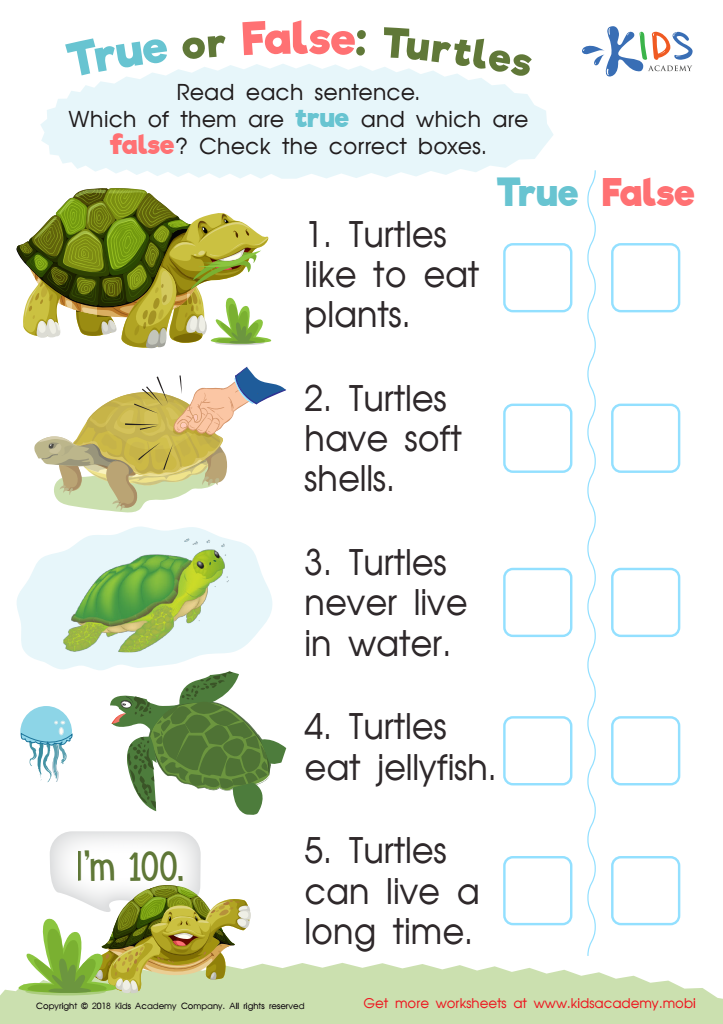
True or False: Turtles Worksheet
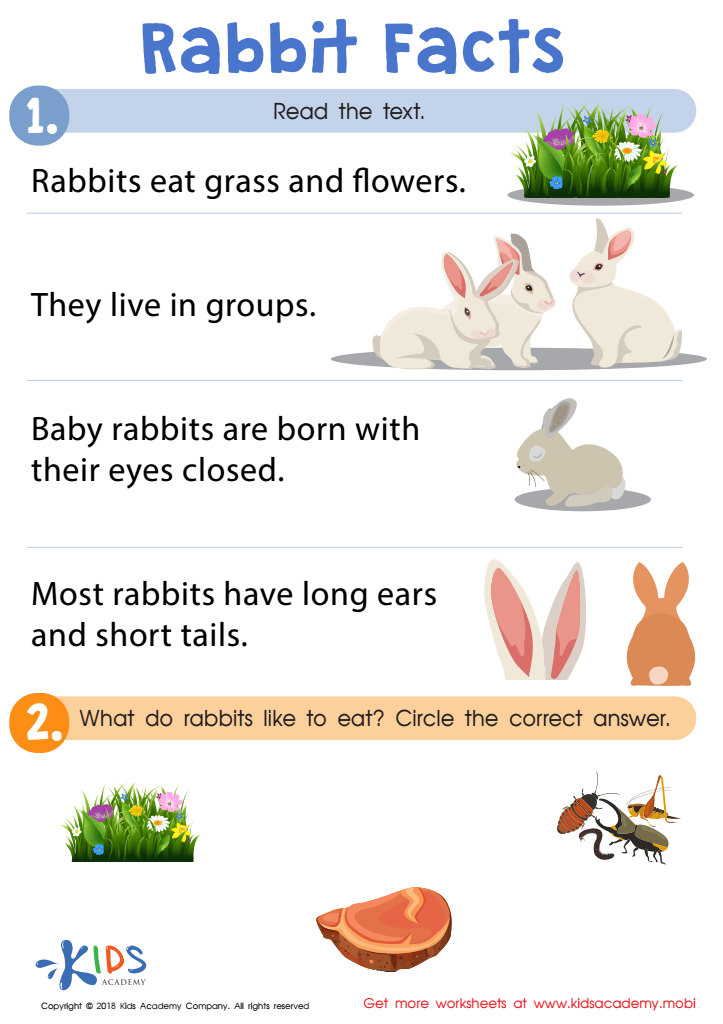
Rabbit Facts Worksheet








Animal knowledge through reading non-fiction is essential for children aged 5-6 as it fosters a deep understanding of the natural world and instills a sense of wonder early in life. Parents and teachers should recognize that this age group is particularly curious, and introducing them to informative texts about animals can ignite their interest in science and nature.
Engaging with non-fiction about animals enhances reading skills, expands vocabulary, and promotes comprehension. It allows children to learn specific facts and concepts, which helps develop critical thinking skills. By exploring animal habitats, behaviors, and life cycles, children gain a richer understanding of biodiversity and the environment.
Furthermore, learning about animals nurtures empathy and encourages responsible stewardship. Children who understand the needs and behaviors of different species can become more compassionate, recognizing the importance of protecting wildlife and their habitats. This sense of responsibility fosters a long-lasting connection between them and the natural world.
Overall, introducing animal knowledge through non-fiction not only enriches literacy development but also shapes informed, caring individuals who appreciate and respect the complexity of life, paving the way for future learning and ethical awareness. Thus, parents and teachers should actively promote and support this enriching educational experience.








