
Vocabulary expansion Reading Non-Fiction Worksheets for Ages 5-6
6 filtered results
Difficulty Level
Grade
Age
-
From - To
Subject
Activity
Standards
Unlock the world of words with our Vocabulary Expansion Reading Non-Fiction Worksheets, specially designed for ages 5-6! These engaging worksheets help young learners explore a variety of non-fiction topics while enhancing their vocabulary skills. Each activity promotes reading comprehension and critical thinking, allowing children to connect with real-world concepts. Your child will enjoy fun, interactive exercises that broaden their language abilities and foster a love for reading. Perfect for classroom settings or home learning, our materials encourage curiosity about the world around them. Support your child’s literacy journey today with captivating non-fiction content that makes learning exciting!
Favorites
With answer key
Interactive
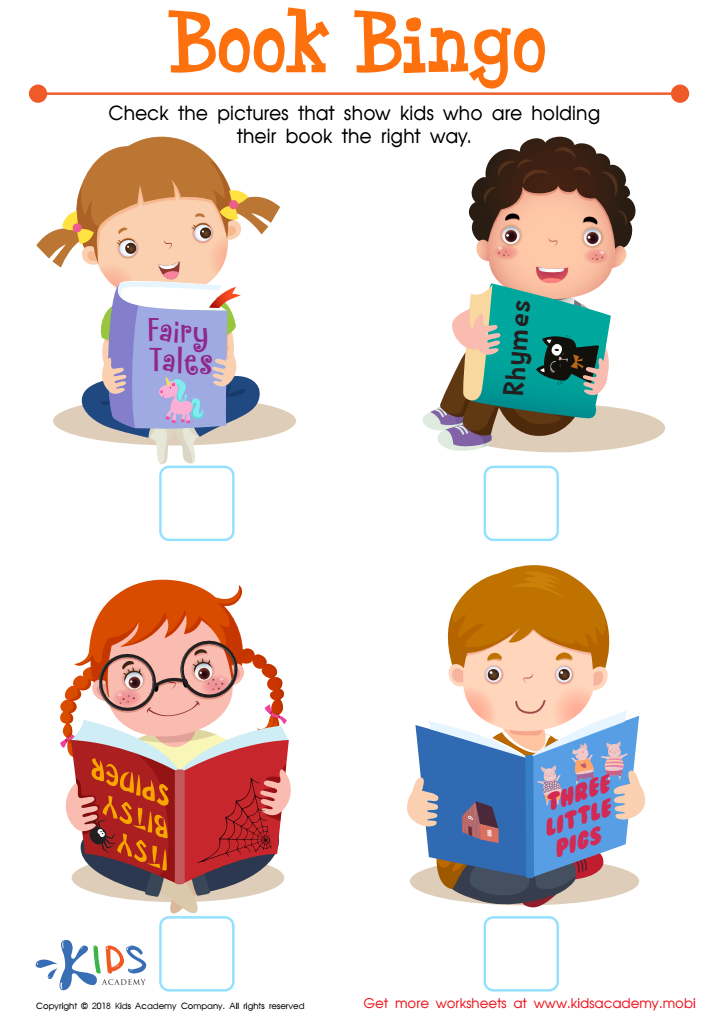
Book Bingo Worksheet
Help your kids spot which of the kids in the worksheet are reading correctly. Early instruction in reading helps ensure kids won't face problems later on, plus any impairments can be identified and corrected quickly. Can your child read? Have them check the pictures of kids holding books the right way.
 Assign to My Students
Book Bingo Worksheet
Worksheet
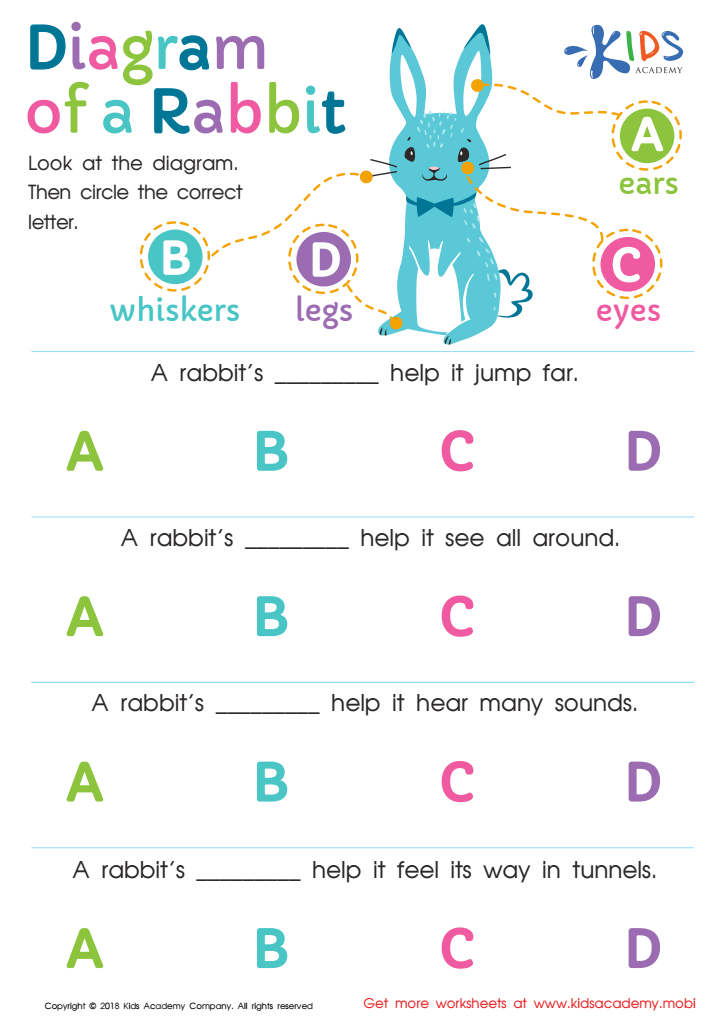
Diagram of a Rabbit Worksheet
Reading skills are essential for success in all subjects, from science and math to fiction. This worksheet helps kids learn to interpret diagrams by studying the rabbit illustration and then selecting the correct answer for each sentence. It's a fun way to build reading and comprehension skills!
Diagram of a Rabbit Worksheet
Worksheet
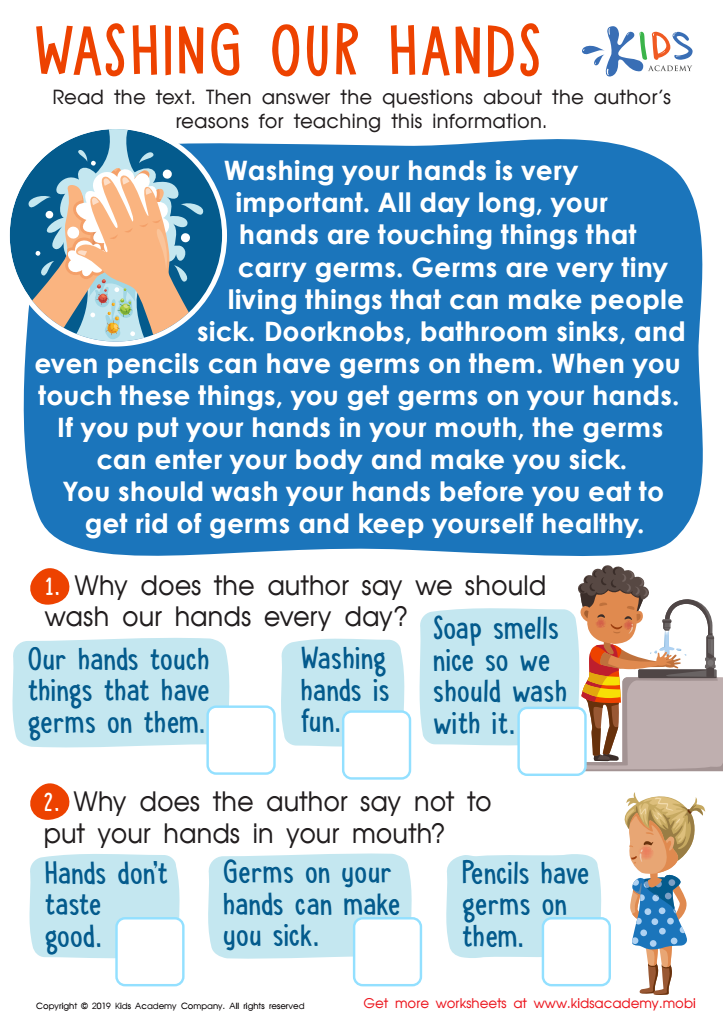
Washing Our Hands Worksheet
Reading allows us to gain knowledge. Informational texts provide essential facts which we need to be able to interpret and use. This PDF worksheet helps kids understand the importance of handwashing. It informs them of the germs they may come into contact with, before asking them to answer related comprehension questions.
Washing Our Hands Worksheet
Worksheet
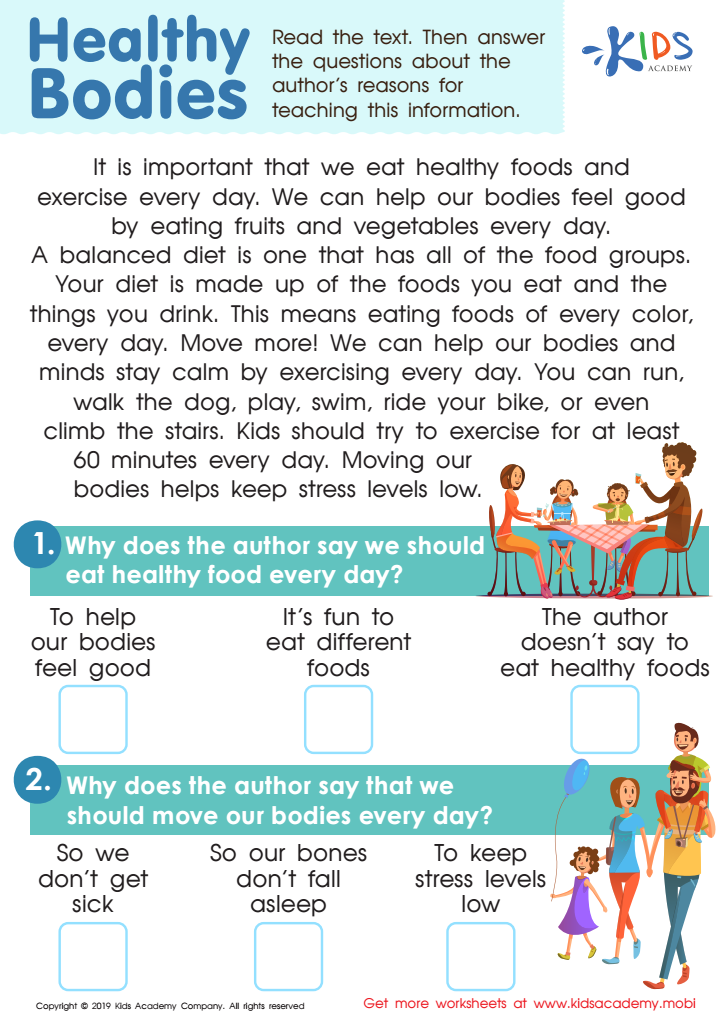
Healthy Bodies Worksheet
Taking care of our bodies is essential. To gain critical thinking skills, readers must understand an author's purpose. Our free worksheet is filled with facts about healthy bodies. After reading, your child can answer questions about the author's purpose.
Healthy Bodies Worksheet
Worksheet
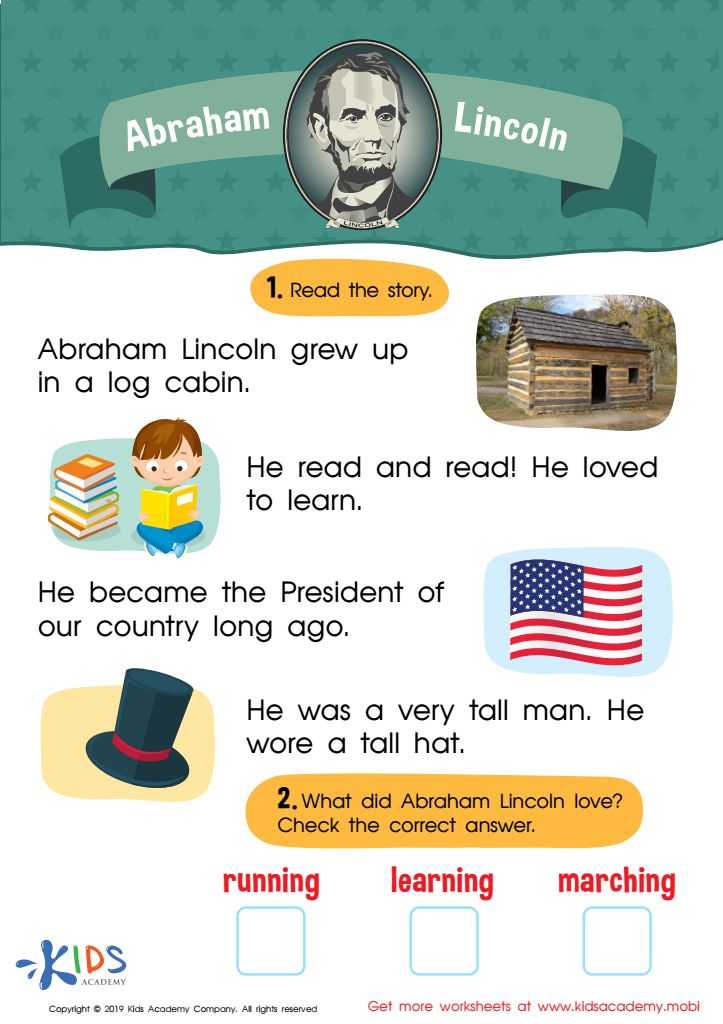
Abraham Lincoln Worksheet
Let your kids listen to interesting stories while having fun! Read the short story in this worksheet, point to the picture representing each sentence, then ask the questions and check the answers. Doing this will help your children learn new things and build their vocabulary.
Abraham Lincoln Worksheet
Worksheet
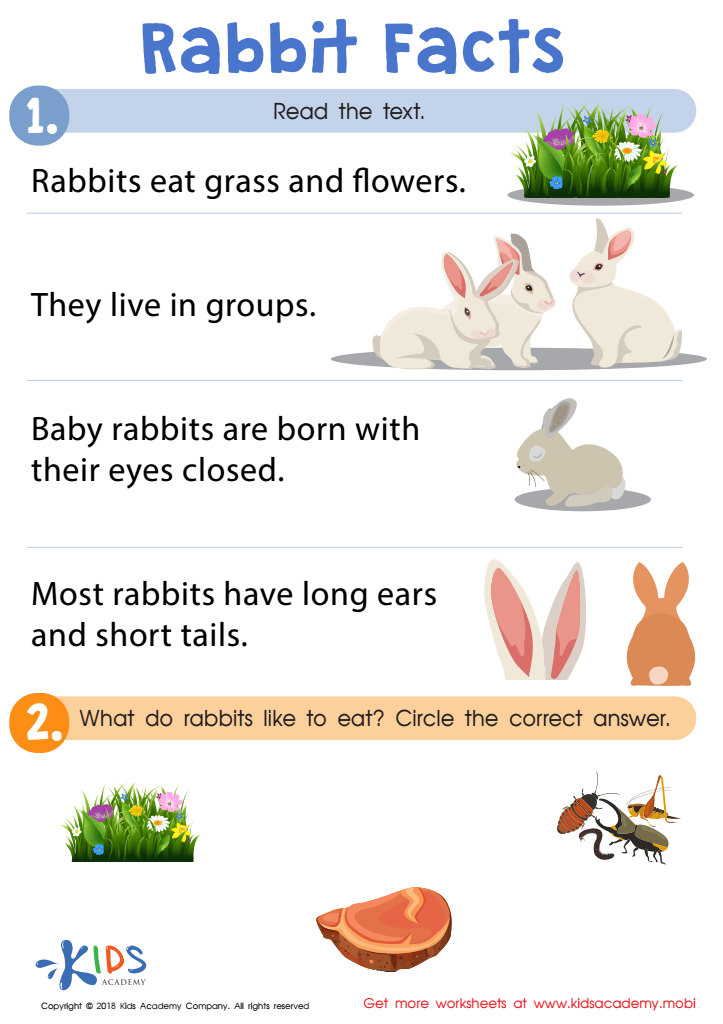
Rabbit Facts Worksheet
Informational texts offer great learning opportunities. Kids Academy's reading worksheet helps children read and recall important details from a text about bunnies. Kids will love it! Simply read the rabbit facts and circle the correct pictures to answer the questions.
Rabbit Facts Worksheet
Worksheet
Join Kids Academy for Free
Who is primarily going to use this learning content?








Parents and teachers play a vital role in a child's early literacy development, and vocabulary expansion through reading non-fiction is particularly important for children aged 5-6. At this stage, children are naturally curious about the world, and non-fiction texts provide an excellent avenue to satiate that curiosity. By introducing youngsters to non-fiction, they encounter a rich array of words and concepts, which not only builds their vocabulary but also enhances their comprehension skills.
Enhanced vocabulary has far-reaching effects on a child’s academic journey. A strong vocabulary enables better communication, improved writing skills, and greater understanding across all subjects, particularly in science and social studies — subjects often enriched by non-fiction literature. Furthermore, non-fiction encourages critical thinking and the ability to differentiate between fact and opinion, skills essential for navigating today’s information-rich environment.
Additionally, reading aloud non-fiction creates opportunities for discussion and engagement, fostering a love of learning. Parents and teachers who emphasize vocabulary expansion through engaging non-fiction texts contribute significantly to building confident, informed, and inquisitive learners. This foundation not only prepares children for successful reading outcomes later in their educational careers but also instills a lifelong appreciation for knowledge and discovery.








