Identifying shapes Sight Words Worksheets for Ages 5-6
7 filtered results
-
From - To
Explore our "Identifying Shapes Sight Words Worksheets" designed for ages 5-6, blending essential shape recognition with early reading skills! These engaging worksheets help young learners associate shapes with sight words, fostering fundamental vocabulary and literacy development in a fun way. Each activity encourages children to identify and draw various shapes while integrating key sight words throughout. Ideal for preschool and kindergarten classrooms, our worksheets promote critical thinking and creativity while strengthening the connections between visual and linguistic forms. Perfect for independent practice, group activities, or additional reinforcement at home, these resources support a well-rounded early learning experience. Download and inspire young minds today!
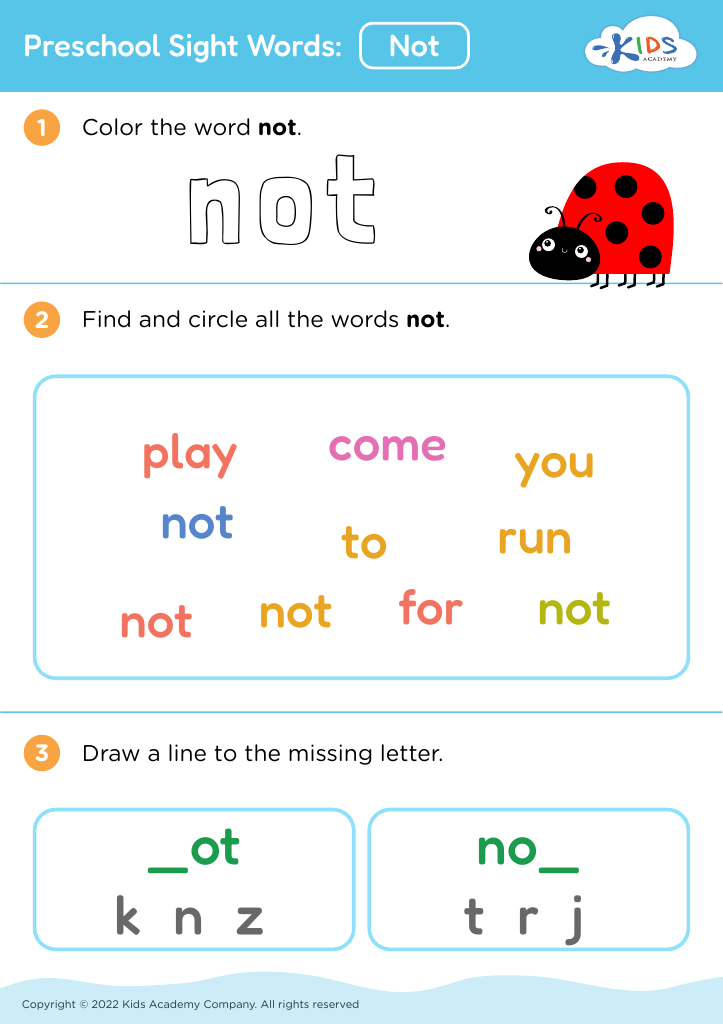

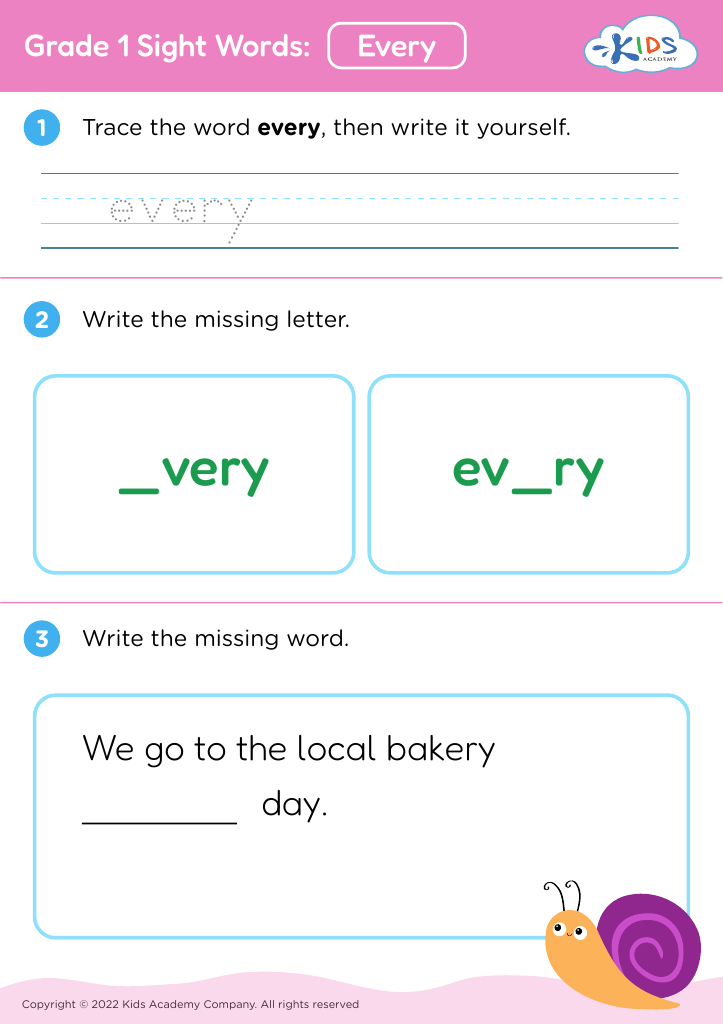
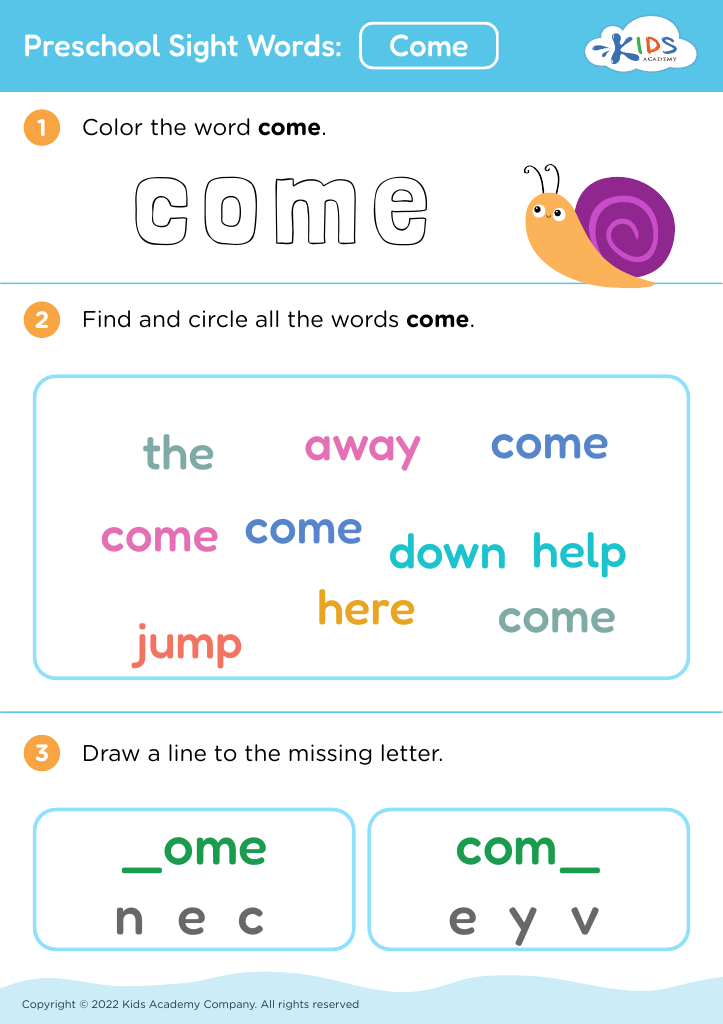
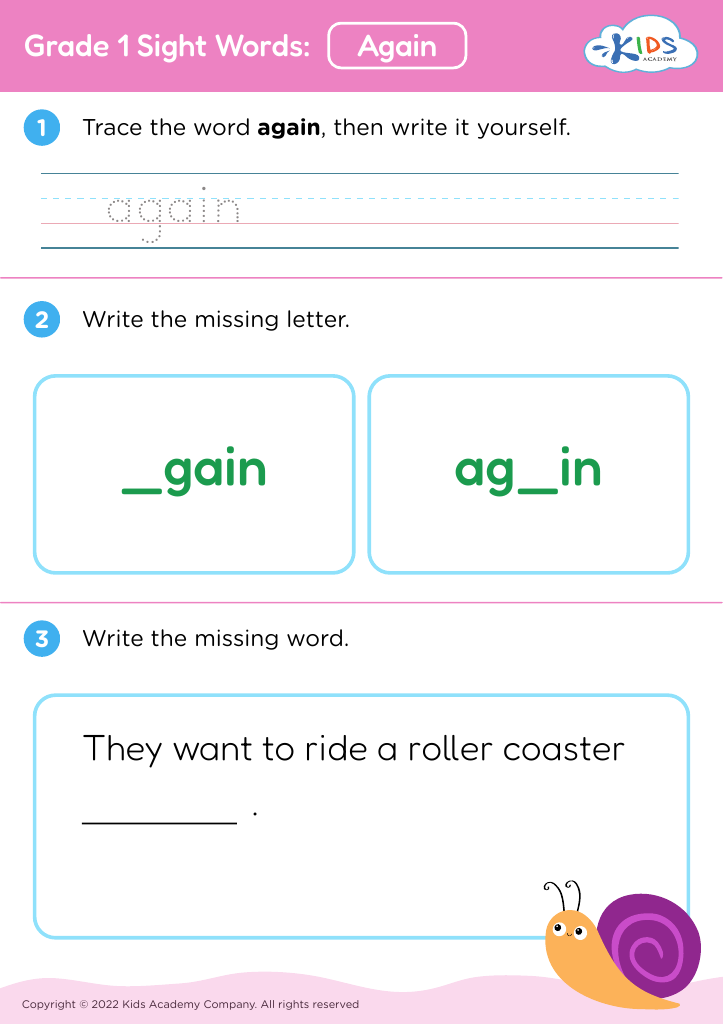
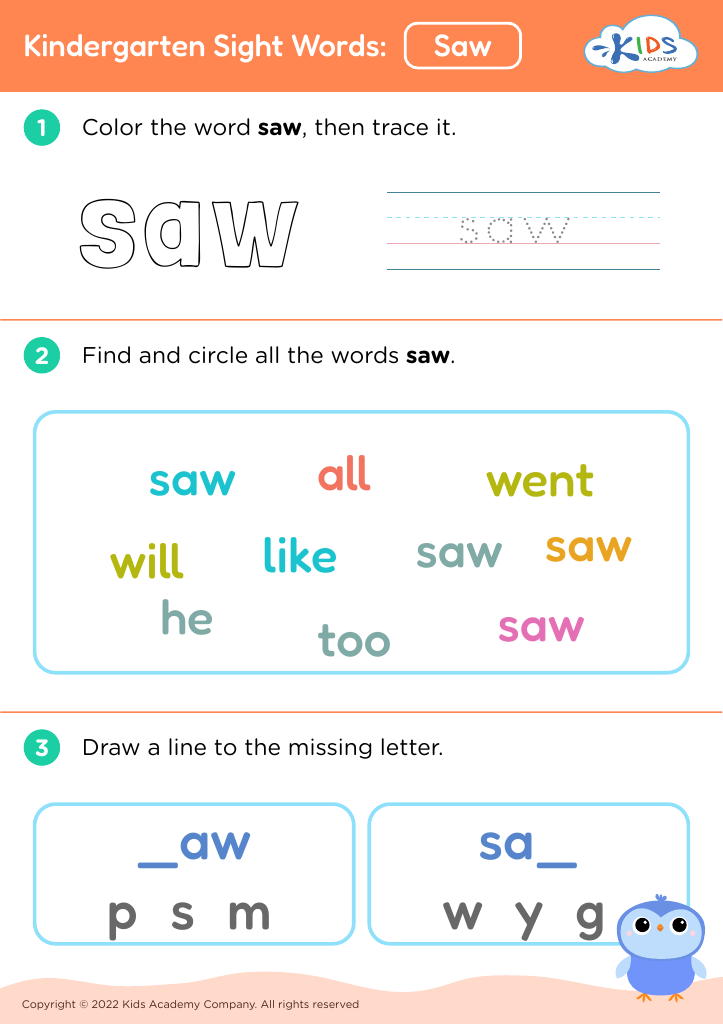
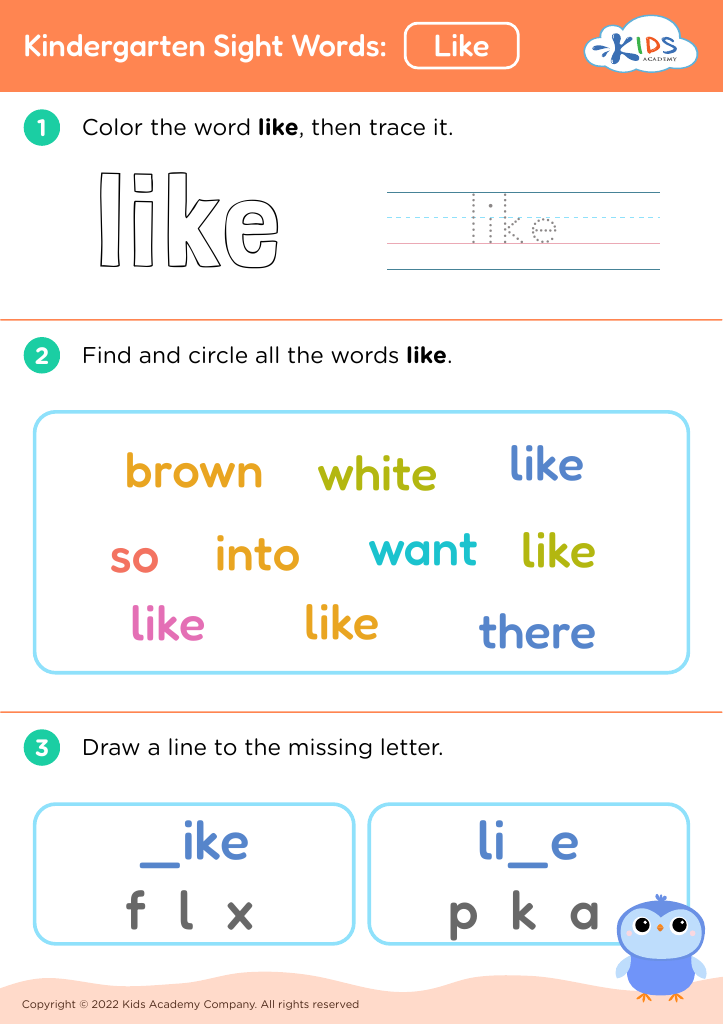
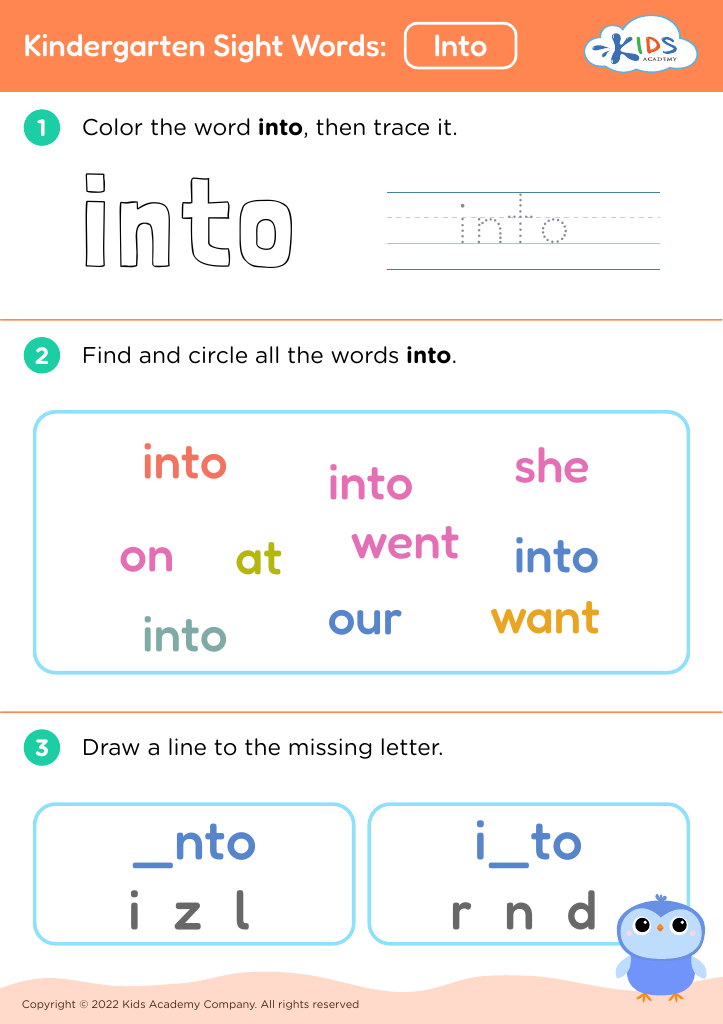








Identifying shapes and sight words are crucial components in early literacy and mathematical development for children aged 5-6. For parents and teachers, fostering these skills facilitates cognitive growth and lays a solid foundation for future learning.
Firstly, identifying shapes enhances spatial awareness and critical thinking. Recognizing different shapes helps children understand the world around them, analyze their environment, and develop problem-solving skills. It supports math skills, leading to a better grasp of geometry and spatial relationships as they progress in school.
On the other hand, sight words are fundamental for reading fluency. Sight words are high-frequency words that children encounter often in texts, such as "the," "is," and "at." Mastering these words enables young learners to read with greater confidence and comprehension, which is pivotal in developing a love for reading.
When children can easily identify shapes and read sight words, they not only succeed academically but also build self-esteem and motivation to learn. Ultimately, by prioritizing these skills, parents and teachers contribute to nurturing well-rounded individuals who are equipped for the challenges of future education and life challenges. Encouraging recognition of shapes and sight words paves the way for more complex learning in mathematics and literacy.