Mathematical reasoning Sight Words Worksheets for Ages 5-6
5 filtered results
-
From - To
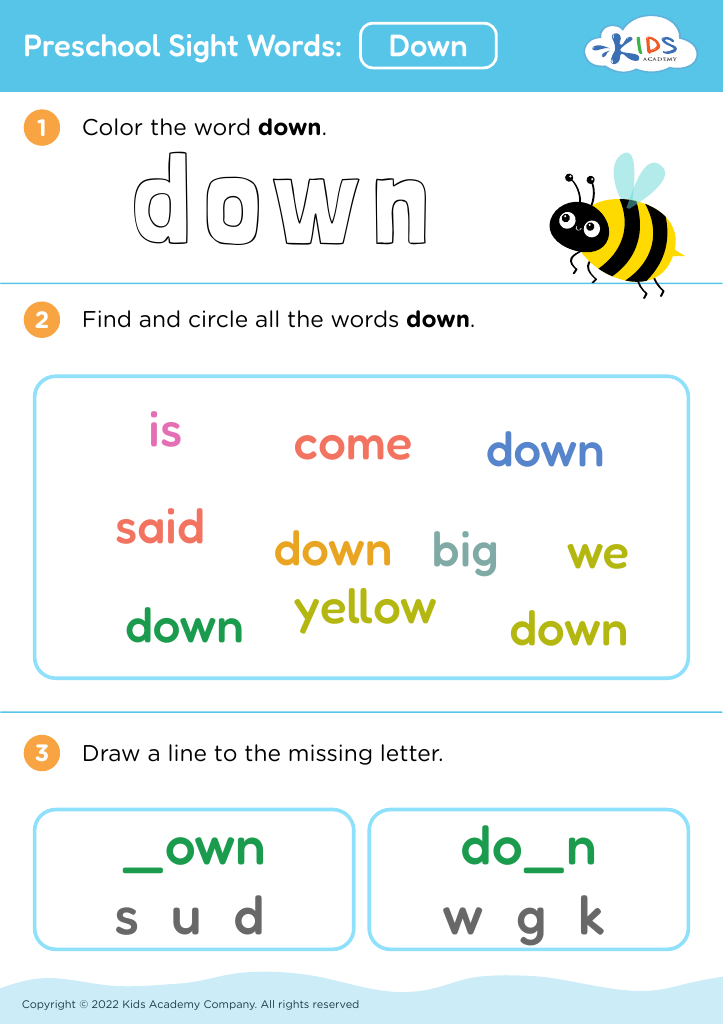
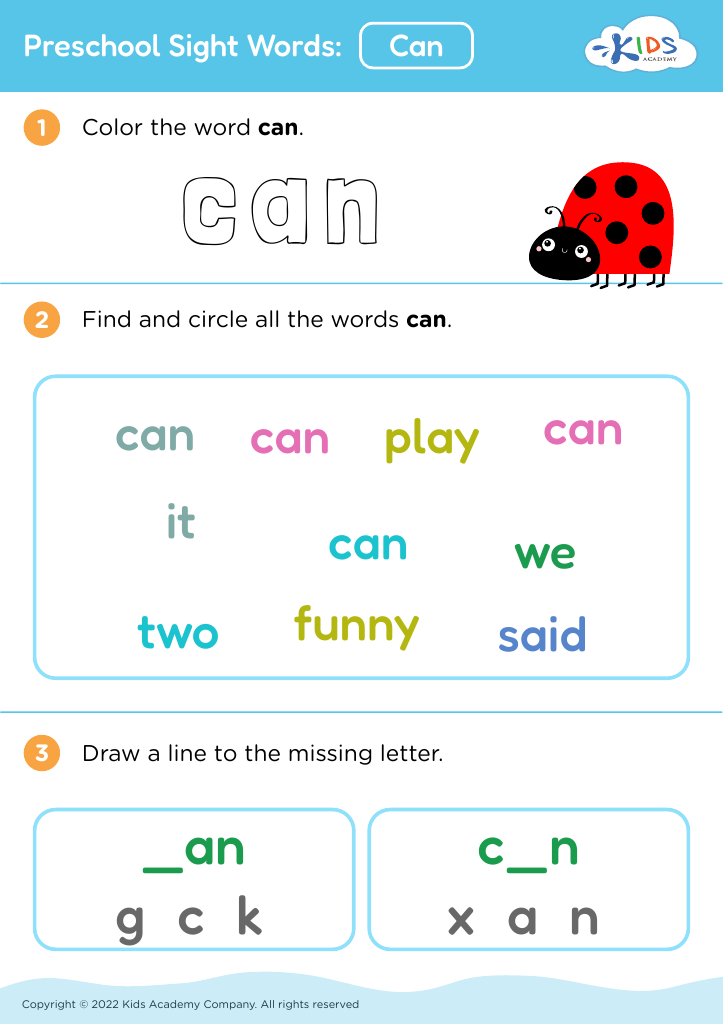
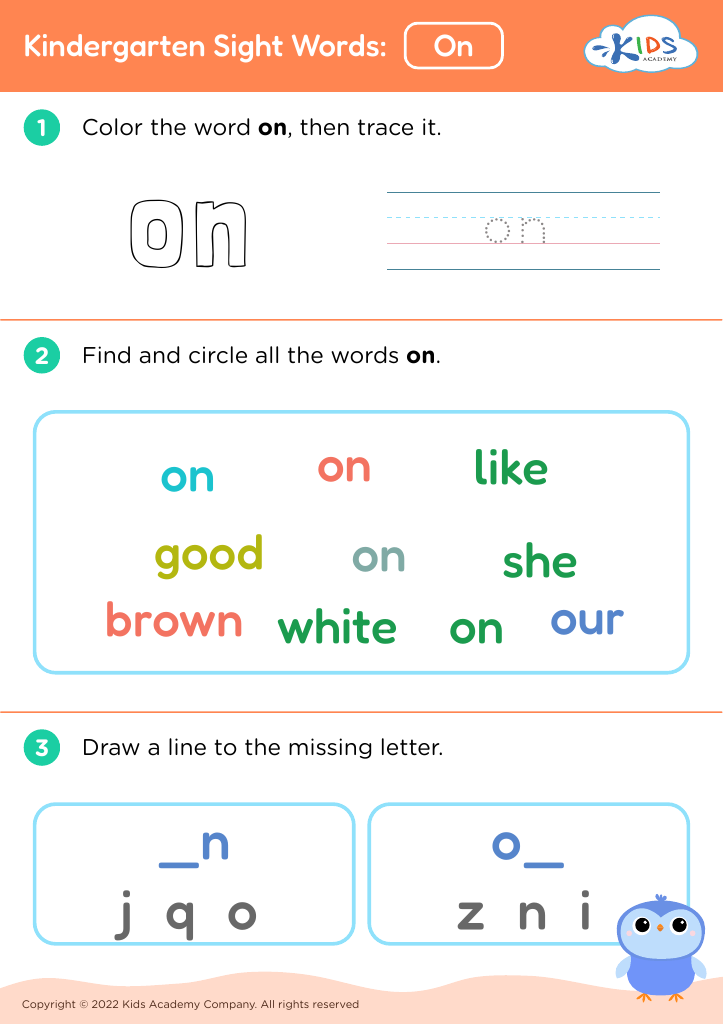
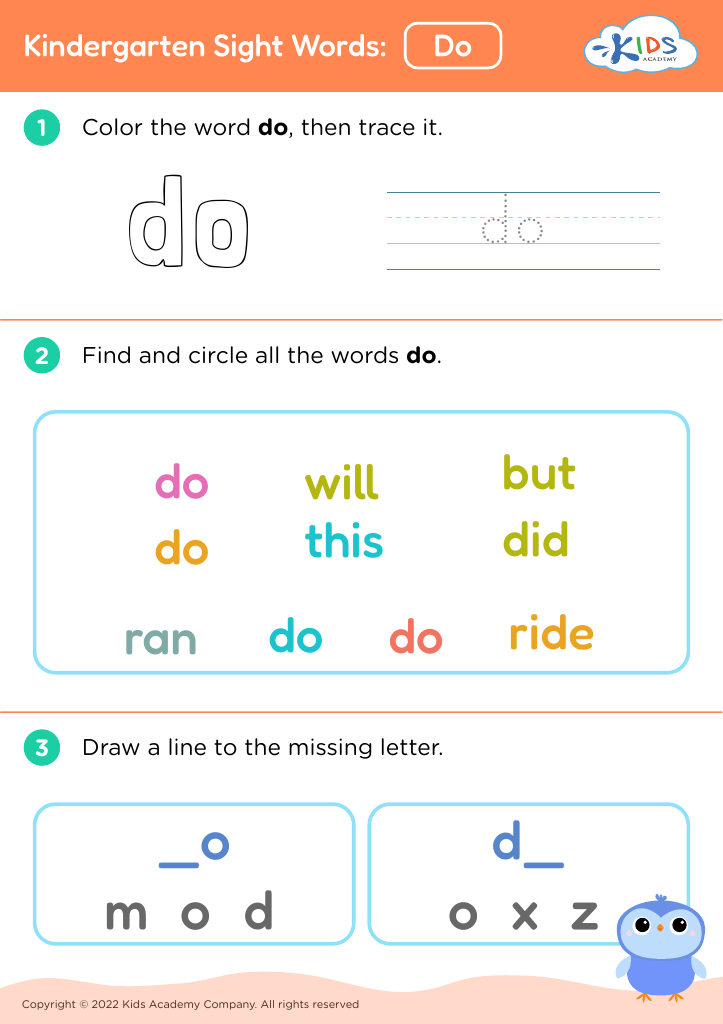
Unlock your child's potential with our engaging Mathematical Reasoning Sight Words Worksheets designed for ages 5-6. These worksheets seamlessly integrate sight word recognition with essential math concepts, laying a strong foundation for early learners. Each interactive activity focuses on building vocabulary while reinforcing critical thinking and problem-solving skills. Children will enjoy hands-on exercises that make learning numbers and basic math principles fun and enjoyable. With vibrant illustrations and age-appropriate tasks, these worksheets promote both literacy and numeracy, fostering a well-rounded educational experience. Perfect for classroom or home use, they support your child's journey towards academic success. Start exploring today!
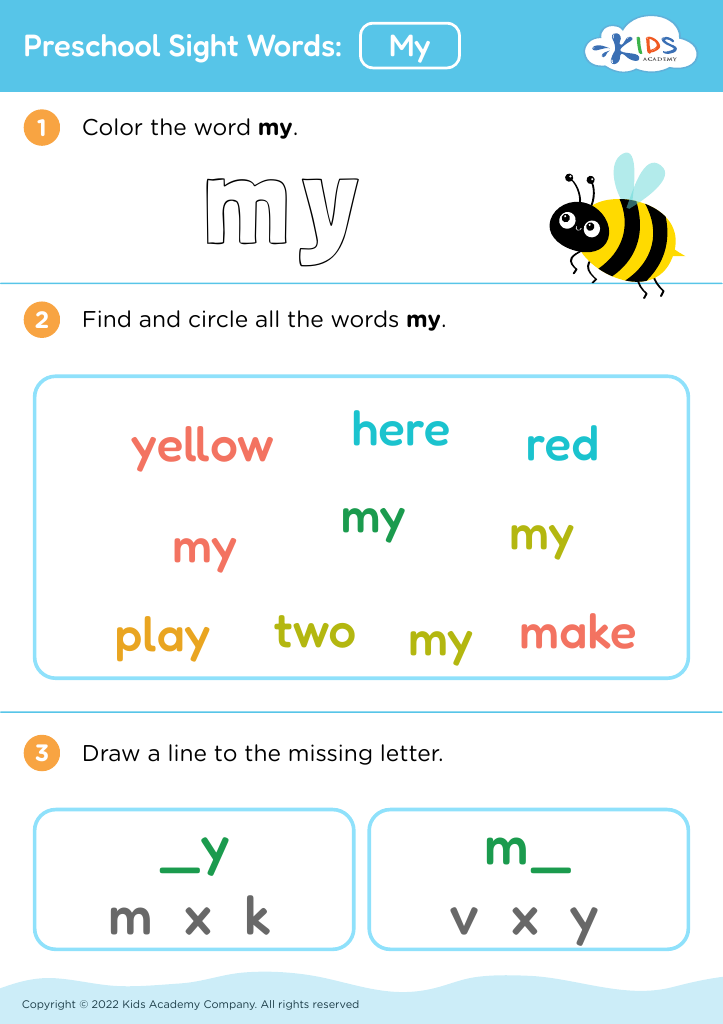















Mathematical reasoning and sight words play a pivotal role in the early development of children aged 5-6, making it essential for parents and teachers to give these areas their attention. At this age, children are beginning to understand and manipulate numbers, forming the foundation for future mathematical skills. Mathematical reasoning helps them make sense of their world through concepts such as counting, addition, subtraction, and problem-solving. By nurturing this skill, parents and teachers foster critical thinking, enabling children to analyze and approach everyday situations logically.
Similarly, sight words are fundamental for beginning readers, allowing them to recognize common words on sight rather than sounding them out each time. This not only aids in reading fluency but also enhances comprehension, as children can focus on understanding the content instead of decoding each word. Both mathematical reasoning and sight words build confidence, enhancing a child's ability to engage with academic material and reinforcing their self-esteem.
Ultimately, prioritizing mathematical reasoning and sight words creates a holistic learning environment, where children develop essential skills that will carry through their education. It prepares them for more complex concepts, making it vital for fostering both academic success and a love for learning.