Understanding fractions Sight Words Worksheets for Ages 5-6 - Page 2
35 filtered results
-
From - To

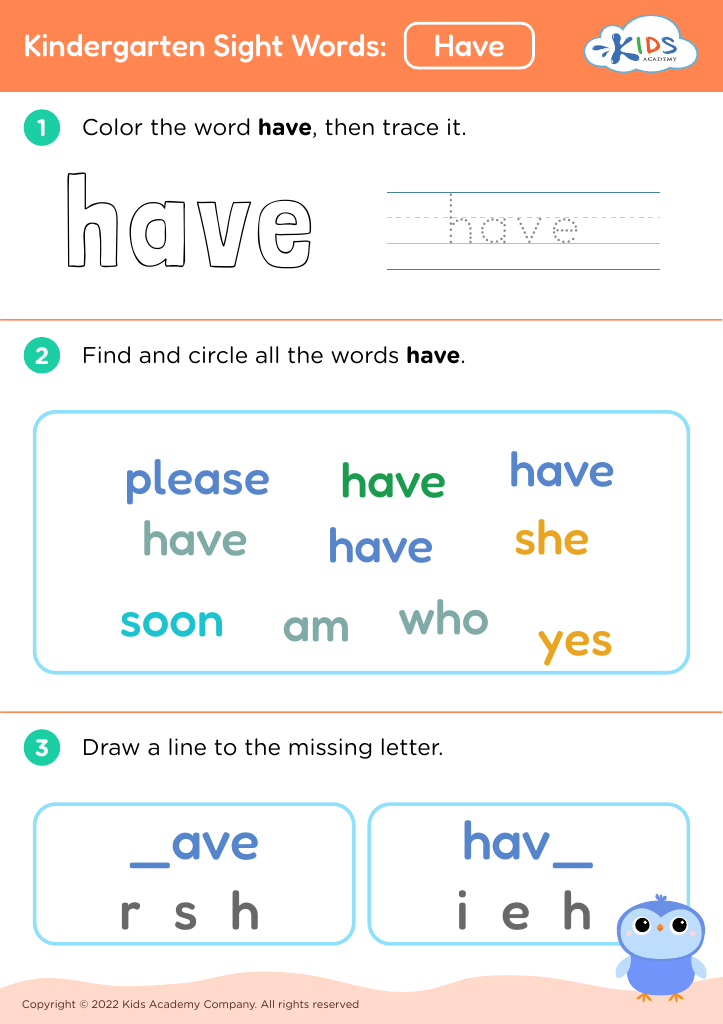
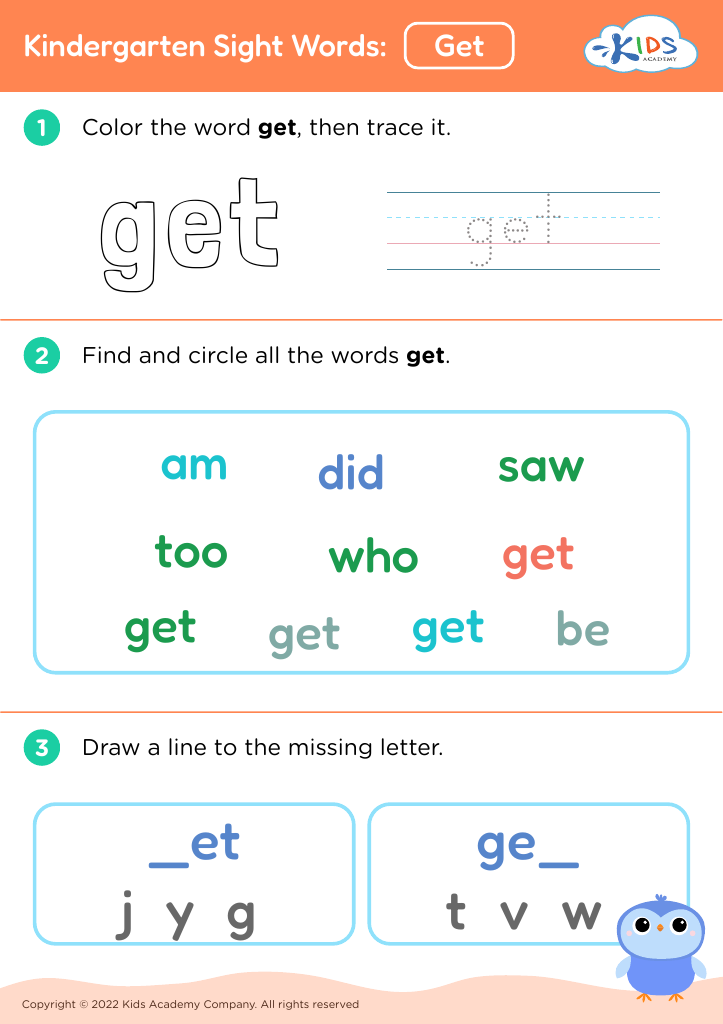
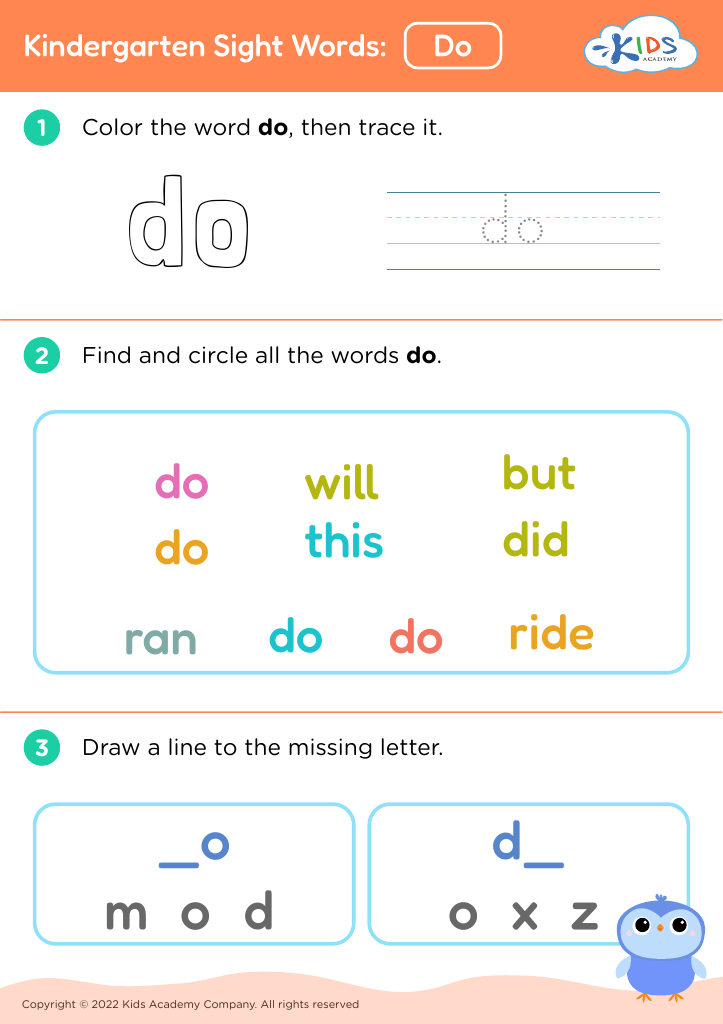
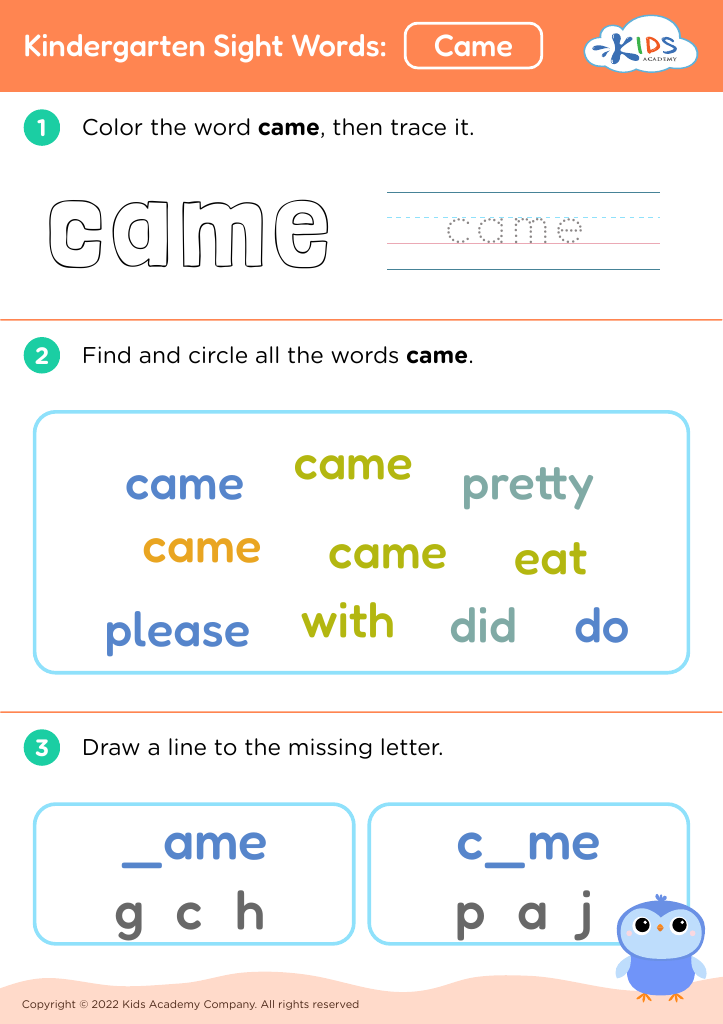
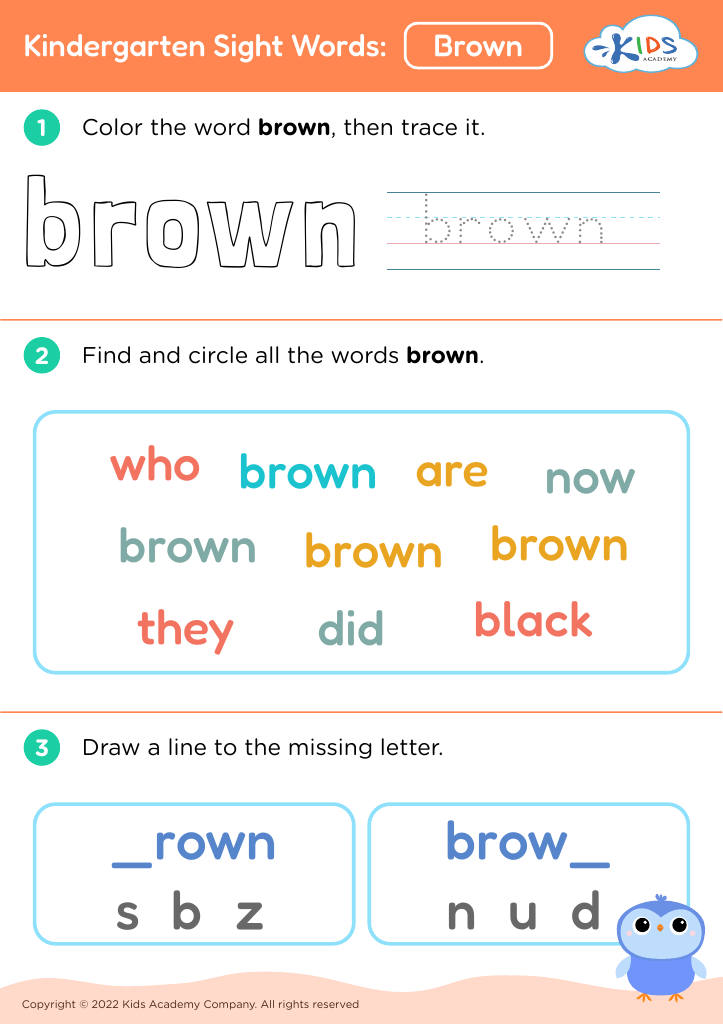
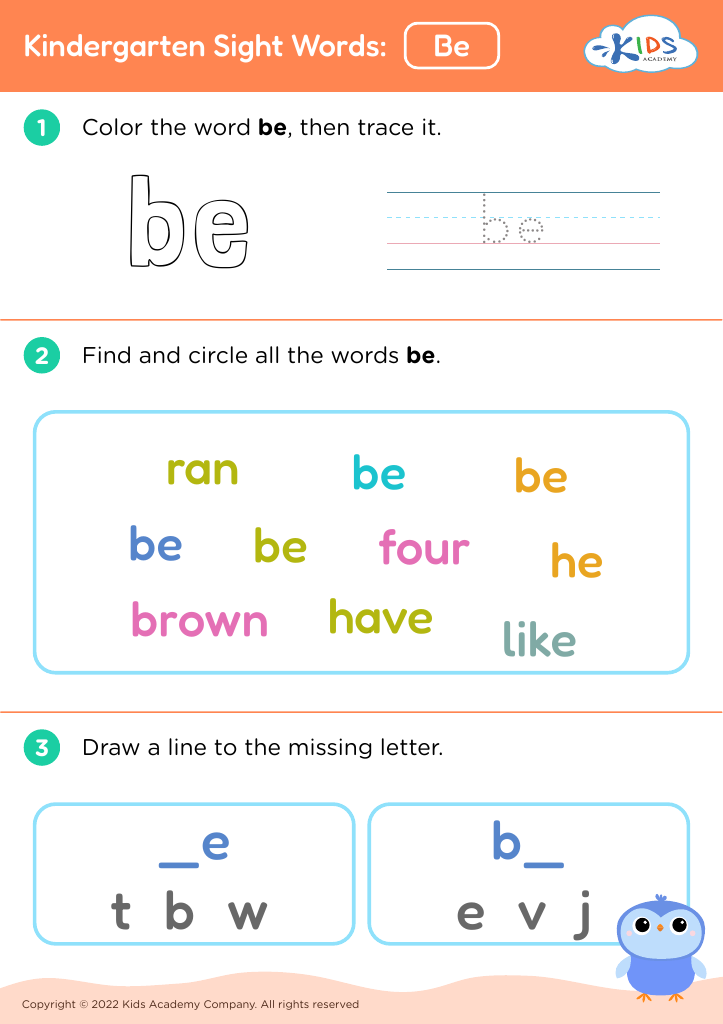
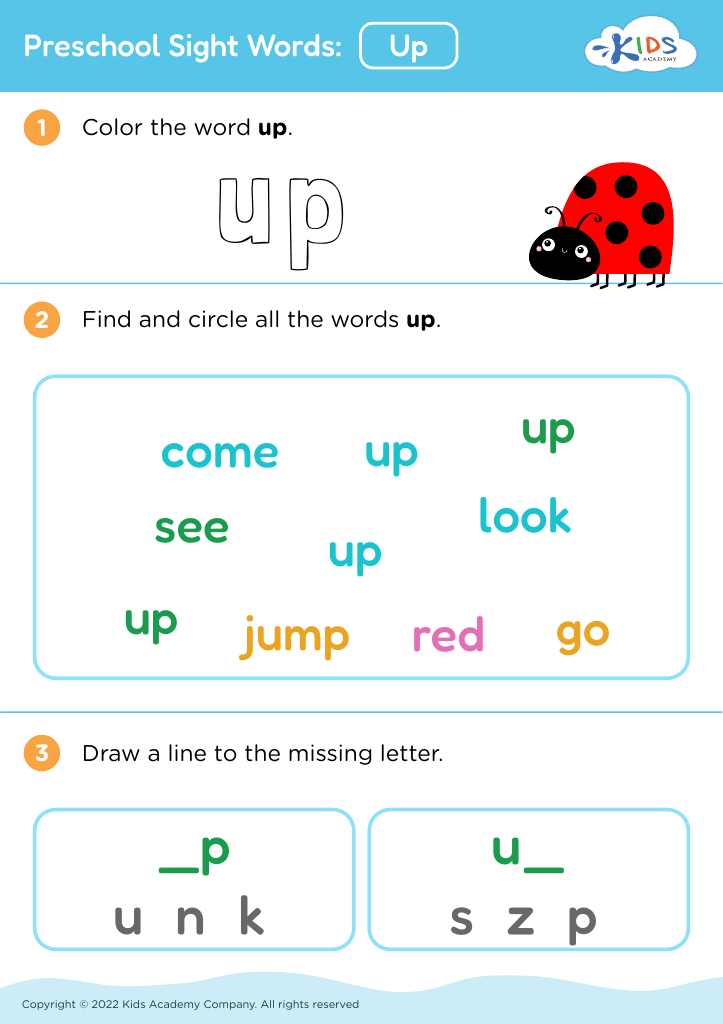
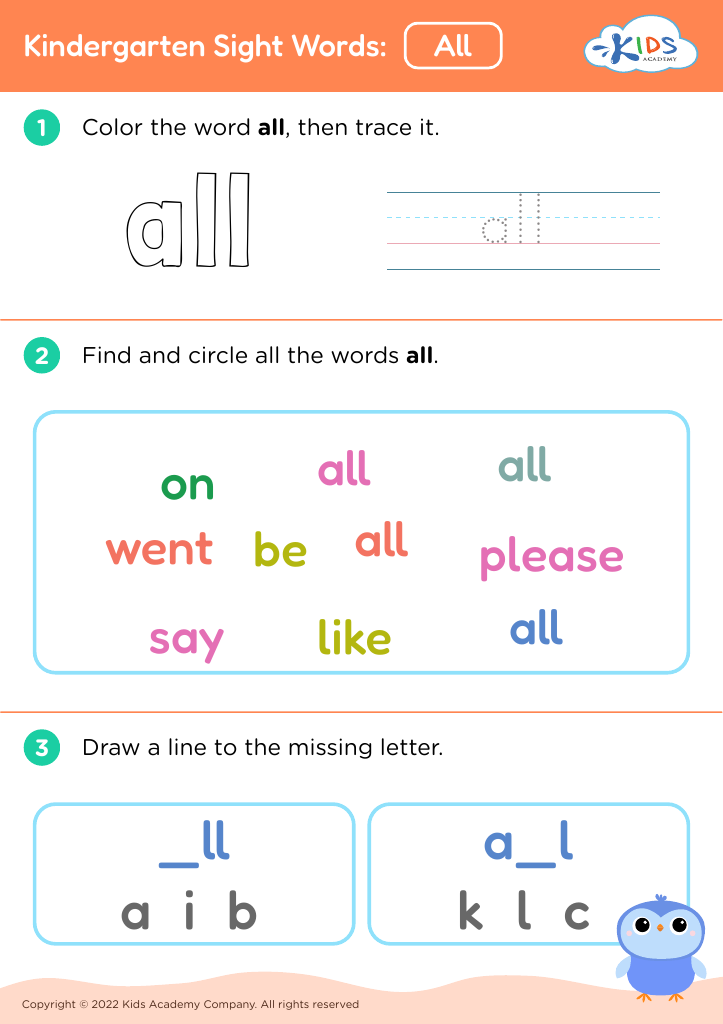








Understanding sight words is essential for young learners, particularly in regard to fractions, as it builds a crucial foundation for literacy and numeracy. For children aged 5-6, acquiring sight words enables them to read basic math problems relating to fractions, enhancing both reading proficiency and mathematical understanding. Recognizing common sight words allows children to navigate printed materials with confidence, ensuring they can interpret instructions and questions in a variety of contexts, including those involving fractions.
Moreover, incorporating sight words with fraction concepts engages students in a holistic learning experience. Parents and teachers can use this connection to foster a more integrated approach to learning. Practicing sight words linked to mathematical terms introduces children to essential vocabulary while practicing their reading skills. For instance, words like "half," "whole," and "part" are key in fraction discussions.
In a world increasingly driven by technology and information, strong reading and comprehension skills are critical. They open the door to deeper learning and critical thinking. By emphasizing sight words in conjunction with fraction understanding, parents and teachers help set the stage for young learners to develop essential skills that will serve them throughout their academic journey and beyond.