
Vocabulary expansion Beginning Sounds Worksheets for 5-Year-Olds
6 filtered results
Difficulty Level
Grade
Age
-
From - To
Subject
Activity
Standards
Enhance your child's vocabulary with our engaging Beginning Sounds Worksheets designed for 5-year-olds! These interactive activities introduce young learners to vital literacy skills by focusing on the initial sounds of words. Your child will enjoy fun exercises that prompt them to identify and match beginning sounds with corresponding images, helping to reinforce their understanding of phonics. Our worksheets not only foster vocabulary expansion but also build essential reading readiness skills. Ideal for both home and classroom use, these resources offer a playful way for preschoolers to develop phonemic awareness while cultivating a lifelong love of language and learning. Get started today!
Favorites
With answer key
Interactive
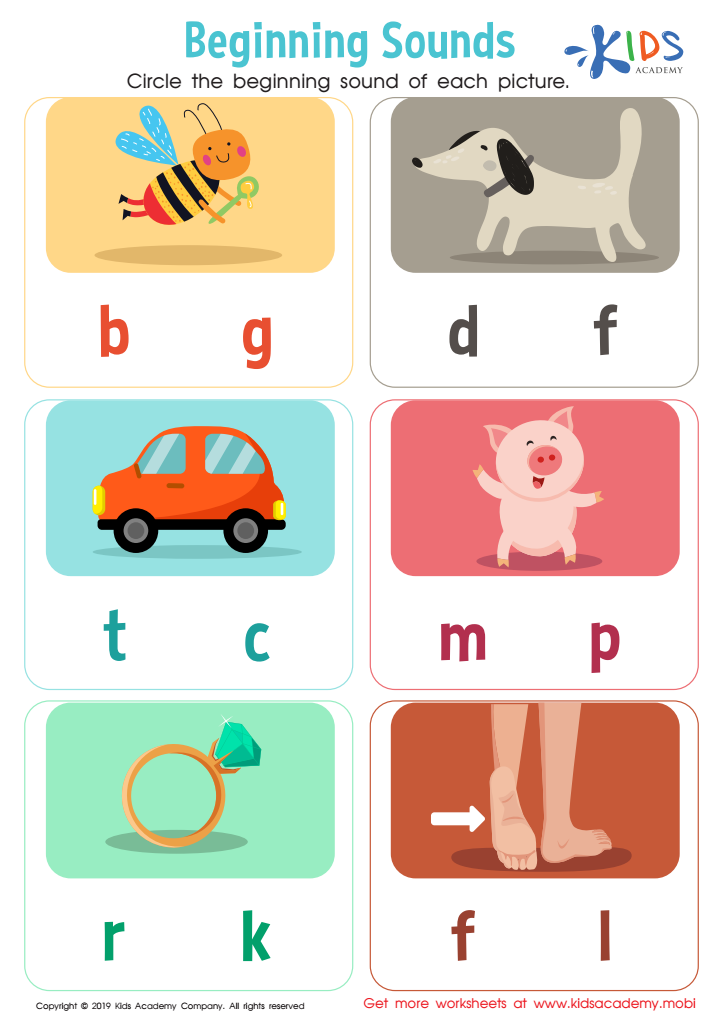
Beginning Sounds Worksheet
Test your child's knowledge with this colorful worksheet! Before beginning, have your kids recite the alphabet and sound them off. Give examples and ask them to do the same, then help them circle the beginning sound of each picture to complete the exercise.
 Assign to My Students
Beginning Sounds Worksheet
Worksheet
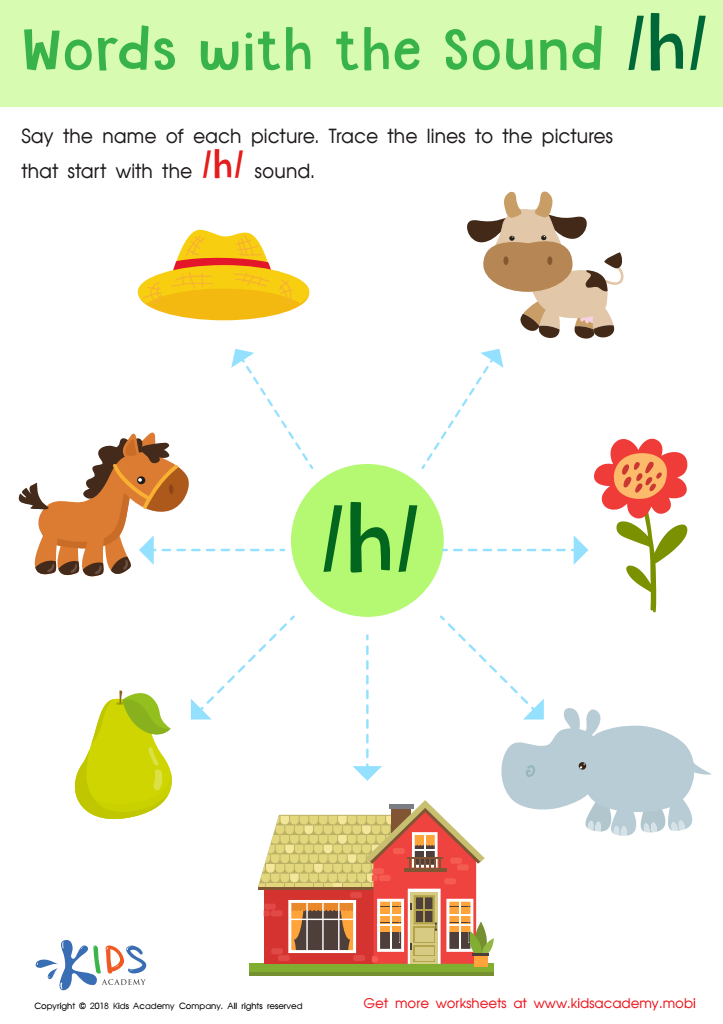
Words with sound h Reading Worksheet
The letter H can often be heard in words! Check your child's knowledge with an engaging worksheet from Kids Academy. Ask them to go around a circle and name each image aloud. Listen for the starting sound and trace the line from the middle letter to the images with the sound. This is a great way to practice phonics!
Words with sound h Reading Worksheet
Worksheet
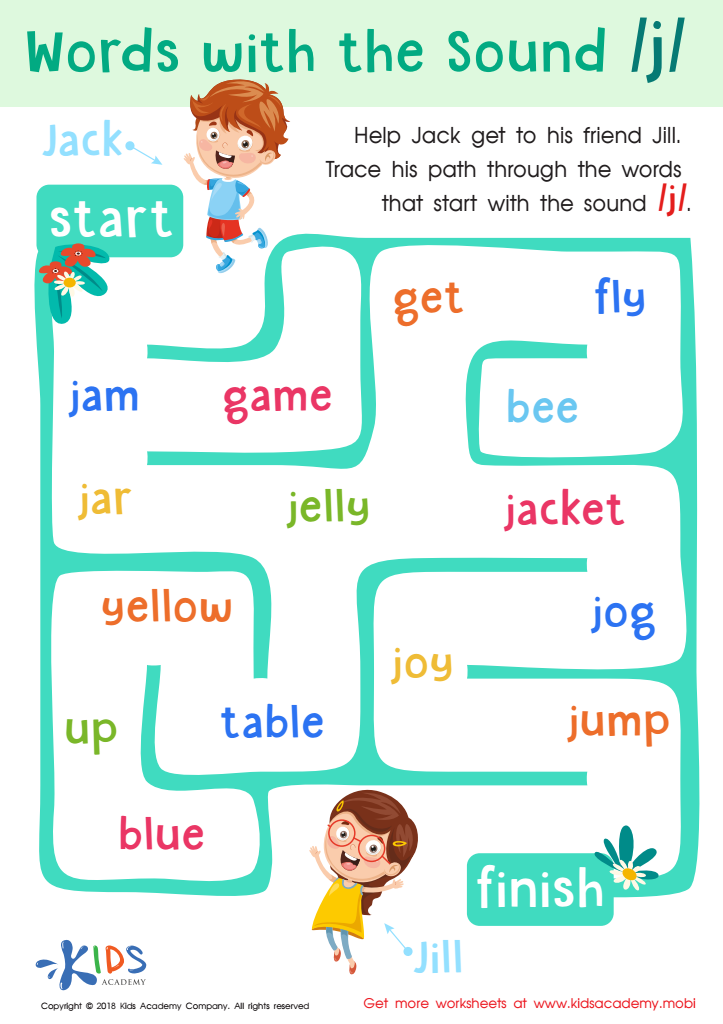
Words with sound j Reading Worksheet
Don't be fooled: The letter J sounds like G in this letter sounds maze! Kids will enjoy helping Jack find Jill by listening to beginning sounds and tracing a path to the exit. Choose words that start with the letter J sound to complete the challenging maze!
Words with sound j Reading Worksheet
Worksheet
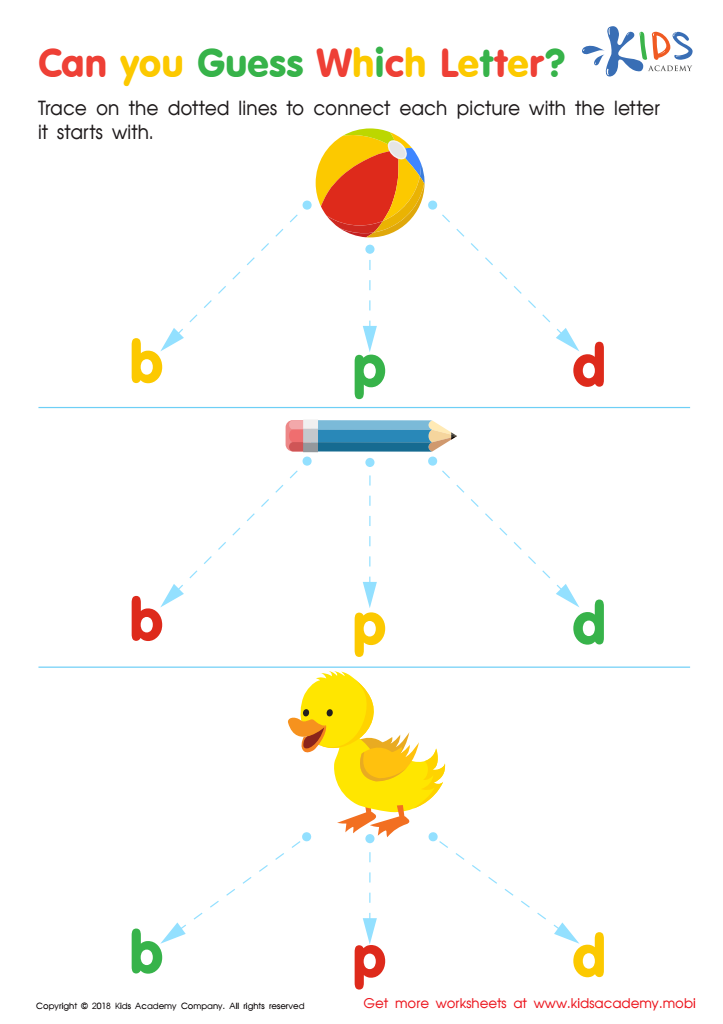
Can you Guess Which Letter? Worksheet
Connect the pictures with their corresponding letters with this fun worksheet! Ask your child what each picture is, then what letter it begins with. Download the PDF for colorful images and engaging texts to hold their attention, making learning an enjoyable activity.
Can you Guess Which Letter? Worksheet
Worksheet
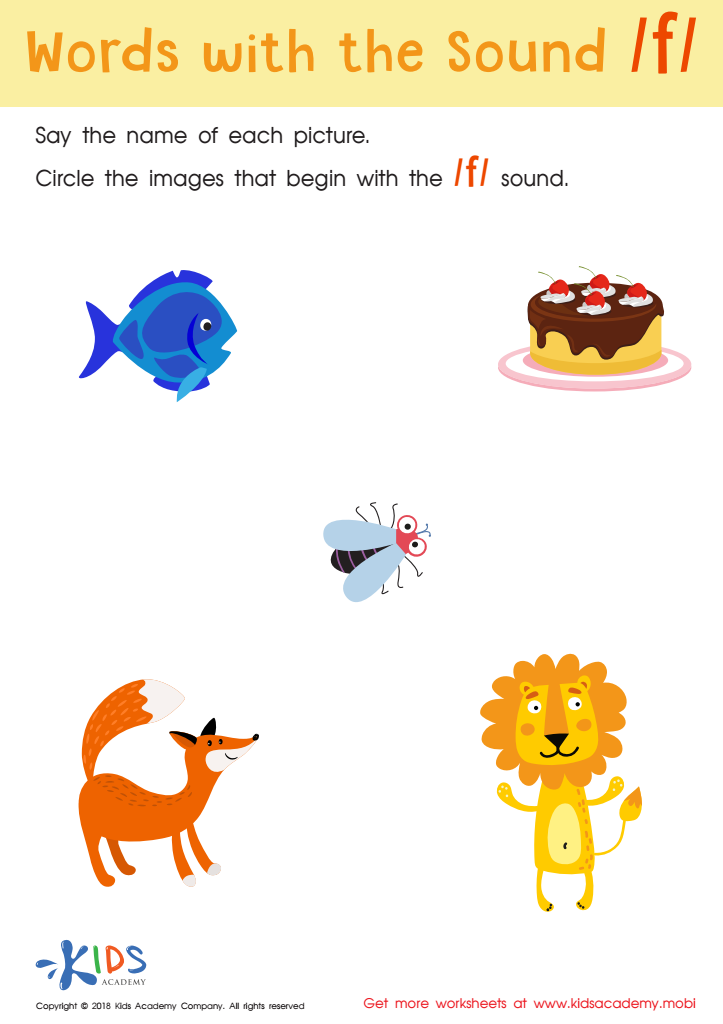
Words with sound f Reading Worksheet
This illustrated phonics worksheet is ideal for preschool or kindergarten. It helps boost learners' literacy skills with a focus on the letter "f". Ask your child to name all the pictures, listening for that sound. Examples are fish, fox, lion, bug. When they can identify which words start with "f", have them circle the images. Congratulate them on a job well done!
Words with sound f Reading Worksheet
Worksheet
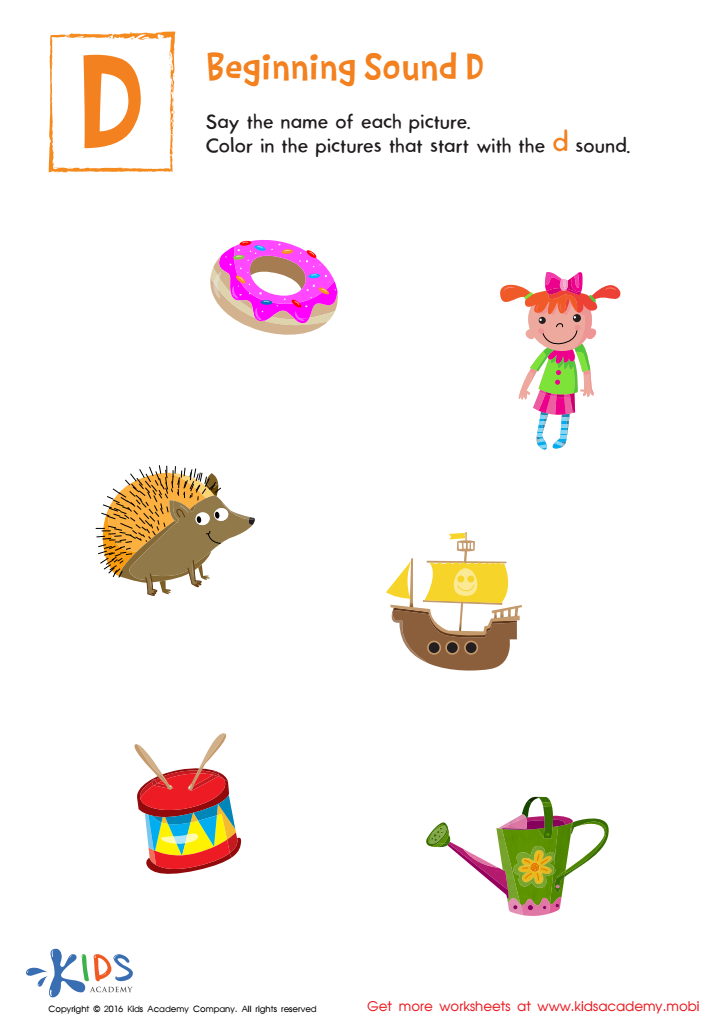
Beginning Sound D Worksheet
Reinforce phonics with this vibrant beginning sound d worksheet! Pictures help kids identify words beginning with 'd' and develop early reading skills. Sounding out each word increases literacy!
Beginning Sound D Worksheet
Worksheet
Join Kids Academy for Free
Who is primarily going to use this learning content?








Vocabulary expansion is crucial for 5-year-olds as it lays the foundation for strong reading and writing skills. Beginning sounds, also known as phonemic awareness, help children recognize the sounds that correspond to letters. Understanding these sounds is key to decoding words, which is fundamental for literacy development. By focusing on beginning sounds, parents and teachers can enhance children's ability to sound out words, enabling them to progress in reading.
Moreover, a robust vocabulary aids in communication skills, allowing children to express their thoughts more clearly and effectively. Engaging with words at this early stage fosters confidence in speaking and increases likelihood of successful interactions with peers and adults. Additionally, vocabulary growth contributes to better comprehension; when children encounter new words in stories or conversations, they are better equipped to understand and engage with what they hear and read.
Ultimately, investing time in vocabulary enrichment through beginning sounds can spark a love for reading and learning, setting children on a positive educational trajectory. Collaborative efforts from parents and teachers in familiarizing children with sounds can lead to lasting benefits in academic performance and everyday communication. This foundational skill not only perpetuates literacy development but also nurtures overall cognitive growth.







