Letter-sound correlation Letter Sounds Worksheets for 5-Year-Olds
4 filtered results
-
From - To
Enhance your child's literacy skills with our engaging Letter-Sound Correlation Worksheets designed specifically for 5-year-olds! These printable resources are perfect for young learners to explore the dynamic relationship between letters and their corresponding sounds. Through fun activities like matching games, tracing exercises, and colorful illustrations, children will develop a strong foundation in phonics essential for reading success. Easy to use at home or in the classroom, our worksheets foster independent learning while keeping kids excited about education. Let your little ones embark on a phonetic adventure that will boost their confidence and readiness for future reading challenges! Explore our collection today!
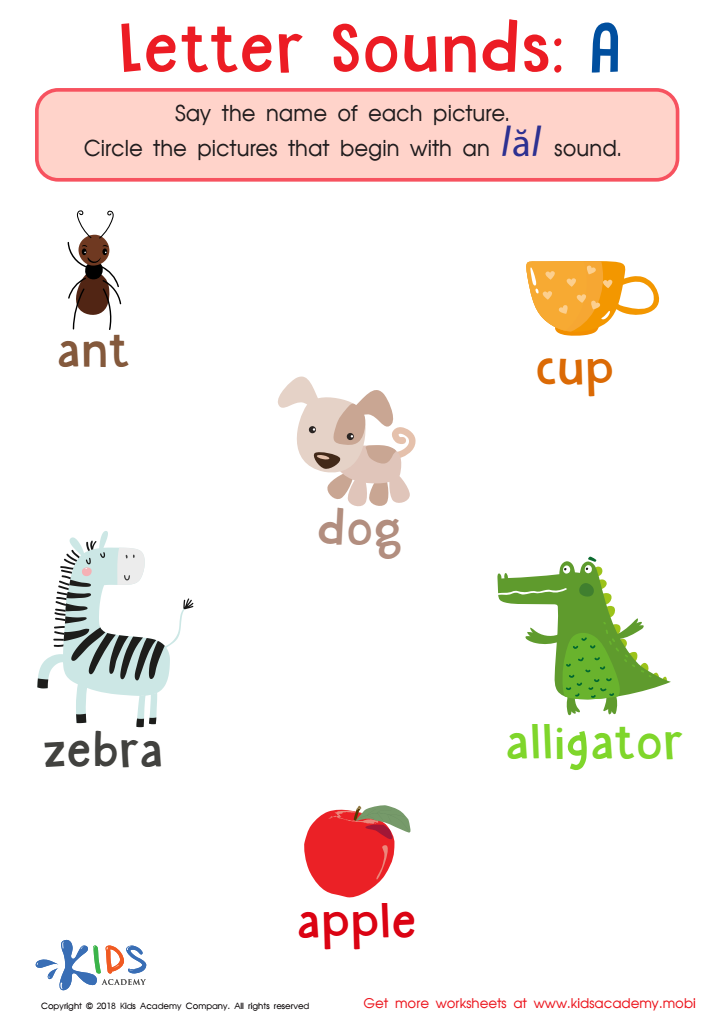
Letter A Sounds Worksheet
 Assign to My Students
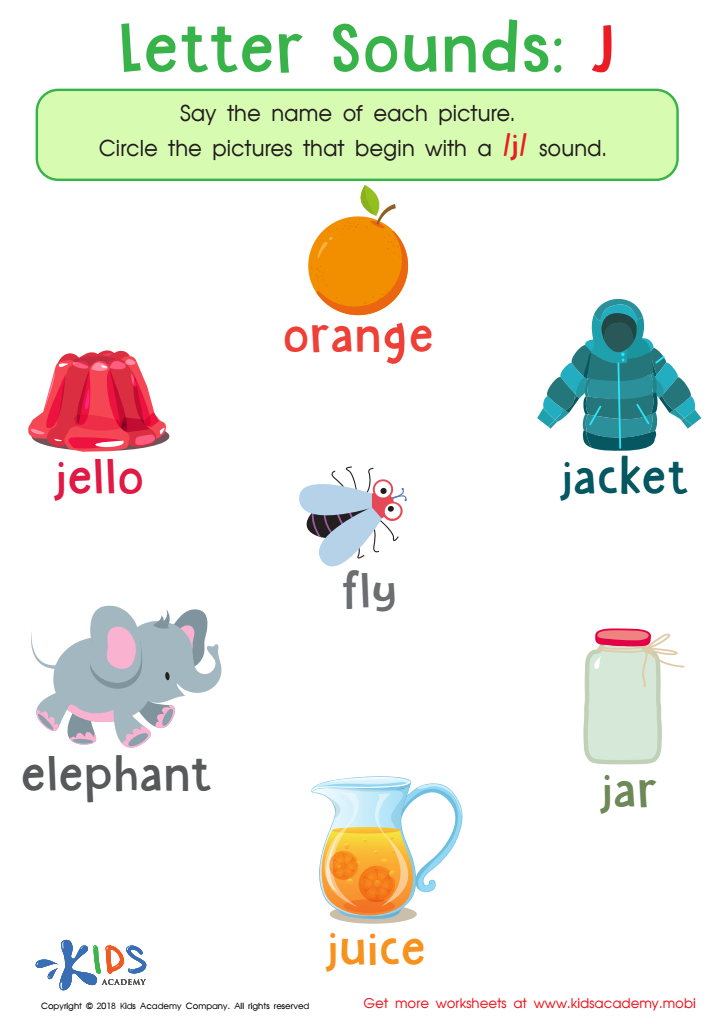
Letter Sounds: J Printable Worksheet
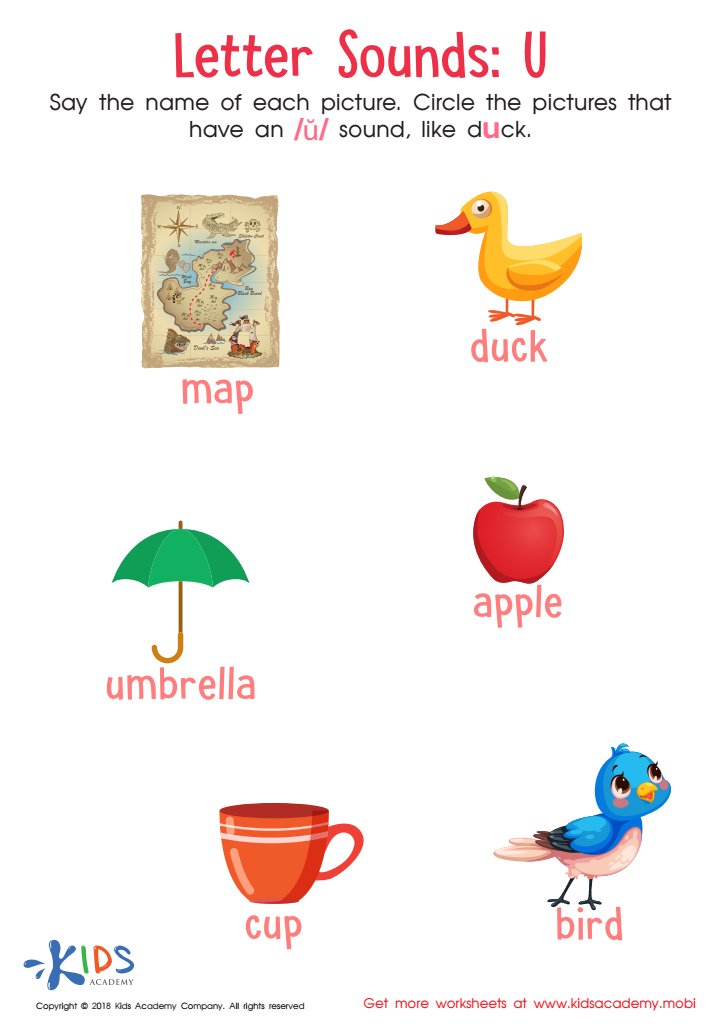
Letter U Sounds Worksheet
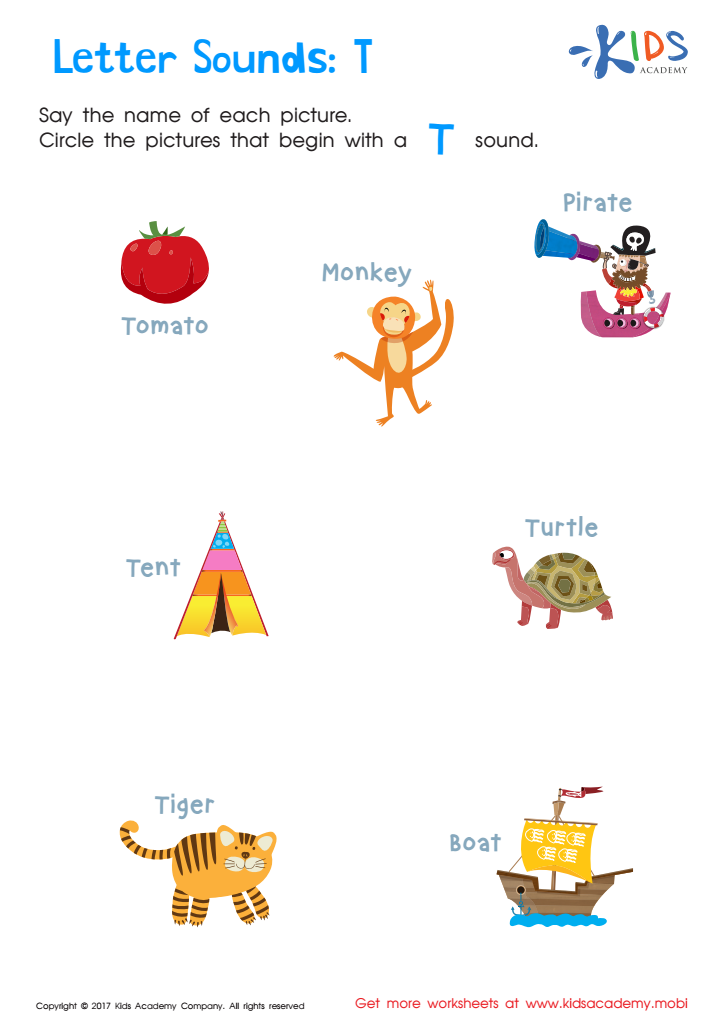
Letter T Sounds Worksheet








Letter-sound correlation, or phonics, is crucial for 5-year-olds as it lays the foundation for reading and writing skills. Understanding that letters represent specific sounds helps children decode words. This foundational skill fosters confidence and promotes a love of learning. When children grasp letter-sound relationships, they can sound out unfamiliar words, enhancing their reading fluency and comprehension.
Parents and teachers should care about this aspect of early literacy because it empowers children to become independent readers. Early mastery of these skills correlates with future academic success; students who struggle with reading in the early years often face challenges later on. Additionally, helping children recognize the sounds associated with letters can improve their spelling and writing abilities, facilitating effective communication.
Encouraging phonemic awareness creates a positive learning environment where children are excited to engage with texts. Simple activities like singing alphabet songs, playing rhyming games, or using flashcards can make learning enjoyable. Furthermore, when parents and teachers readily support these skills at home and in the classroom, it bridges the learning process, reinforcing what children learn across different contexts. This cohesive approach ultimately ensures that every child develops a strong and lasting literacy foundation, setting them up for lifelong learning.







