Letter-sound association Lowercase/Small Letters Worksheets for 5-Year-Olds
3 filtered results
Difficulty Level
Grade
Age
-
From - To
Subject
Activity
Standards
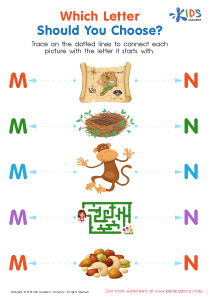
Introduce your 5-year-old to the exciting world of reading with our engaging Letter-Sound Association Lowercase/Small Letters Worksheets! These expertly designed printables help young learners master letter-to-sound correspondence, an essential step in reading development. Our worksheets are packed with fun activities, from letter tracing to sound matching, ensuring children stay motivated and interested. Bright illustrations and interactive exercises make learning enjoyable and effective. Perfect for classroom use or homeschooling, these resources support teachers and parents in building a strong literacy foundation. Nurture your child's reading skills with these engaging and educational worksheets today!
Favorites
With answer key
Interactive
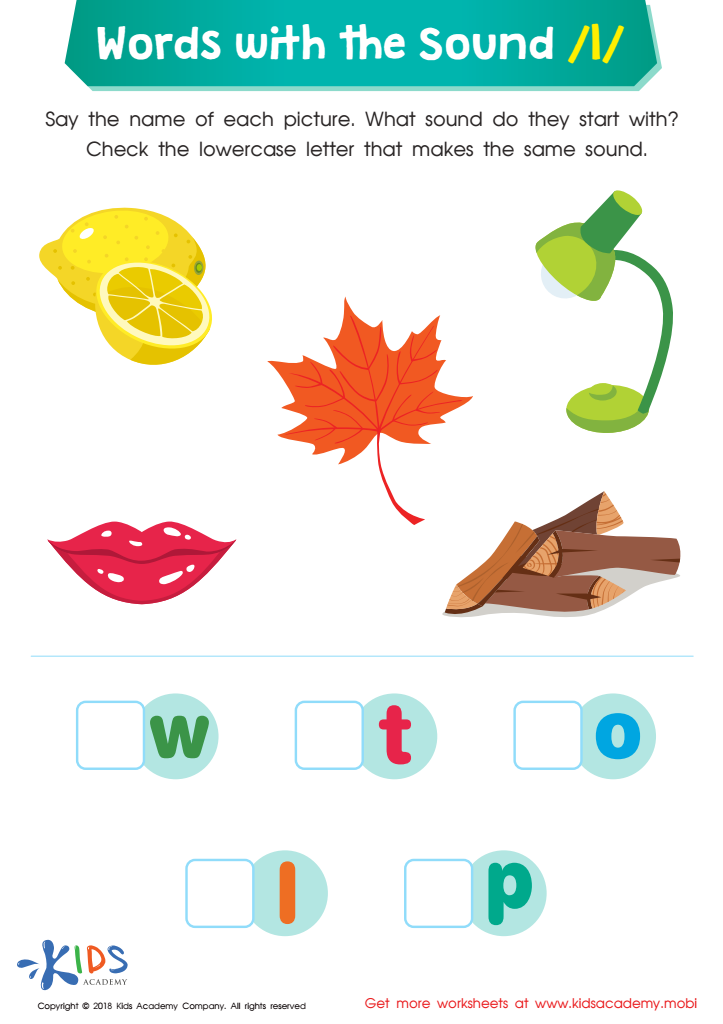
Words with Sound L Reading Worksheet
This PDF worksheet is great for helping emerging readers isolate initial sounds. Kids name familiar pictures, then identify the correct letter for the "l" sound. This worksheet strengthens fine motor skills, plus builds visual discernment. It's fun and colorful too!
 Assign to My Students
Words with Sound L Reading Worksheet
Worksheet
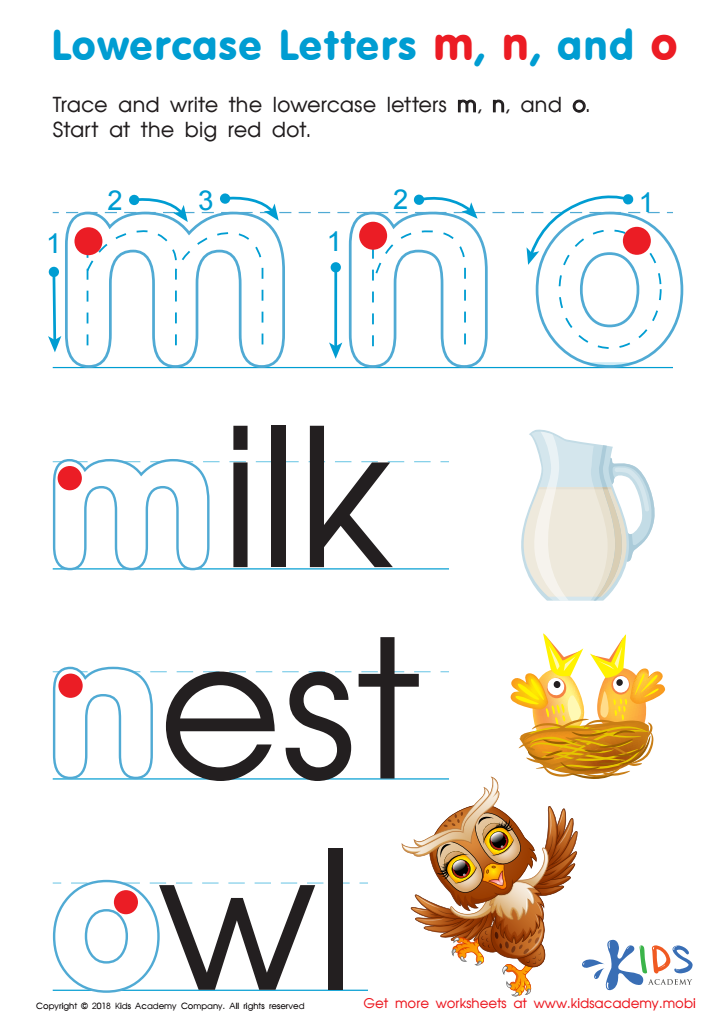
Lowercase Letters m n o Worksheet
Help your child learn the alphabet with letter tracing. Show them the difference between uppercase and lowercase letters by working through this free worksheet, tracing and writing lowercase m, n and o.
Lowercase Letters m n o Worksheet
Worksheet
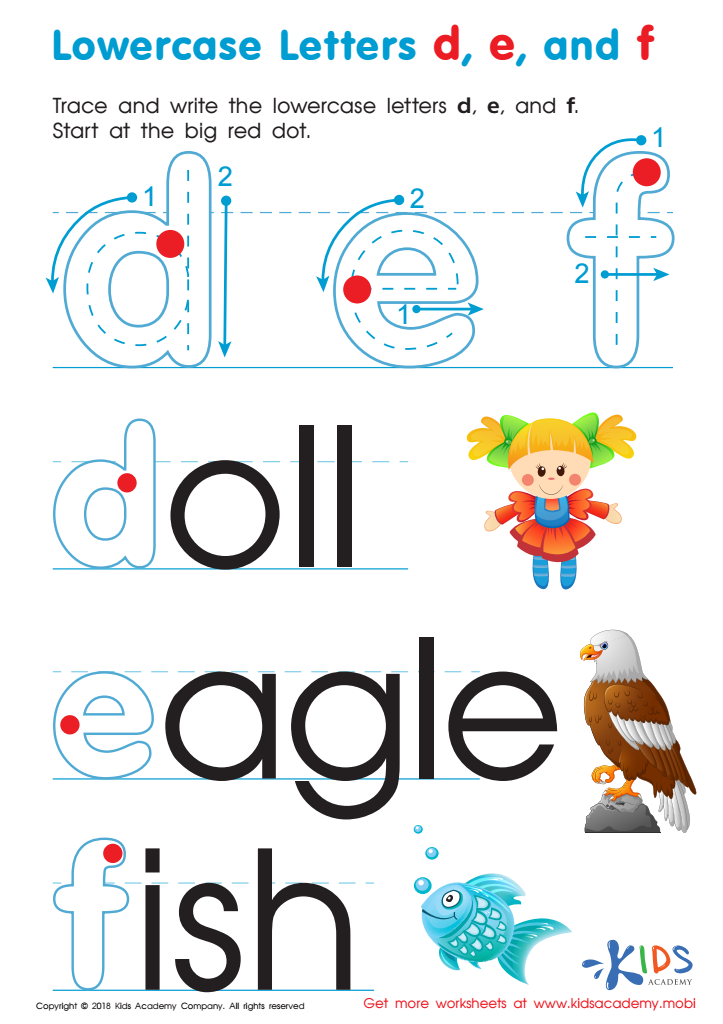
Lowercase Letters d e f Worksheet
Help your child learn the alphabet letters by tracing and writing the lowercase letters d, e, and f. Begin at the big red dot and follow the dots. This worksheet will help your little one gain a better understanding of the letters.
Lowercase Letters d e f Worksheet
Worksheet
Join Kids Academy for Free
Who is primarily going to use this learning content?


Understanding letter-sound associations in lowercase letters is a critical milestone for 5-year-olds as it lays the foundation for their reading and writing skills. At this developmental stage, children are naturally equipped to absorb and learn language patterns, making it an ideal time to introduce these core literacy concepts.
Firstly, recognizing the relationship between lowercase letters and their corresponding sounds supports phonemic awareness, a fundamental aspect of reading. Phonemic awareness allows children to decode written words, which leads to better reading fluency and comprehension. By associating sounds with letters, children can begin blending these sounds to form words, facilitating early spelling and written communication skills.
Moreover, lowercase letters are more commonly used in everyday reading material, such as books and stories, making this knowledge incredibly practical. Children who grasp lowercase letter-sound associations will find it easier to follow along during reading sessions and will be more confident in participating and showing interest in literacy activities.
Teachers and parents should care about this aspect of literacy as it directly impacts a child’s future success in learning. Early mastery of lowercase letter-sound associations empowers children to tackle more complex linguistic tasks with confidence. The support and encouragement from adults during this crucial learning period can instill a lifelong love for reading and learning.