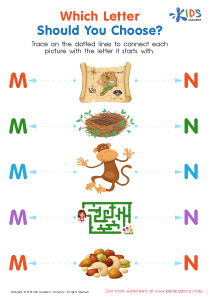
Lowercase letter writing Lowercase/Small Letters Worksheets for 5-Year-Olds
3 filtered results
-
From - To
Our "Lowercase Letter Writing: Small Letters Worksheets for 5-Year-Olds" are specially designed to help young learners master their alphabet skills. These engaging worksheets make learning fun, offering a variety of activities that guide children in properly forming each lowercase letter. Perfect for preschool and kindergarten students, these resources blend educational exercises with entertaining visuals to captivate young minds. By incorporating tracing practices and interactive games, our worksheets foster fine motor development and letter recognition. Parents and educators will find these tools invaluable in supporting children’s journey towards confident and fluent writing. Unlock your child’s potential with our expertly crafted worksheets!
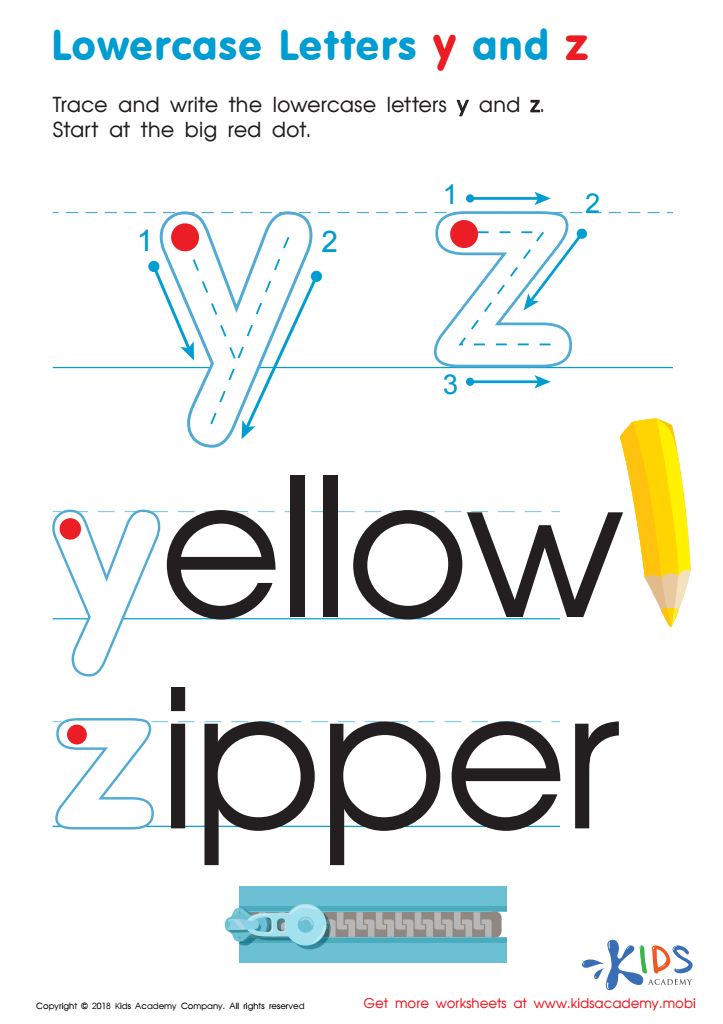
Lowercase Letters y z Worksheet
 Assign to My Students
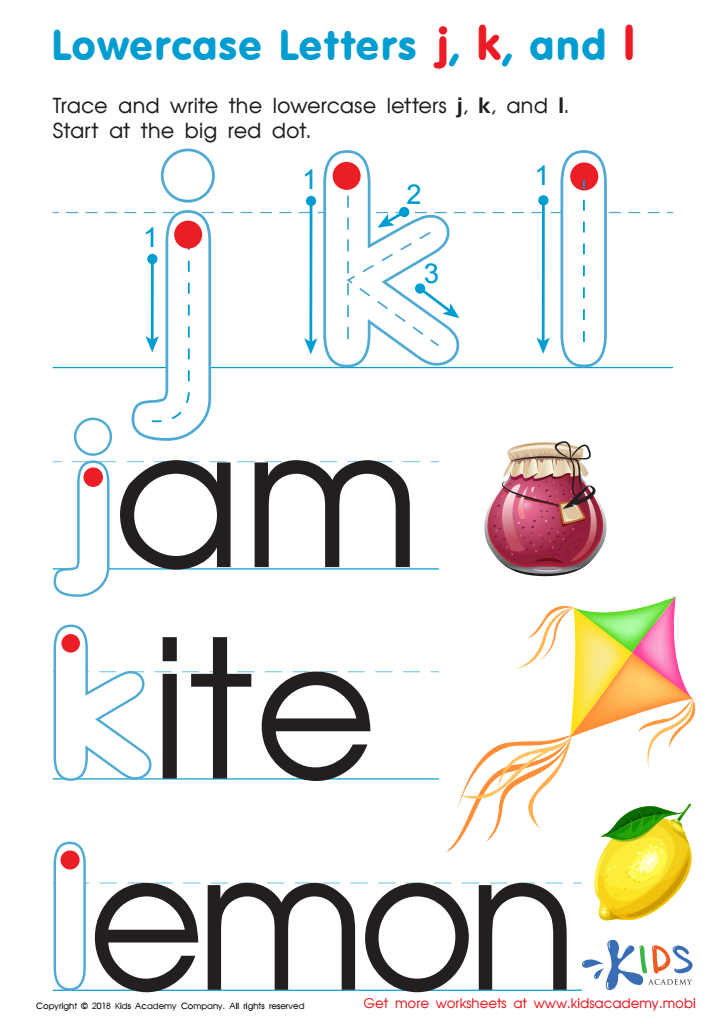
Lowercase Letters j k l Worksheet

Lowercase Letters m n o Worksheet


Parents and teachers should place importance on teaching lowercase letters to 5-year-olds due to its crucial role in foundational literacy. Lowercase letters compose the majority of written language, appearing more frequently than uppercase letters in everyday text like books, signs, and digital media. Mastering lowercase letter formation early on enables children to recognize words seamlessly, enhancing reading fluency and comprehension.
Additionally, learning lowercase letters supports proper handwriting skills. Efficient and correct stroke formation lays the groundwork for legible and comfortable writing as children progress in their education. This early proficiency can alleviate future frustrations associated with writing tasks.
Teaching lowercase letters also aligns with developing fine motor skills. As children practice the precise movements needed for each letter, they improve their hand-eye coordination and control, which is beneficial for various daily activities beyond writing.
Furthermore, familiarity with lowercase letters can bolster a child's confidence and independence in learning. Recognizing and writing these letters empowers them to read simple words and feel competent in their academic abilities, fostering a positive attitude toward education.
In summary, prioritizing lowercase letter instruction at an early age secures essential reading and writing skills, enhances fine motor development, and builds a solid foundation for lifelong learning success.