
Sight word recognition Three Letter Words Phonics Worksheets for 5-Year-Olds
3 filtered results
Difficulty Level
Grade
Age
-
From - To
Subject
Activity
Standards
Boost your child's reading skills with our engaging Sight Word Recognition Three Letter Words Phonics Worksheets designed for 5-year-olds! These worksheets combine phonics and sight word recognition to build foundational reading skills in a fun and interactive way. Kids will enjoy recognizing, pronouncing, and writing essential three-letter words, enhancing their vocabulary and reading fluency. Perfect for at-home learning or classroom practice, our worksheets use colorful illustrations and clear instructions to make learning enjoyable and effective. Equip your child with the key skills they need to become confident readers with our expertly crafted worksheets!
Favorites
With answer key
Interactive
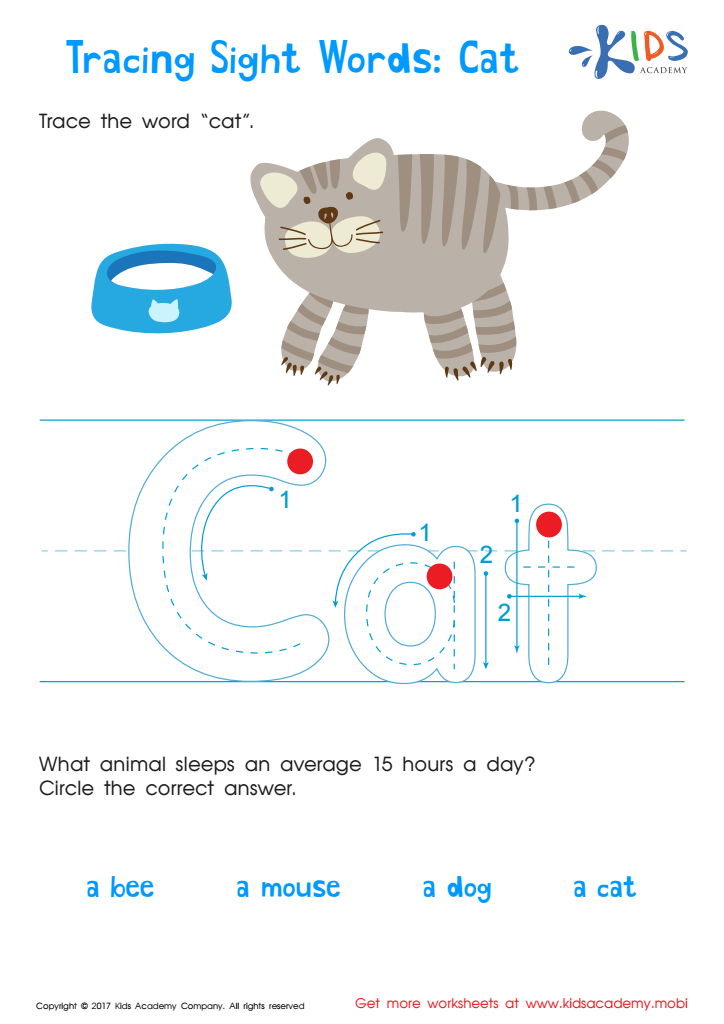
Cat Printable Sight Words Worksheet
Encourage your child's literacy with this fun sight words worksheet: cat PDF! It helps build a solid foundation for reading, featuring activities such as reading and tracing the word cat, and finding it amongst other sight words. With its cute cat, Kids Academy makes learning to read a delight!
Cat Printable Sight Words Worksheet
Worksheet
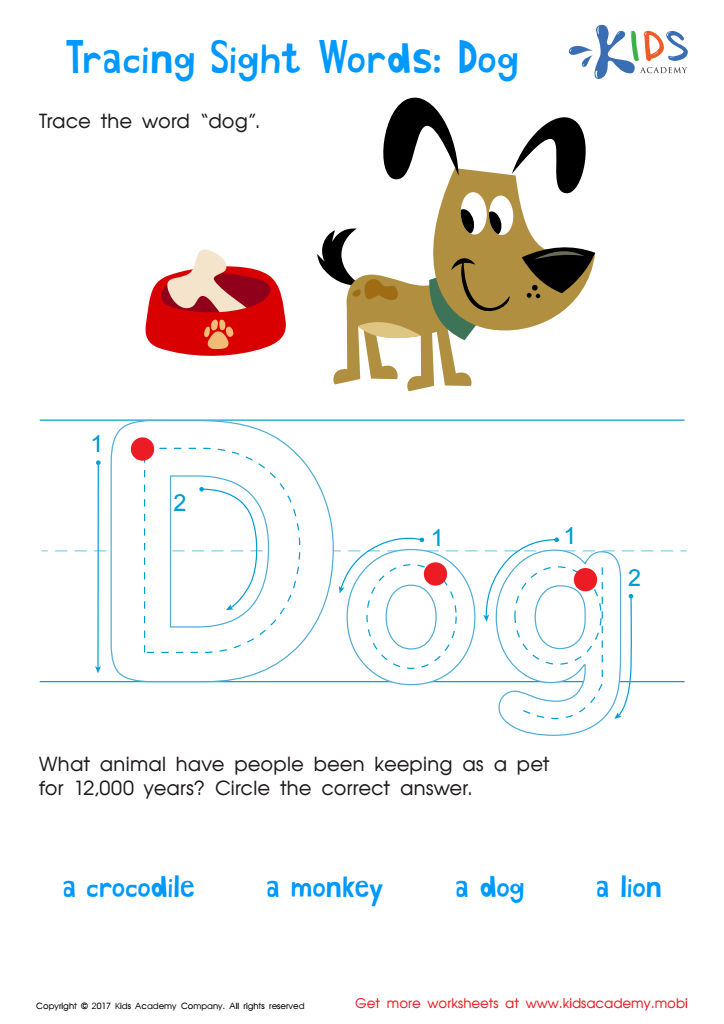
Dog Worksheet Sight Words Worksheet
Get your kids excited to read with our dog-themed sight words worksheet!
Excite your child to read with our sight words worksheet: dog edition! Featuring a lovable dog character to put a smile on any kid's face, this worksheet helps kids practice reading and writing the word "dog". Build a library of words they can read quickly and promote increasing literacy skills with early fluency! Get them ready for reading with our dog-themed sight words worksheet!
Dog Worksheet Sight Words Worksheet
Worksheet
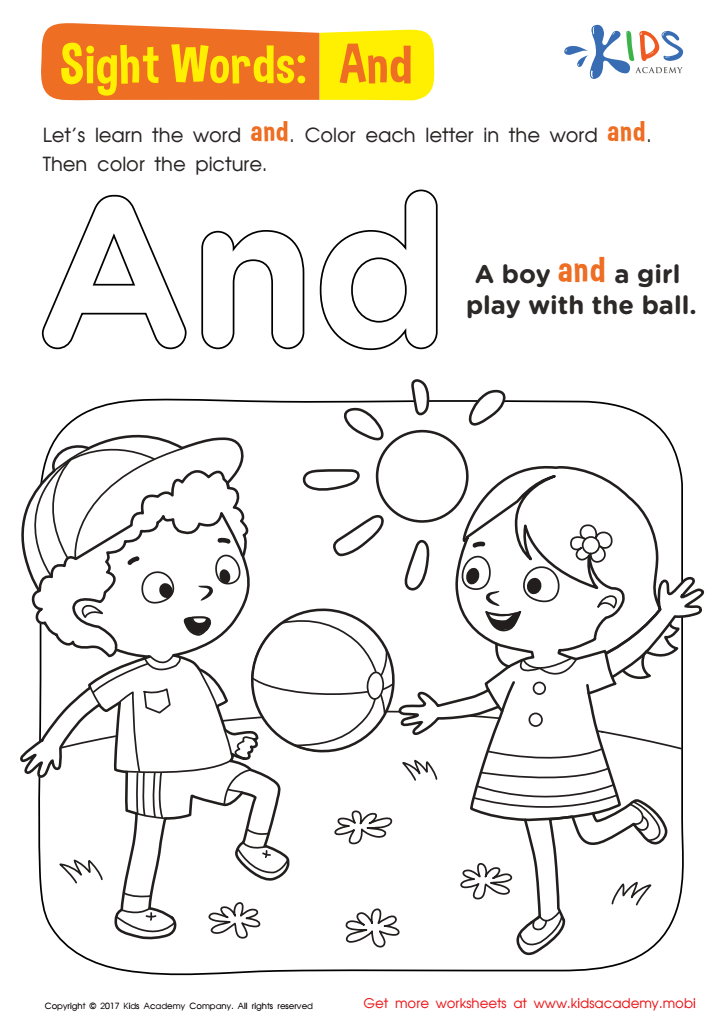
And Worksheet Sight Words Worksheet
Help your child get a jumpstart on reading with sight words! Print out this fun worksheet and get your child to read the sentence. Point out the word "and", then color the word and enjoy the rest of the scene! It's a great way to introduce sight words and get their early reading skills going!
Download (PDF)
 Assign to My Students
Assign to My Students
And Worksheet Sight Words Worksheet
Worksheet
Join Kids Academy for Free
Who is primarily going to use this learning content?




Sight word recognition and understanding three-letter words are foundational elements for early readers, especially 5-year-olds, and both parents and teachers play crucial roles in nurturing these skills.
Sight words are commonly used words that children are encouraged to recognize without having to sound them out. Examples include "the," "and," "is," and "was." Recognizing these words instantly helps children read more fluently and focus on understanding the text rather than decoding every single word. This enhances their confidence and motivates them to read more.
Three-letter word phonics, such as "cat," "dog," and "hat," also serve an essential role in phonics and early reading skills. By mastering these, children learn how letters come together to form sounds and words. This shift from recognizing letters to reading words bridges the path to reading more complex texts.
Parents and teachers should care about these skills because early literacy is critical for successful learning throughout a child's educational journey. Strong early reading abilities set the stage for greater academic achievement and a lifelong love of learning. Children who can effortlessly recognize sight words and decode three-letter words are more likely to enjoy reading and are statistically more likely to excel in school. Therefore, fostering these skills at an early age is integral to future academic success and personal growth.







