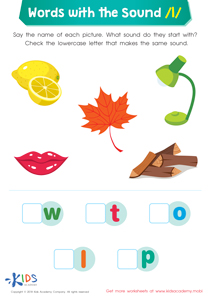
Alphabet familiarity Uppercase Letters Worksheets for 5-Year-Olds
4 filtered results
-
From - To
Boost your child's early literacy skills with our engaging Alphabet Familiarity worksheets focusing on uppercase letters, specifically designed for 5-year-olds. These worksheets offer a fun and interactive way for young learners to recognize and familiarize themselves with uppercase letters. Featuring vibrant illustrations and easy-to-follow activities, children will enjoy tracing, identifying, and matching letters. Perfect for at-home practice or classroom use, these resources aim to build a strong foundation in reading readiness. Unlock the joy of learning the alphabet today and watch your child gain confidence in their literacy journey! Download and print our worksheets to embark on an exciting educational adventure!
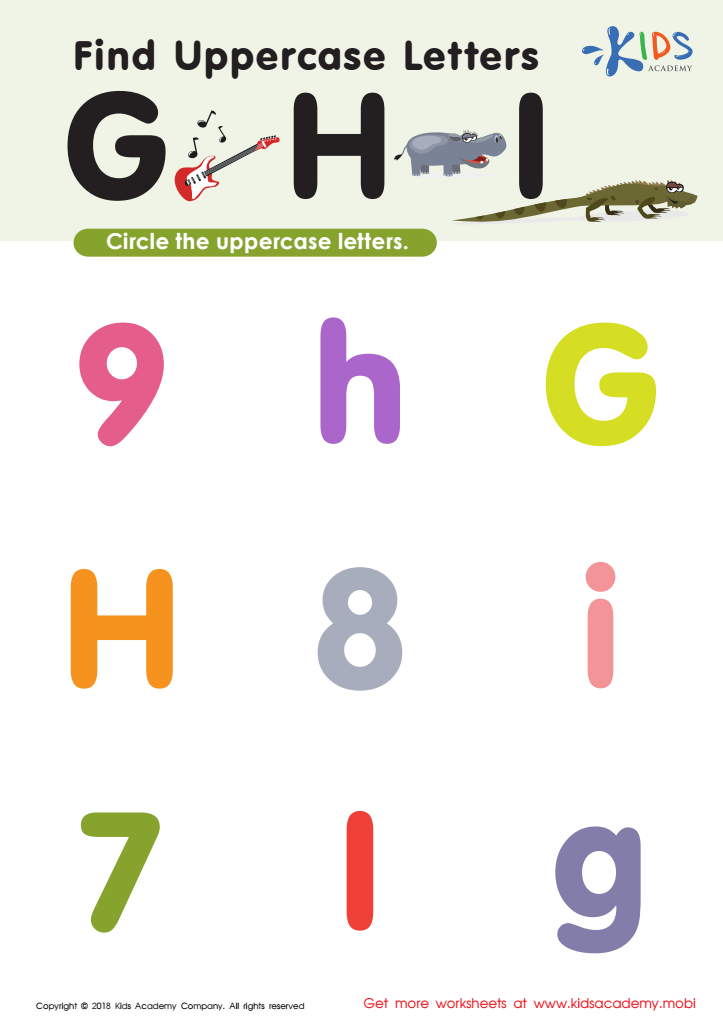
Find Uppercase Letters G, H, and I Worksheet
 Assign to My Students
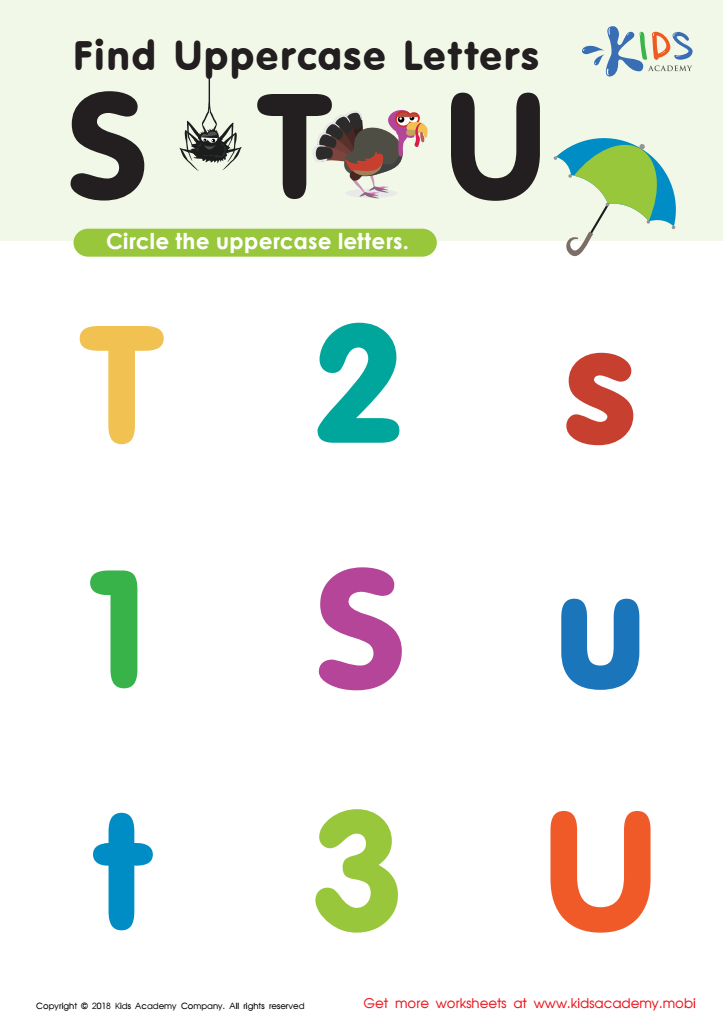
Find Uppercase Letters Worksheet
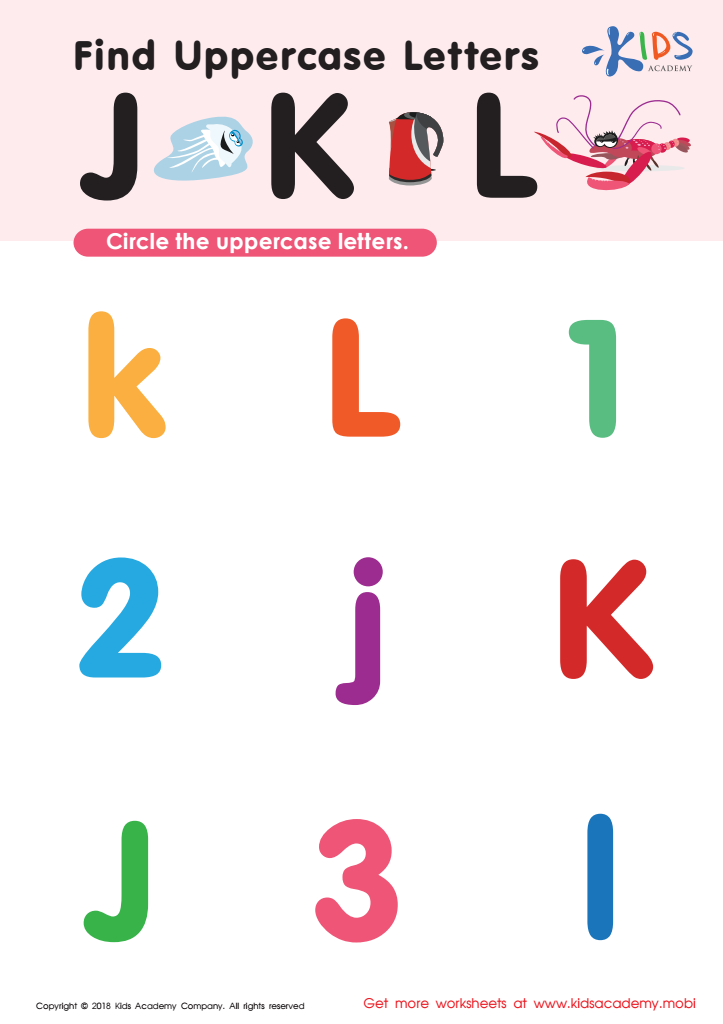
Find Uppercase Letters J, K, and L Worksheet
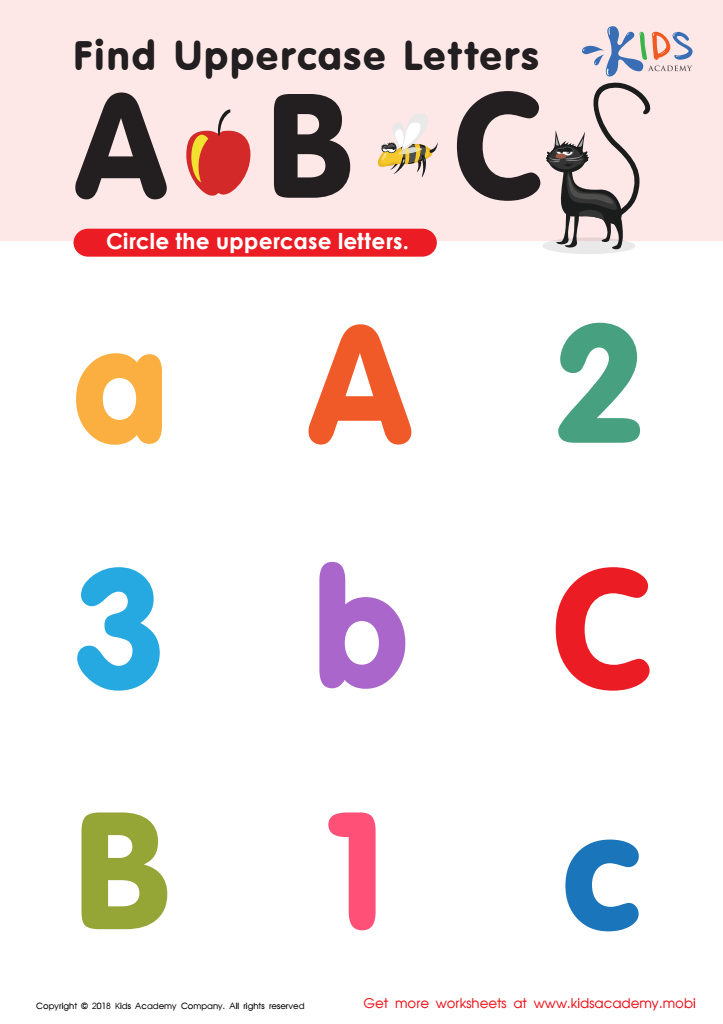
Find Uppercase Letters A, B, and C Worksheet








Alphabet familiarity, particularly with uppercase letters, is critically important for 5-year-olds as it lays the foundation for literacy and communication skills. At this age, children begin to develop early reading and writing abilities, making recognition of uppercase letters a vital milestone. Familiarity with these letters helps children identify the beginning of sentences and names, guiding them in understanding the structure of written language.
Uppercase letters serve essential functions in written communication, signifying proper nouns and the start of new sentences. By mastering these letters, children can engage more effectively with reading materials and learn to write their names and other significant words. Additionally, familiarity fosters confidence and enthusiasm for reading, encouraging a lifelong love of literacy.
Moreover, learning uppercase letters develops fine motor skills necessary for writing. When teachers and parents engage children in alphabet activities, such as games or crafts, they make learning enjoyable and interactive, which enhances retention.
Ultimately, caring about uppercase letter familiarity equips children with the skills they need for academic success, supports their cognitive development, and prepares them for future learning experiences. By promoting this skill, parents and teachers play a crucial role in nurturing essential foundational skills.