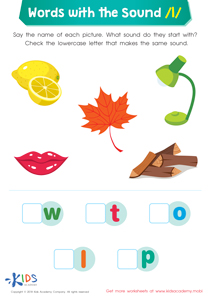
Uppercase identification Uppercase Letters Worksheets for 5-Year-Olds
5 filtered results
-
From - To
Discover our engaging Uppercase Letters Worksheets designed for 5-year-olds to enhance uppercase letter identification skills. These printables provide fun and interactive activities that make learning the alphabet exciting! Each worksheet is crafted to help young learners recognize, trace, and differentiate uppercase letters through various activities such as matching games and coloring exercises. With clear instructions and illustrations, our worksheets support early literacy development while fostering confidence in young readers. Perfect for use at home or in the classroom, these resources make learning uppercase letters enjoyable and effective. Explore our collection now and watch your child thrive in their literacy journey!
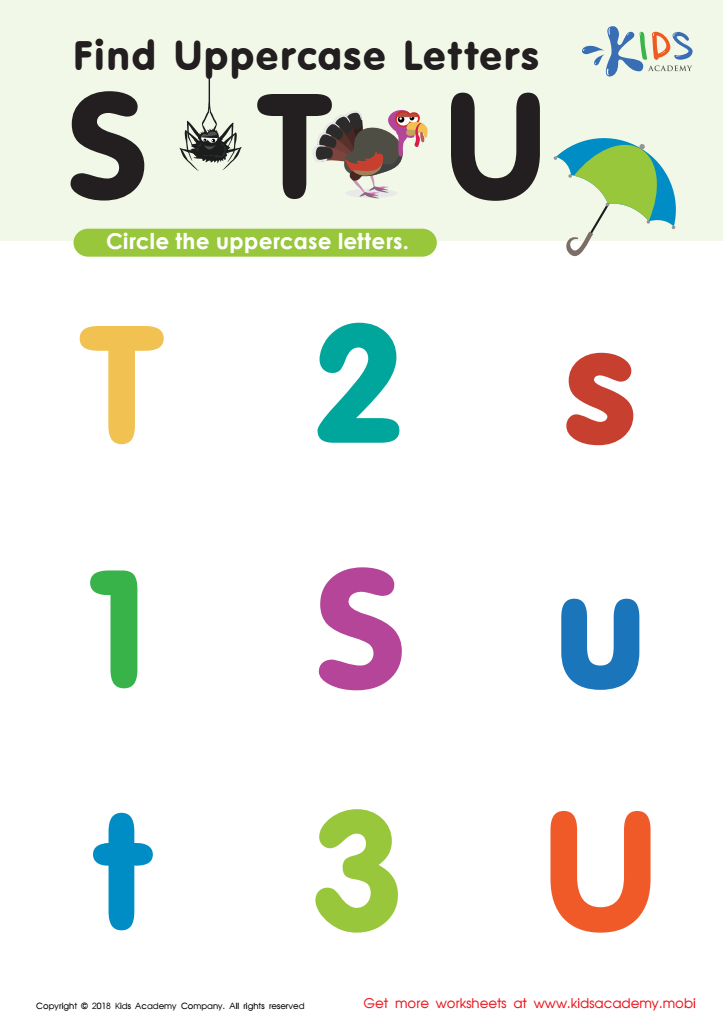
Find Uppercase Letters Worksheet
 Assign to My Students
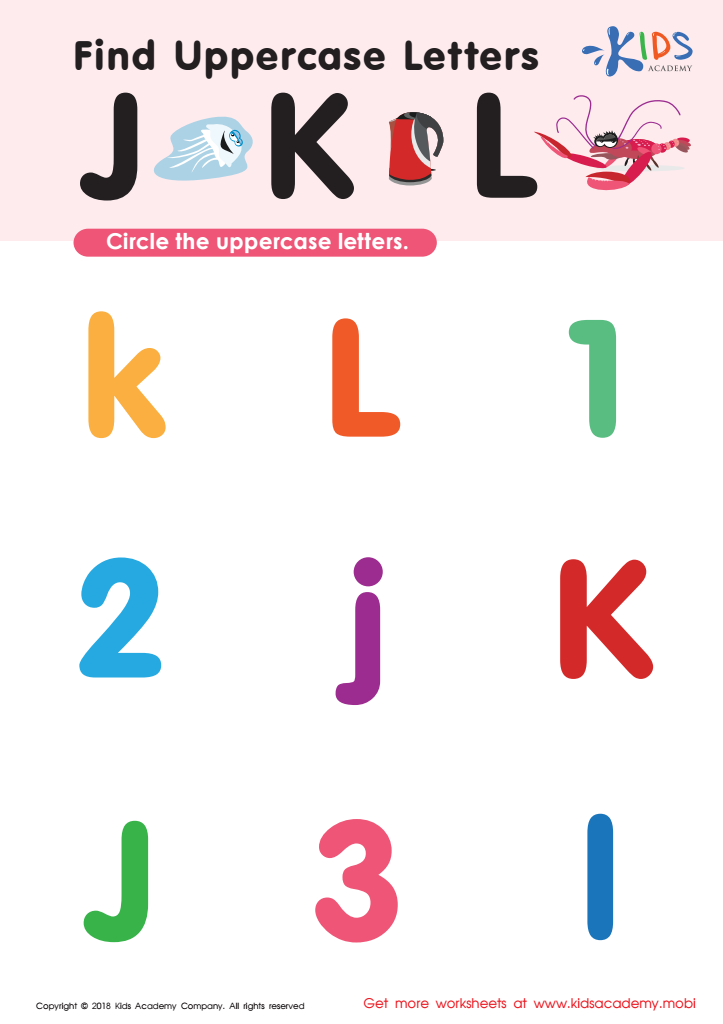
Find Uppercase Letters J, K, and L Worksheet

Find Uppercase Letters A, B, and C Worksheet
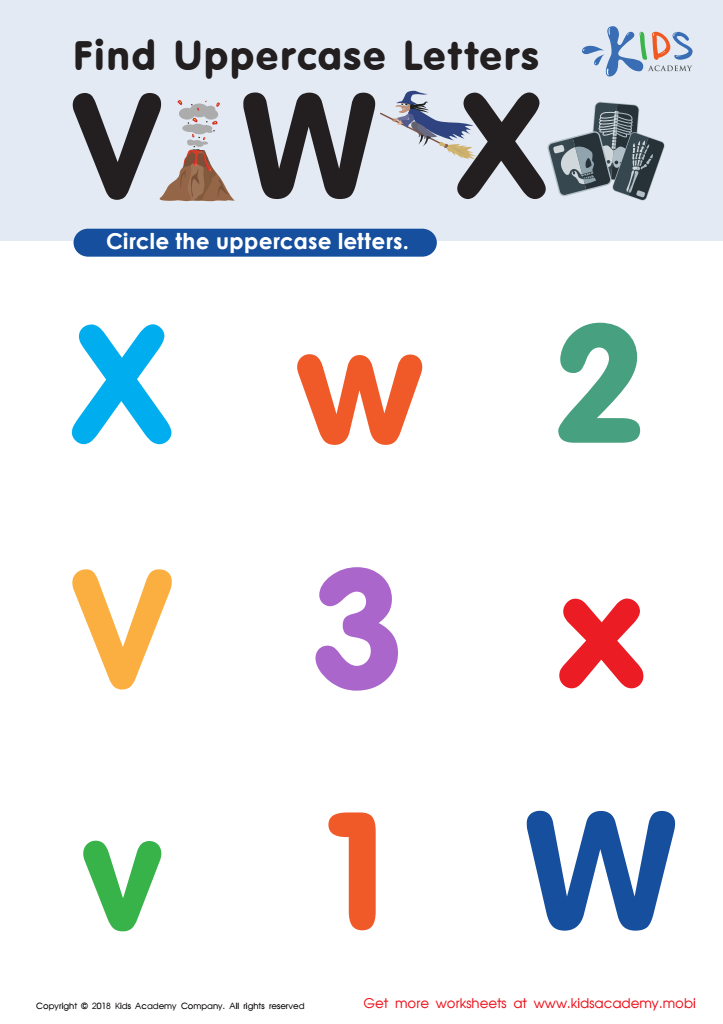
Find Uppercase Letters V, W, X Worksheet
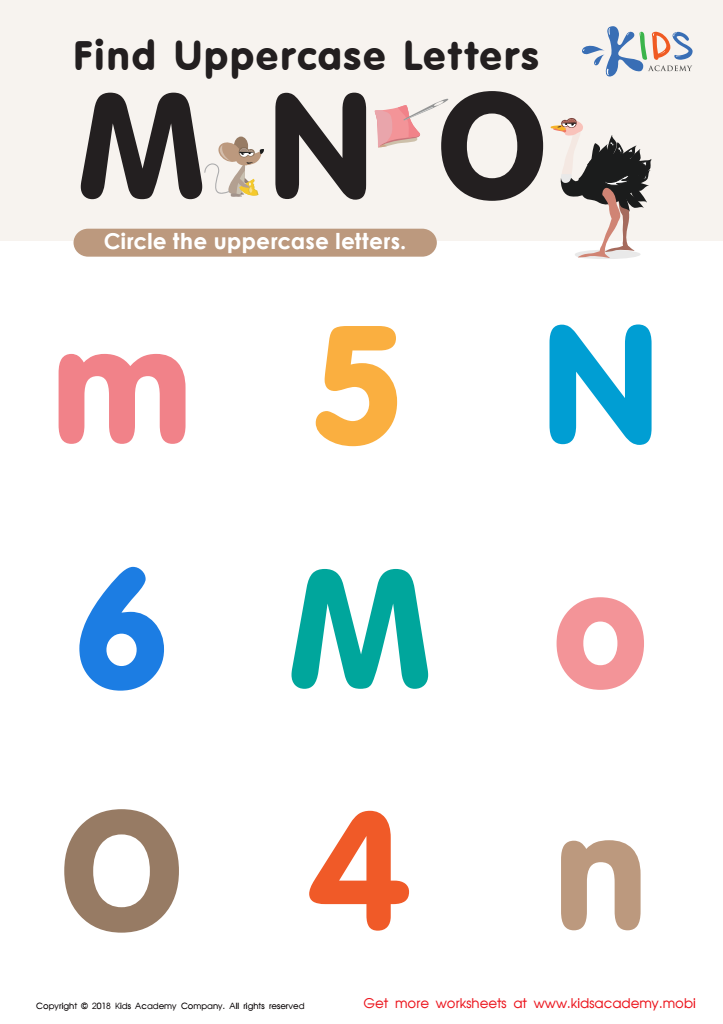
Find Uppercase Letters M, N, and O Worksheet








Uppercase letter identification is crucial for 5-year-olds as it lays the foundation for literacy development. At this age, children are beginning to develop their reading and writing skills, and uppercase letters play a significant role in their early literacy experiences.
Recognizing uppercase letters helps children understand the basics of written language. Most children's books use uppercase letters for the beginning of sentences or proper nouns, making it vital for them to identify these letters for comprehension. Moreover, mastering uppercase letters fosters a sense of achievement, boosting confidence in young learners as they begin to write their names and other simple words.
Parents and teachers should care about uppercase identification as it supports phonemic awareness, which is the ability to hear, identify, and manipulate sounds in spoken language. Engaging activities with uppercase letters, such as games, books, and visual aids, make learning enjoyable and effective, encouraging children to explore literacy on their own.
Involving parents in this process also enhances the learning experience. When caregivers engage in literacy activities, it forms stronger home-school connections and promotes ongoing learning. Ultimately, instilling a strong foundation in uppercase letter identification sets children on the path to becoming proficient readers and writers.