Comparing quantities Worksheets for 5-Year-Olds
5 filtered results
-
From - To
Introduce your 5-year-old to the world of math with our engaging "Comparing Quantities Worksheets". These worksheets are designed to develop essential skills such as counting, recognizing more or less, and understanding basic quantities. Colorful, fun, and interactive, the exercises captivate young minds while enhancing their problem-solving abilities. Perfect for early learners, our printable worksheets offer a variety of activities including matching, counting, and comparing groups of objects. Boost your child's confidence and foundation in math while keeping learning enjoyable and rewarding. Explore our collection today and watch your child's math skills flourish!
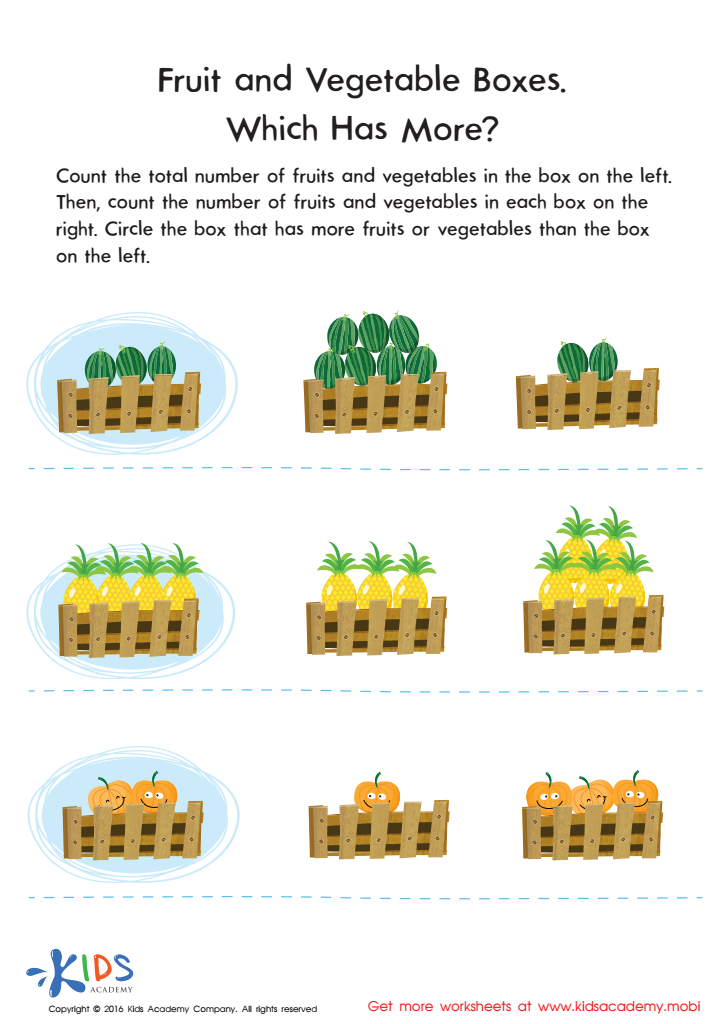
Which Has More? Size Worksheet
 Assign to My Students
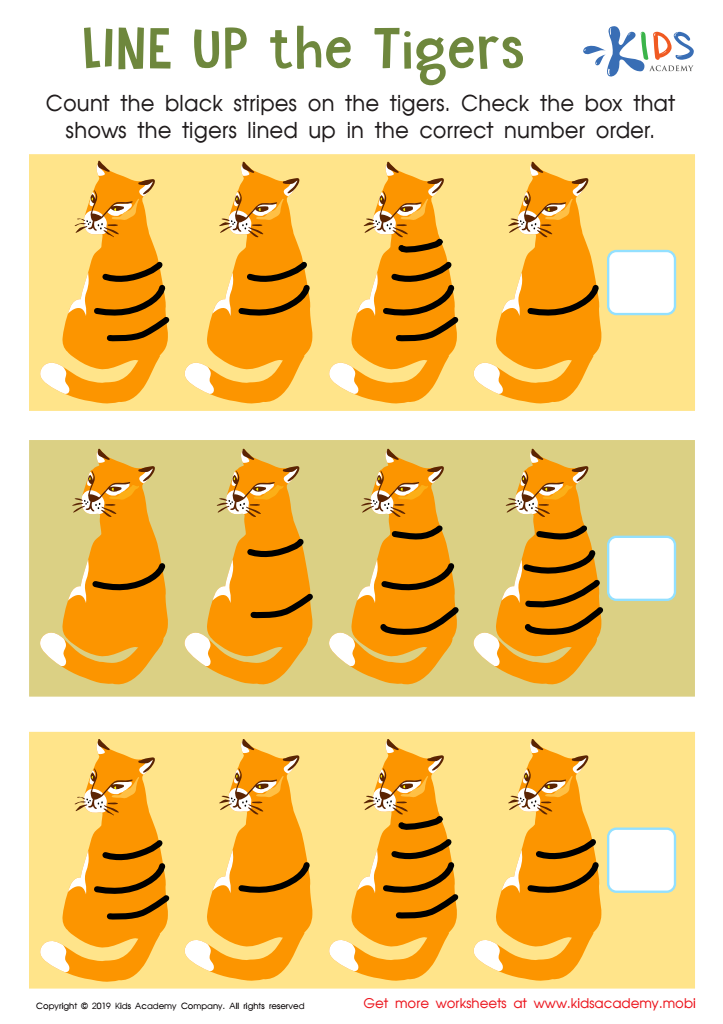
Line up the Tigers Worksheet
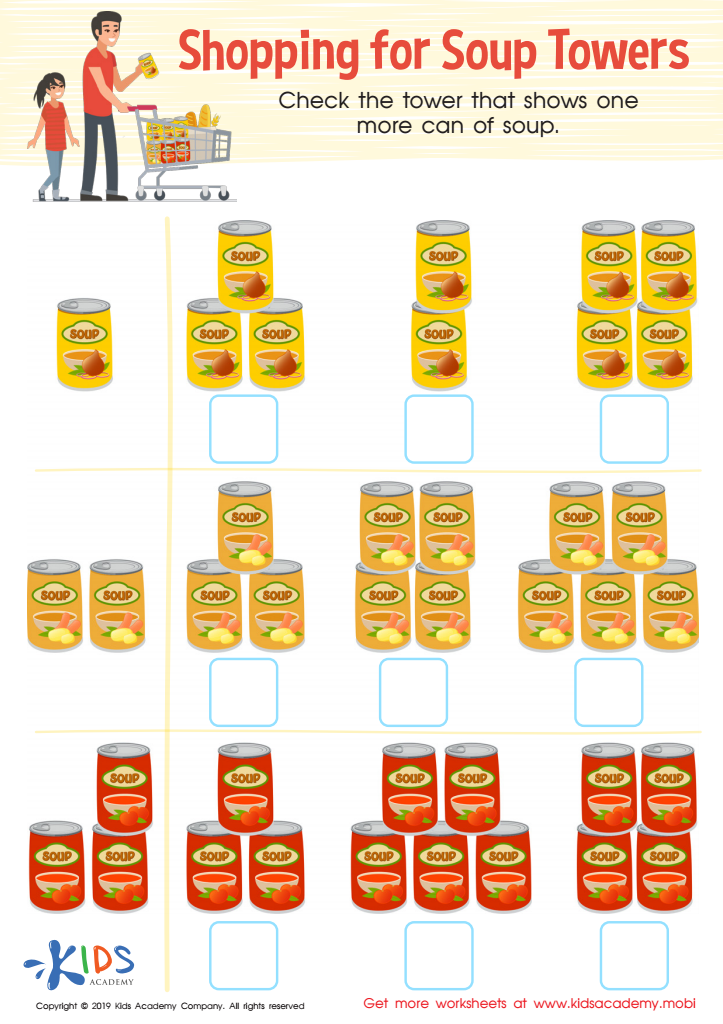
Soup Towers Worksheet
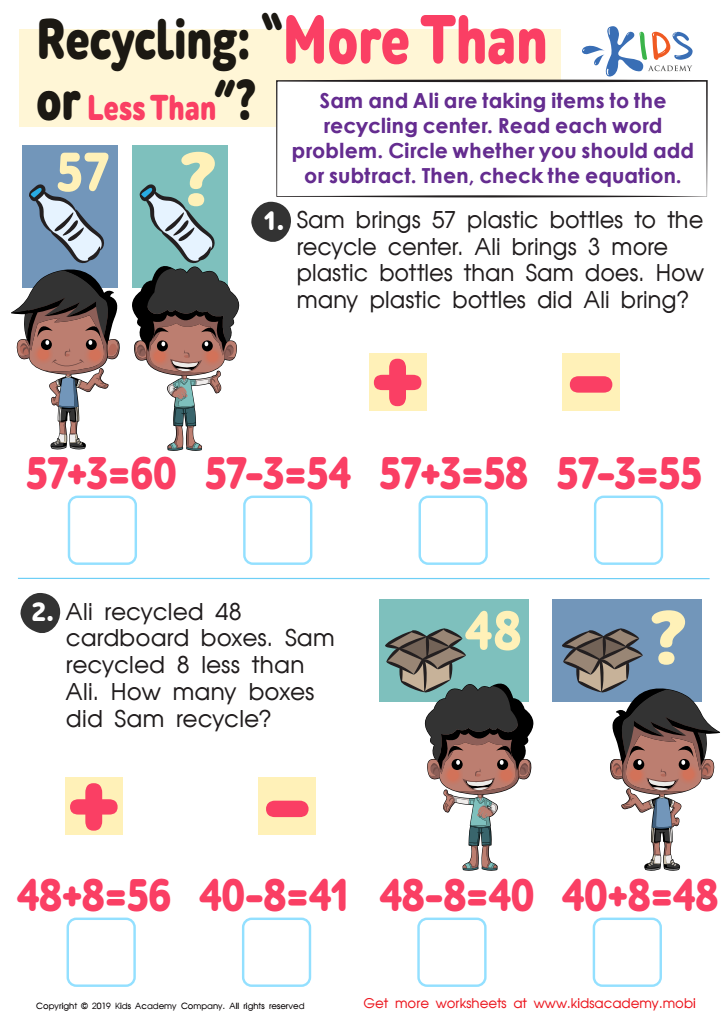
Recycling - More or Less Worksheet
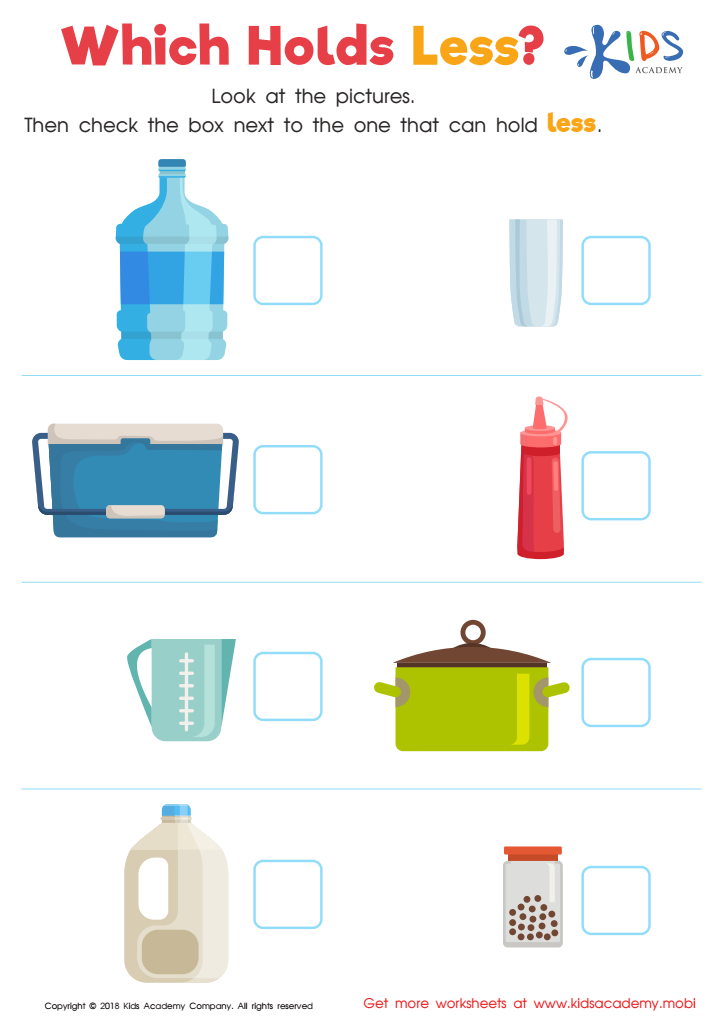
Which Holds Less? Worksheet








Fostering an understanding of comparing quantities in 5-year-olds is critical for both cognitive and mathematical development. At this age, children are rapidly learning about the world around them, and recognizing differences and similarities in quantities helps them make sense of their environment.
For parents and teachers, promoting skills in comparing quantities can enhance a child's numerical literacy, which is foundational for future success in math. For instance, a child who can distinguish between groups of objects by counting (knowing that five apples are more than three apples) builds the basis for more complex mathematical concepts, such as addition, subtraction, and, later, multiplication and division.
Furthermore, comparing quantities extends beyond mathematics into everyday decision-making processes. It aids children in problem-solving and reasoning tasks. For instance, knowing which stack of blocks is taller or which bowl has more cookies supports logical thinking and decision-making, essential skills in both academic settings and life-general.
Moreover, these activities can also enrich language development as children describe and articulate comparisons, enhancing their communication skills. Games and playful activities involving comparison can spark curiosity, teamwork, and interaction, making learning not just effective but enjoyable. Prioritizing this aspect of early education equips children with tools for a confident academic start and practical life skills.








