Noun identification Worksheets for 5-Year-Olds
5 filtered results
-
From - To
Introduce your 5-year-old to the world of nouns with our engaging Noun Identification Worksheets! Designed to spark curiosity and enhance vocabulary, these worksheets offer a fun and interactive way for young learners to recognize and categorize nouns. Each activity is visually appealing and age-appropriate, making learning enjoyable and effective. Kids will identify common nouns through exciting exercises, including pictures and word matching. By enhancing their understanding of nouns, children will build a strong foundation for reading and writing. Perfect for homeschooling or classroom use, our worksheets make noun learning both easy and fun! Download now and watch your little one thrive!
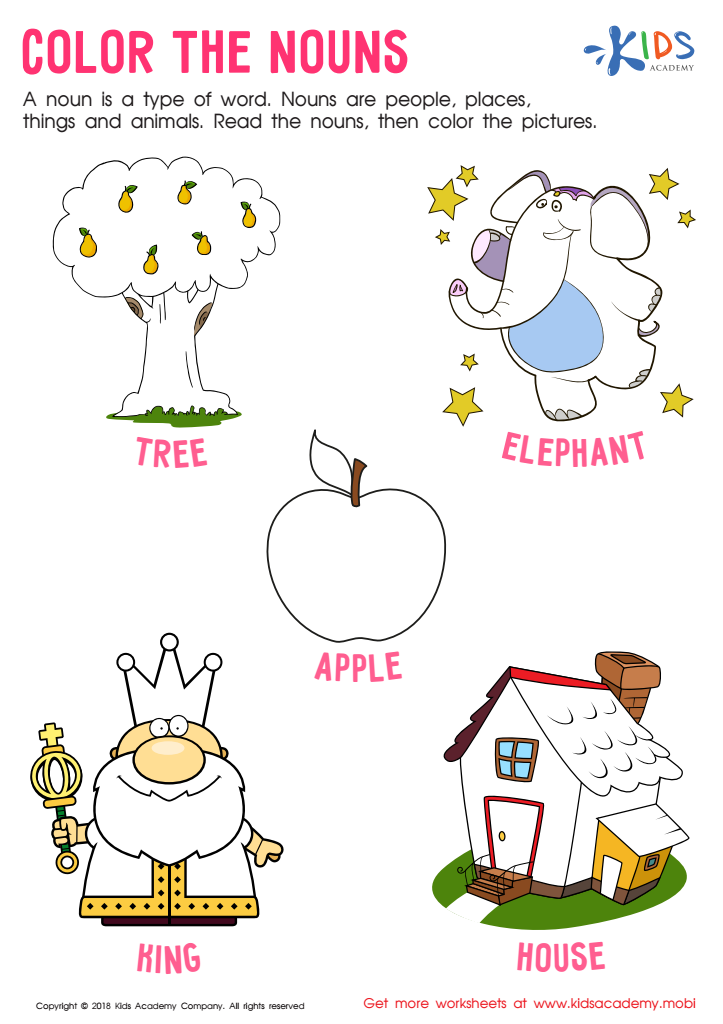
Color the Nouns Worksheet
 Assign to My Students
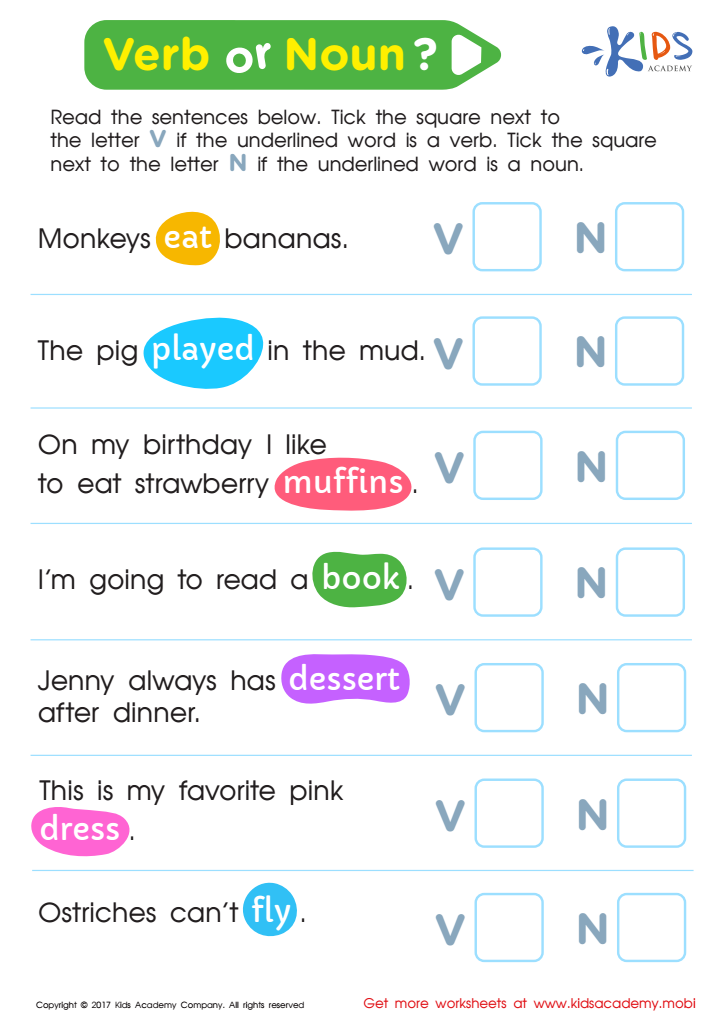
Verb or Noun Worksheet
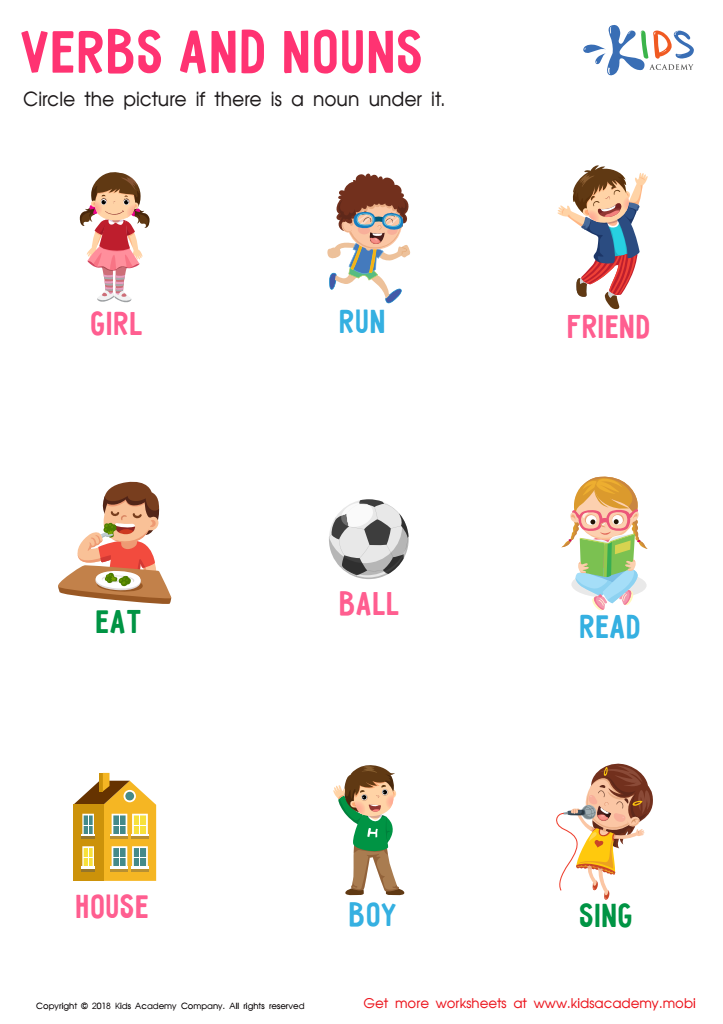
Verbs and Nouns Worksheet
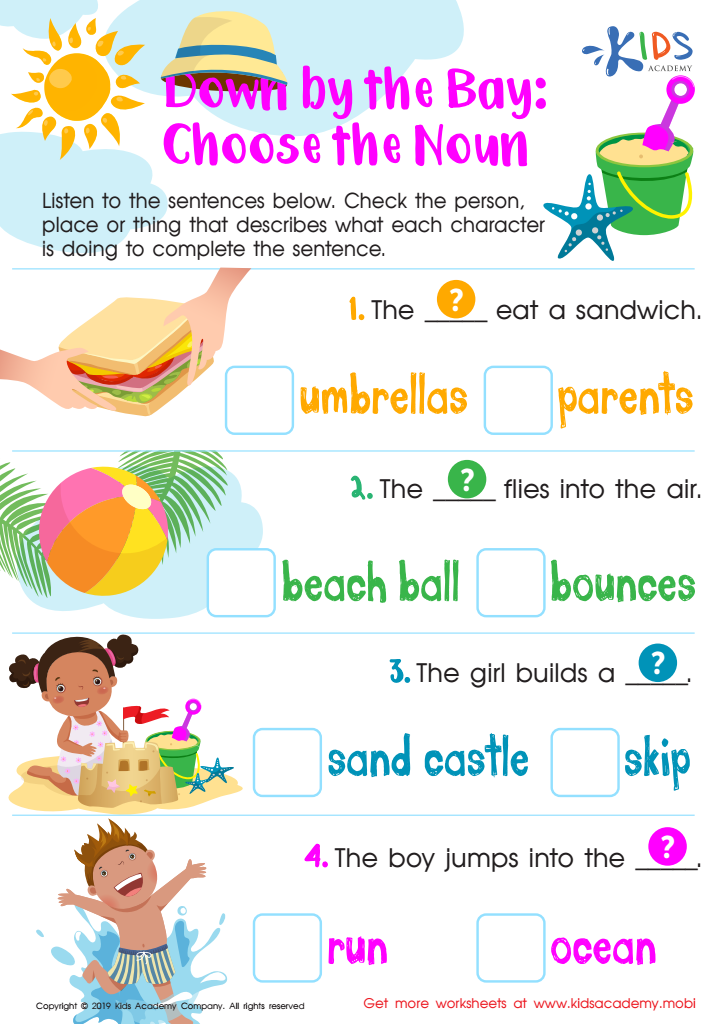
Down by the Bay: Choose the Noun Worksheet
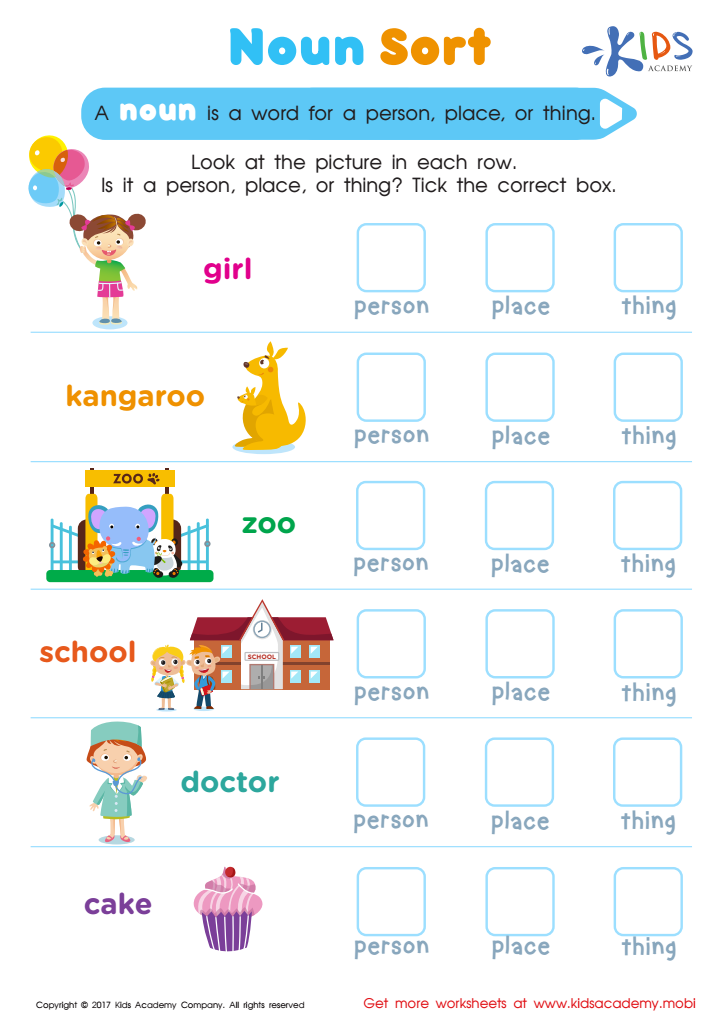
Noun Sort Printable





.jpg)


Noun identification is a fundamental skill for 5-year-olds, and parents and teachers should care about it for several key reasons. First, nouns form the backbone of our language; they name people, places, things, and ideas, enabling children to communicate effectively and express their thoughts. Recognizing nouns helps young learners build expanding vocabulary, which is essential for reading comprehension and overall language development.
Additionally, understanding nouns lays the groundwork for other grammatical concepts, such as verbs and adjectives, fostering a well-rounded comprehension of sentence structure. This skill is crucial as children transition from oral language to written expression. Instruction in noun identification can nurture a child's confidence and curiosity in language, sparking a lifelong love for reading and learning.
Noun identification also has social implications. In conversations, naming objects or people accurately helps children engage meaningfully with peers and adults. By identifying nouns, children can express their ideas and needs more directly, promoting assertiveness and effective communication.
Moreover, a focus on noun identification can be incorporated into fun, engaging activities and games, making learning active and enjoyable. Overall, understanding nouns is an essential step in nurturing language development and social skills in young learners.








