Recognizing shapes Worksheets for 5-Year-Olds
8 filtered results
-
From - To
Welcome to our "Recognizing Shapes Worksheets for 5-Year-Olds"! Designed specifically for young learners, these engaging and colorful worksheets help children identify and understand various shapes, including circles, squares, triangles, and more. By incorporating fun activities, kids will develop their visual recognition skills and enhance their comprehension of the world around them. Perfect for at-home learning or classroom activities, our worksheets promote independent learning and critical thinking. With a variety of exercises to practice drawing, coloring, and matching shapes, your child will boost their creativity while mastering essential geometry skills. Start exploring shapes today and watch your child's confidence soar!
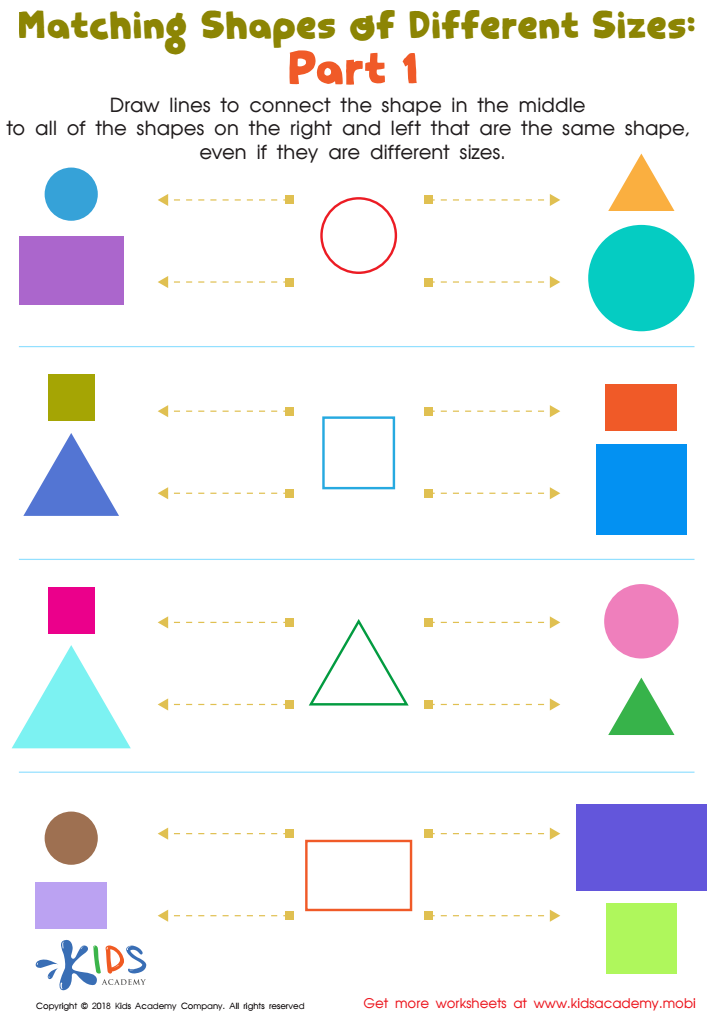
Geometry: part 1 Worksheet
 Assign to My Students
Ramps Worksheet
Easter Word Search Worksheet







Recognizing shapes is a foundational skill that plays a crucial role in the cognitive development of 5-year-olds. First and foremost, it enhances children's spatial awareness and helps them understand their environment. Shapes are everywhere, and by recognizing them, children can better navigate their world, which boosts their confidence and independence.
Moreover, shape recognition lays the groundwork for more advanced mathematical concepts. Understanding shapes allows young learners to grasp ideas involving symmetry, patterns, and measurement, paving the way for future success in mathematics. It stimulates critical thinking and problem-solving as children learn to categorize and compare shapes based on their attributes.
Additionally, shape recognition fosters language development. As children identify and describe shapes, they build vocabulary and improve communication skills—aiding in their overall language acquisition. Activities that involve shape recognition promote fine motor skills through drawing, cutting, and crafting, further enhancing their developmental growth.
Engaging young learners in activities related to shape recognition can be fun and interactive, ensuring a love for learning from an early age. Therefore, parents and teachers should prioritize shape recognition as an essential part of early childhood education, enriching children's physical, cognitive, and linguistic development.








