Animal recognition Adding in the Forest Worksheets for 5-Year-Olds
15 filtered results
-
From - To
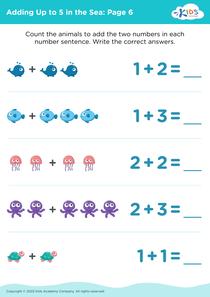
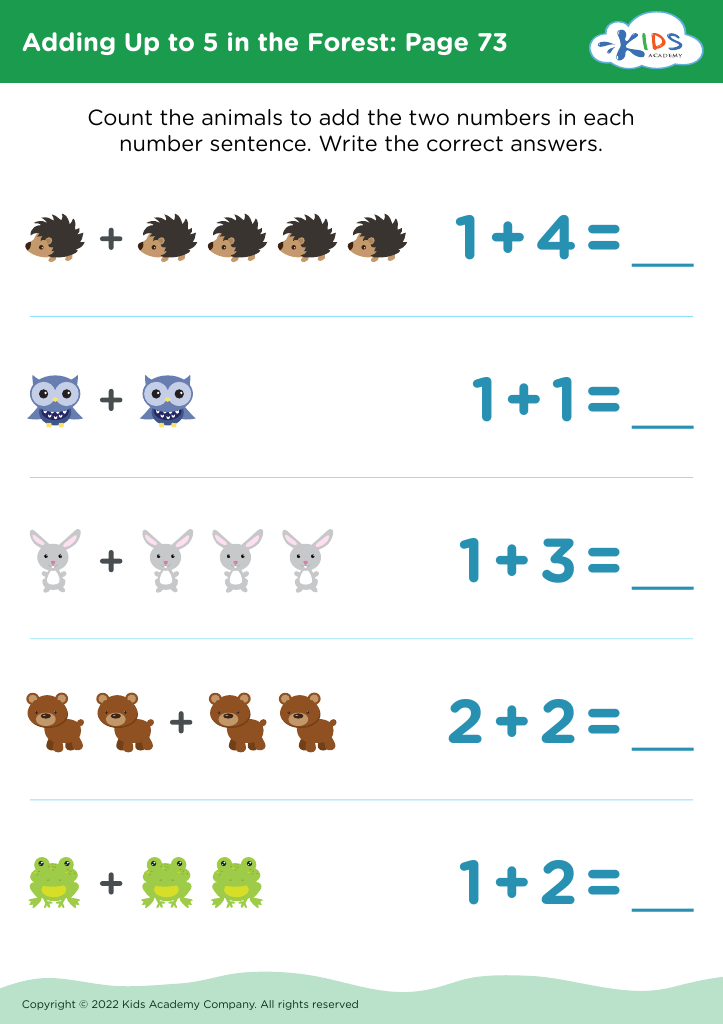
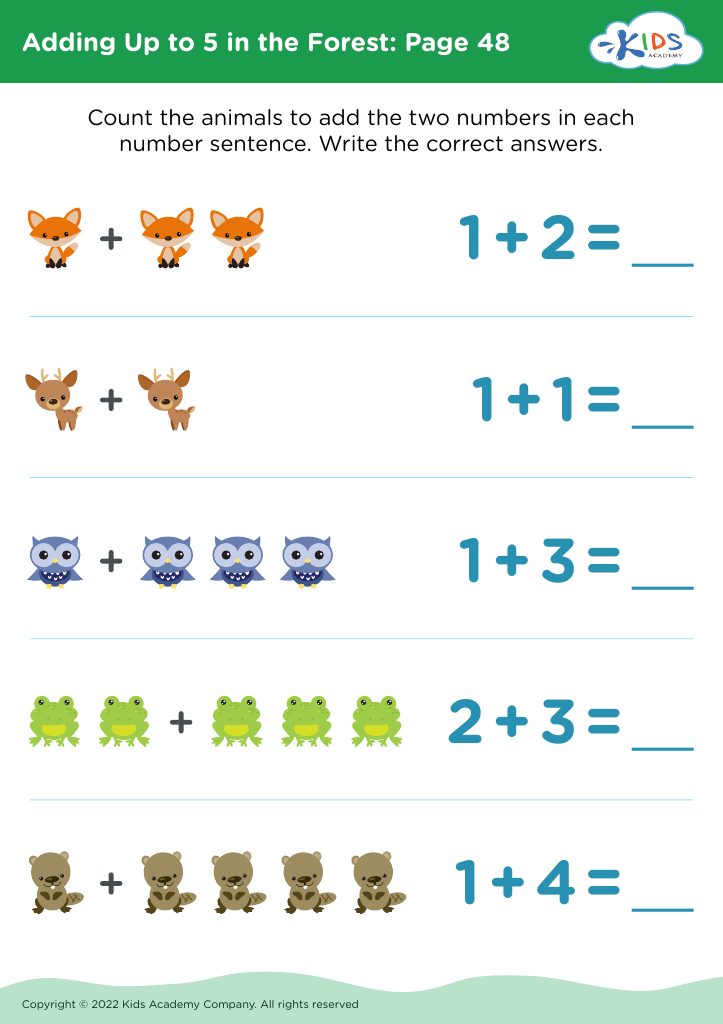
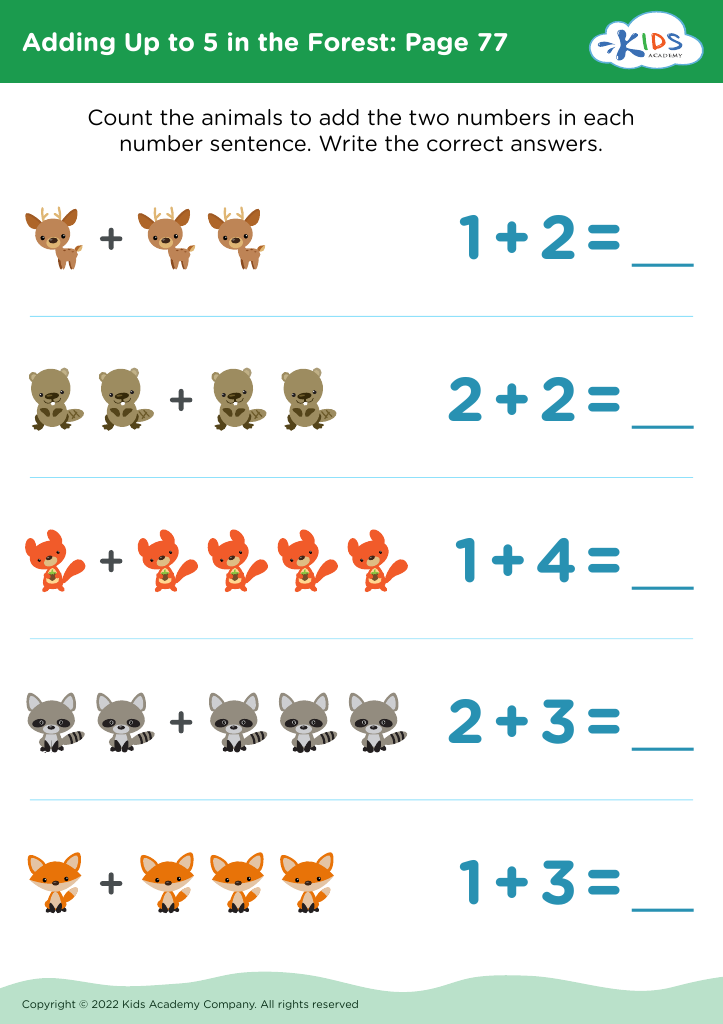
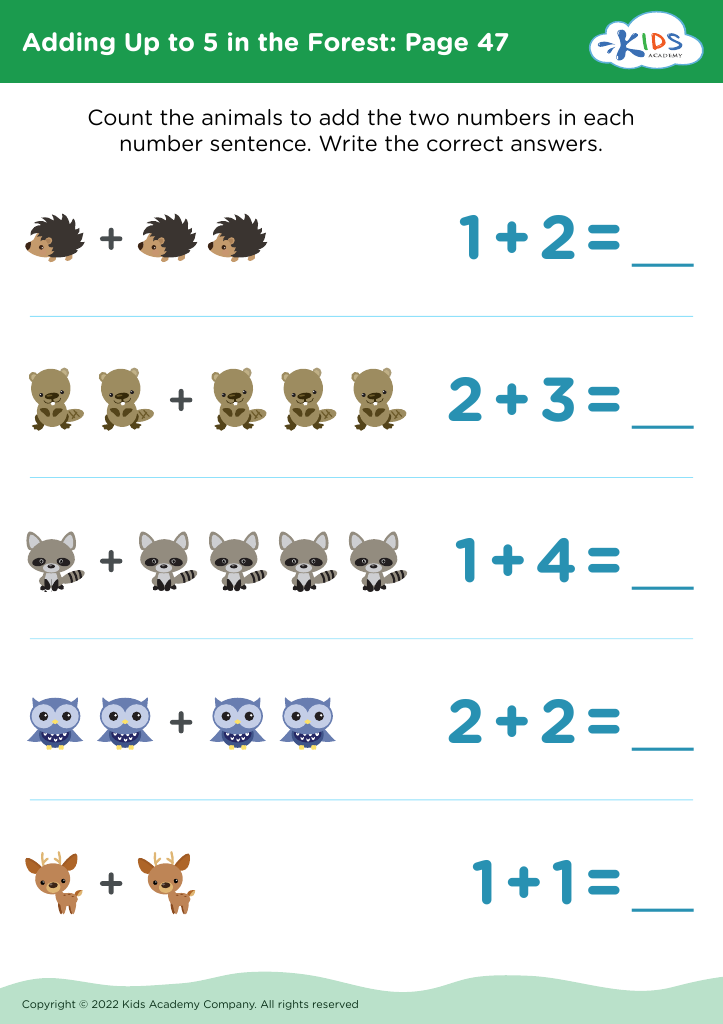
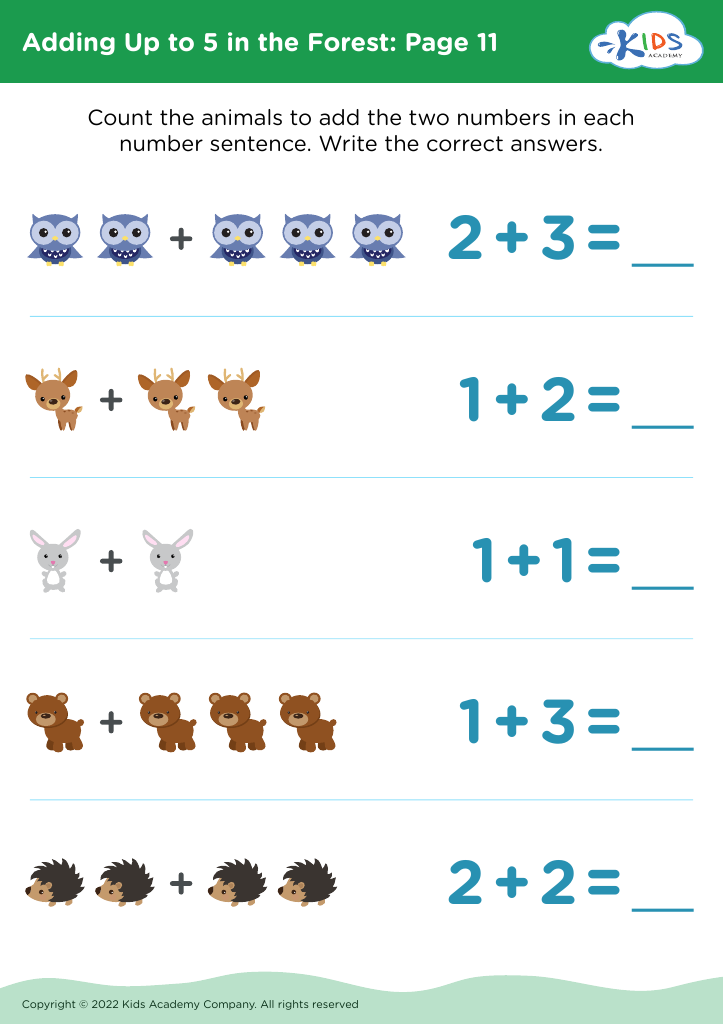
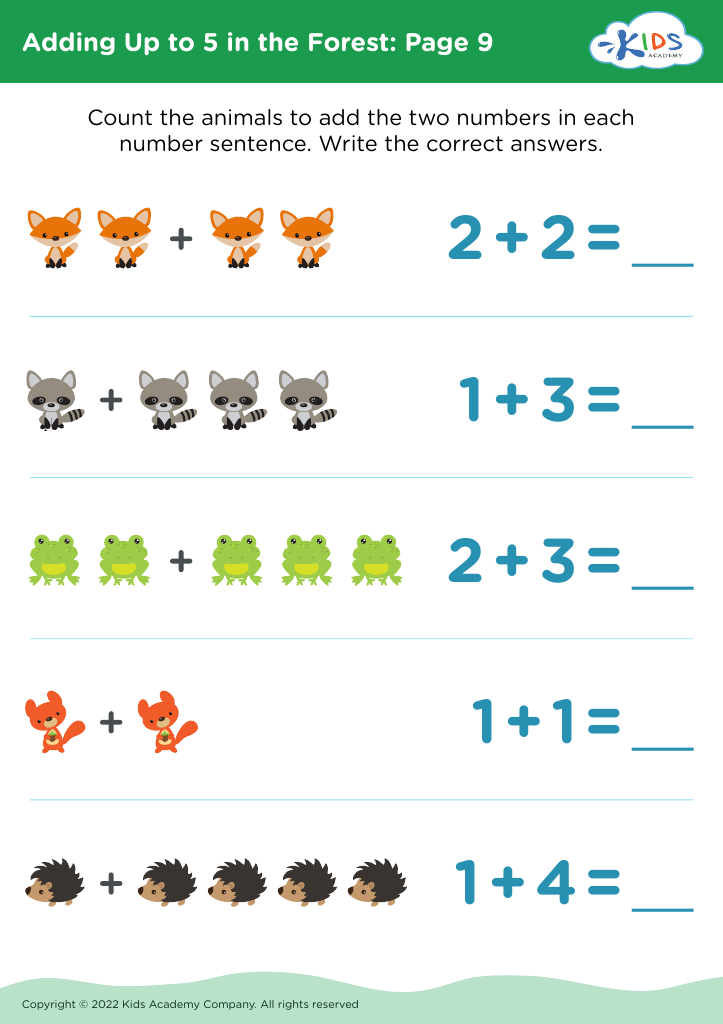
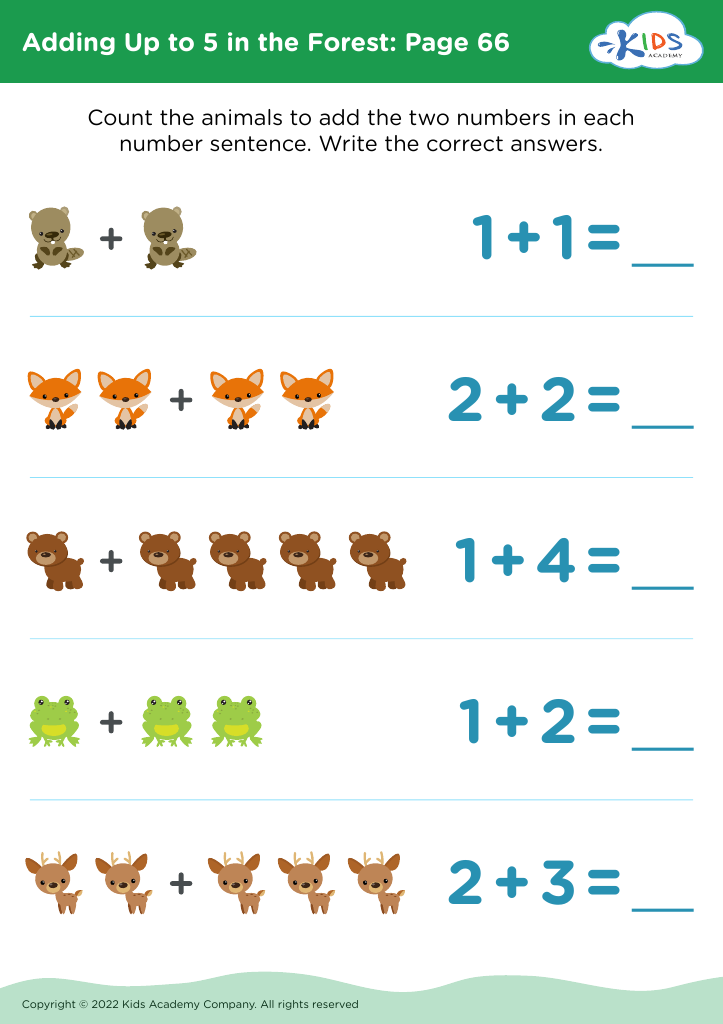
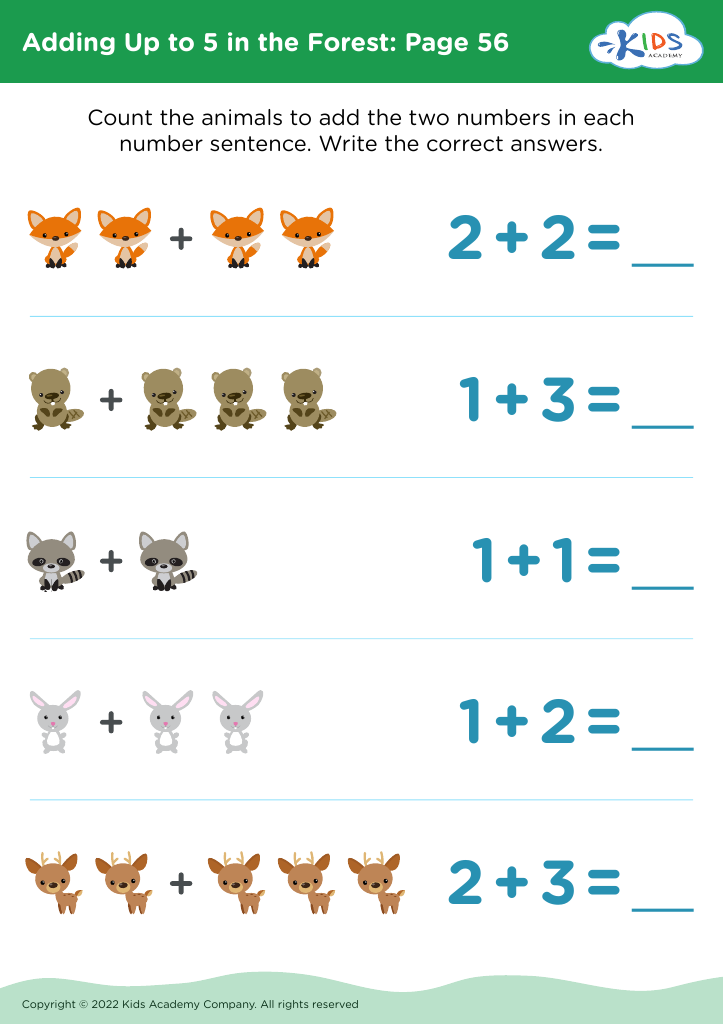
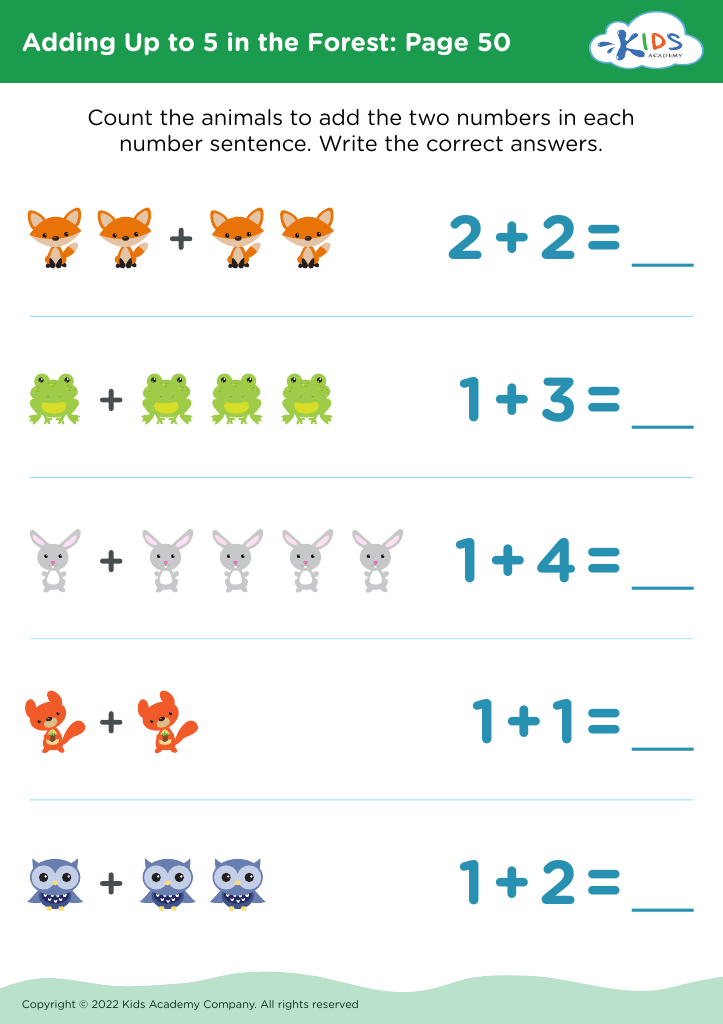
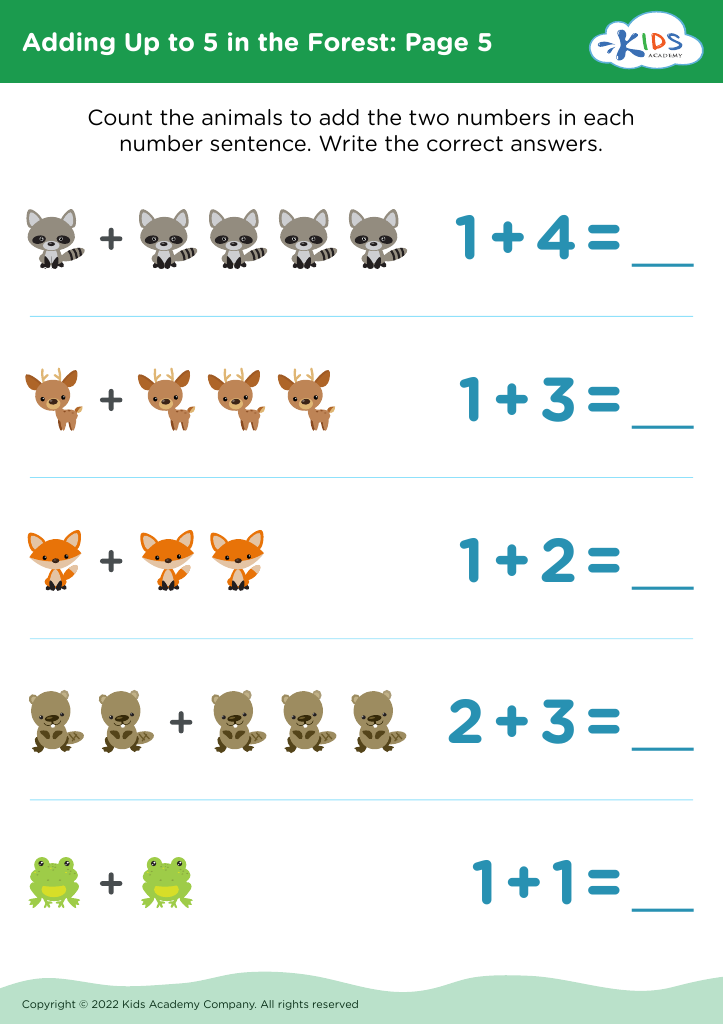
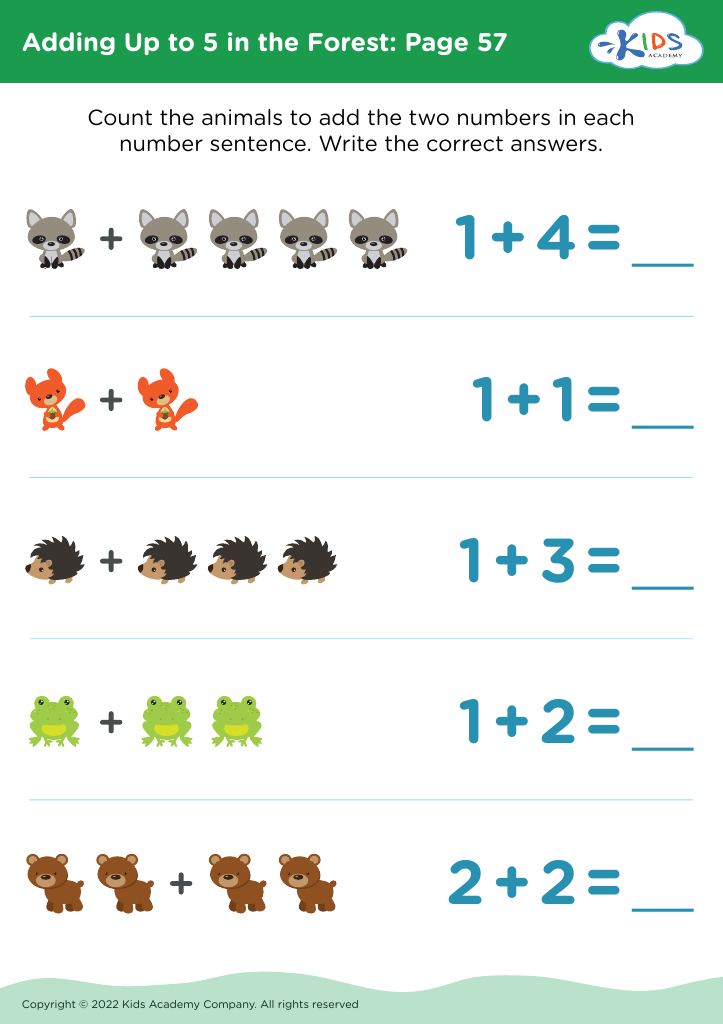
Ignite your child's love for learning with our "Animal Recognition Adding in the Forest Worksheets" tailored for 5-year-olds! These engaging worksheets combine basic math skills with fun animal-themed imagery, making learning addition an exciting adventure. As kids identify various forest animals, they'll practice counting and simple addition through colorful and interactive activities, fostering their early math skills while nurturing a curiosity for the natural world. Perfect for homeschooling, classrooms, or rainy day fun, these worksheets provide a wonderful opportunity for children to enhance their cognitive abilities while enjoying the wonders of wildlife. Download now and watch them thrive!
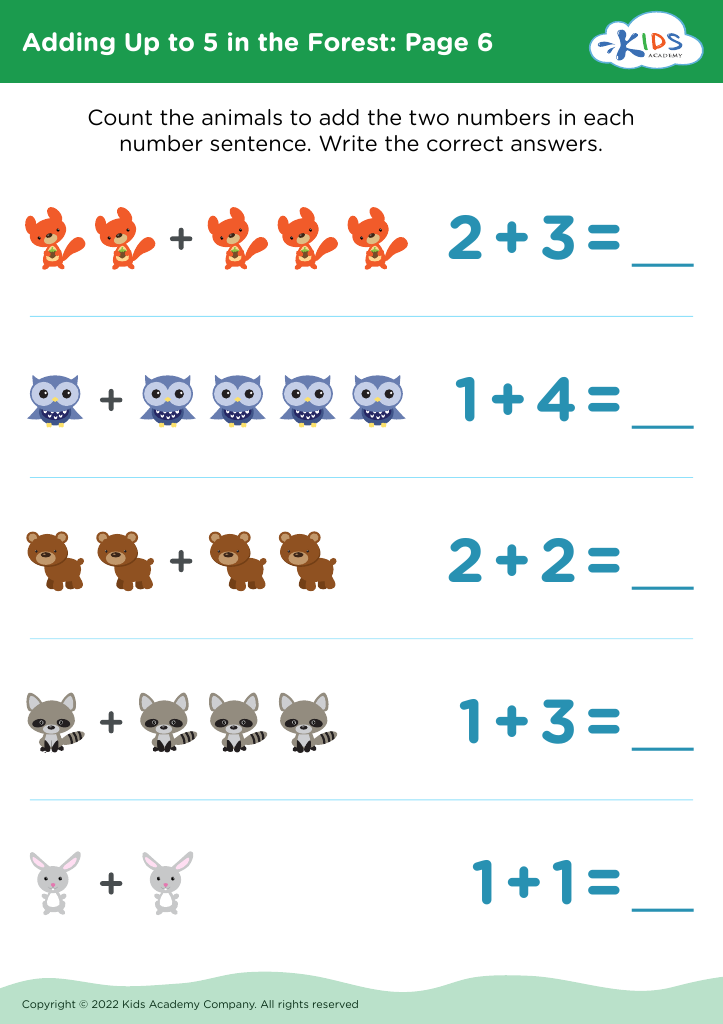
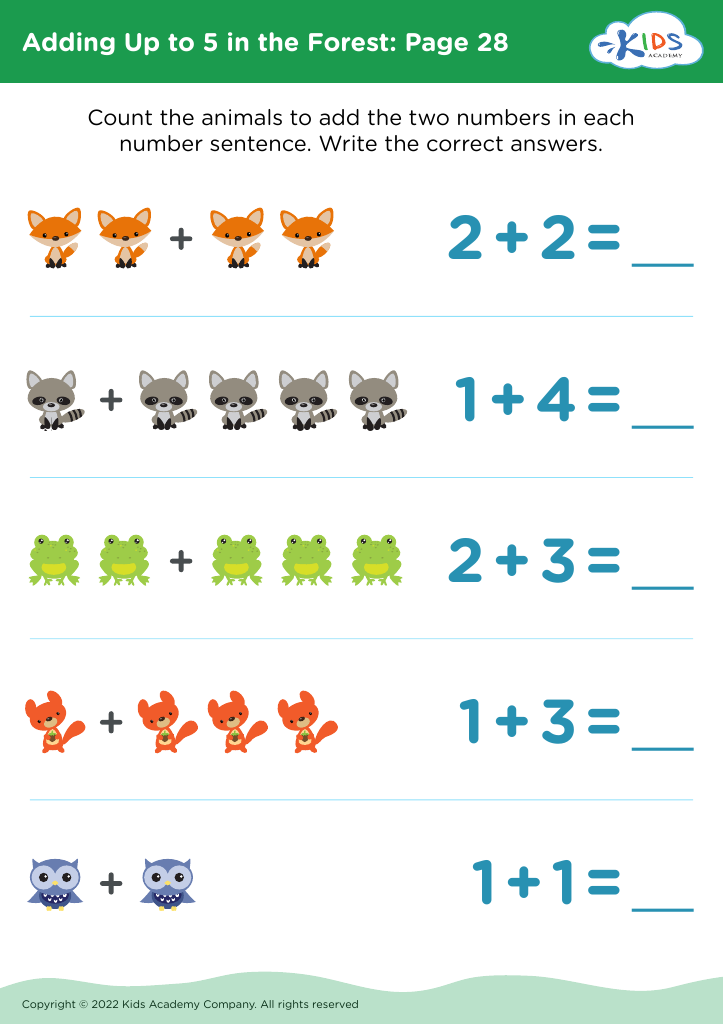
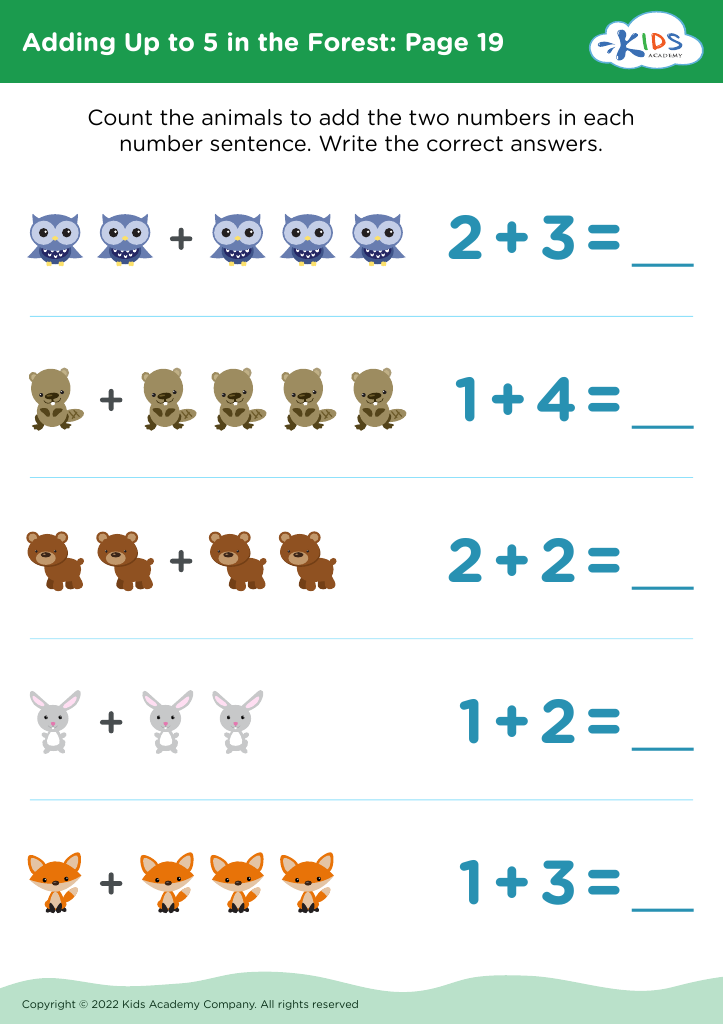
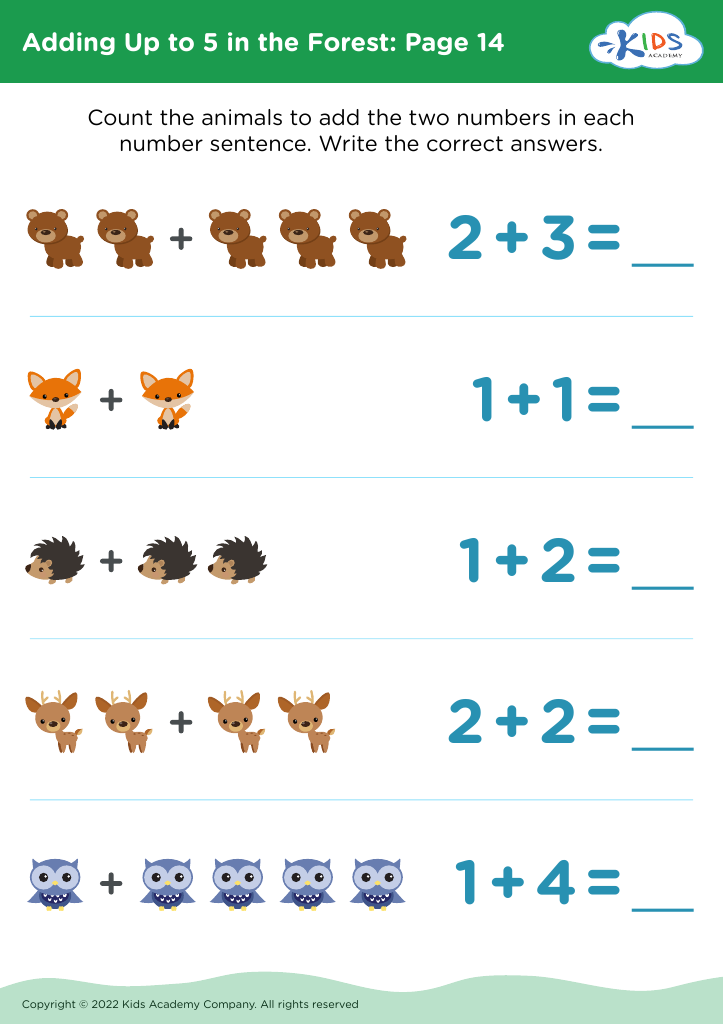



Animal recognition is a crucial aspect of early childhood education, especially when introduced in engaging contexts like a forest setting. For 5-year-olds, developing the ability to identify and understand animals fosters curiosity and a love for nature. It enriches their observational skills, encouraging them to take notice of their surroundings, which is a foundational element of learning.
When parents and teachers focus on animal recognition within a forest environment, they provide children with hands-on experiences that deepen their understanding of ecosystems and the role of animals within them. This connection to nature can spark a lifelong interest in animal conservation and environmental stewardship. Moreover, recognizing different animals enhances vocabulary and cognitive development as children learn new names, sounds, and behaviors associated with various species.
Engaging with animals teaches empathy and respect for living creatures, invaluable qualities for children's social development. Additionally, storytelling and games centered around animal recognition can make learning more enjoyable, ensuring that education occurs in a playful, captivating manner. In summary, encouraging animal recognition in a forest setting supports cognitive, emotional, and social growth, making it a critical area of focus for parents and teachers alike.