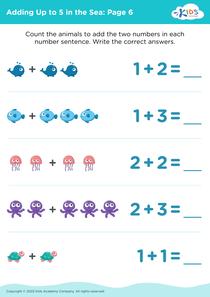
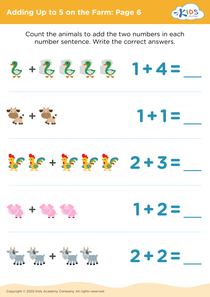
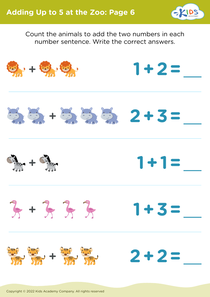
Basic Addition Skills Adding in the Forest Worksheets for 5-Year-Olds - Page 3
55 filtered results
-
From - To
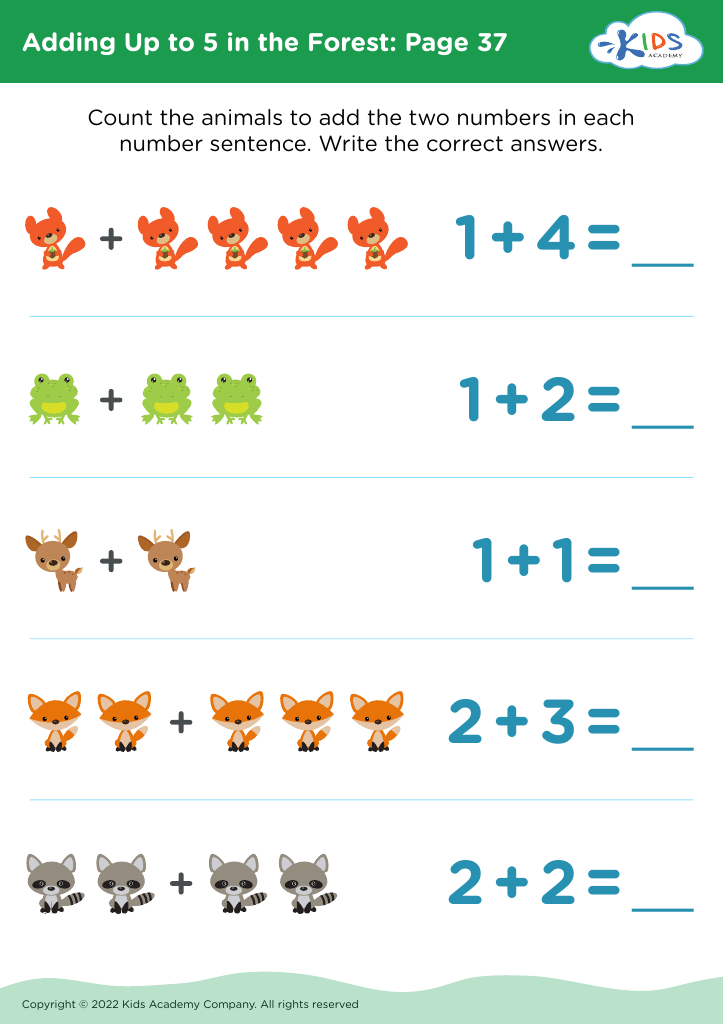
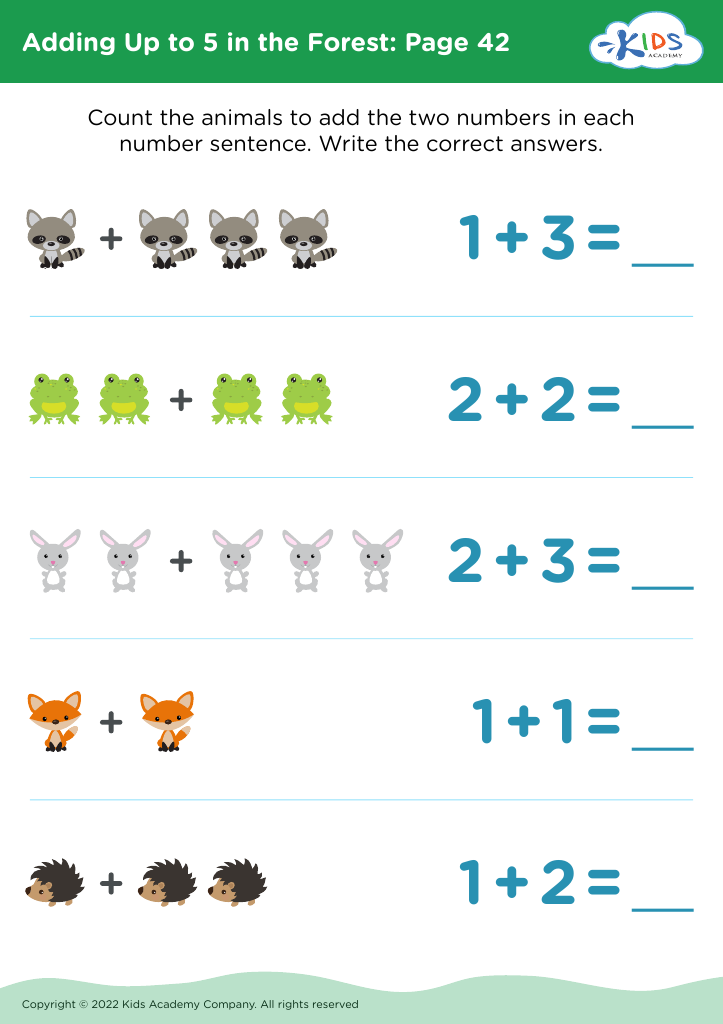
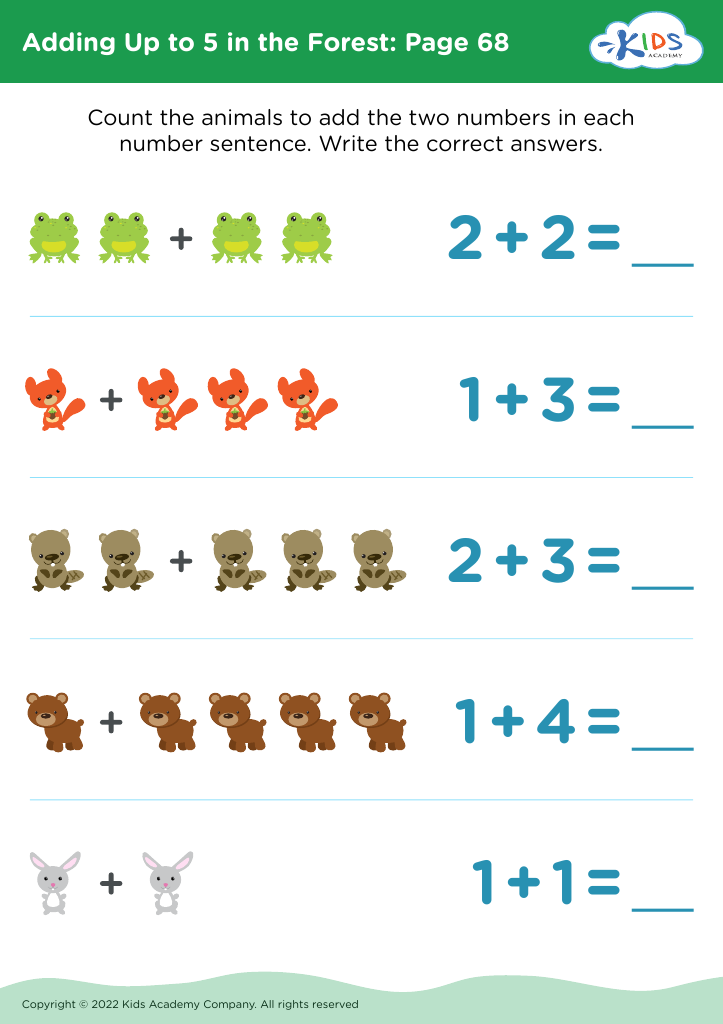
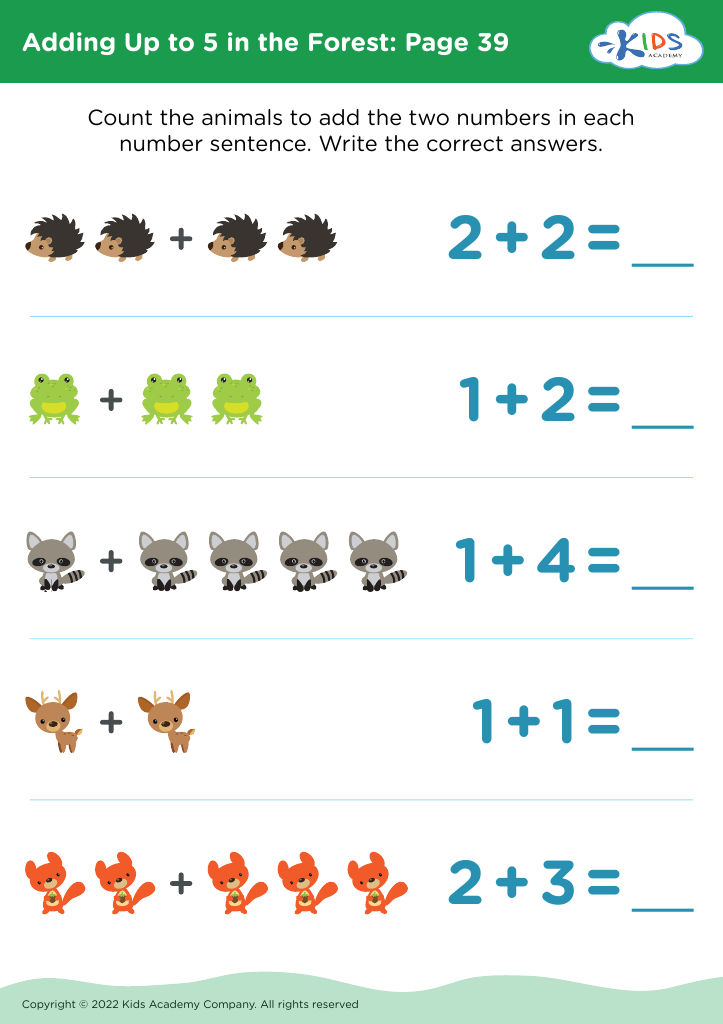
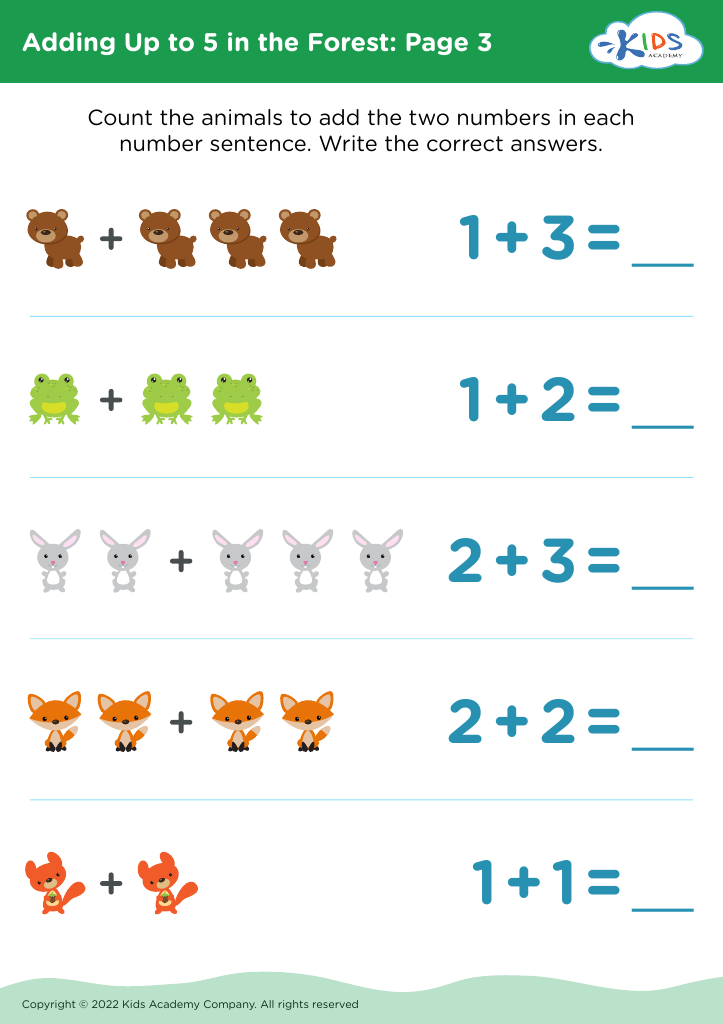
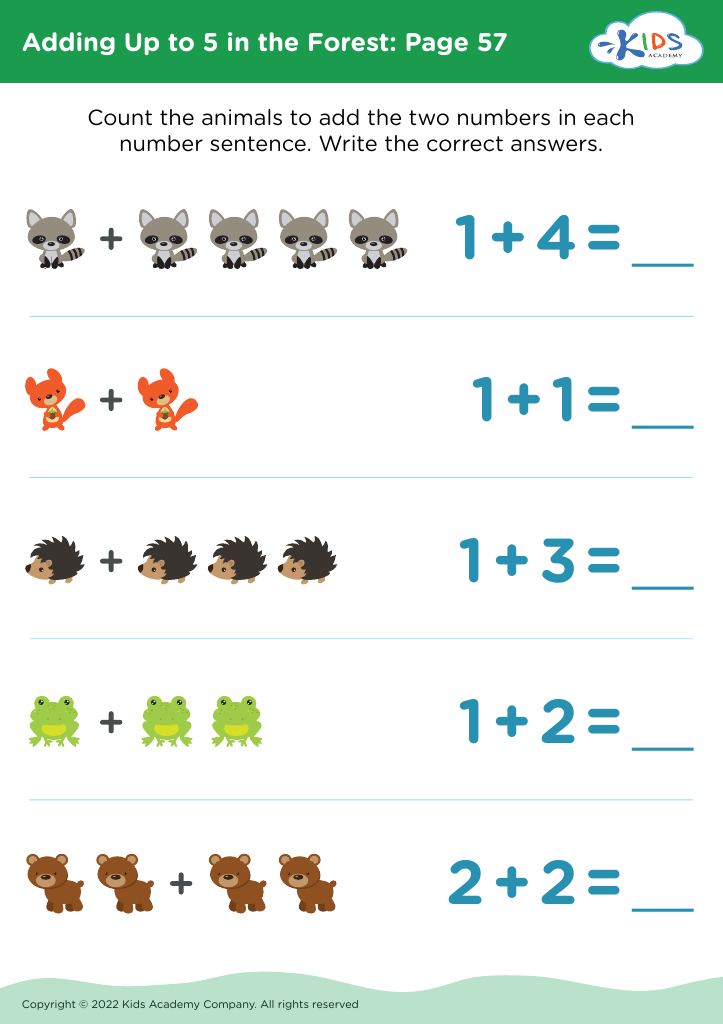
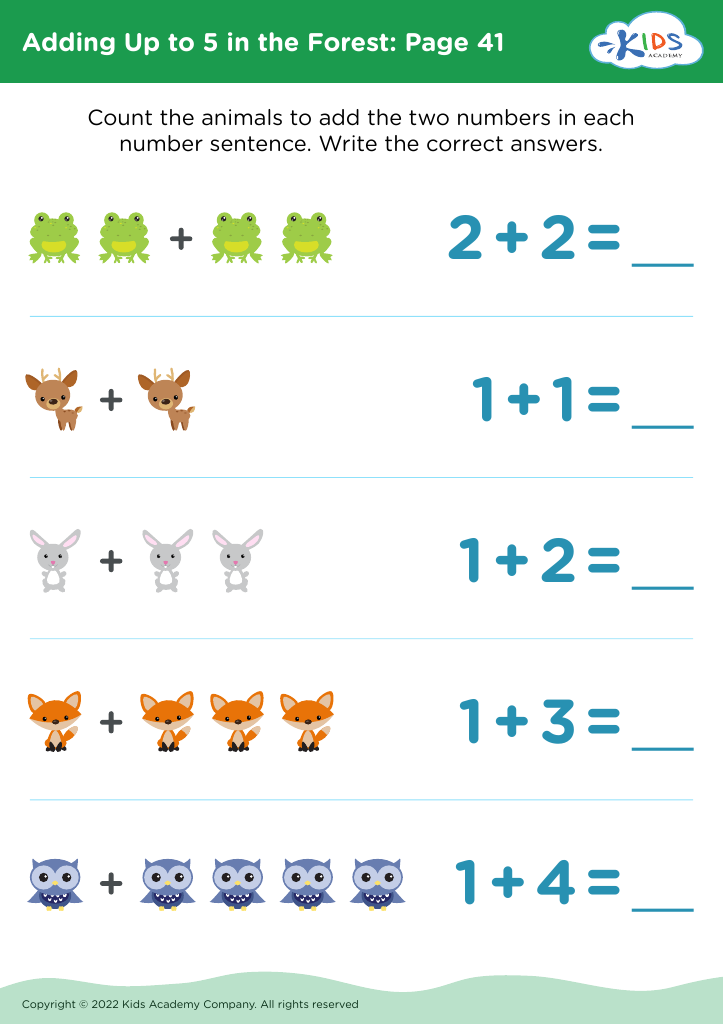




Parents and teachers should prioritize teaching basic addition skills to 5-year-olds using engaging methods like "Adding in the Forest" because early mastery of these fundamentals sets the foundation for future success in mathematics and everyday problem-solving. At this critical developmental stage, children are highly receptive to learning new concepts and skills. Incorporating fun and visually stimulating activities such as "Adding in the Forest" not only makes learning enjoyable but also helps maintain the child's natural curiosity and enthusiasm for learning.
Moreover, foundational math skills are crucial for cognitive development. Early exposure to addition enhances numerical fluency, pattern recognition, and logical thinking. These are skills that benefit a wide range of subjects beyond math, including reading and science. "Adding in the Forest," with its thematic, context-driven tasks, enables children to visualize real-world applications of addition, thus broadening their understanding and fostering a positive attitude towards math.
Additionally, the collaborative and interactive nature of these activities strengthens social skills. Children learn to work together, share ideas, and solve problems collectively, which are essential skills for future academic teamwork and everyday social interactions. Overall, focusing on basic addition through creative and structured methods prepares children not only for their academic journey but also imbues them with confidence and a love for learning.