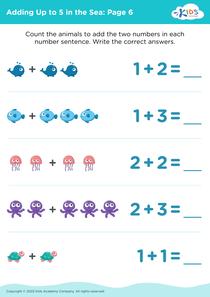
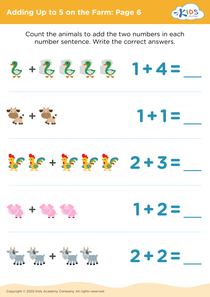
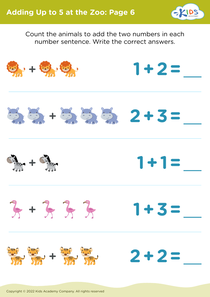
Basic Arithmetic Adding in the Forest Worksheets for 5-Year-Olds
5 filtered results
-
From - To
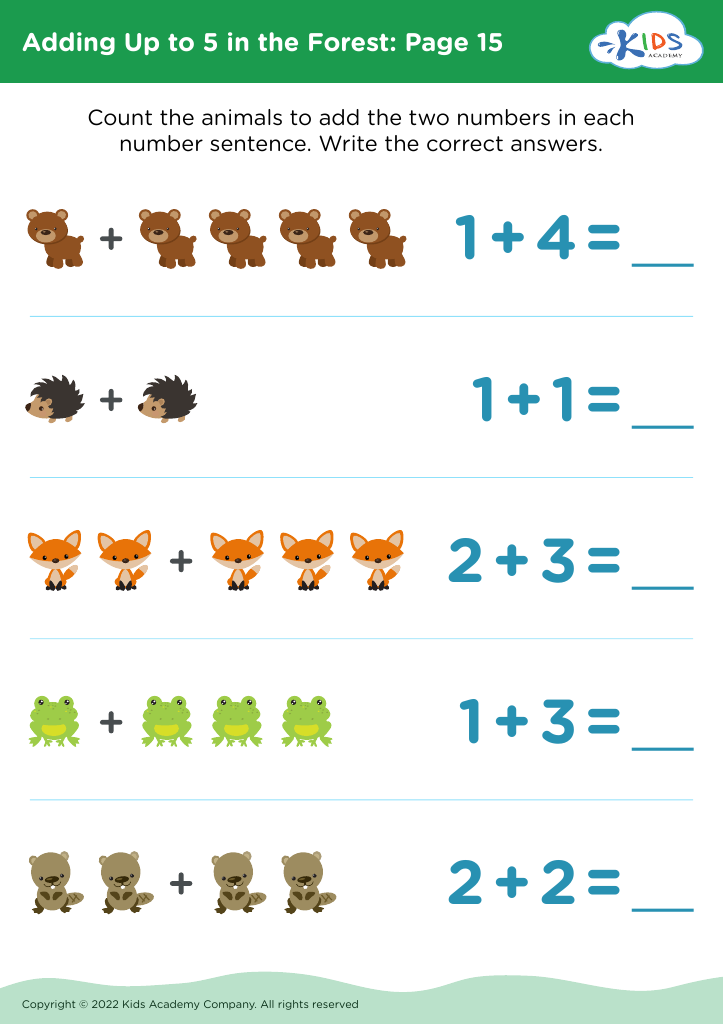
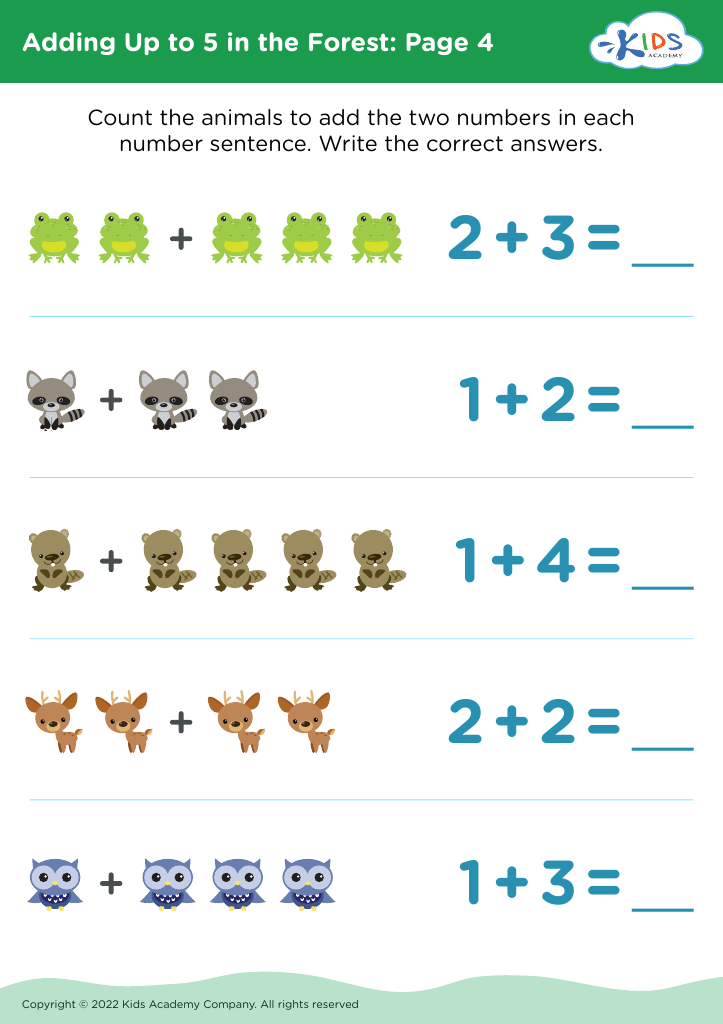
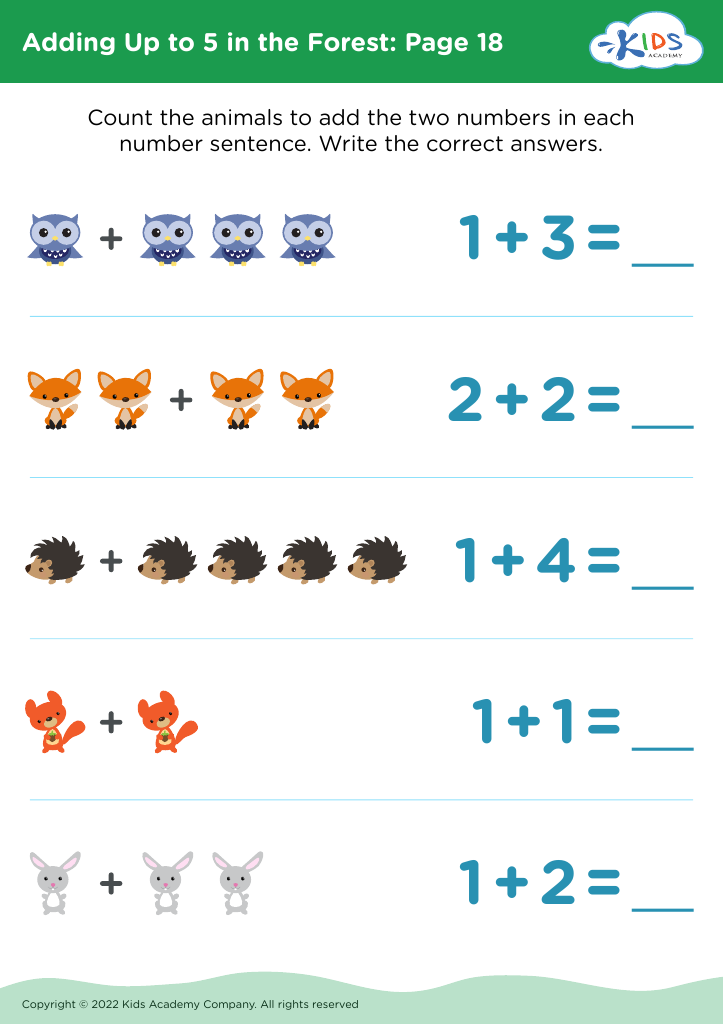
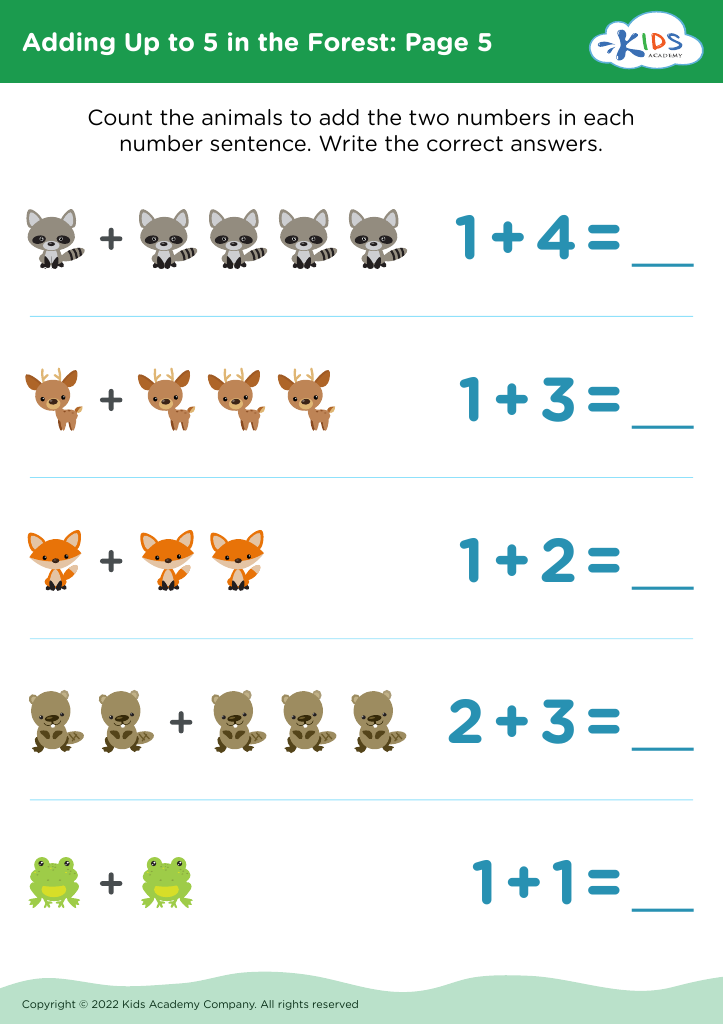
Welcome to our "Basic Arithmetic Adding in the Forest Worksheets" page, specially designed for 5-year-olds! Our engaging worksheets transform early math learning into a fun adventure amidst the trees and wildlife. Each worksheet focuses on foundational addition skills, incorporating colorful forest imagery to captivate young learners' attention. Children will practice adding numbers while identifying woodland animals and natural objects, making math both enjoyable and relatable. With clear instructions and ample encouragement, these worksheets support developing critical math abilities through delightful exploration. Discover the perfect blend of education and entertainment as your child embarks on their arithmetic journey in the enchanting forest!
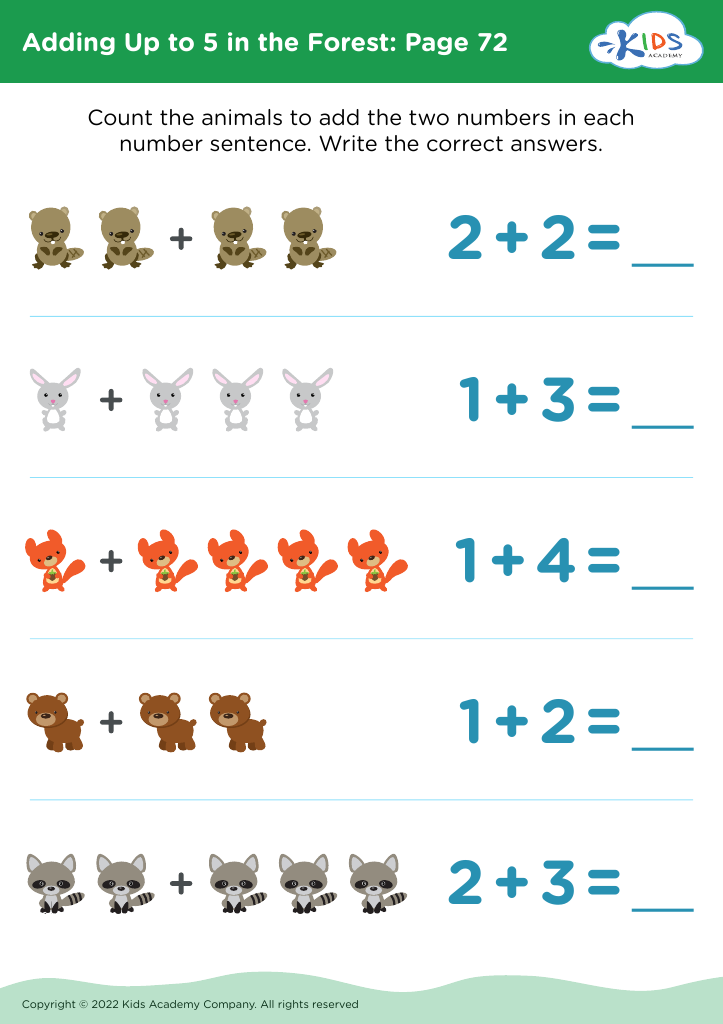



Parents and teachers should care about introducing Basic Arithmetic Adding in the Forest for 5-year-olds because it creates a rich, engaging learning experience that blends nature with foundational math skills. At this age, children are naturally curious, and incorporating outdoor elements enhances their learning by connecting abstract concepts to tangible experiences.
Engaging with arithmetic in a forest setting promotes sensory learning; the environment allows children to use objects around them, such as leaves, rocks, or sticks, to represent numbers. For example, they can gather groups of items and physically manipulate them to understand addition, making the concepts more relatable and less intimidating.
Moreover, outdoor math activities encourage physical movement, which is crucial for young learners who often have excess energy. The combination of movement and learning can enhance focus and retention. Introducing basic arithmetic through playful exploration fosters a positive attitude toward mathematics, setting the stage for a lifelong appreciation for learning. In addition, it nurtures problem-solving skills, critical thinking, and social interaction when children work together. Ultimately, using nature to teach basic arithmetic not only builds essential skills but also instills a sense of wonder and respect for the environment.