Filters

19 filtered results

Clear all filters
Favorites
With answer key
Interactive

19 filtered results

Difficulty Level

Grade


Introduce your 5-year-old to the enchanting world of math with our "Counting Skills: Adding in the Forest Worksheets." These engaging printables combine the beauty of nature with fundamental addition, enhancing your child's counting and number recognition. Ideal for early learners, the worksheets feature eye-catching illustrations of forest animals and plants, making math practice enjoyable and interactive. As children add elements of the forest, they build confidence and foundational math abilities. Perfect for home or school, our worksheets ensure a delightful and educational journey through the whimsical forest of addition. Explore today and nurture your child's love for learning and adventure!
Check out this FREE Trial Lesson on Adding in the Forest for age 5!

X

Favorites
With answer key
Interactive
  • 5
  • Counting skills
  • Adding in the Forest
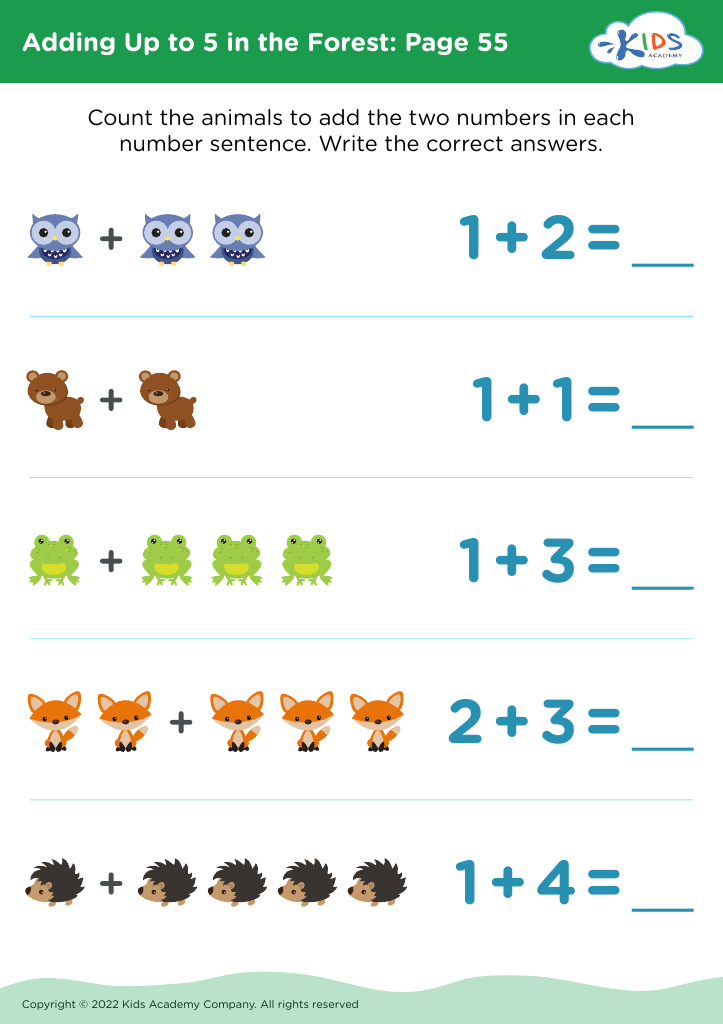
Adding Up to 5 in the Forest: Page 55
Worksheet
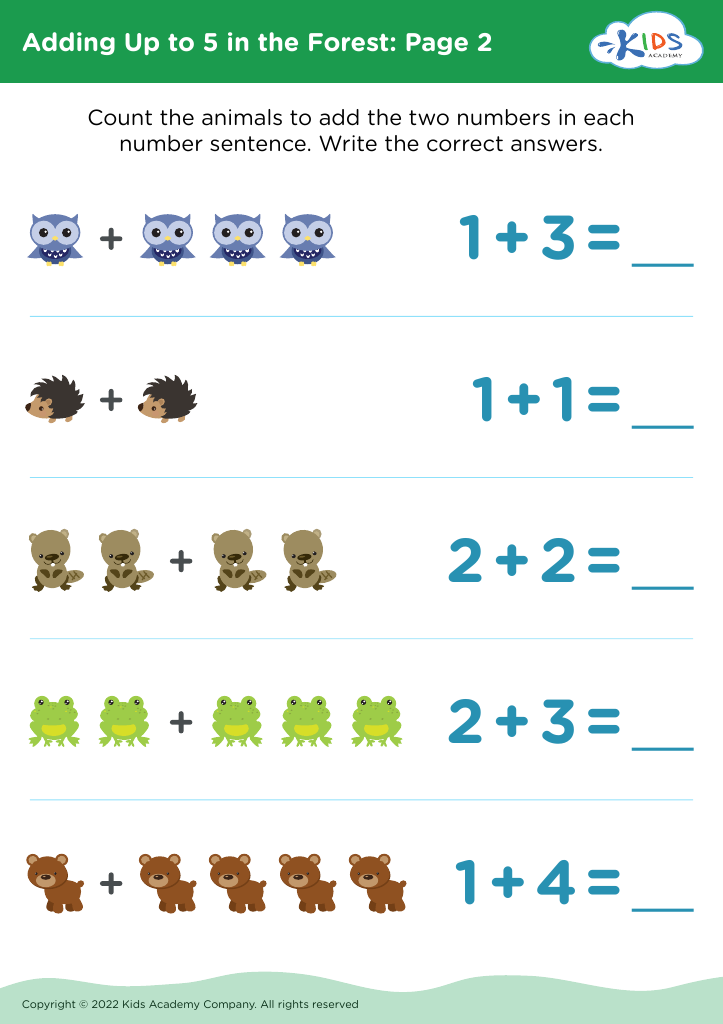
Adding Up to 5 in the Forest: Page 2
Worksheet
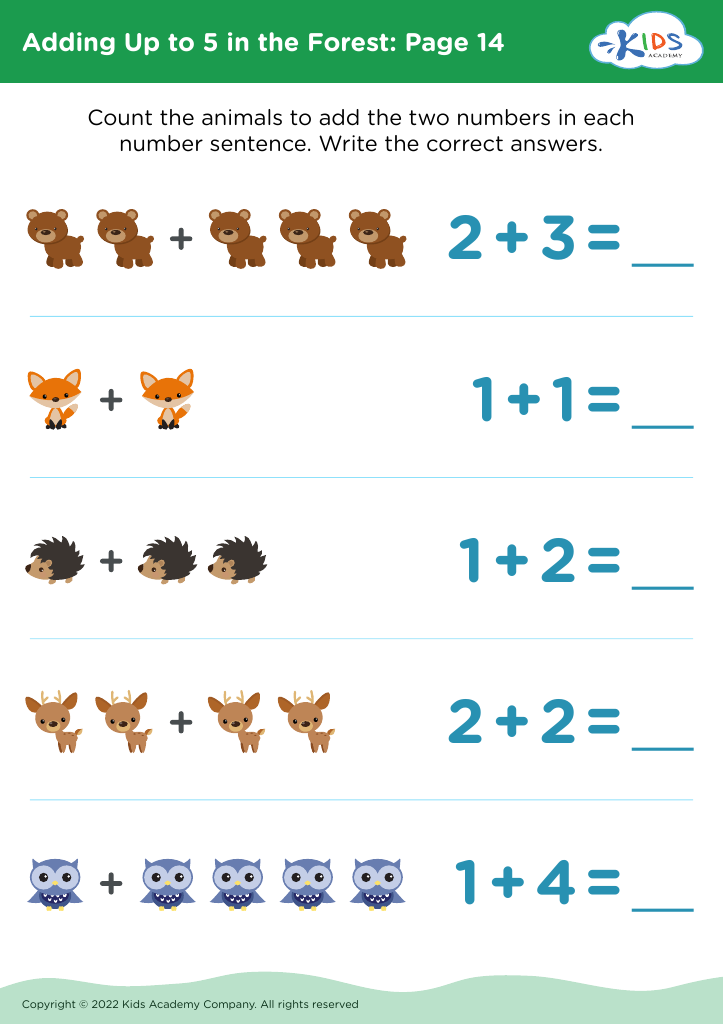
Adding Up to 5 in the Forest: Page 14
Worksheet
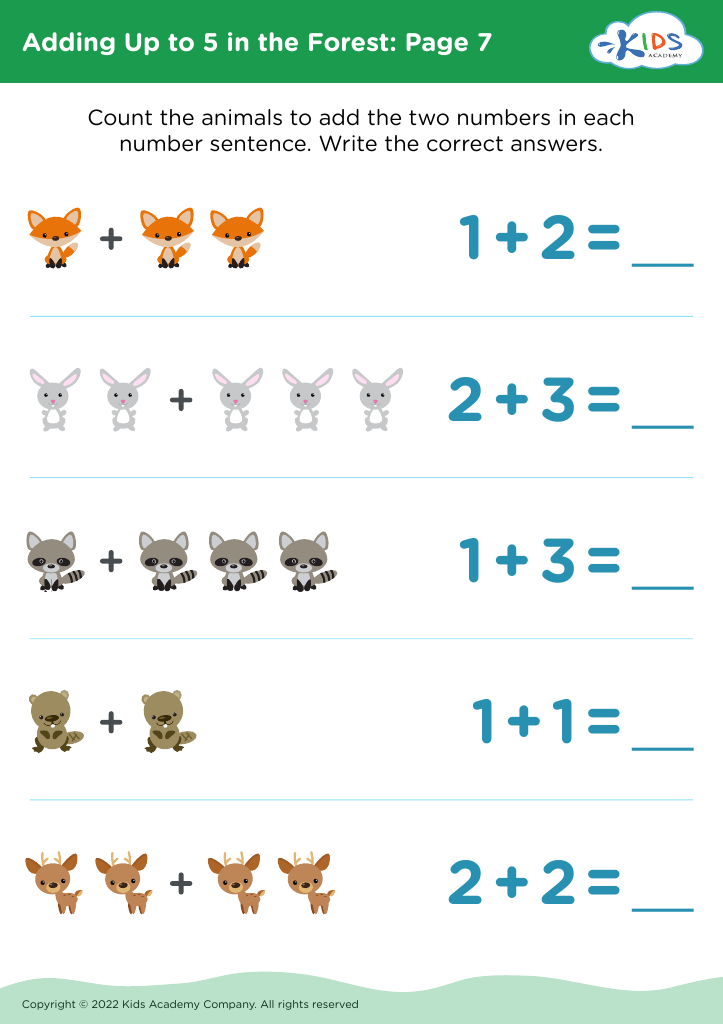
Adding Up to 5 in the Forest: Page 7
Worksheet
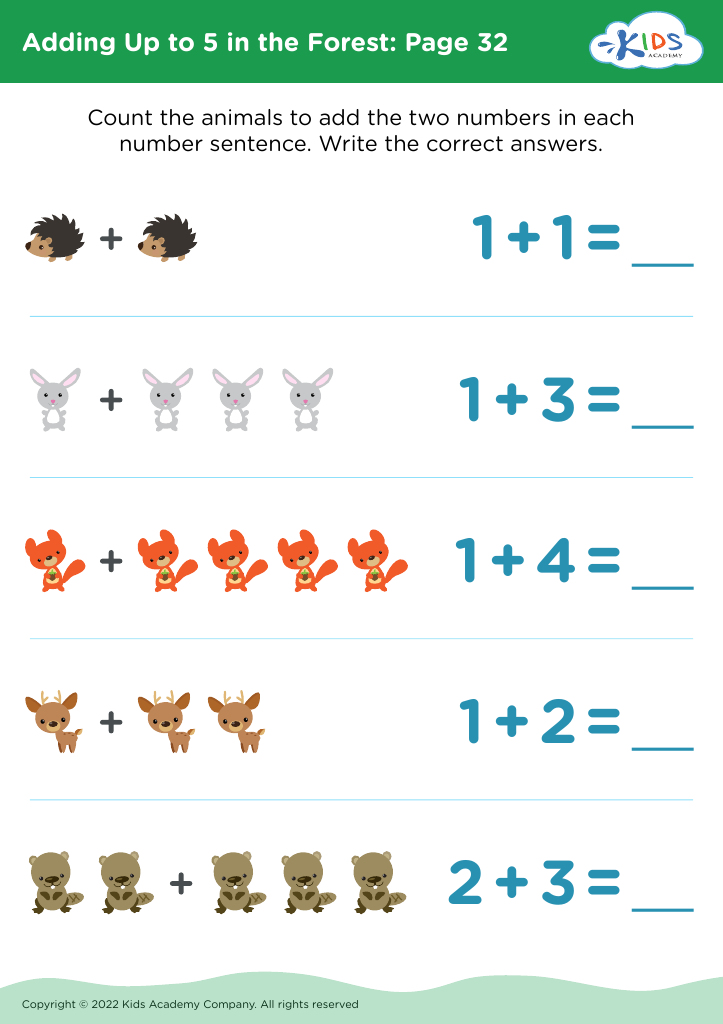
Adding Up to 5 in the Forest: Page 32
Worksheet
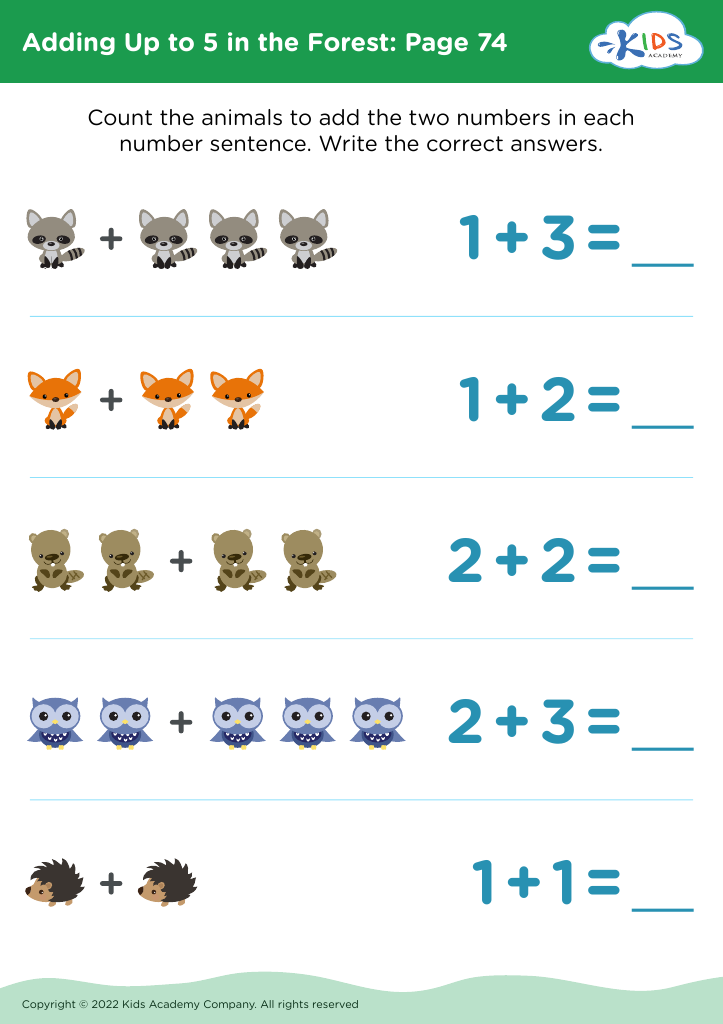
Adding Up to 5 in the Forest: Page 74
Worksheet
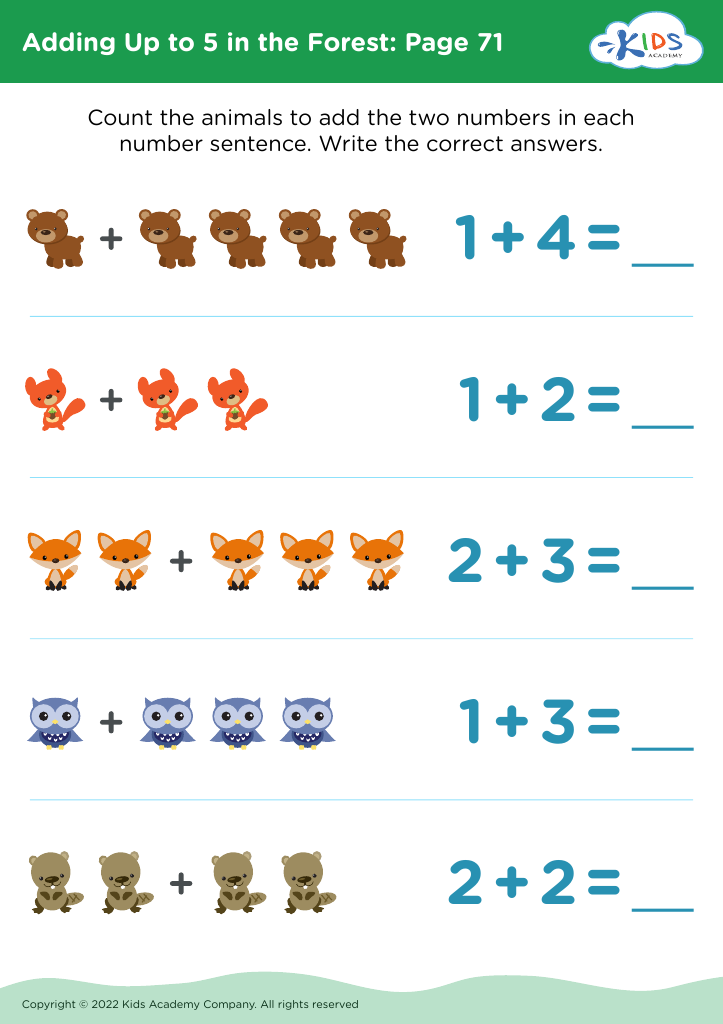
Adding Up to 5 in the Forest: Page 71
Worksheet
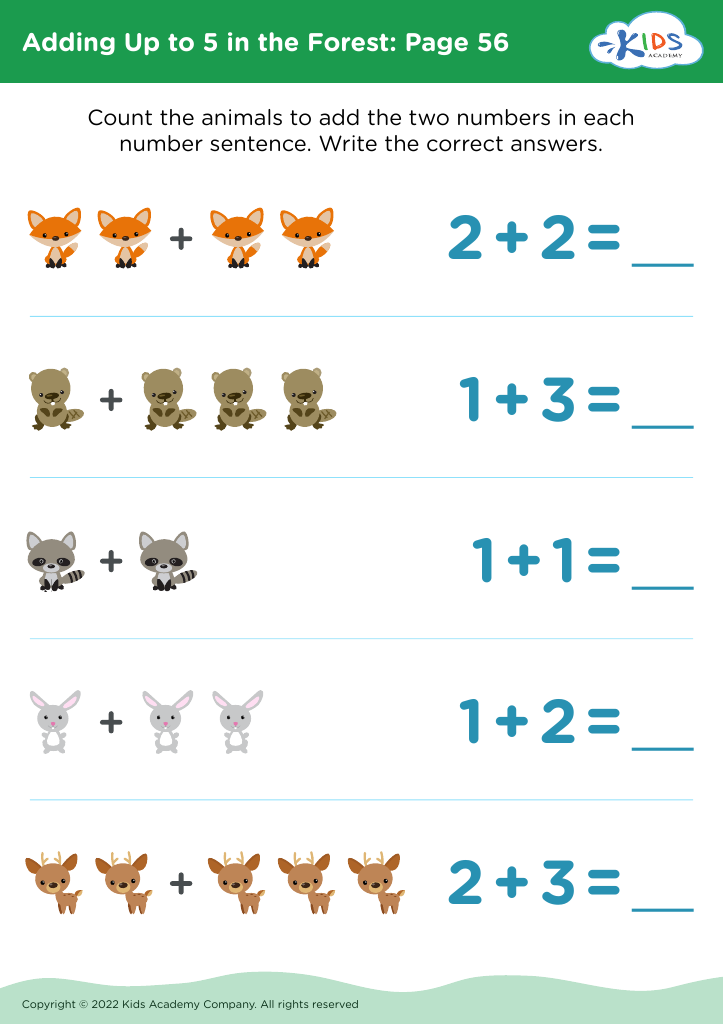
Adding Up to 5 in the Forest: Page 56
Worksheet
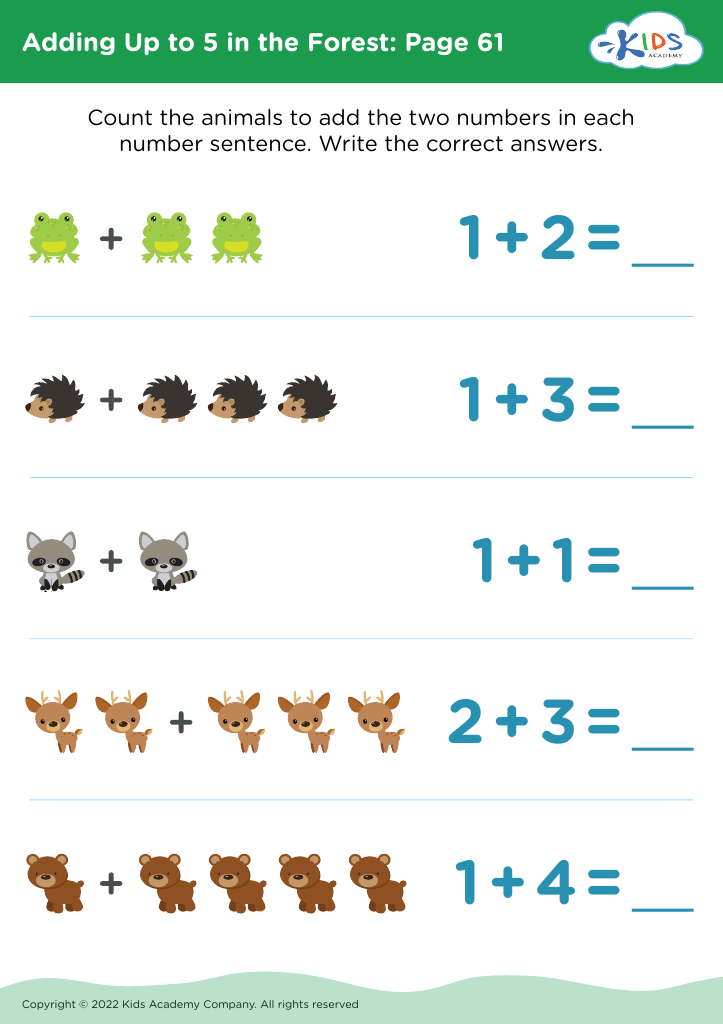
Adding Up to 5 in the Forest: Page 61
Worksheet
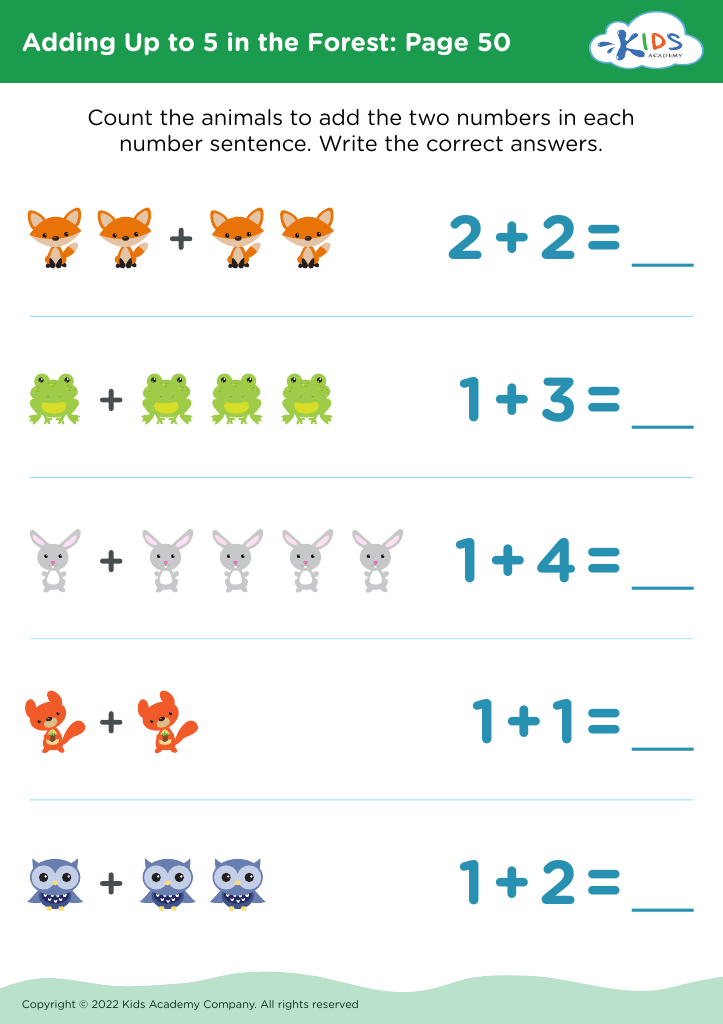
Adding Up to 5 in the Forest: Page 50
Worksheet
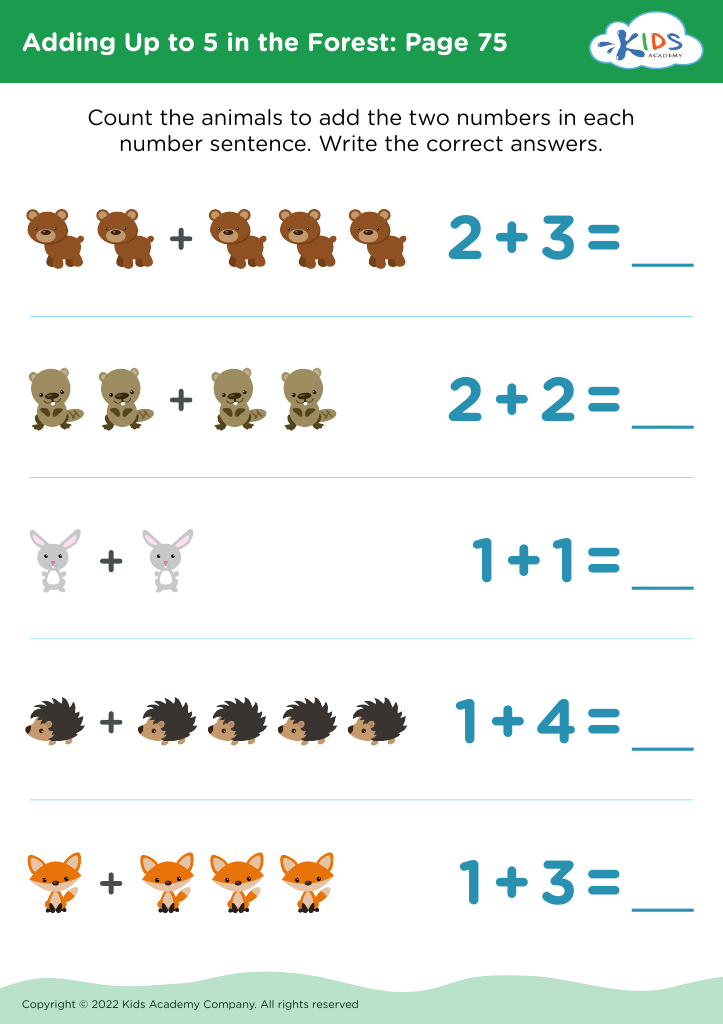
Adding Up to 5 in the Forest: Page 75
Worksheet
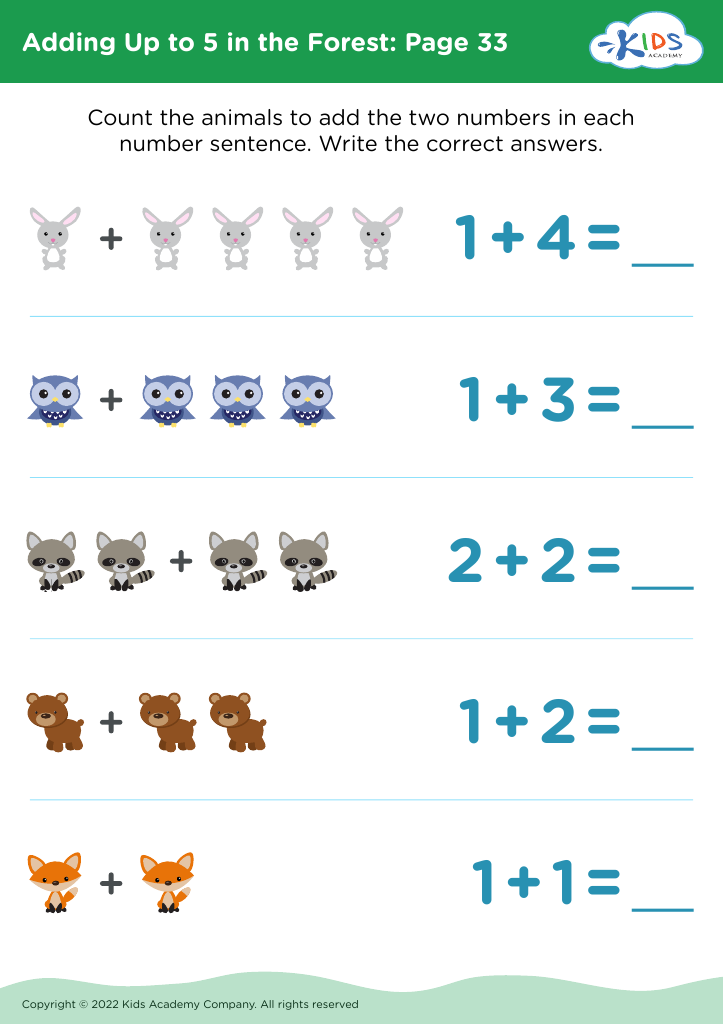
Adding Up to 5 in the Forest: Page 33
Worksheet
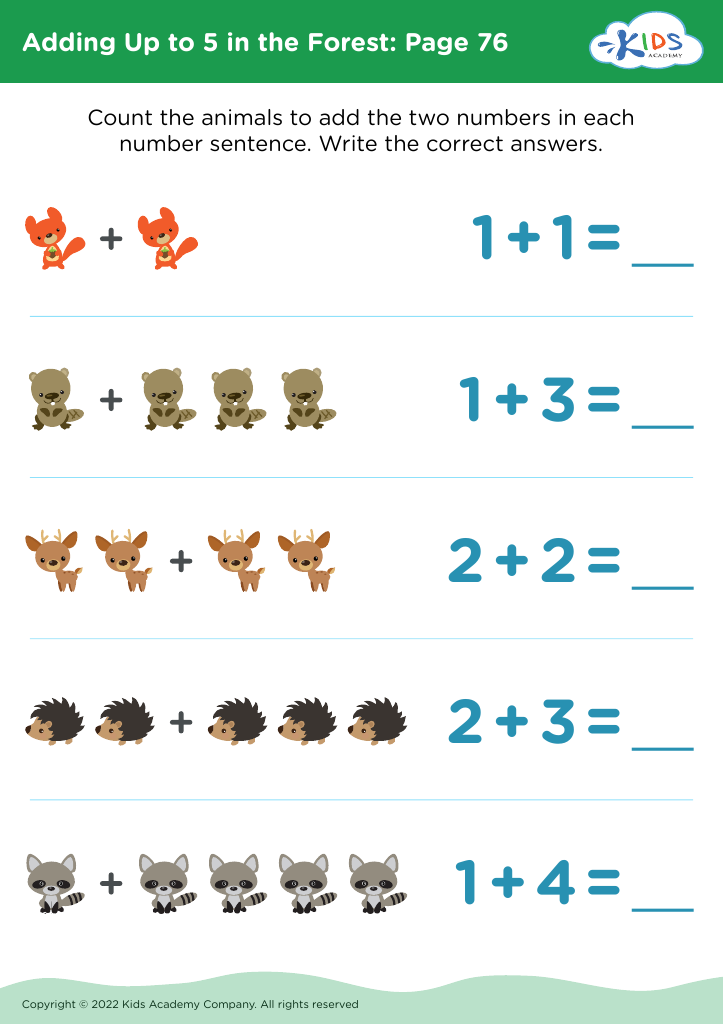
Adding Up to 5 in the Forest: Page 76
Worksheet
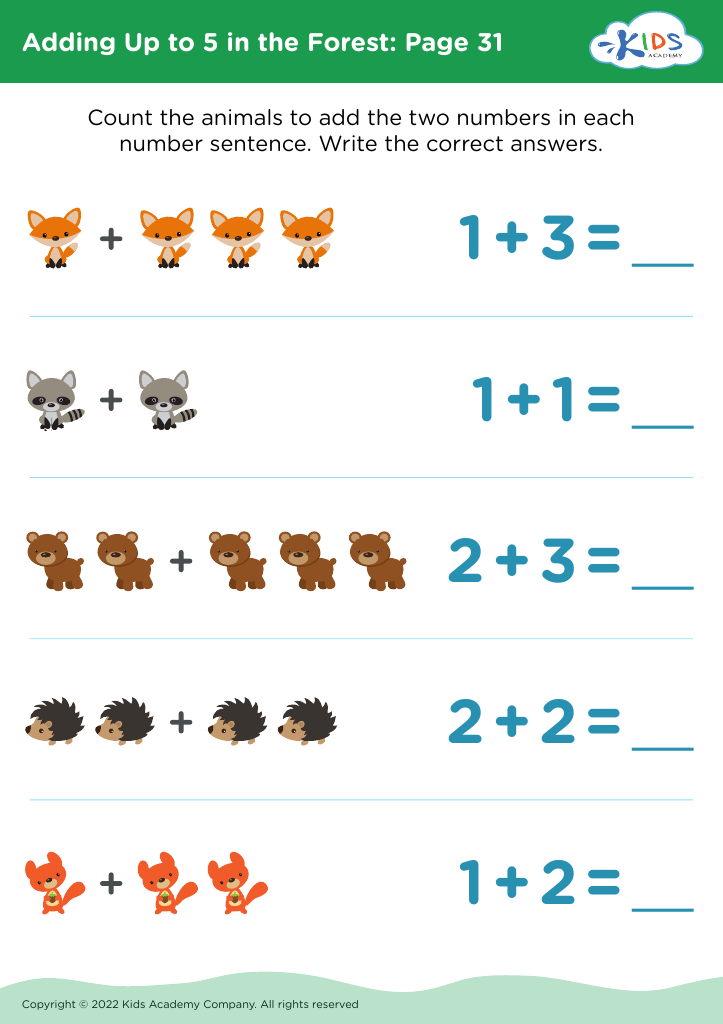
Adding Up to 5 in the Forest: Page 31
Worksheet
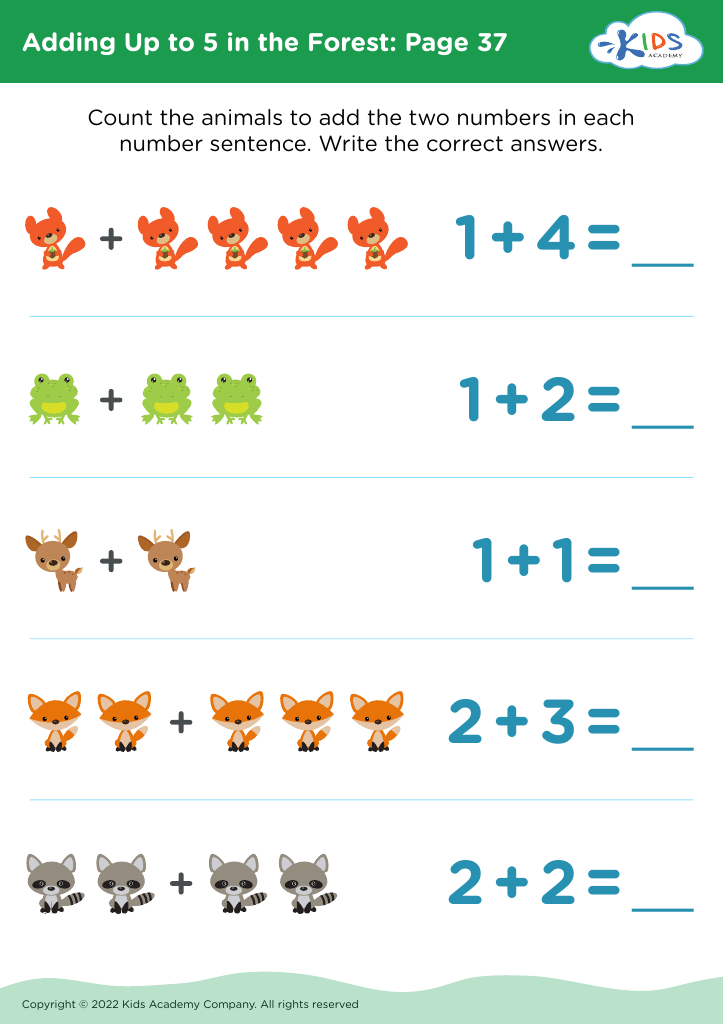
Adding Up to 5 in the Forest: Page 37
Worksheet
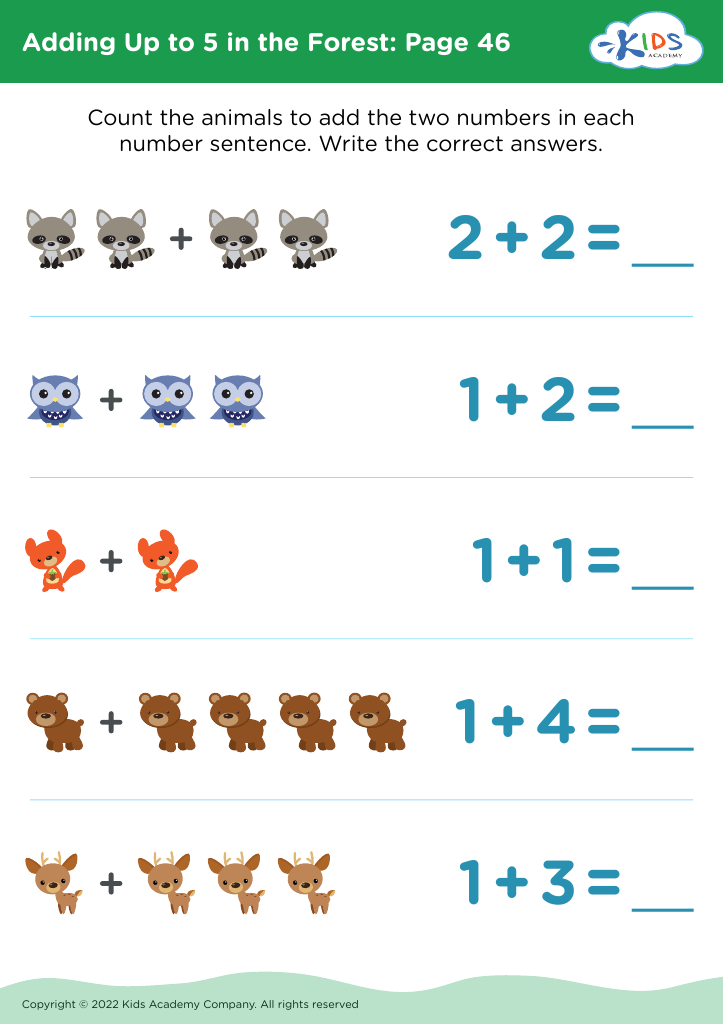
Adding Up to 5 in the Forest: Page 46
Worksheet
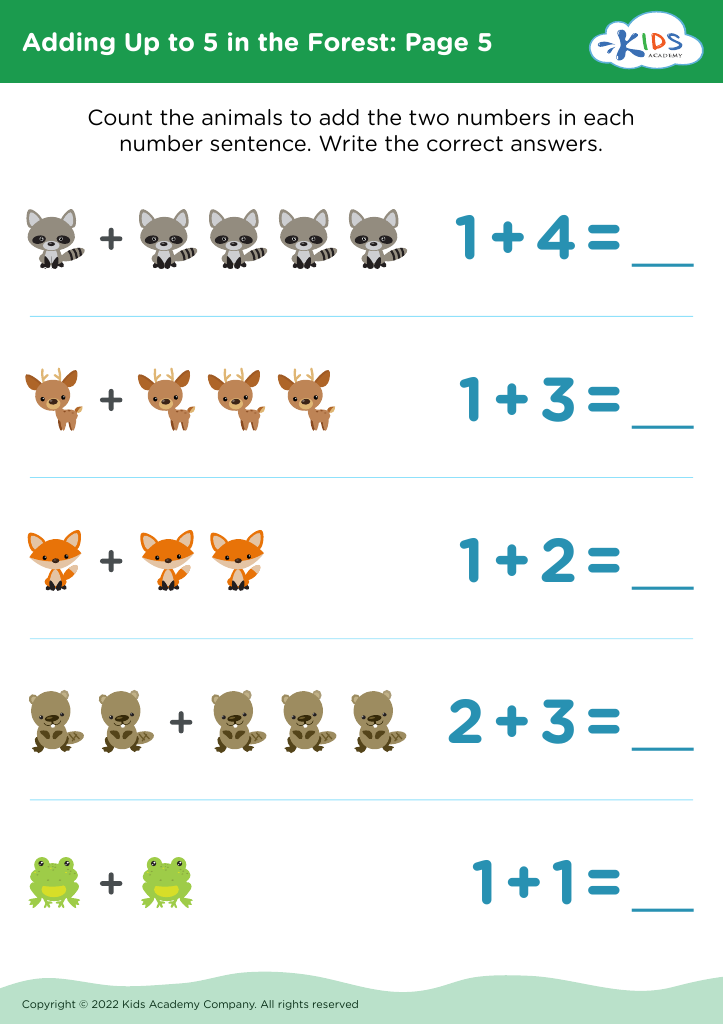
Adding Up to 5 in the Forest: Page 5
Worksheet
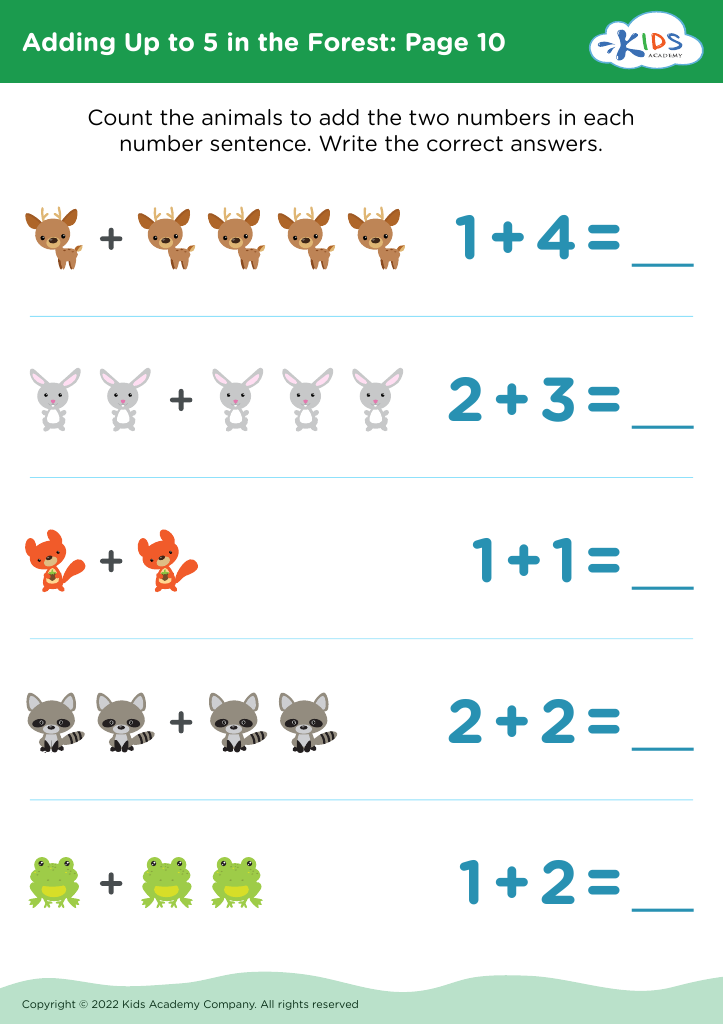
Adding Up to 5 in the Forest: Page 10
Worksheet
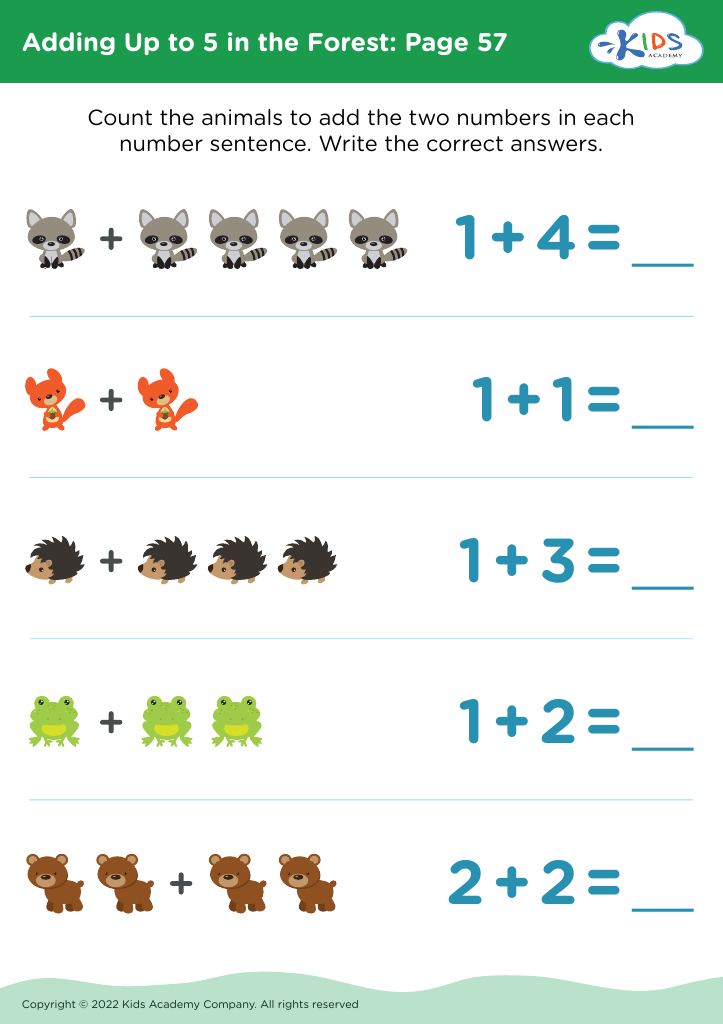
Adding Up to 5 in the Forest: Page 57
Worksheet


Counting skills, especially interactive and engaging methods like 'Adding in the Forest,' are essential for the development of 5-year-olds. At this pivotal age, children are establishing foundational numeracy skills that will support their academic growth through school and their daily lives. Here’s why parents and teachers should care:

First, 'Adding in the Forest' blends learning with the natural curiosity and wonder of young children, making math less intimidating and more enjoyable. This playful approach fosters a positive attitude toward mathematics early on.

Second, counting and addition activities enhance cognitive development. Engaging in 'Adding in the Forest' helps children grasp basic arithmetic, understand the concept of quantities, and develop problem-solving skills. These skills are vital not just academically but also for day-to-day tasks, creating a strong practical base for future complex mathematical concepts.

Third, these activities improve fine motor skills and hand-eye coordination through hands-on counting objects such as pinecones or stones. It also boosts observation skills and reinforces consistency in their learning environments, connecting school and play.

Finally, participating in these counting exercises in a natural setting promotes an appreciation of the environment and combines physical activity with learning. Parents and teachers who actively support and participate in these engaging counting exercises ensure a well-rounded and enjoyable educational experience for children.