Fine motor skills (writing) Adding in the Forest Worksheets for 5-Year-Olds
3 filtered results
-
From - To
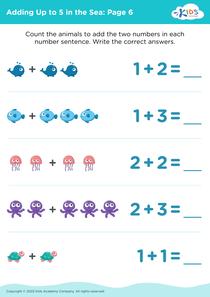
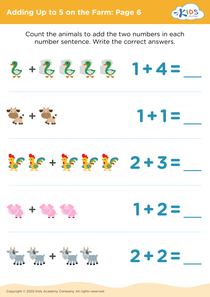
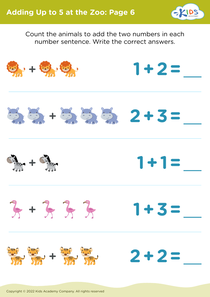
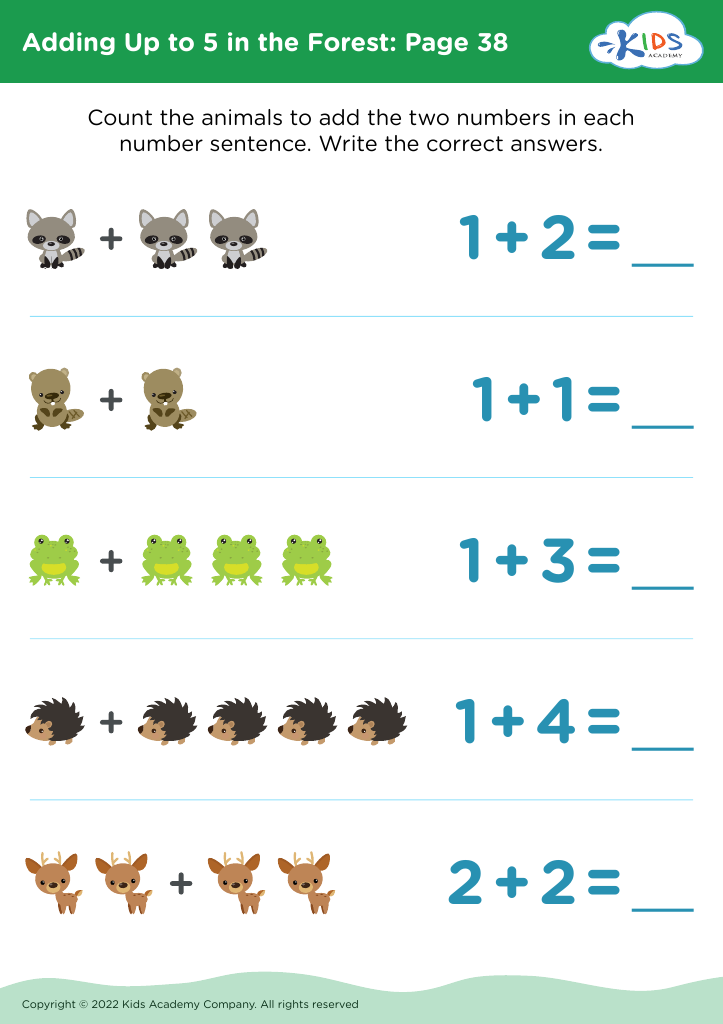
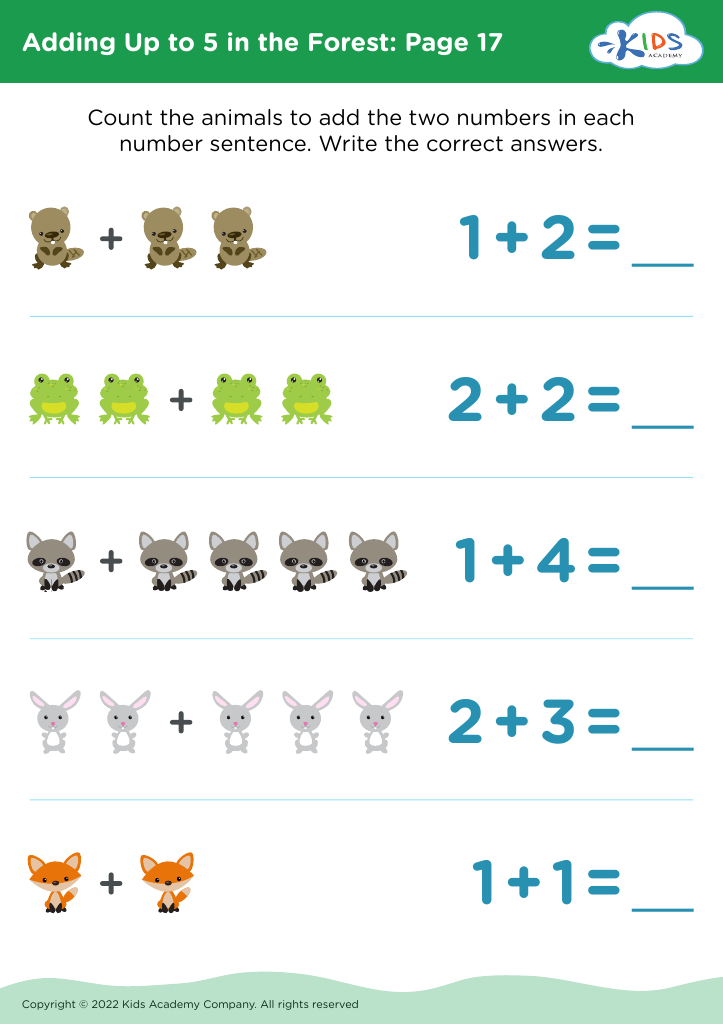
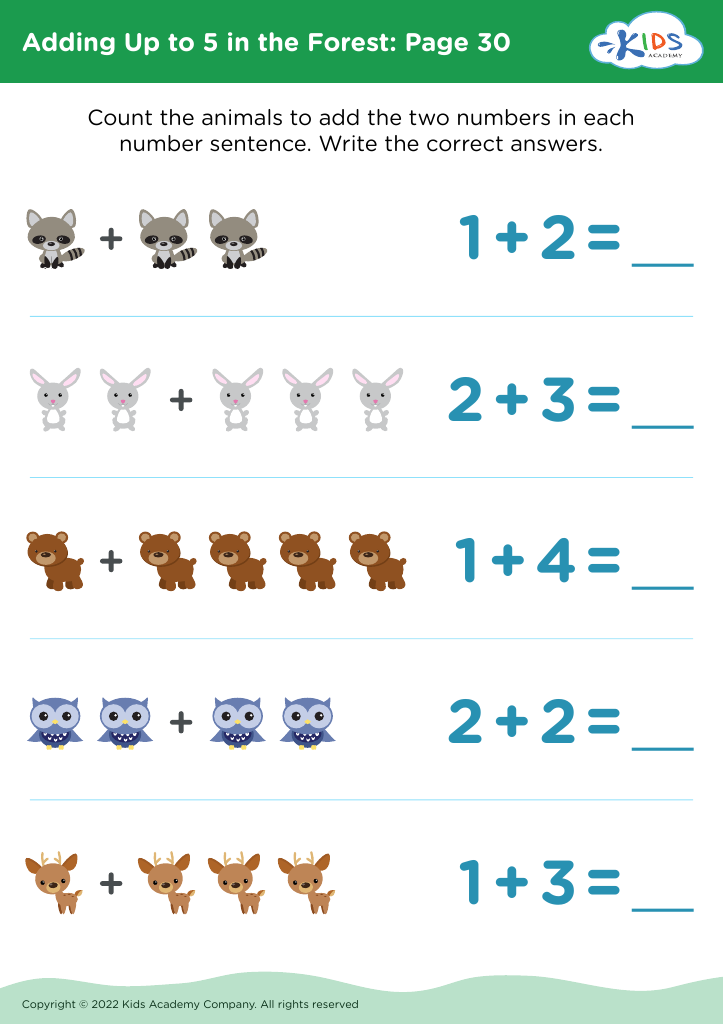
Enhance your 5-year-old's fine motor skills while engaging in a delightful learning adventure with our "Adding in the Forest" worksheets! Designed for young learners, these fun, interactive activities focus on refining writing skills through playful exercises. Kids will joyfully explore numbers and addition while practicing hand-eye coordination and handwriting. Each worksheet incorporates vibrant illustrations inspired by the enchanting forest theme, keeping your child entertained and motivated. Perfect for preschool and kindergarten, these printable resources foster early math proficiency alongside essential fine motor development, making learning an enjoyable experience. Encourage creativity and confidence in your child's writing and math abilities today!



Fine motor skills are crucial for a child's development, especially when it comes to writing. For 5-year-olds, these skills involve the coordination of small muscles in the hands and fingers, which play a key role in basic tasks such as holding a pencil, cutting with scissors, and manipulating small objects.
Parents and teachers should prioritize fine motor development because these skills directly impact a child's ability to express themselves through writing and drawing. When children can efficiently control their hand movements, they gain confidence, fostering a love for learning and creativity.
Incorporating activities in a Forest setting can further enhance fine motor skills while making the learning process enjoyable. Nature offers countless opportunities for hands-on experiences, such as squeezing pine cones, gathering leaves, and using sticks for drawing in the dirt. These activities not only boost fine motor abilities but also connect children to their environment, igniting their curiosity and supporting overall cognitive development.
Ultimately, by focusing on fine motor skills and emphasizing playful, nature-based learning, parents and teachers can ensure that children are prepared for academic success and personal expression as they grow.