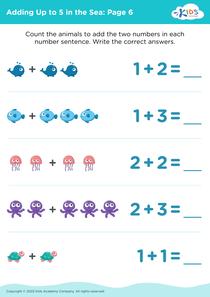
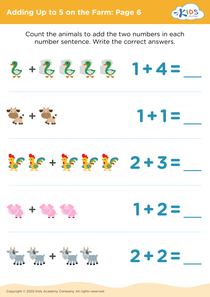
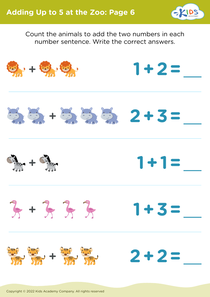
Understanding Quantities Adding in the Forest Worksheets for 5-Year-Olds
6 filtered results
-
From - To
Discover our engaging "Understanding Quantities Adding in the Forest" worksheets designed for 5-year-olds. These fun and interactive worksheets immerse children in a vibrant forest setting, making math exploration captivating. Through whimsical visuals and relatable scenarios, kids will practice adding different quantities, enhancing their number sense and mathematical skills. Each worksheet encourages problem-solving and critical thinking while fostering a love for learning. Perfect for parents and educators alike, these resources support early math development in a playful environment. Help your little ones build a strong foundation in addition with our educational and enjoyable activities today!
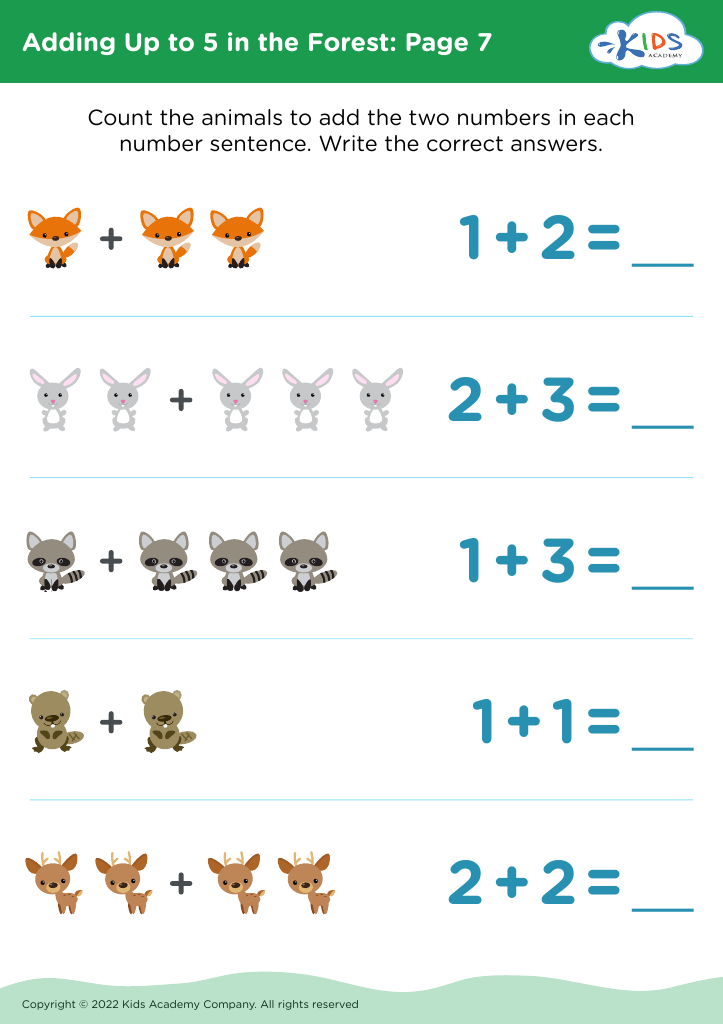
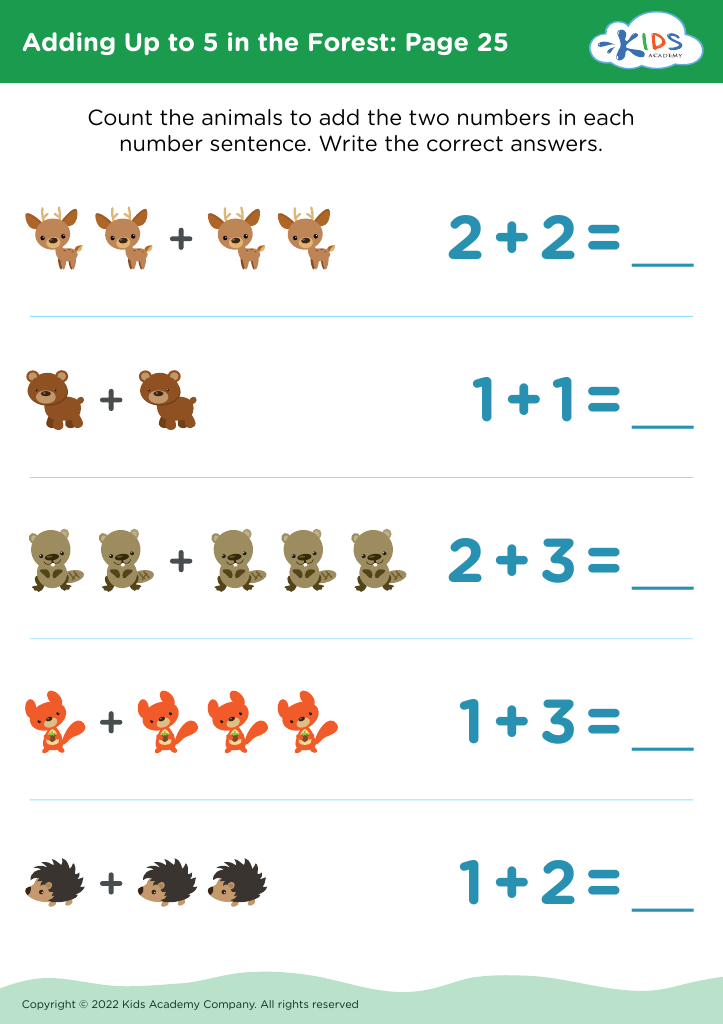
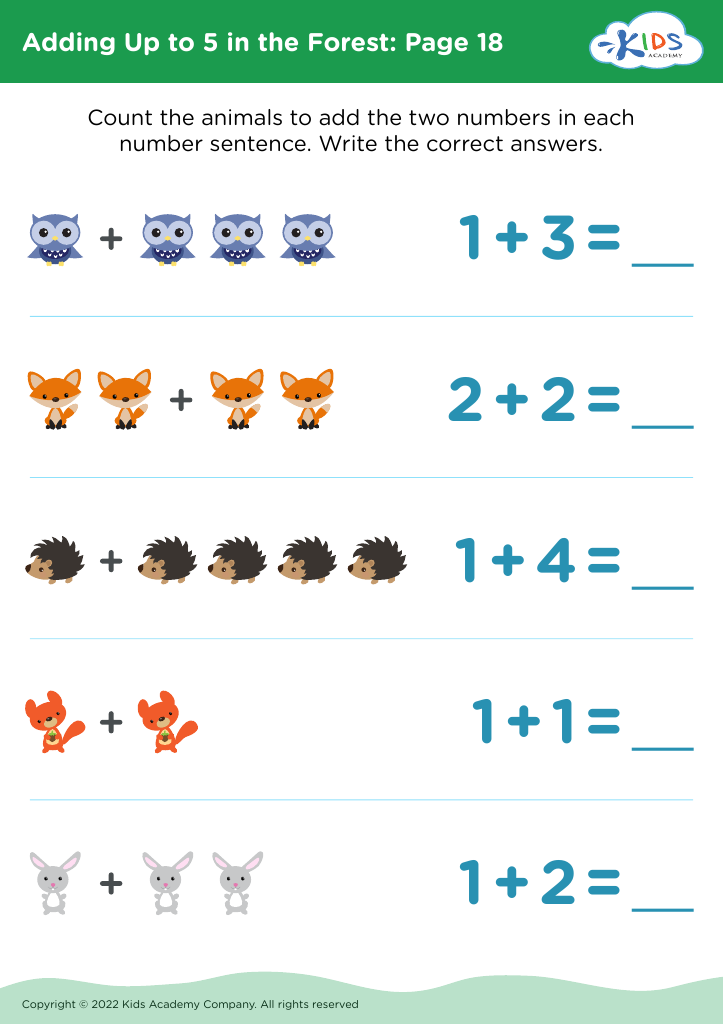
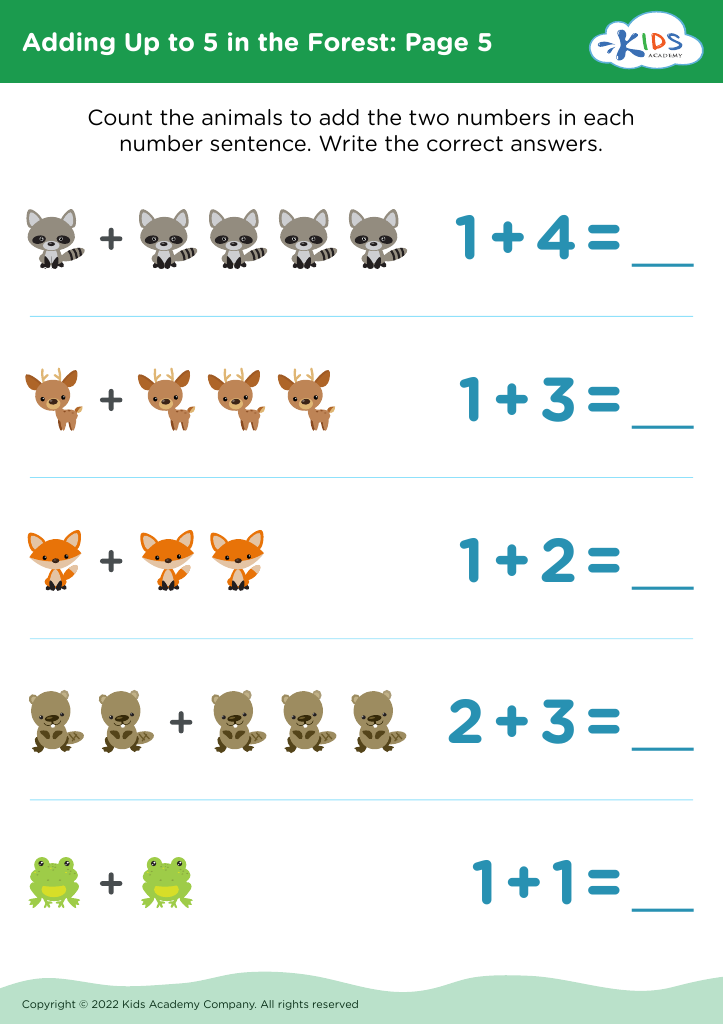
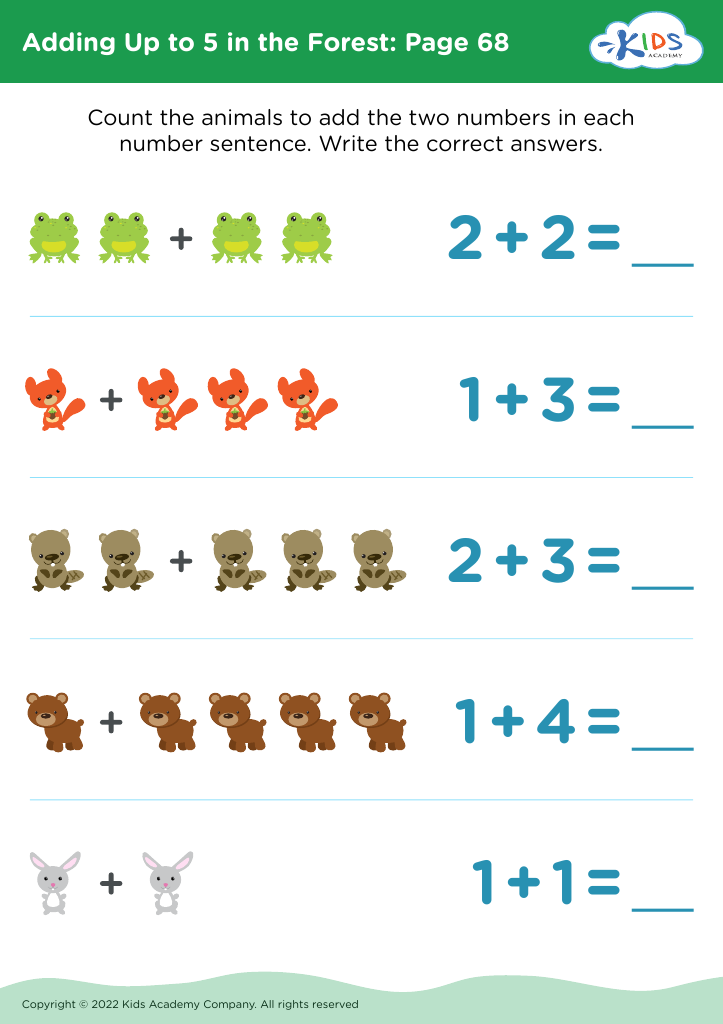
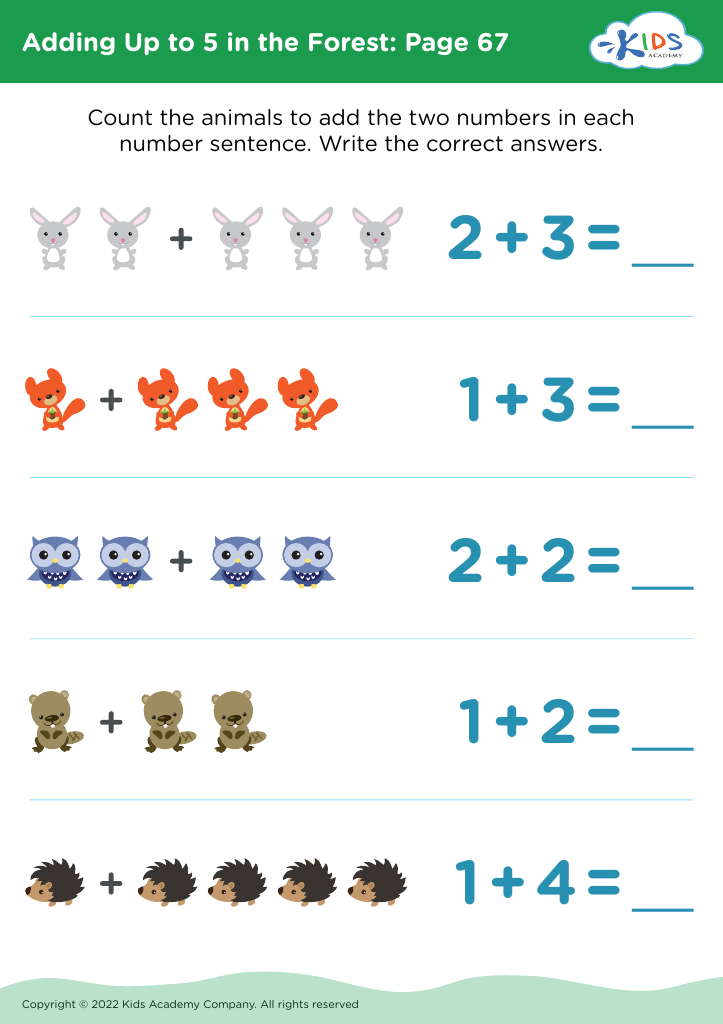



Understanding quantities and basic addition is a fundamental skill for young learners, and programs like "Adding in the Forest" provide an engaging context for developing these abilities. At this age, children are naturally curious and learn effectively through play and exploration. Being outdoors enhances their learning experience by connecting mathematical concepts to real-world scenarios, making math relatable and fun.
Parents and teachers should care about this approach because it nurtures critical thinking and problem-solving skills. By incorporating nature into the learning process, children gain opportunities to visualize and practice adding quantities, such as counting leaves, acorns, or animals they encounter. This hands-on experience reinforces classroom learning and helps solidify foundational mathematical concepts.
Moreover, outdoor activities foster social skills, teamwork, and communication as children collaborate on tasks, share ideas, and discuss their findings. This holistic approach to learning not only cultivates mathematical understanding but also promotes a love for nature and outdoor play.
Ultimately, supporting children in developing their understanding of quantities through innovative programs like "Adding in the Forest" can enrich their educational journey, offering them a strong basis for future mathematical learning while promoting physical health and environmental awareness.