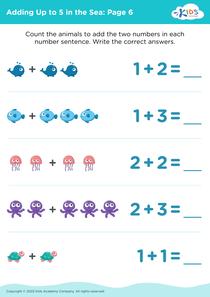
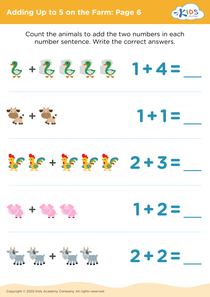
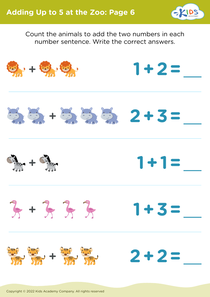
Visual Learning Adding in the Forest Worksheets for 5-Year-Olds
12 filtered results
-
From - To
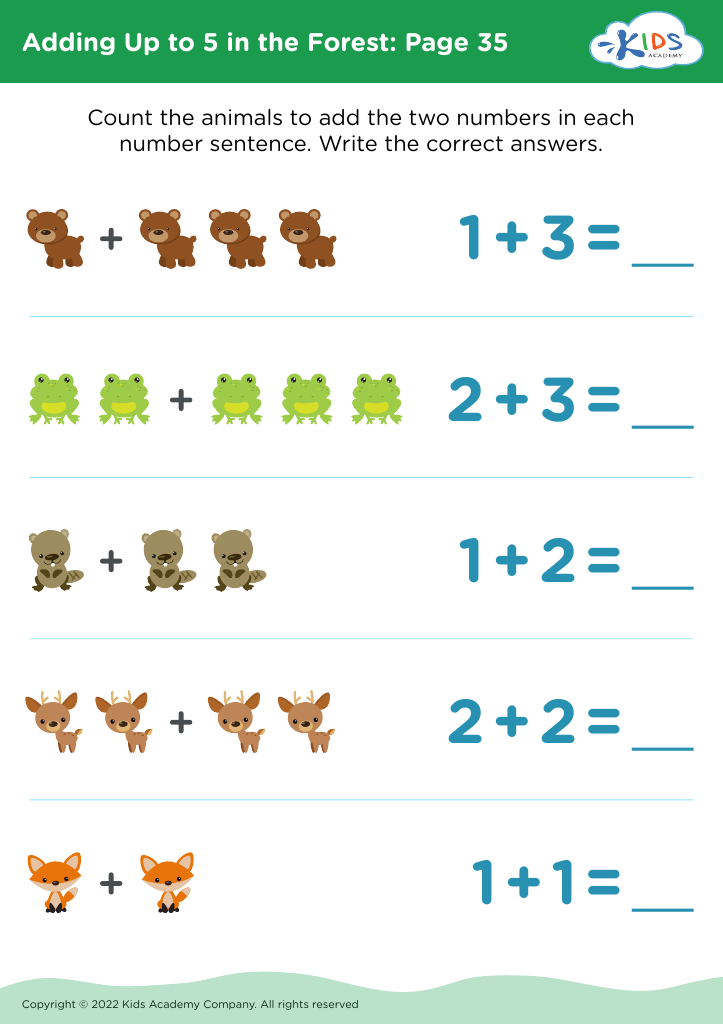
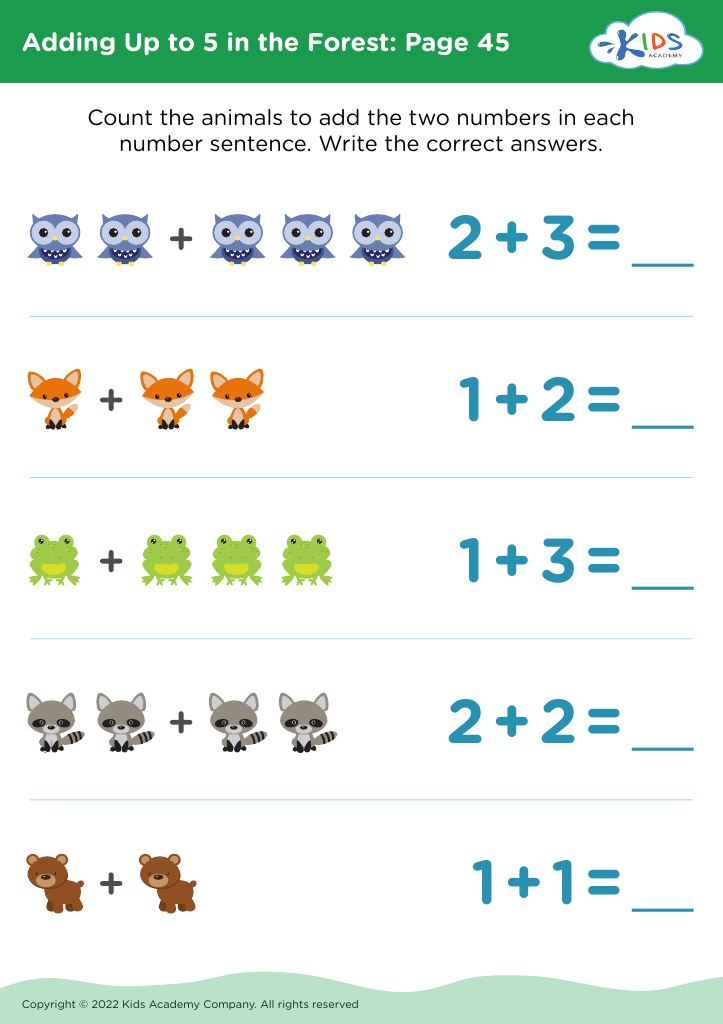
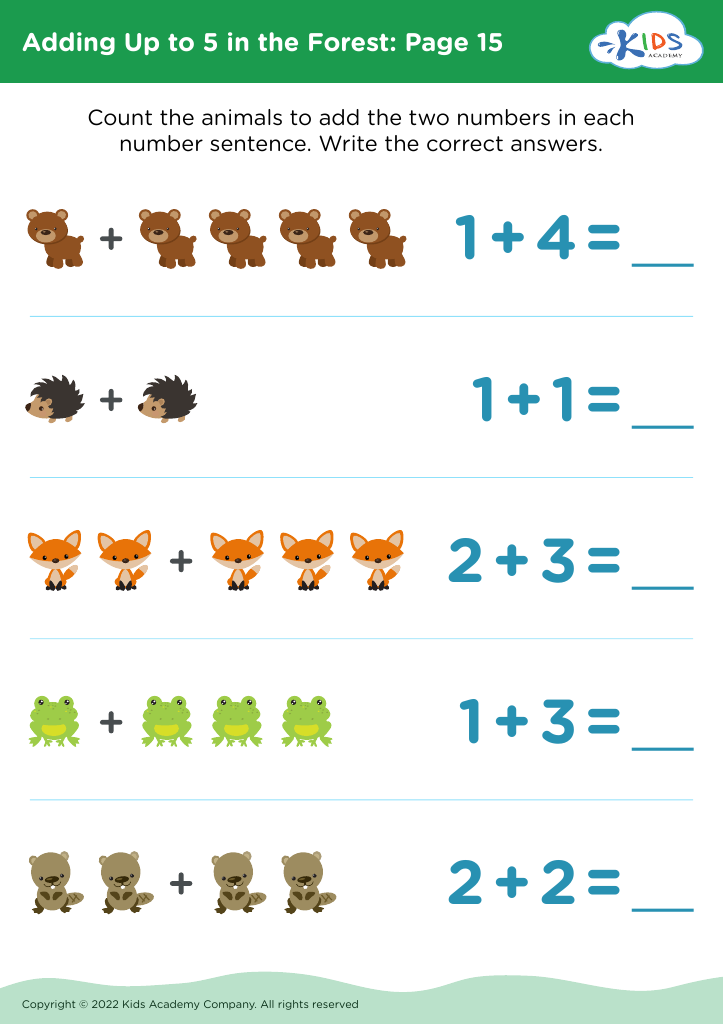
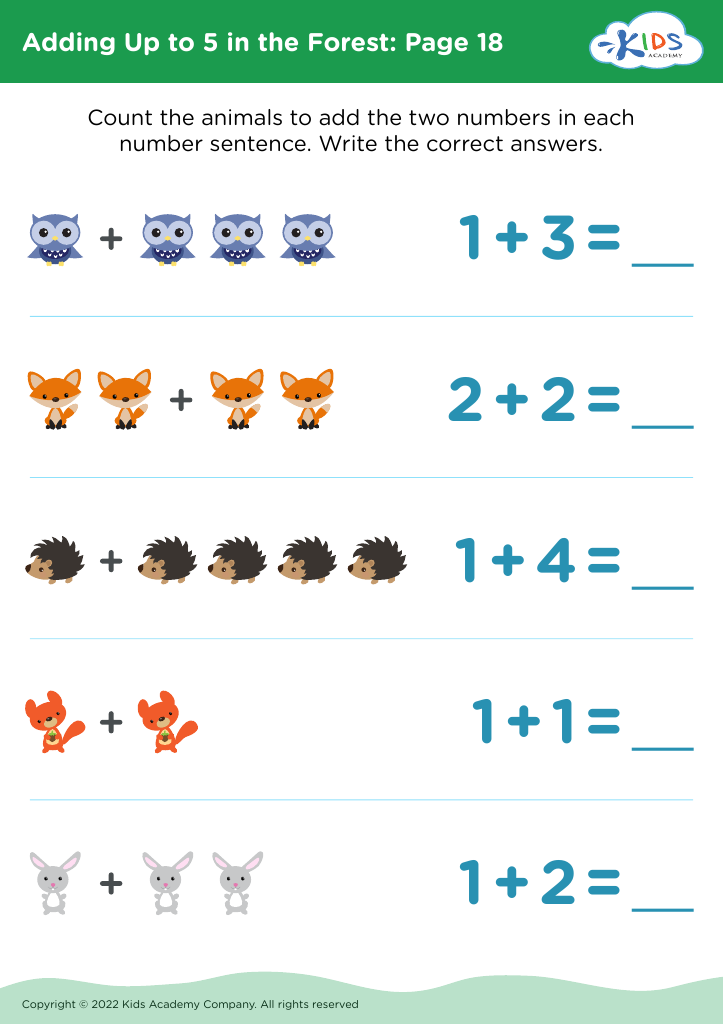
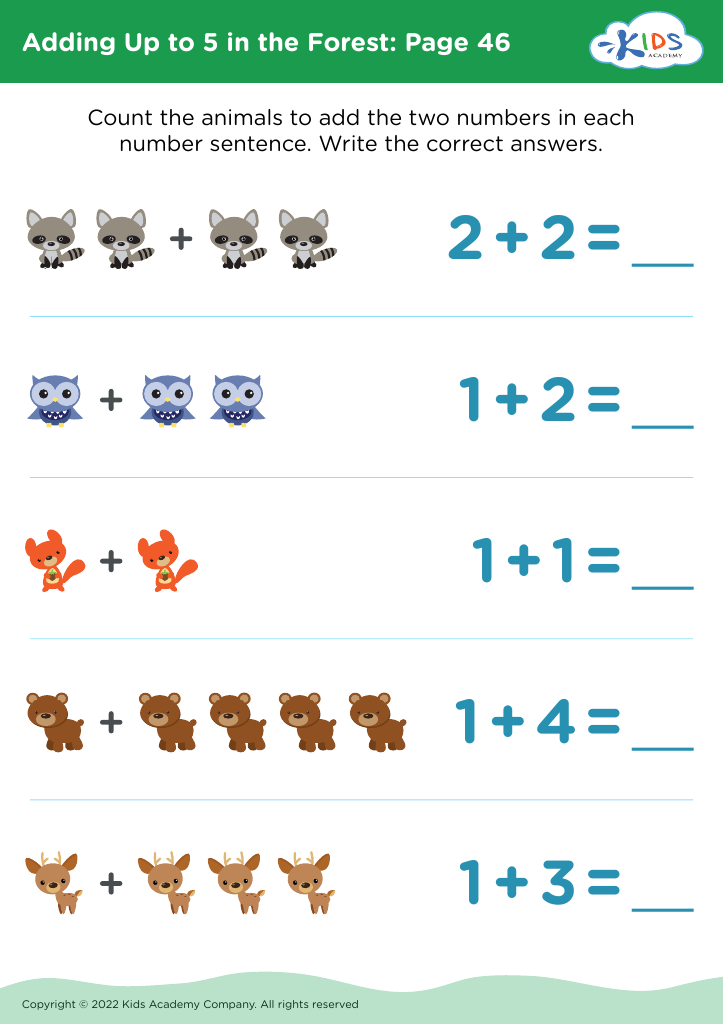
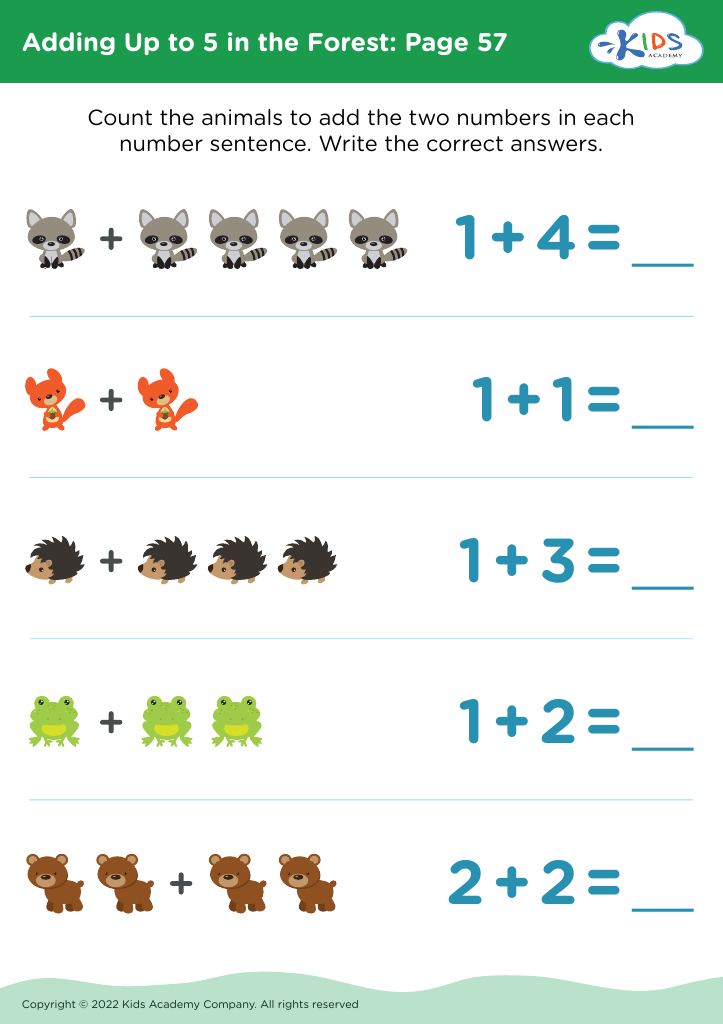
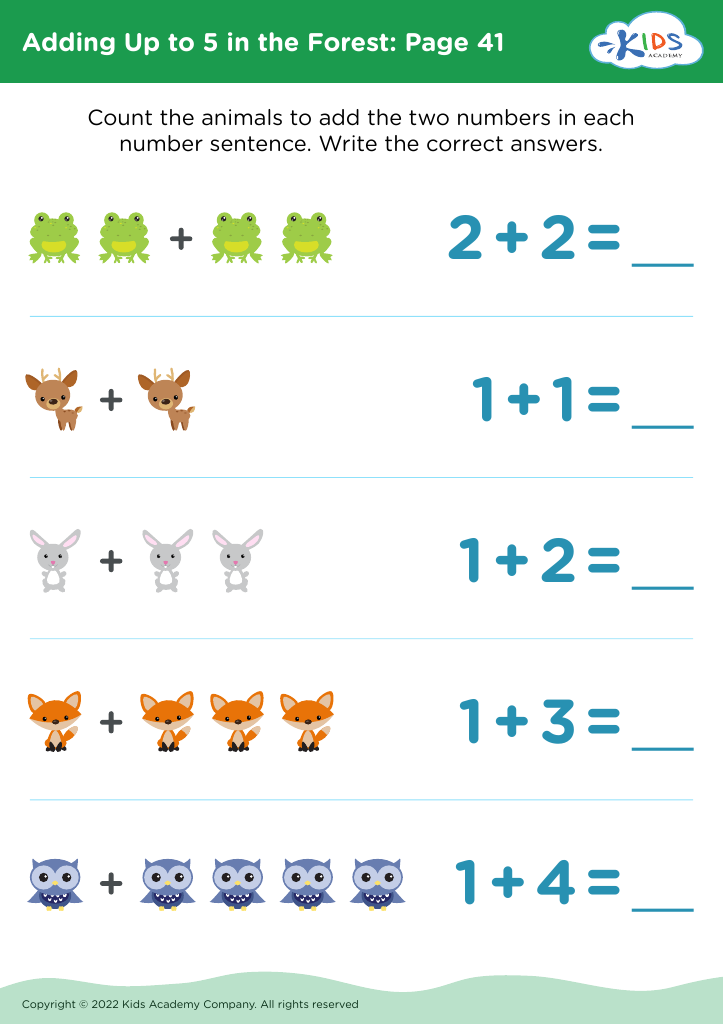
Welcome to our "Visual Learning Adding in the Forest Worksheets" designed specifically for 5-year-olds! These engaging worksheets combine the joy of nature with essential math skills, allowing young learners to develop their addition abilities in a fun, immersive way. Each worksheet features vibrant forest themes and playful visuals, making math relatable and enjoyable. Children will encounter delightful animal characters as they practice addition through interactive activities. With a blend of visual aids and hands-on learning, these worksheets foster a deep understanding of math concepts. Explore our collection and watch your little ones thrive as they embark on a mathematical adventure in the forest!
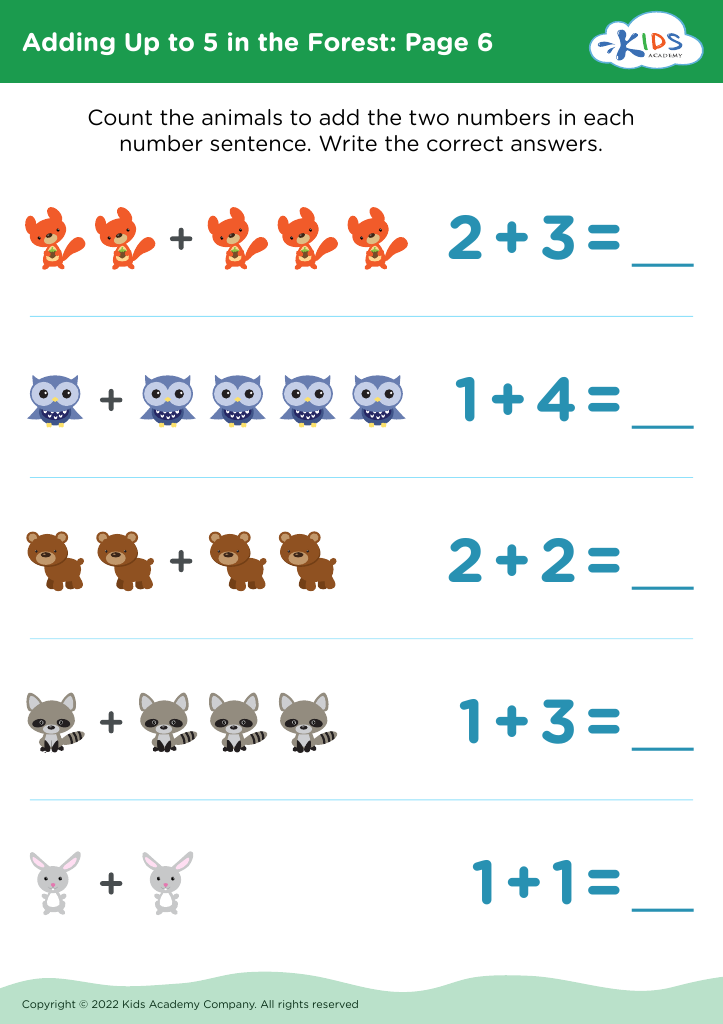
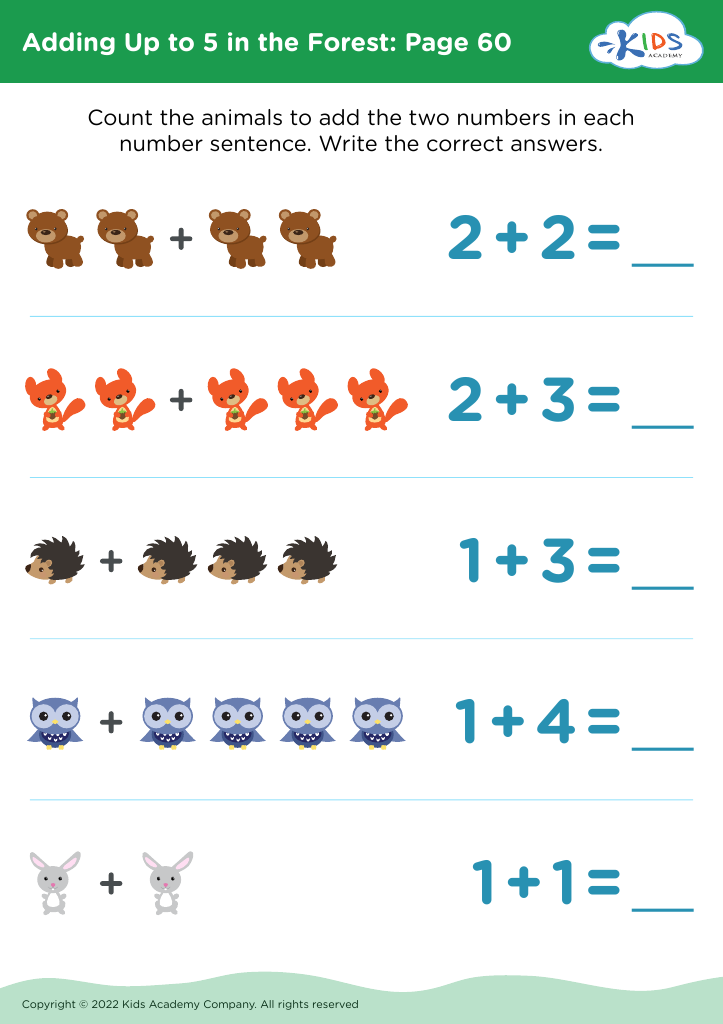
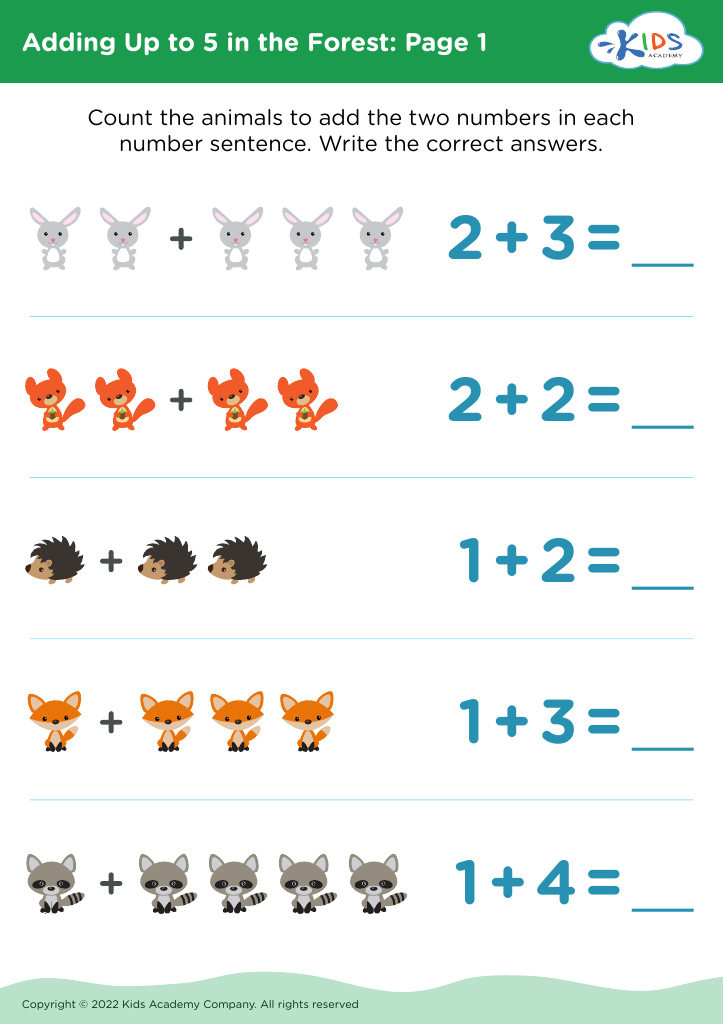
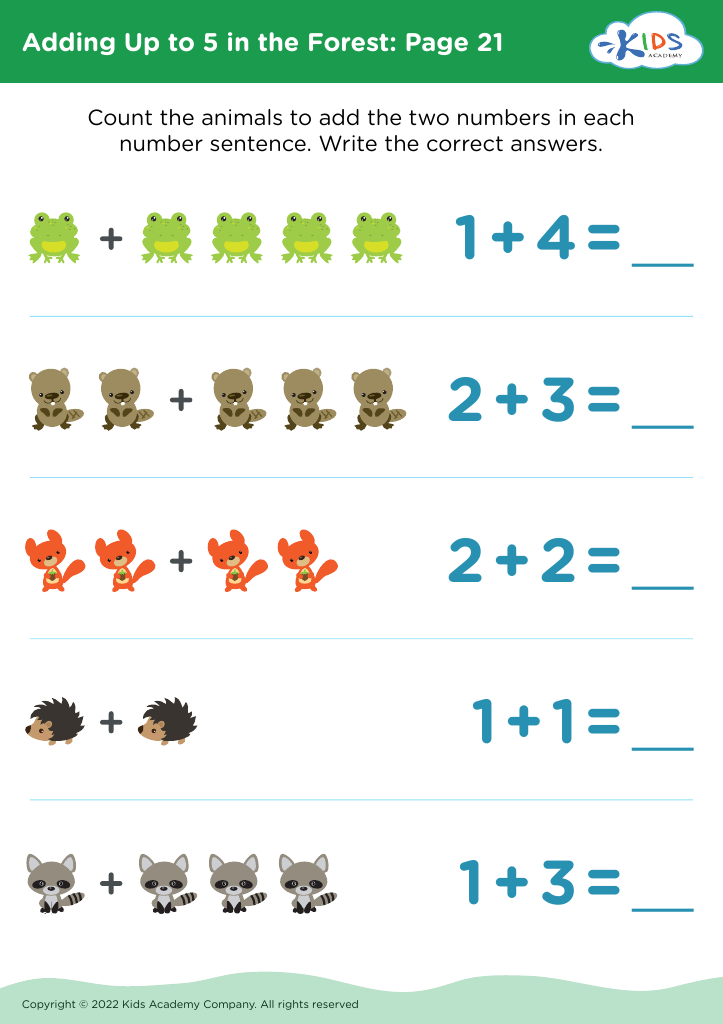
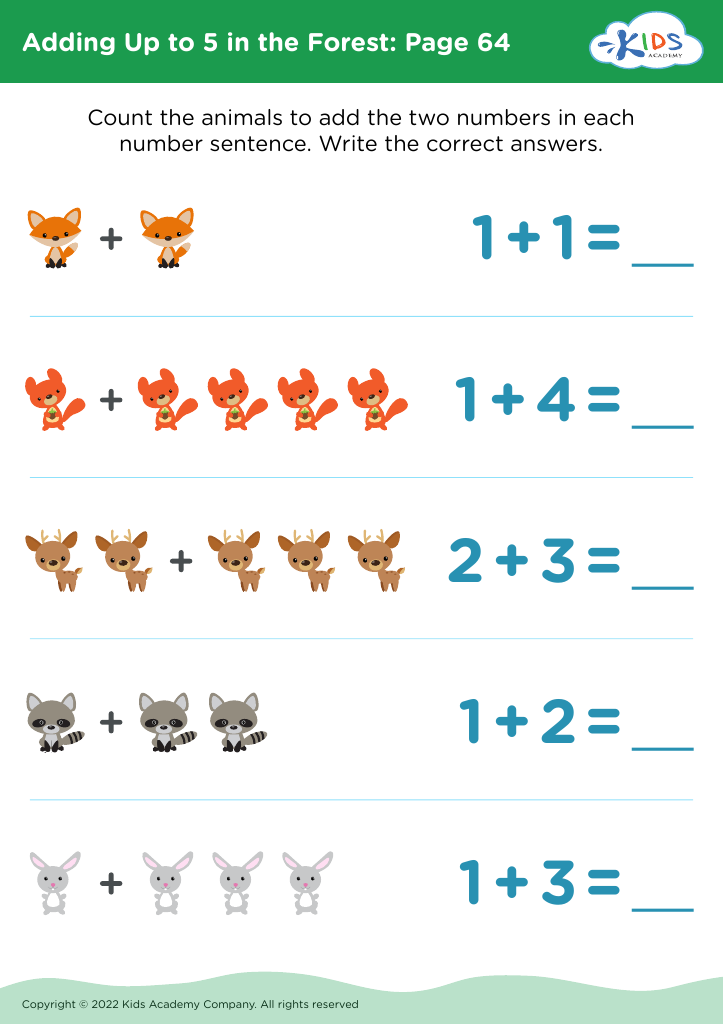



Visual learning is a critical component of establishing a strong foundation for young learners, particularly for 5-year-olds. This engaging approach utilizes images, charts, drawings, and natural surroundings, making concepts more tangible and relatable. Incorporating visual learning in outdoor settings, such as providing "Visual Learning in the Forest," encourages exploration and curiosity—key elements in early education.
First, young children are naturally drawn to visual stimuli, which helps promote focus and retention. By arranging lessons around nature, layers of visual experiences from colorful foliage to wildlife can enhance their cognitive abilities. For instance, pairing a lesson on plants with actual exploration reinforces understanding and makes learning unforgettable.
Additionally, such programs foster creativity and critical thinking. Kids who engage with their environment learn problem-solving skills organically as they explore and interact. Teachers and parents also observe increased collaboration among peers, as children often share discoveries and ideas during outdoor activities.
In summary, incorporating visual learning in outdoor settings is essential for young children's development, enhancing their academic, social, and emotional growth. By prioritizing this approach, educators and parents can cultivate lifelong learners who appreciate the world around them.