Basic Math understanding Adding Up to 5 Worksheets for 5-Year-Olds
7 filtered results
-
From - To
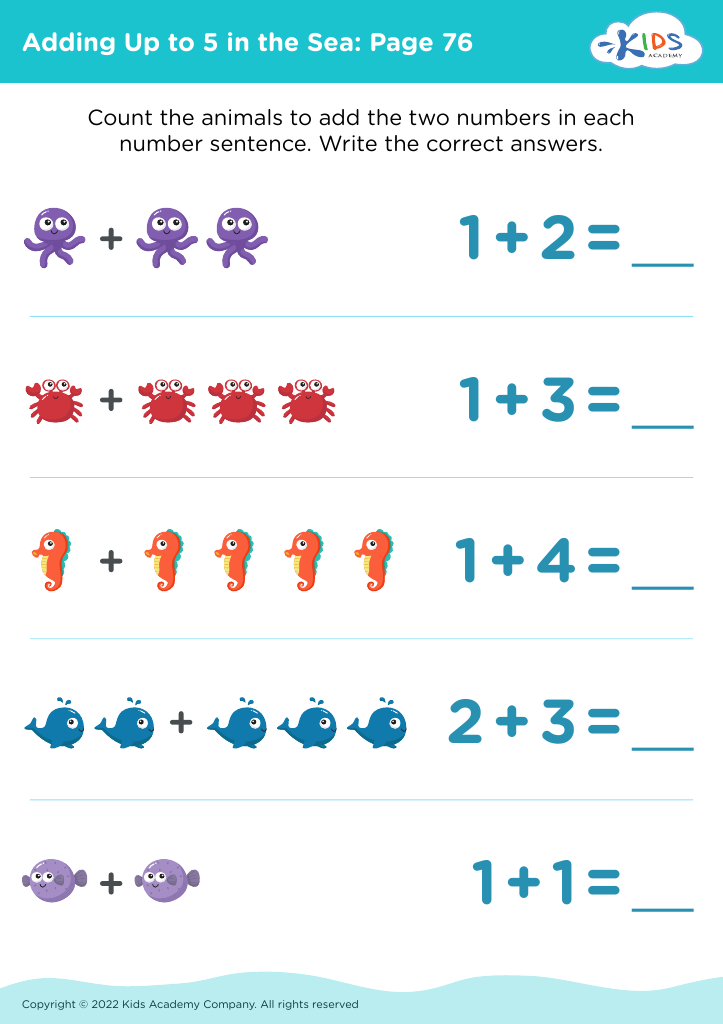
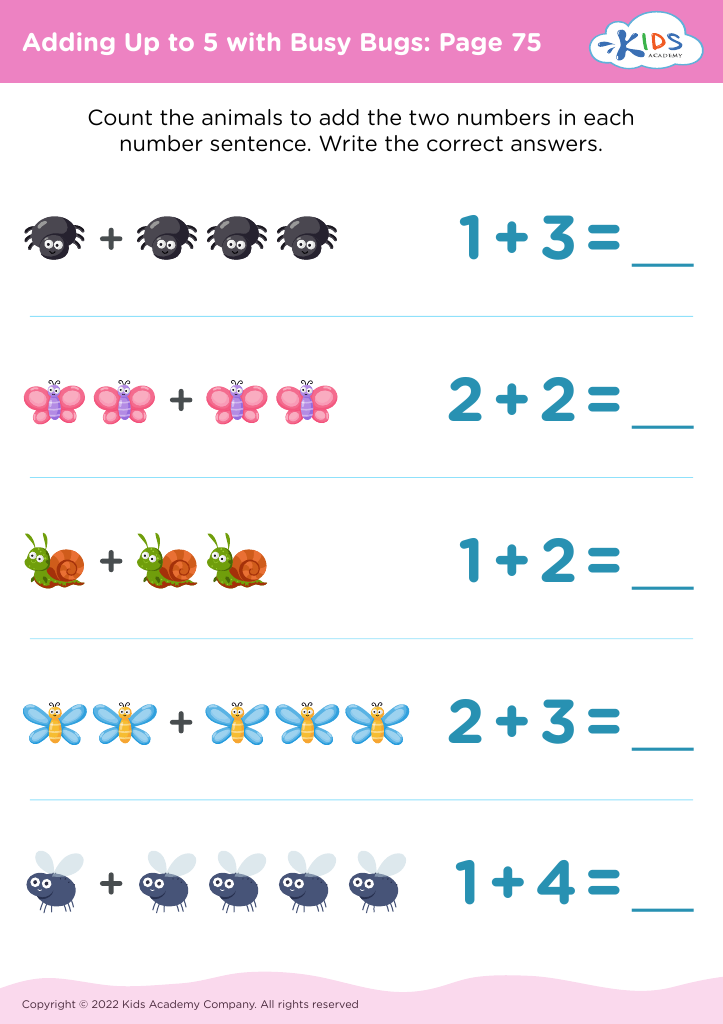
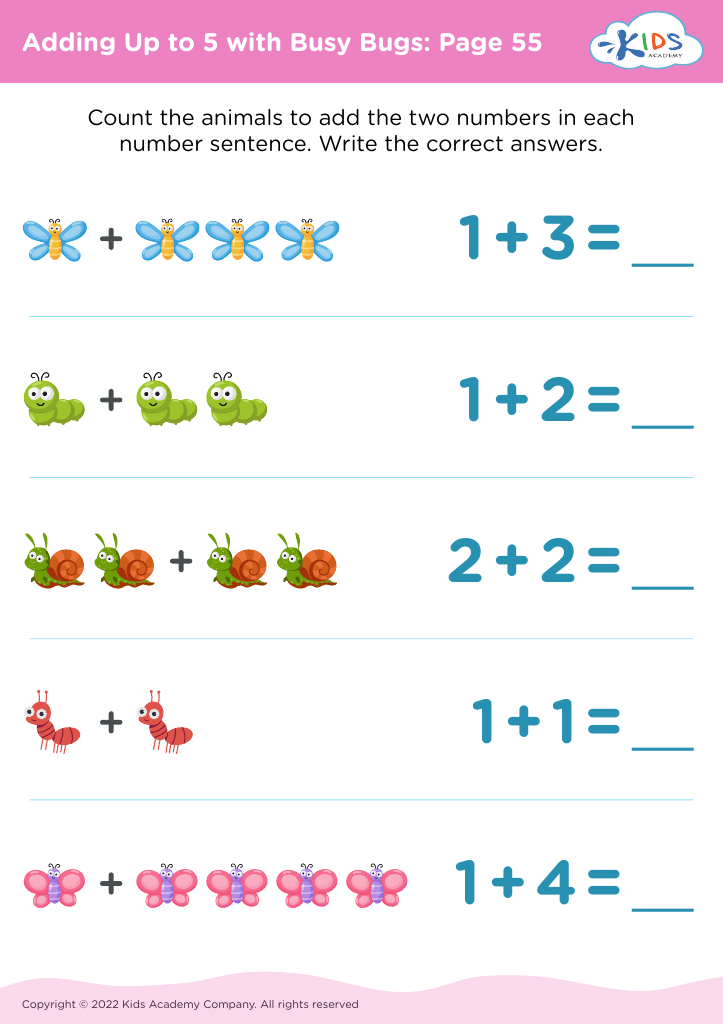
Spark your child's interest in math with our "Basic Math Understanding: Adding Up to 5 Worksheets" designed specifically for 5-year-olds. These engaging and colorful worksheets make learning fun while teaching essential addition skills. Through a variety of exercises and interactive activities, children will grasp the concept of adding numbers up to 5, laying a strong foundation for future math success. Boost your child’s confidence and competence in math with these carefully crafted sheets that combine education with enjoyment. Perfect for at-home practice or supplemental classroom materials, they make mastering basic math a delightful experience.
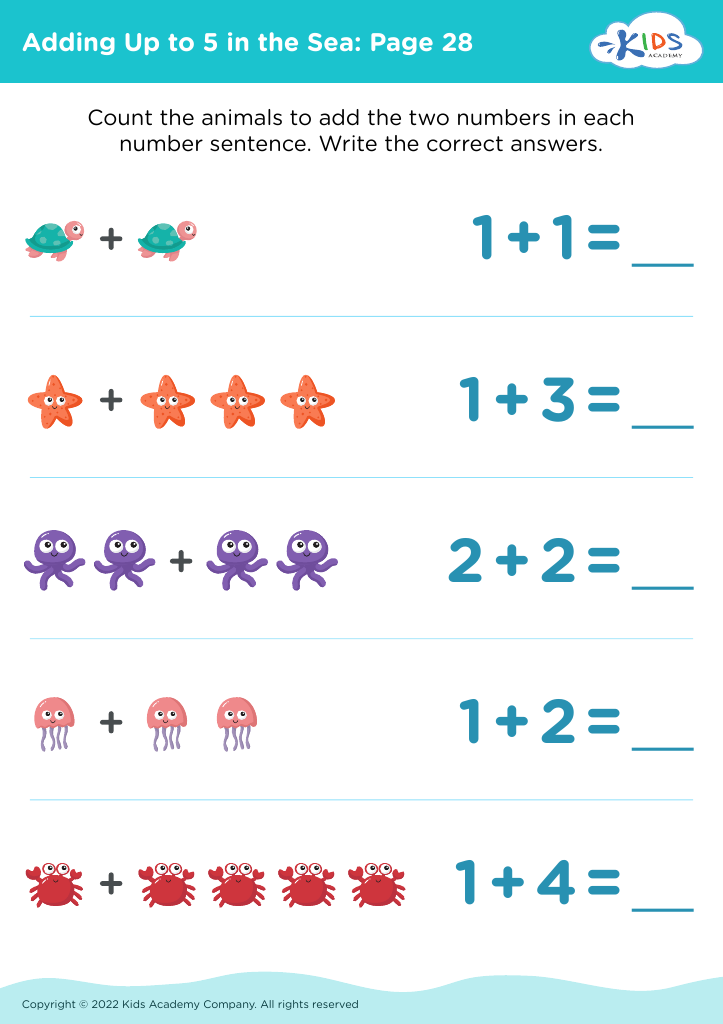
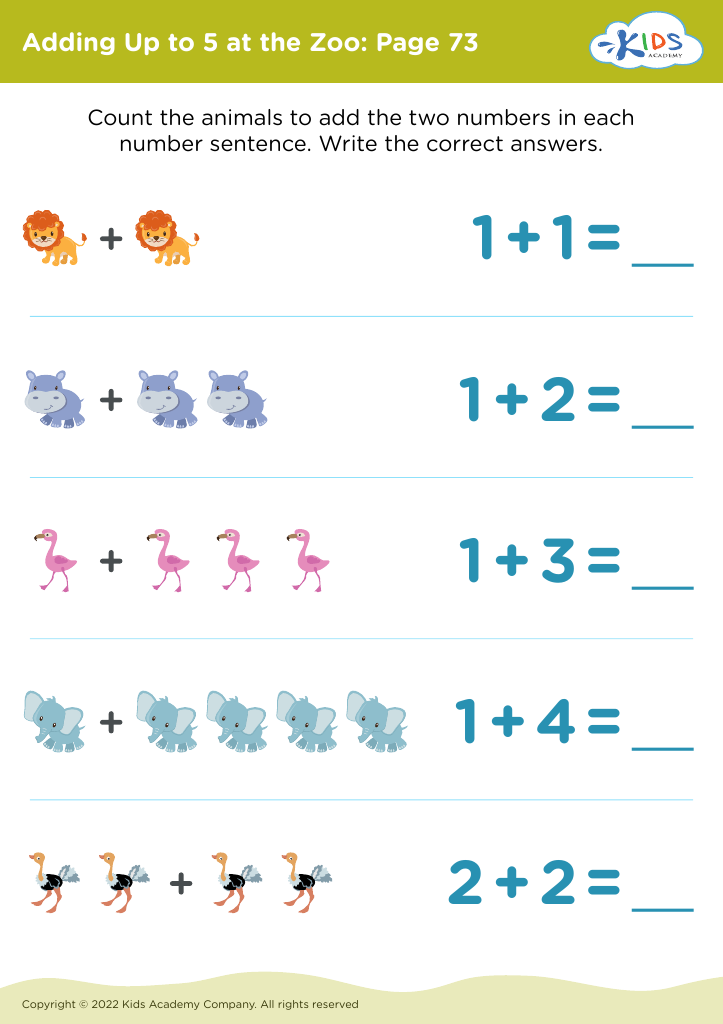
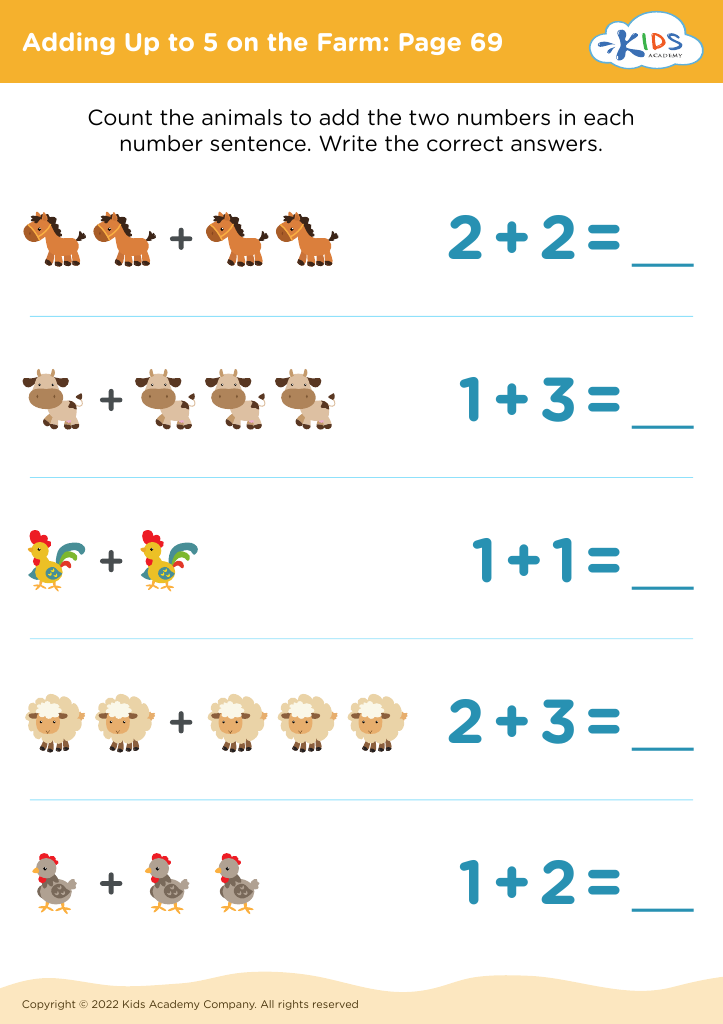
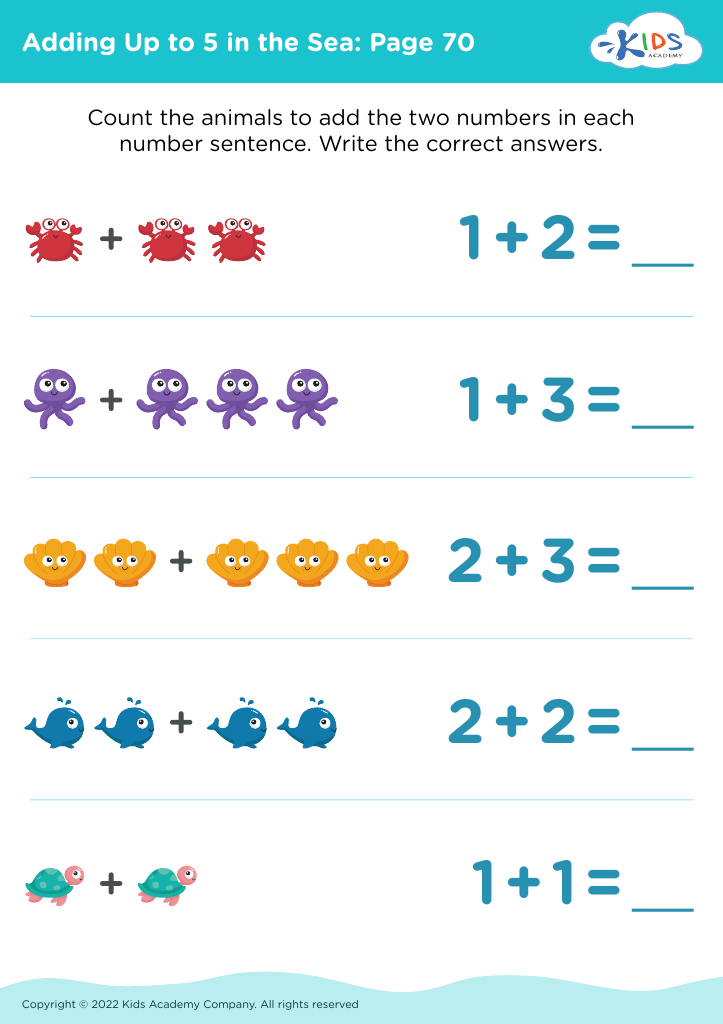





.jpg)


Understanding basic math, such as adding up to five, forms a crucial foundation for young minds, especially for 5-year-olds. At this developmental stage, children are curious, absorb information quickly, and develop critical thinking skills. For parents and teachers, emphasizing these early math skills can propel a child’s academic journey and their daily problem-solving abilities.
First, learning basic addition fosters a sense of numbers and their relationships, key concepts necessary for understanding more complex arithmetic later on. This basic number sense is predictive of future achievement in mathematics, which has lifelong applications, from maintaining personal finances to succeeding in various careers.
Second, mastering simple addition helps build confidence and encourages a positive attitude toward learning. With each successful addition problem, children experience a sense of accomplishment that motivates them to tackle new and challenging tasks, thereby cultivating a growth mindset.
Moreover, problem-solving and critical thinking are nurtured through these basic math practices. Children learn to approach problems methodically, recognize patterns, and develop strategies to find solutions—skills applicable beyond the realm of math.
Ultimately, nurturing these early mathematical abilities provides children with essential tools for academic success and practical life skills, making it imperative for parents and teachers to invest time and effort in ensuring children understand basic addition by age 5.








