Understanding number relationships Adding Up to 5 Worksheets for 5-Year-Olds
3 filtered results
-
From - To
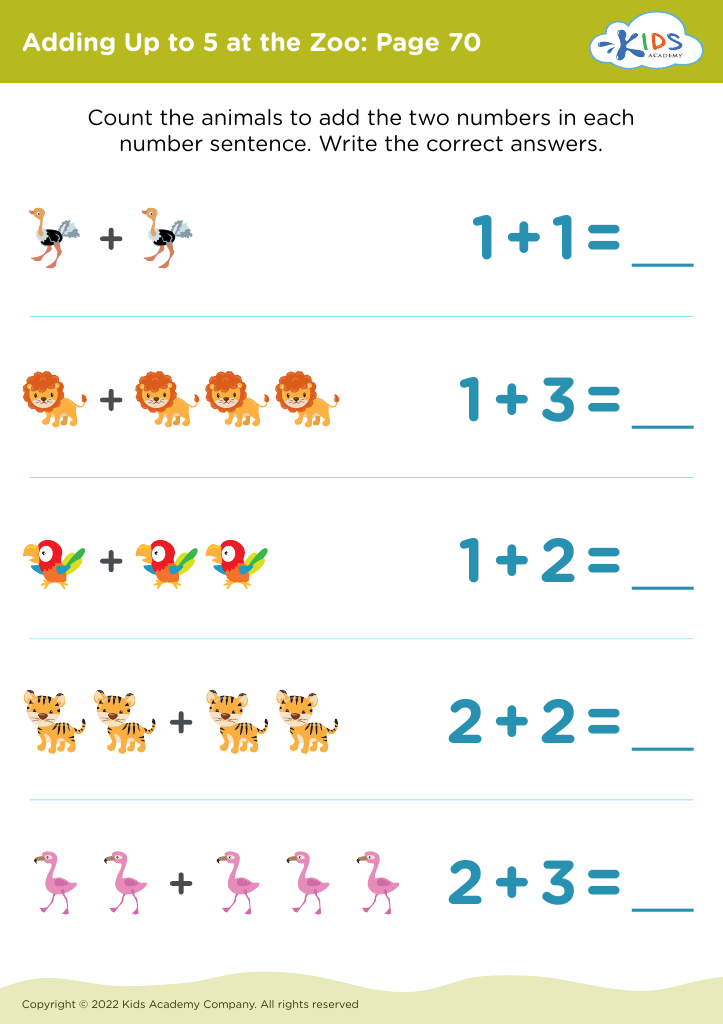
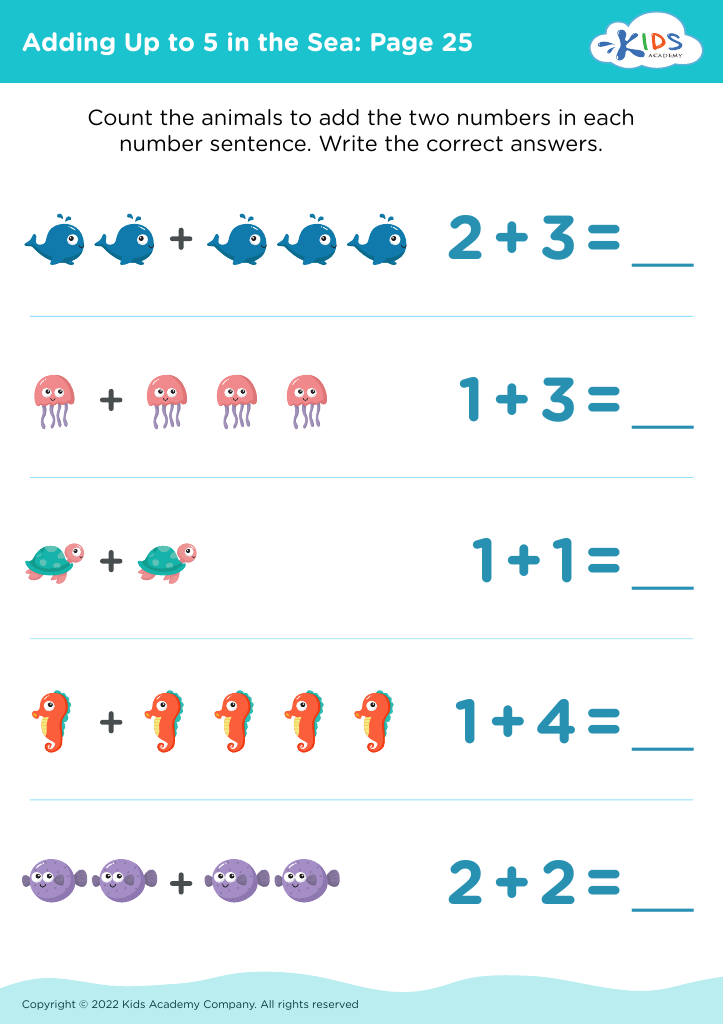
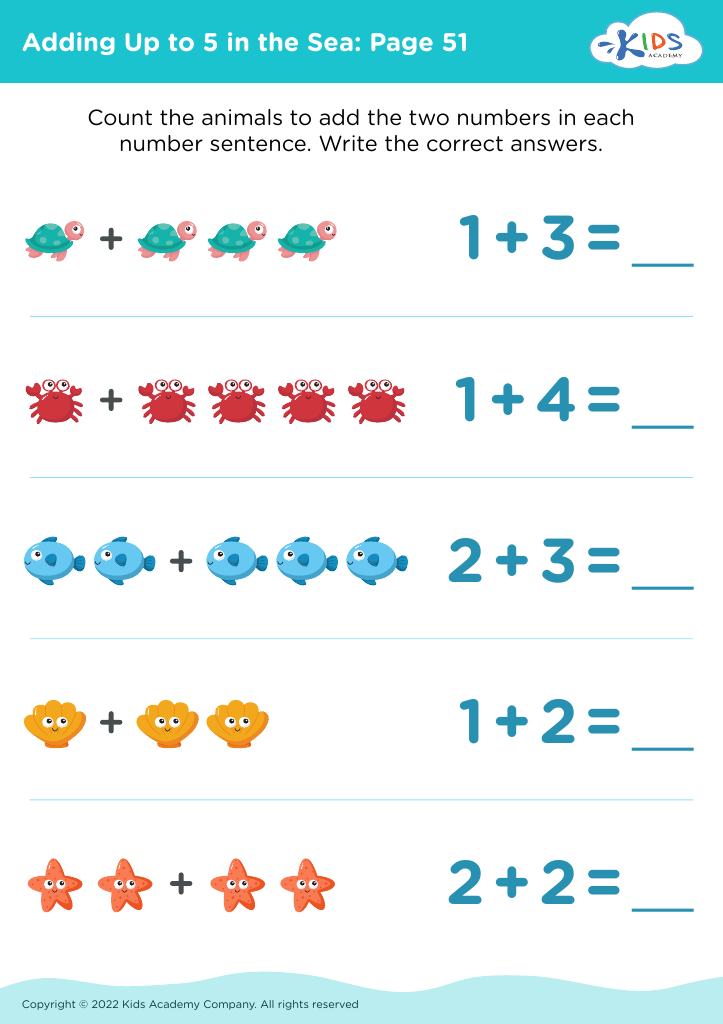
Explore our "Understanding Number Relationships: Adding Up to 5 Worksheets" designed specifically for 5-year-olds! These engaging worksheets help young learners develop foundational math skills by focusing on the relationship between numbers while mastering addition up to 5. Children will enjoy hands-on activities that promote recognition of number patterns and reinforce their counting abilities. Our thoughtfully crafted resources encourage critical thinking and problem-solving, supporting preschoolers in building confidence as they tackle basic math concepts. Perfect for both classroom and home use, these worksheets ensure that your child has fun while developing essential early math skills. Unlock your child’s potential today!




.jpg)



Understanding number relationships, particularly when adding up to 5, is essential for 5-year-olds as it lays the foundation for their future mathematical skills. At this age, children are developing their cognitive abilities, and engaging with numbers in a meaningful way helps foster critical thinking and problem-solving skills.
First, grasping the concept of adding up to 5 helps children recognize and work with basic number combinations, which is crucial for later arithmetic. For example, they learn that 2 + 3 equals 5 and appreciate that 5 can also be made by adding different pairs, such as 1 + 4 or 0 + 5. This understanding enhances their ability to see patterns in numbers, making advanced math concepts more approachable in later years.
Moreover, engaging in these activities in a supportive environment encourages a love for learning. Children who feel confident in their number skills are more likely to explore challenges eagerly and develop a positive attitude toward mathematics. For parents and teachers, showing children the fun in understanding number relationships can spark interest in learning and improve their overall academic readiness, paving the way for a successful educational experience.








