Understanding numerical values Adding Up to 5 Worksheets for 5-Year-Olds
4 filtered results
-
From - To
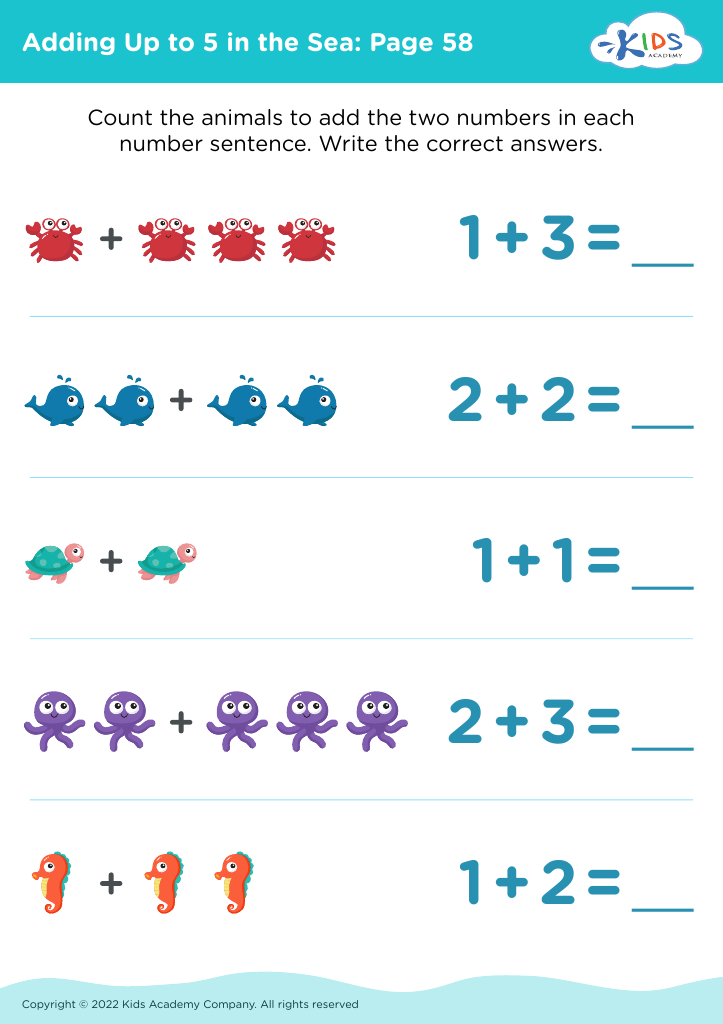
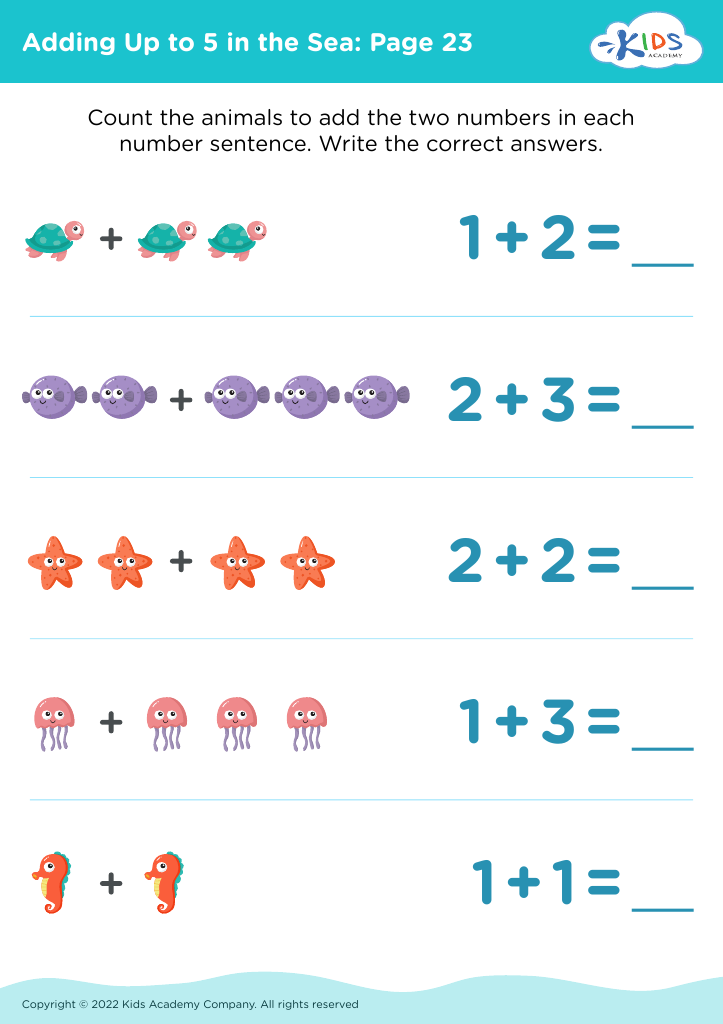
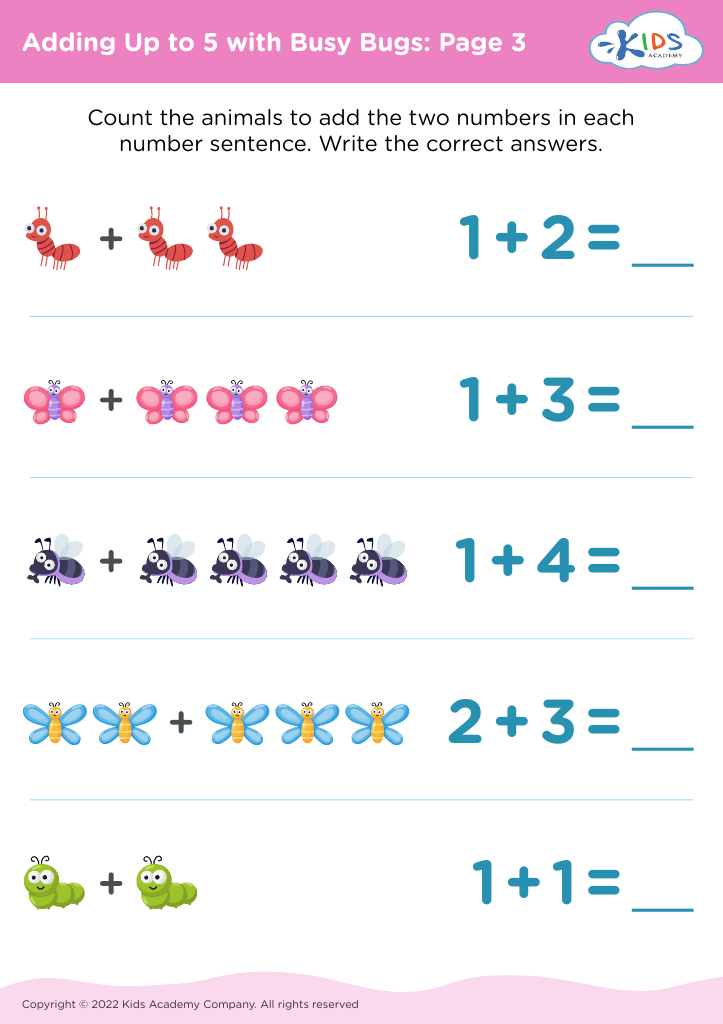
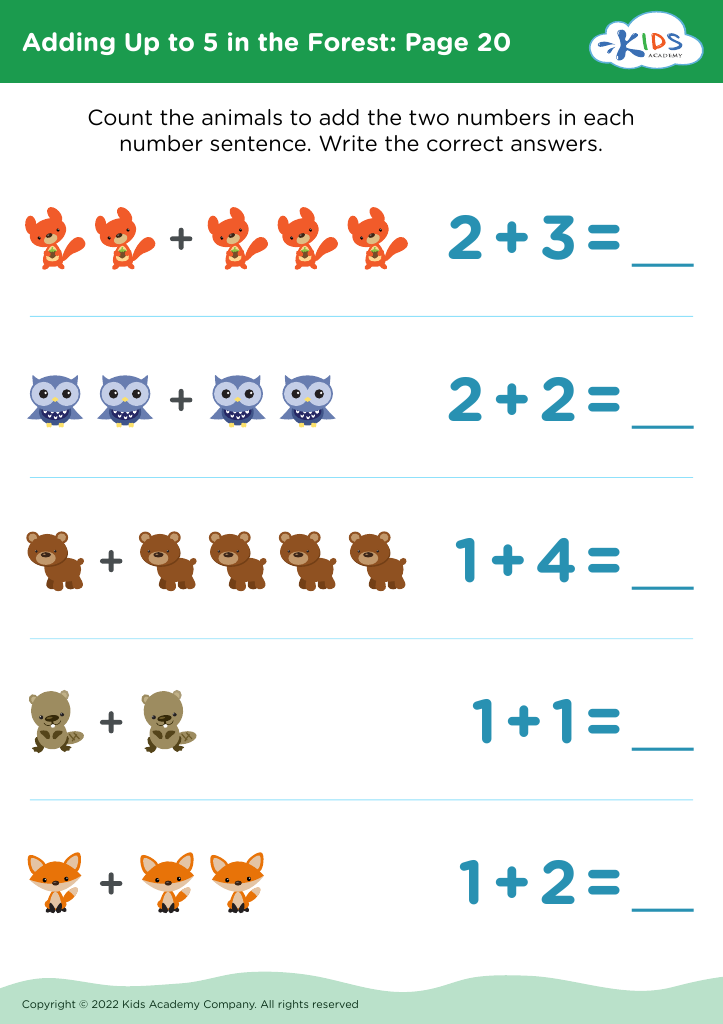
Welcome to our "Understanding Numerical Values: Adding Up to 5 Worksheets" for 5-year-olds! These engaging and interactive worksheets are designed to help young learners grasp the fundamentals of math by recognizing numerical values and practicing basic addition. Perfect for kindergartners, the activities encourage children to explore numbers through colorful visuals and fun exercises. With an emphasis on combining numbers to reach a total of five, these worksheets not only boost counting skills but also foster problem-solving and critical thinking abilities. Make math enjoyable and accessible for your child with our carefully crafted resources that ensure a solid foundation for future learning!



%20(1).jpg)




Understanding numerical values and the concept of adding up to 5 is crucial for 5-year-olds as it forms the foundational block for future mathematical learning. First, this early comprehension fosters number sense, enabling children to recognize, compare, and manipulate numbers effectively. Mastering the small number set of 0 to 5 helps in developing confidence and reduces anxiety towards mathematics as they progress to larger numbers.
Additionally, arithmetic involving numbers up to 5 encourages problem-solving and critical thinking skills. It engages young minds in logical reasoning as they learn to combine quantities, which can also support their ability to understand subtraction conceptually.
Moreover, these early mathematical skills are integrated into daily life scenarios—such as counting objects, sharing snacks, or playing games—making learning both meaningful and enjoyable. By grasping these concepts early on, children are better prepared for increased complexities in math as they advance in their education.
For parents and teachers, nurturing these skills not only ensures academic readiness but also lays the groundwork for a lifelong positive attitude towards learning math, contributing to overall cognitive development and academic success in the years ahead. Encouraging an early understanding of such basic arithmetic is imperative for holistic growth in young learners.








