Fine motor skills (writing) Addition & Subtraction Worksheets for 5-Year-Olds - Page 2
33 filtered results
-
From - To
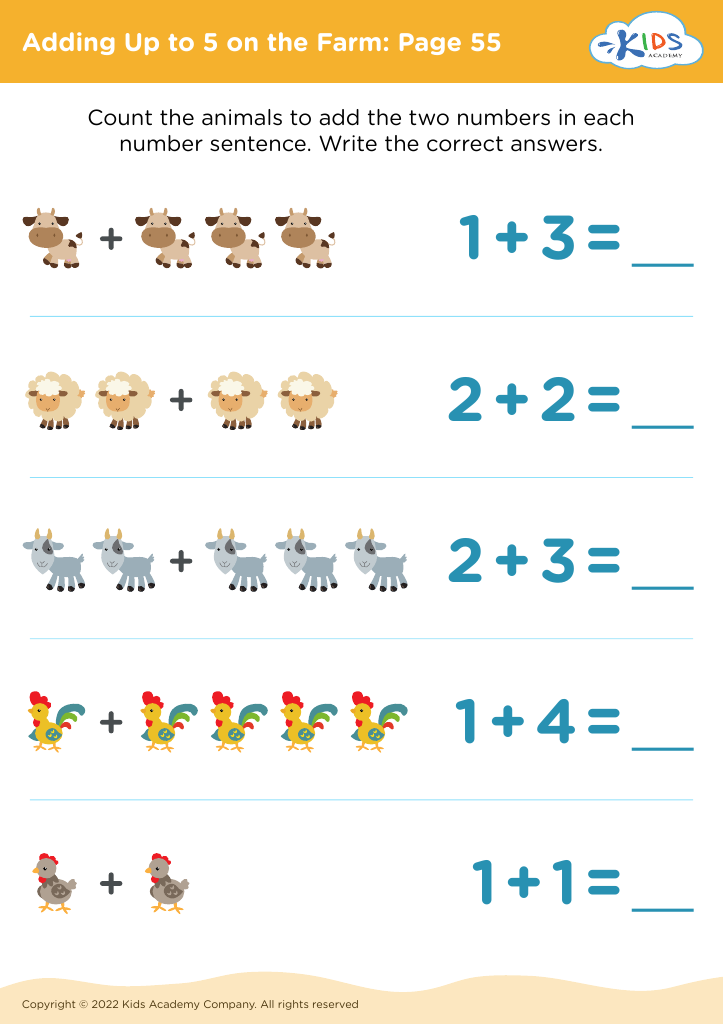
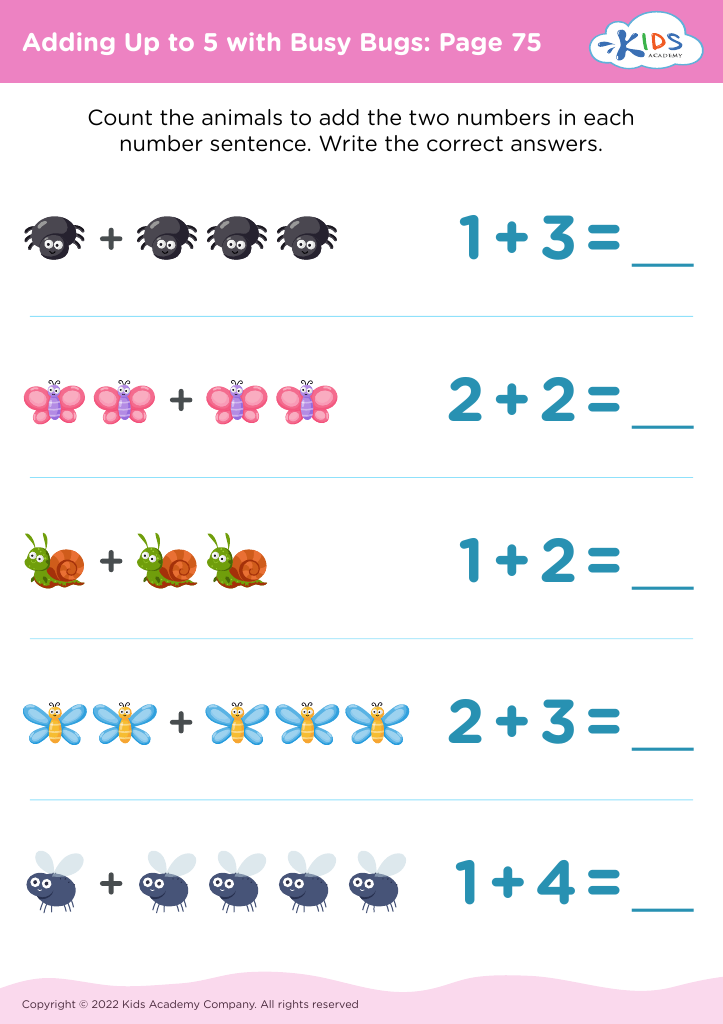
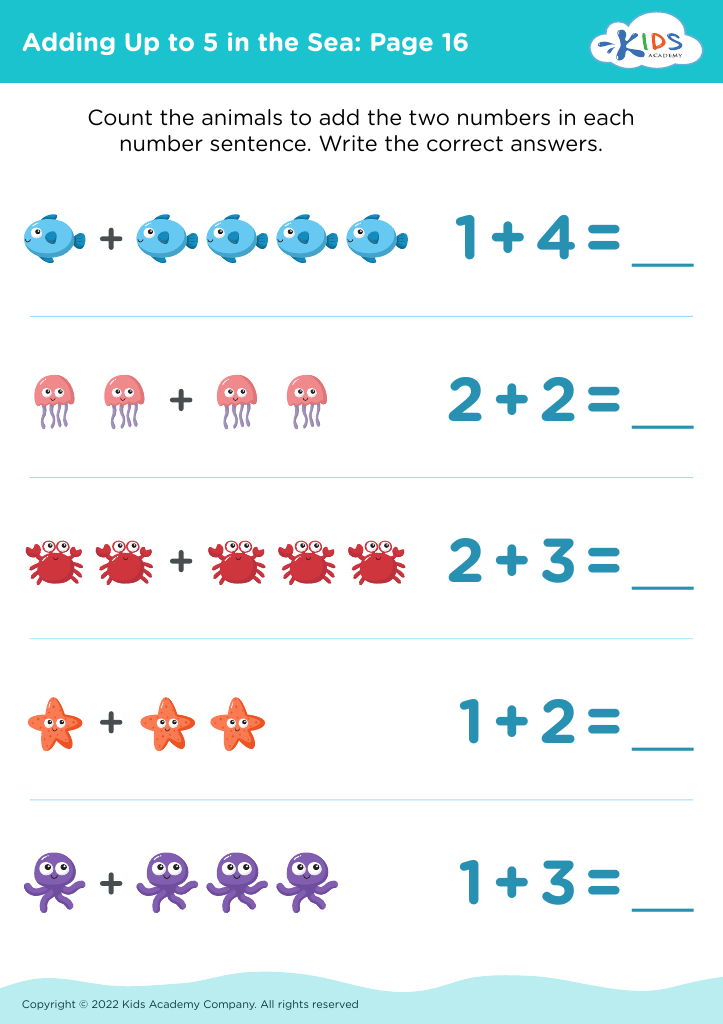
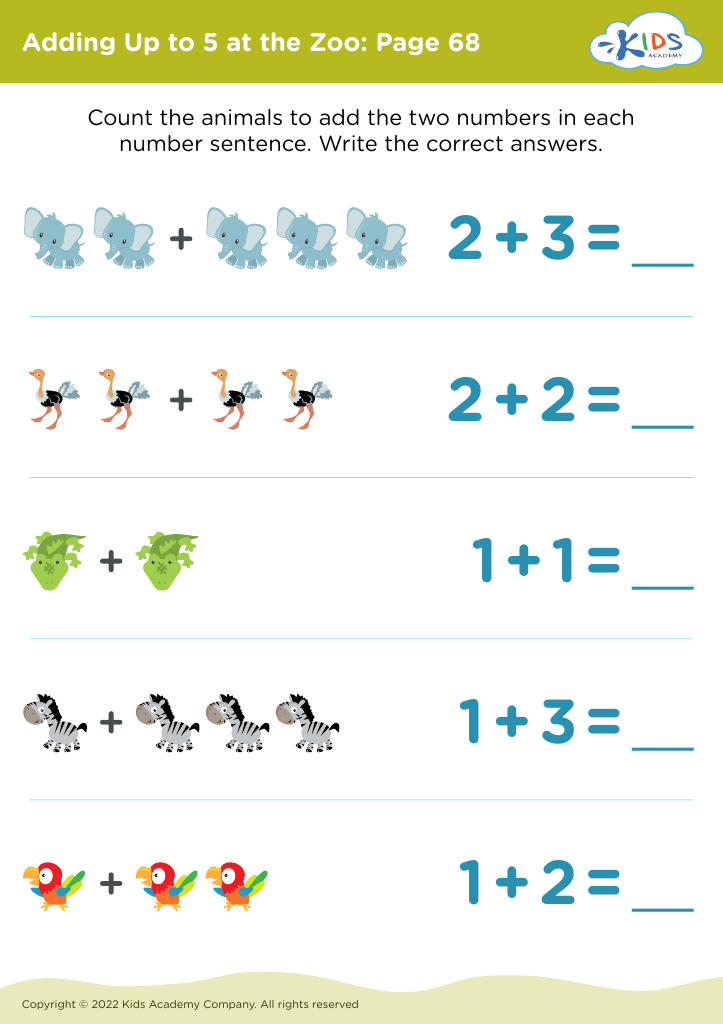
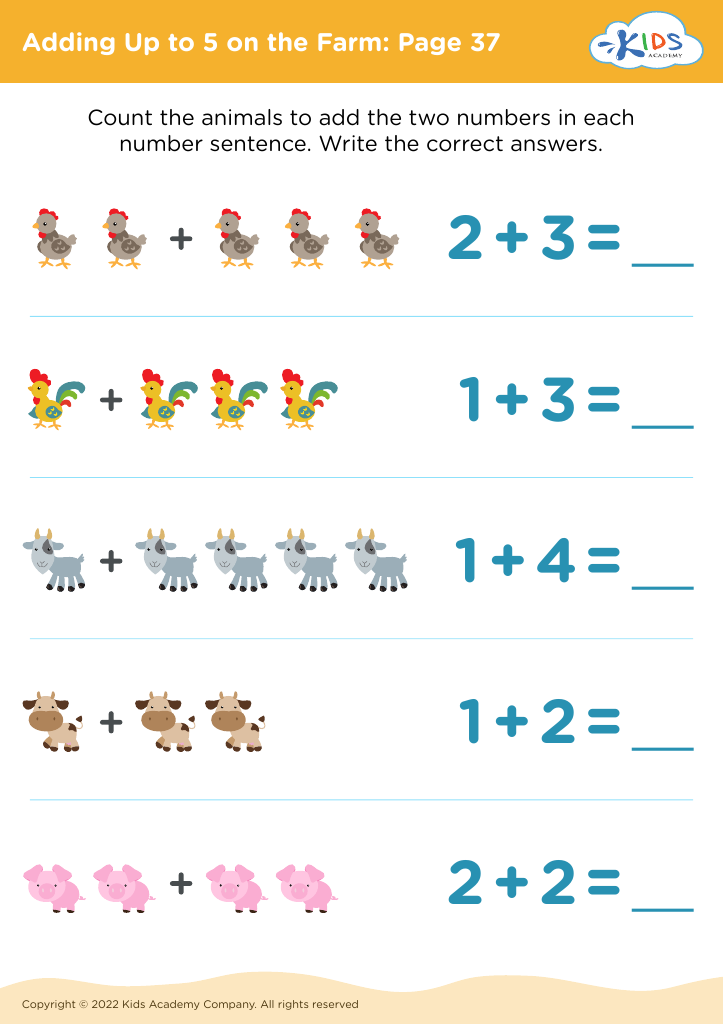
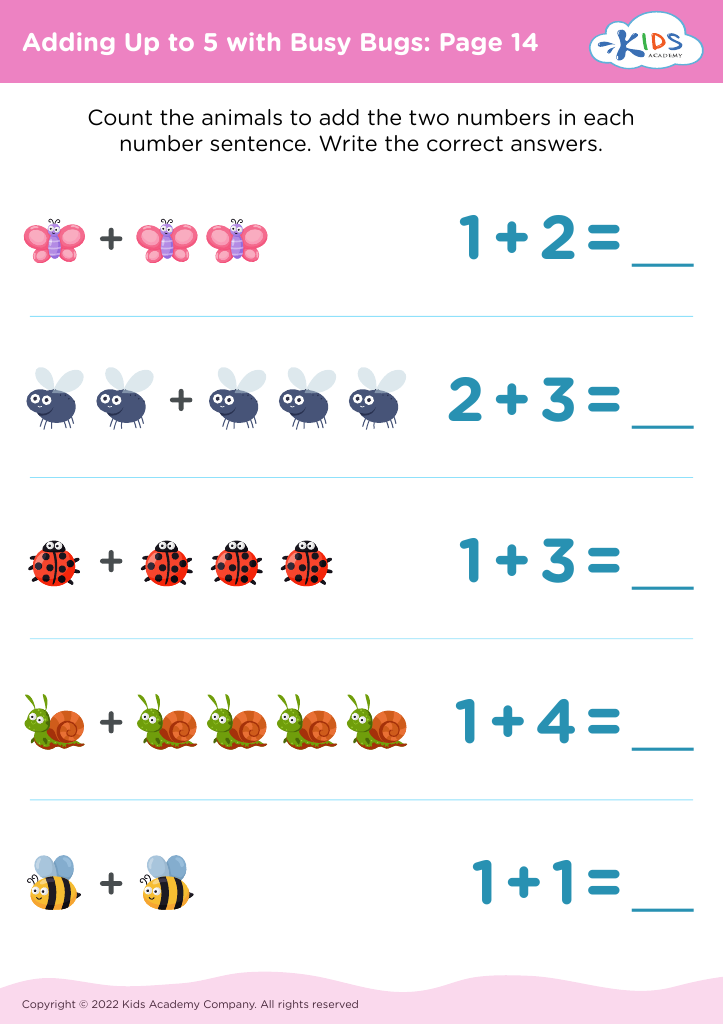
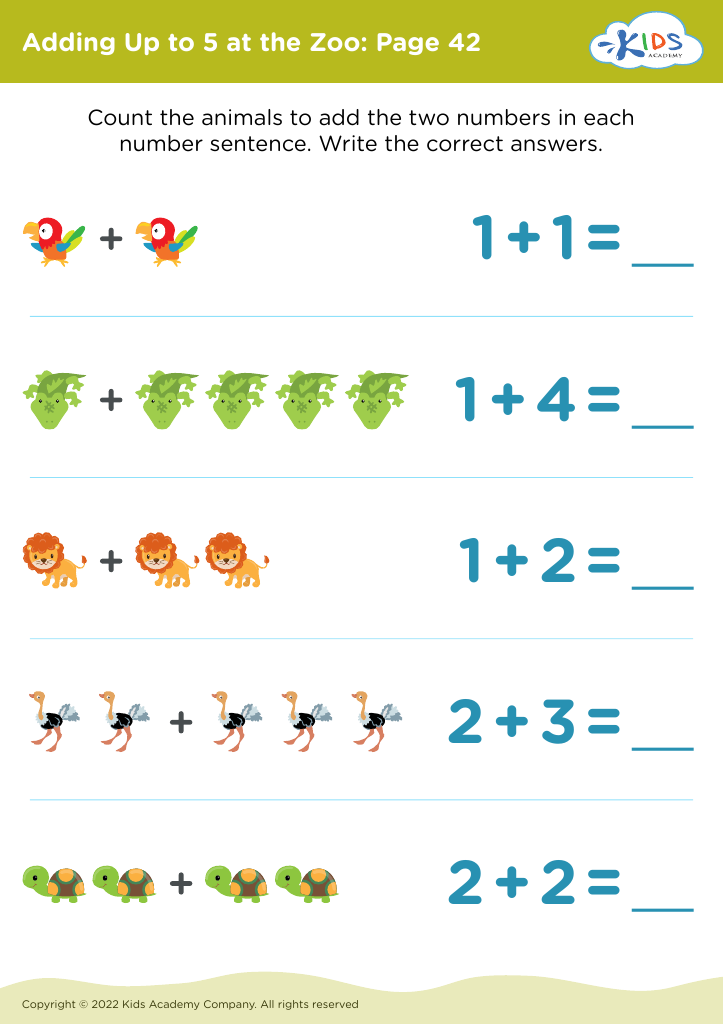
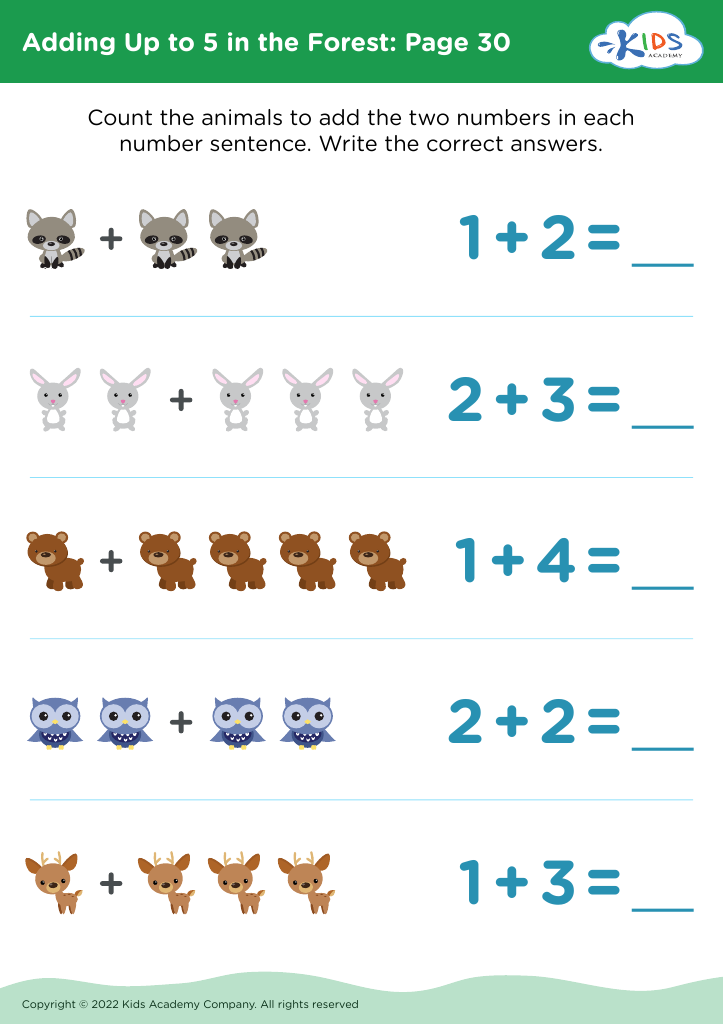
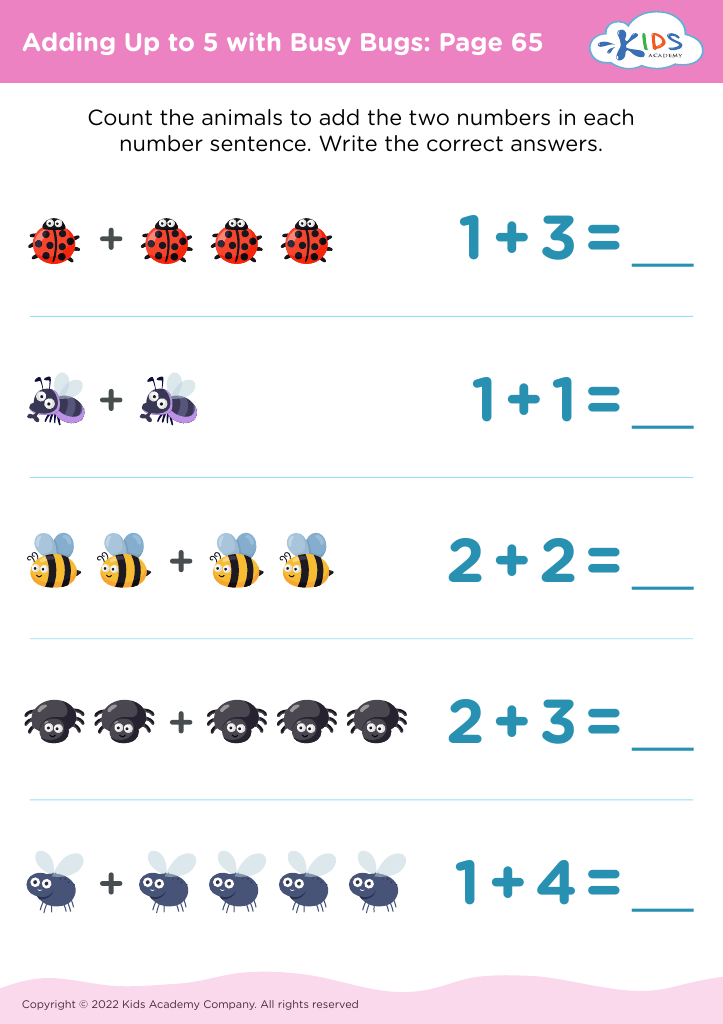








Fine motor skills are essential for the development of 5-year-olds, particularly when it comes to tasks like writing and basic math such as addition and subtraction. Parents and teachers should care about these skills because they form the foundation for a child's academic success and everyday functioning.
First, fine motor skills involve the precise movements of small muscles, particularly in the hands and fingers. These skills are crucial for writing, as they allow children to grip pencils correctly, control their writing instruments, and form letters accurately. Early writing proficiency promotes a child’s ability to communicate ideas clearly, a skill that becomes increasingly important in school and beyond.
In addition to writing, fine motor skills are related to early mathematical concepts like addition and subtraction. Children often use their fingers to count, and developing these skills enhances their ability to perform basic math operations, plan out strategies, and solve problems effectively.
Moreover, practicing fine motor tasks can boost a child’s confidence and self-esteem. Every milestone achieved—like writing their name or solving addition problems—encourages a sense of accomplishment. Thus, nurturing fine motor skills is not only a pathway to academic readiness but also a key player in fostering independence and resilience. Parents and teachers can significantly impact a child's future success by encouraging these foundational skills.








