Visualization skills Addition & Subtraction Worksheets for 5-Year-Olds
3 filtered results
-
From - To
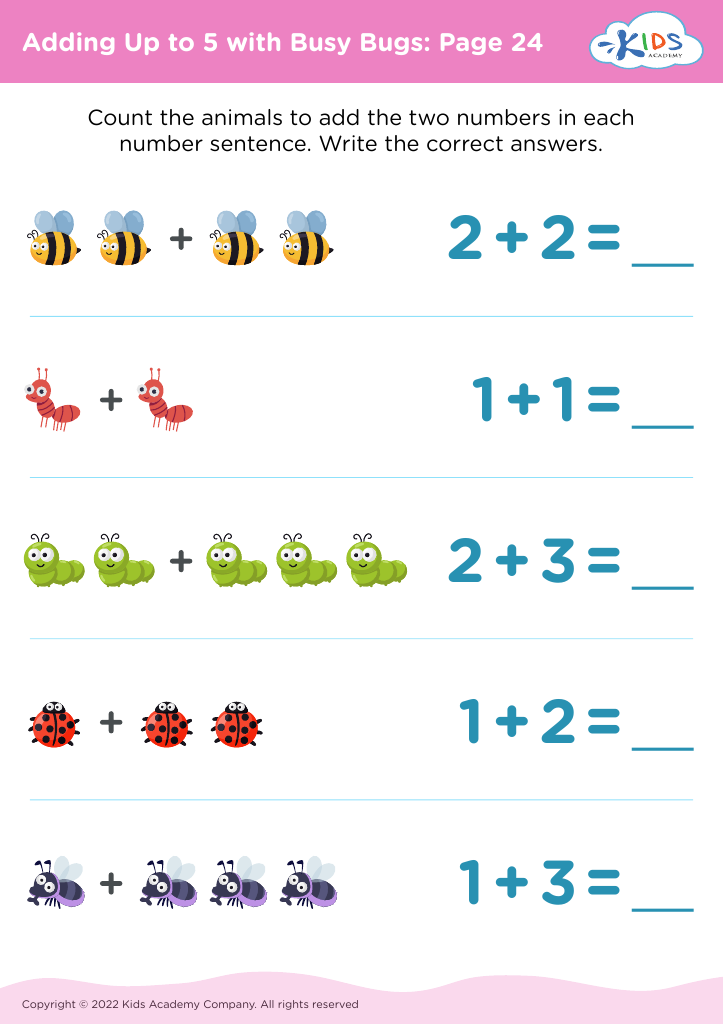
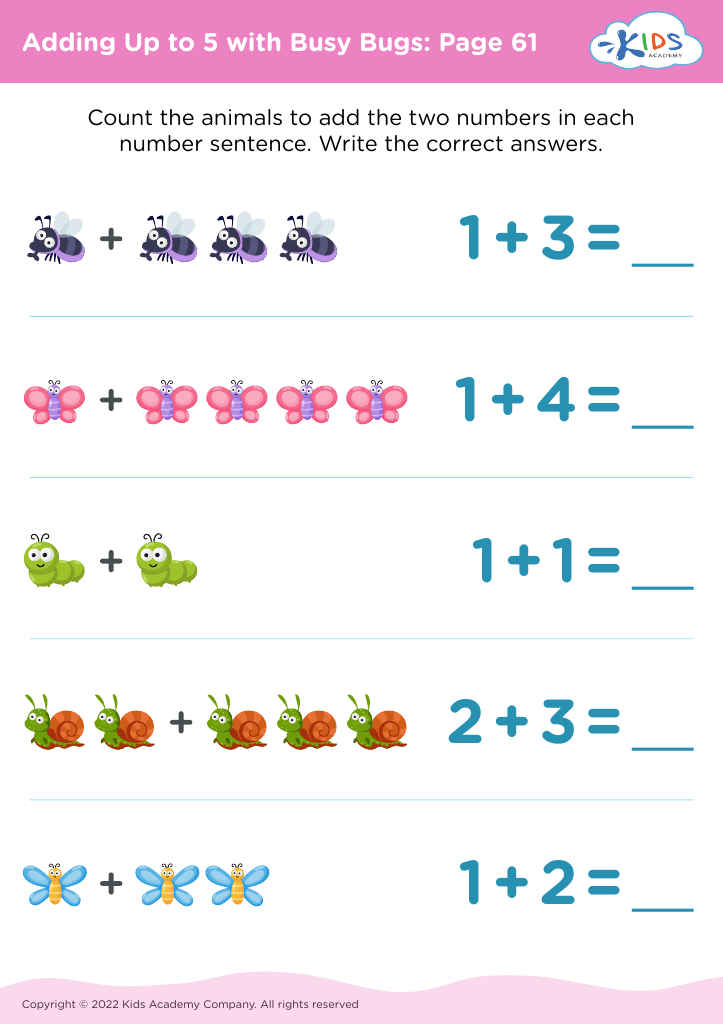
Enhance your child's mathematical abilities with our Visualization Skills Addition & Subtraction Worksheets designed for 5-year-olds. These interactive worksheets make learning fun and effective by incorporating vibrant visuals and engaging activities. Children will learn how to add and subtract while developing critical thinking and visual perception skills. Each worksheet is crafted to keep young learners captivated and eager to practice. Ideal for early learners, these resources foster a solid foundation in math that will benefit them in their educational journey. Explore our collection and turn addition and subtraction into an entertaining adventure for your child.
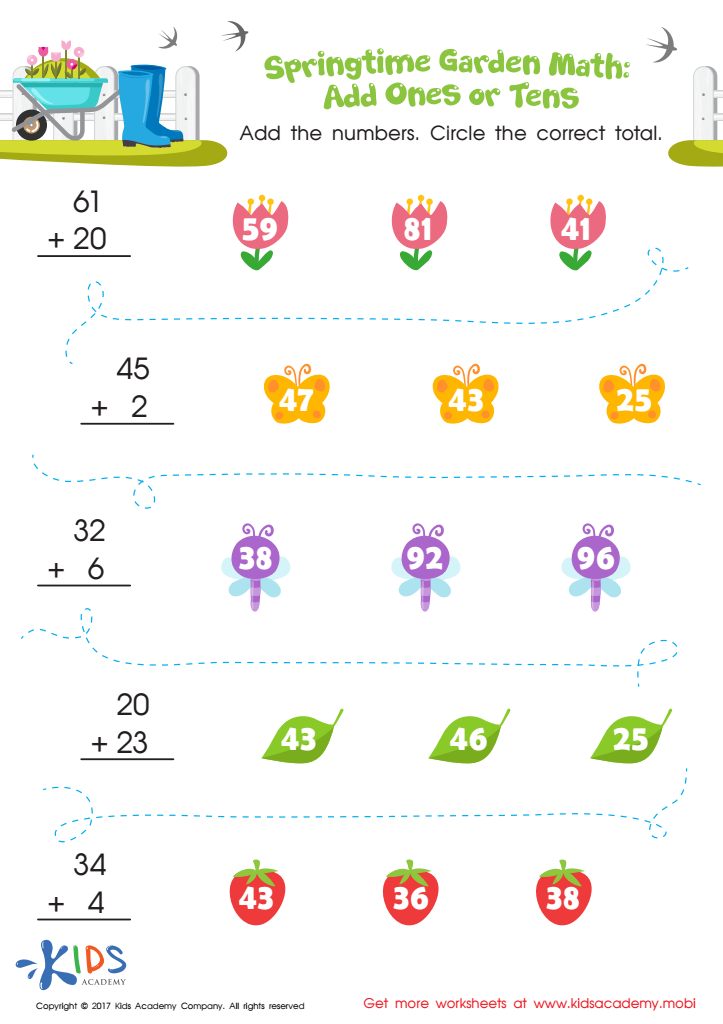
Springtime Garden Math Worksheet
 Assign to My Students








Parents and teachers should prioritize visualization skills in addition and subtraction for 5-year-olds because these foundational skills significantly enhance their mathematical understanding and cognitive development. Visualization helps young learners see and manipulate numbers and their relationships, making abstract mathematical concepts concrete and accessible. By visualizing, children can grasp the idea of grouping, partitioning, and balance, which are essential for addition and subtraction.
For instance, using physical objects like blocks or drawing pictures to represent math problems allows children to see what adding or taking away quantities looks like in a tangible way. This hands-on approach not only makes learning more engaging but also fosters critical thinking and problem-solving abilities. Furthermore, these skills lay the groundwork for more complex mathematical concepts they'll encounter later in their education.
Moreover, visualization promotes confidence and reduces anxiety related to math. When children understand what the numbers represent, they're more likely to view math as an enjoyable challenge rather than a difficult task. Teachers and parents can equip their children with lifelong tools to approach mathematical problems creatively and confidently, leading to improved academic performance and a positive attitude toward learning in general.








